
New companies, new ways to back existing ones, and every purchase built to pull in more capital
We’re adding new companies to our portfolio and getting creative with how we put more money behind existing ones. From algae pods cleaning sewer lagoons in Utah to biochar funding Ukraine’s national parks, each purchase had to do two things: directly unlock more capital and deliver impact beyond carbon removal.
Prioritizing leverage and impact
Climate causes received only 2.1% of global philanthropy in 2024. That’s a new high, but as we wrote recently, it’s still a sliver of what the problem demands. With so little capital flowing to climate and the environment, every dollar we deploy this year has to unlock more and deliver impact well beyond emissions.
>> In Other News: Global CCS Hits 113 Projects as Americas Lead Capacity
That shaped how we chose the projects in this purchase round and why we focused on two priorities.
Leverage. We look for the point where an early payment brings much larger capital behind it. Since Terraset launched, we’ve tracked up to 6x direct leverage, meaning each dollar we deploy can unlock up to six more. Earlier this year, our $200,000 pre-purchase from Restord helped secure a ~$1.5 million bank loan. In this round, our purchases are positioned to help bring in city contracts, prize money, and development bank financing.
Impact. We want projects that deliver benefits across sectors. Our purchase from AgriCapture, for example, cut methane from rice fields and saved around 300,000 gallons of groundwater with each credit produced. This year we put extra weight on soil, water, jobs, and land. The projects below (and the others we purchased from this round) clean municipal wastewater, cut fertilizer use on farms, and fund national parks in a country at war.
This round supports a range of companies and methodologies, some from our existing portfolio and some new companies. Here are a few new additions, each with a clear unlock and impact beyond removal or abatement.
Airbuild’s Utah pilot could help turn $37.5 million in city interest into signed contracts
Algae-infused biochar, United States
Airbuild’s ‘Biopods’ convert wastewater into Terraforming Fertilizer, recovering the nitrogen and phosphorus that pollute rivers and fuel toxic algae blooms, and turning them into a nutrient-rich biochar that rebuilds soil while cleaning the water in the same step.
Impact beyond removal
Small/mid-sized towns can meet EPA limits without chemicals or energy-intensive aeration. The biochar also works as a slow-release fertilizer, and Airbuild says farmers who use it cut their synthetic fertilizer use and irrigation by 20 to 40 percent.
The unlock
Our pre-purchase helps fund on-site pyrolysis capacity for a three-pod water treatment facility in Green River, Utah. Airbuild needs a larger pilot system to turn $37.5 million from five municipalities into signed contracts, roughly 100x what we’re putting in. Because cities/industries pay Airbuild to build each site, it doesn’t need to take on project debt. Their team estimates every dollar invested now unlocks at least five more.
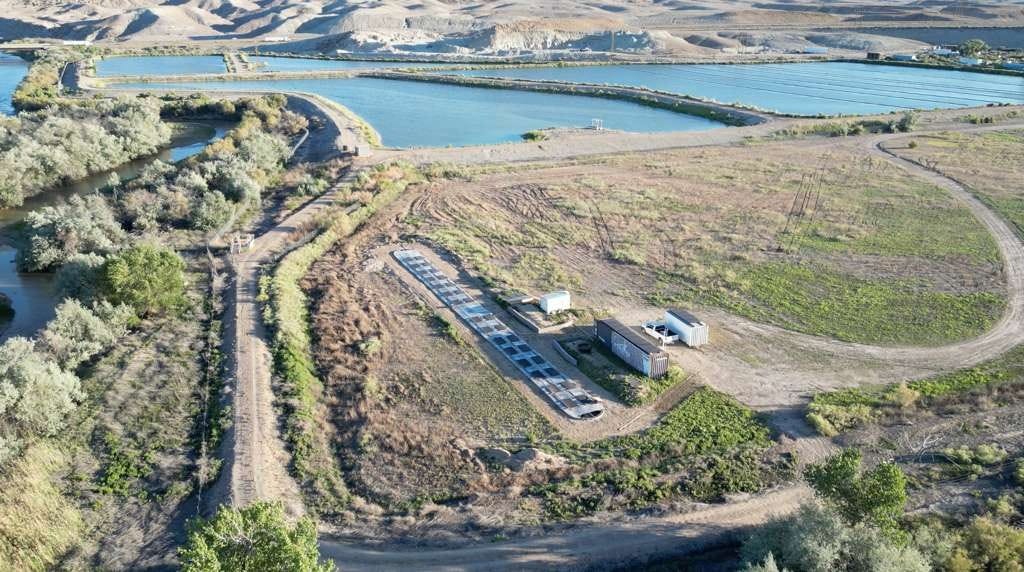
Airbuild’s water treatment facility in Green River, Utah. Photo courtesy of Airbuild.
Frost Methane’s credit sales put a $1 million prize within reach
Methane abatement, United States
Frost captures and flares methane from livestock farms, abandoned coal mines, landfills, and natural seeps.
Impact beyond removal
On farms, Frost’s covers improve water quality, reduce odors, and retain nitrogen in manure, which reduces the need for synthetic fertilizer. Frost also shares credit revenue with its farm partners. These credits come from its reference site in upstate New York, giving other farmers in the region a working example to follow.
The unlock
Frost is one of 20 finalists in the Grow-NY competition, where the top three food and agriculture startups receive $1 million, $500,000, and $250,000. To move forward with its pitch in November, Frost needed stronger evidence of credit sales. It has sold offsets from its New York farm for 2026 onward, but verification timelines meant that money wouldn’t arrive in time for the competition. Our purchase provides that evidence and could help unlock up to 6.5 times our commitment.
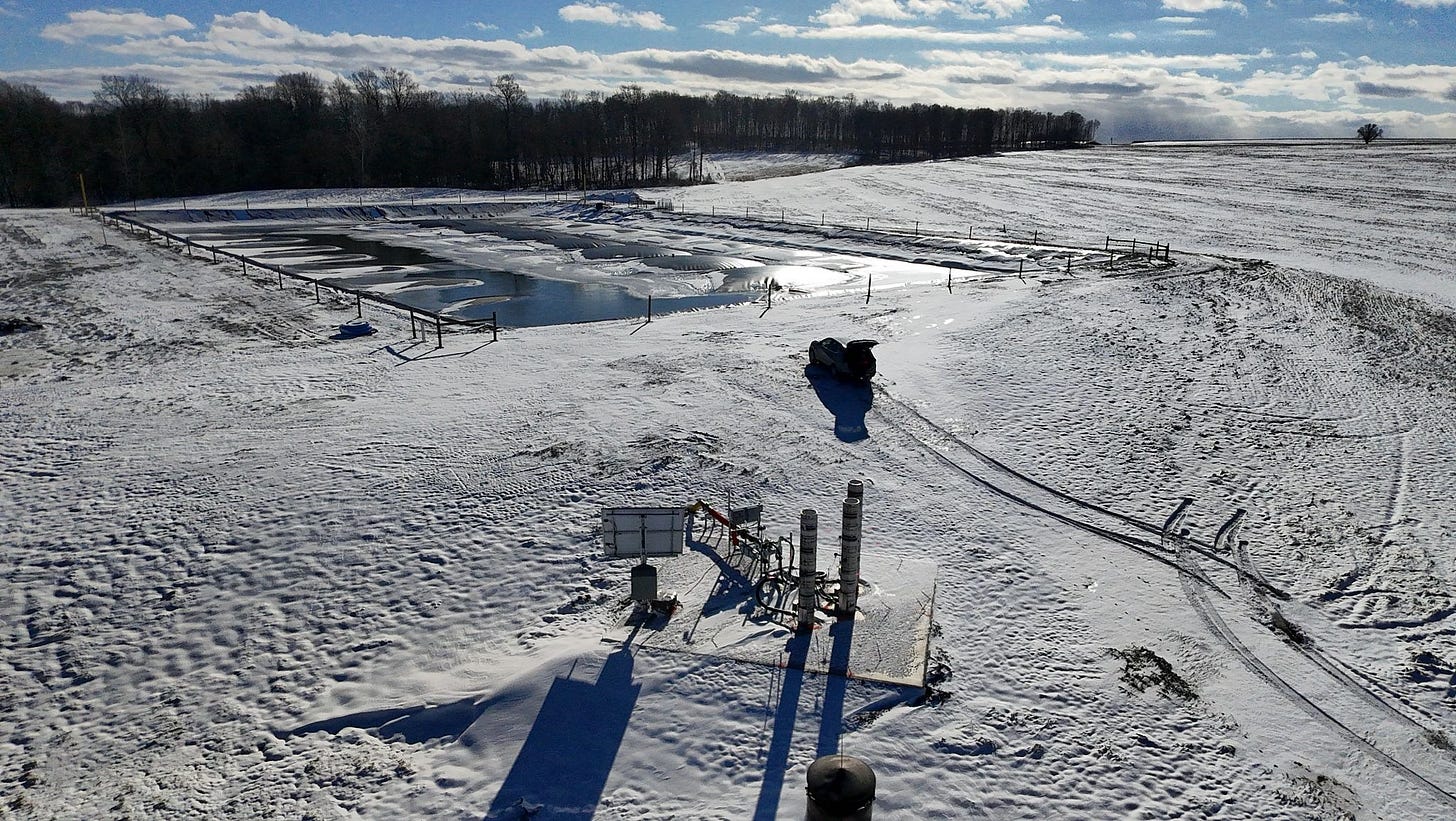
Frost’s cover and flare system. Photo courtesy of Frost Methane.
Tellus’s biochar gives 11 Ukrainian national parks a sustainable income
Biochar, Ukraine
London-based Tellus Conservation produces biochar in Ukraine and is building a two-kiln commercial system in Rivne Oblast. Profits from its kilns flow into the Nature Fund of Ukraine, which provides long-term funding for 11 national parks.
Impact beyond removal
The war in Ukraine has cut off conservation funding across the country, and most of what remains depends on grants renewed year to year. Biochar revenue gives these parks a lasting source of income and offers a model for land conservation that supports long-term climate stability. We want to help prove it out.
The unlock
Tellus is working with a financier on the two-kiln buildout. Once the feasibility study is complete, the financier needs a buyer commitment for the roughly 4,000 credits the kilns will produce each year. Our purchase helps provide that commitment.
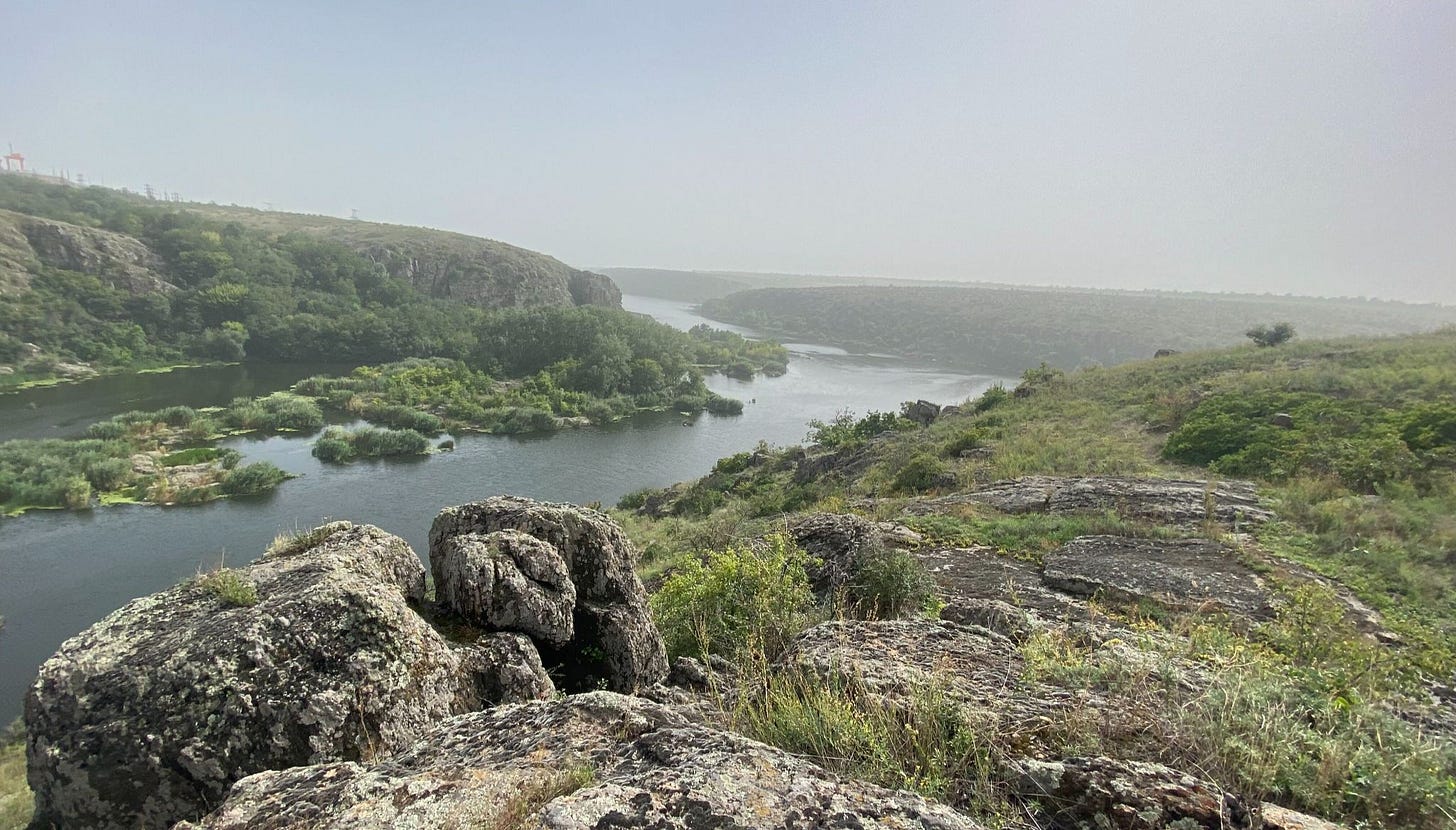
Climate philanthropy is limited, so we put $2M+ in motion where it can have the most impact and unlock more dollars. More to come on other ways we creatively deployed capital in this round.
Subscribe to the newsletter
Daily decarbonization data and news delivered to your inbox
Follow the money flow of climate, technology, and energy investments to uncover new opportunities and jobs.
Latest issues
-
The $915M Ethanol Deal Where Carbon Capture Sets the Price
Inside This Issue 🌽 The Andersons Bets $915M on Low-Carbon Ethanol Plants 🌐 Rad Web Hosting Announces Fossil-Free Internet by 2030 Manifesto, Commits 1% of Revenue to Carbon Removal 💶 EU Earmarks ...
-
Which Texas Project Got Verra’s First CCS Credits?
Inside This Issue ✅ Verra Approves First Credits Under CCS Methodology ⚡ Houston-Based Transition Industries Signs EPC Deal for 210 MW Electrolyzer at Pacifico Mexinol 🏗️ Investing in Wyoming’s In...
-
CRC Vows to Fight Kern County CCS Ruling
Inside This Issue ⚖️ Court Sets Aside Kern County Approval of California’s First Carbon Storage Project, Carbon TerraVault I 🌲 The Integrity Council Approves Methodologies for Coal Transition and ...
Company Announcements
-
Carbon TerraVault VIII's Five-Well Hub Enters EPA Review
The U.S. Environmental Protection Agency (EPA) has posted the Class VI permit application for Carbon TerraVault VIII. The filing reveals a five-well carbon storage hub now in administrative review....
-
Survey to add new gravity measurements west of the Cloverleaf target and within the eastern block ahead of 3D inversion and 2D seismic-profile modelling VANCOUVER, British Columbia, Nov. 10, 2026 ...
-
Greene Tweed Introduces PFAS-Free Sealing Material Built for Hydrogen and CCUS Reliability
EPM 893 reduces sealing tradeoffs by combining low-temperature performance, decompression resistance, and chemical compatibility LANSDALE, PA, UNITED STATES, November 10, 2026 /EINPresswire.com/ -...
-
Aemetis Biogas Receives CARB Approval for Six Dairy RNG Pathways
CUPERTINO, Calif., Nov. 10, 2026 (GLOBE NEWSWIRE) -- Aemetis, Inc. (NASDAQ: AMTX), a renewable natural gas and biofuels company, announced today that the California Air Resources Board (CARB) has a...