
Isometric Raises $40 Million to Scale AI Certification Across Carbon, Energy and Industrial Markets
Published by Todd Bush on June 22, 2026
- Isometric raised $40 million in Series A funding to expand AI-based certification across the industrial economy.
- The company says its platform can reduce certification checks from months to hours by analysing full datasets, not samples.
- The funding targets a wider industrial certification market valued by BCG at about $350 billion.
London Startup Targets the Verification Gap in Industrial Claims
Isometric has raised $40 million to expand its AI certification platform beyond carbon removal and into the wider industrial economy.
The Series A round was led by AVP, formerly AXA Venture Partners. The firm counts insurer AXA as an anchor investor. Existing backers Lowercarbon Capital and Plural also joined the round. Kleiner Perkins chairman John Doerr and investor Walter Kortschak added personal cheques.
>> In Other News: India Likely Won't Export Sugar for Years as El Nino, Ethanol Squeeze Supply
The funding gives Isometric more capital to build its certification technology. It also positions the company for a much larger market. BCG has valued the industrial certification sector at about $350 billion.
For companies, investors and regulators, the timing is important. Industrial claims now sit at the centre of climate disclosure, clean energy procurement, supply-chain assurance and carbon markets. Yet many claims still rely on slow audits, fragmented records and limited sampling.
Isometric wants to change that.
AI Agents Move Certification From Samples to Full Coverage
The company’s platform, Certify, uses AI agents to ingest and cross-check the data behind industrial claims. That can include sensor readings, satellite imagery, supply-chain records and lab results.
Instead of relying mainly on human spot checks, the system scans millions of data points. It flags discrepancies and sends complex cases to human experts. The goal is not to remove auditors. Rather, Isometric wants to reserve expert judgment for decisions that need it.
This shift matters for governance. Certification has become a trust layer for climate and industrial markets. Buyers, lenders and regulators need proof that claims are accurate, consistent and comparable.
“For decades the certification industry faced a tradeoff between speed and rigour. Do it fast or do it right,” Jubbawy said. “With Isometric, industrial companies can get both. AI agents are here, and they’re making the certification process instant and invisible, unleashing the potential of the industrial economy.”
The pitch is clear. If certification becomes faster and more complete, clean technologies could scale with fewer bottlenecks. However, the model also raises the bar for transparency. Companies using AI-based certification will need confidence in data quality, audit trails and oversight.
Carbon Removal Gives Isometric Its Proving Ground
Isometric built its approach in carbon removal. That market has faced intense scrutiny over credit quality, permanence and buyer trust.
The company says it is now the largest carbon removal certifier by contracted volume. It has been engaged to certify more than 16 million tonnes. More than 200 projects are on its platform. Customers include Microsoft, Anglo American, JPMorganChase and Boeing.
In December 2024, Isometric became the first carbon removal registry to gain accreditation from ICVCM, ICROA and CORSIA. Those bodies play key roles in voluntary and aviation carbon market integrity.
That credibility matters as demand for durable carbon removal grows. Large buyers want credits that can withstand regulatory, investor and public scrutiny. For boards, weak verification can create reputational and financial risk.
Isometric now wants to apply the same verification layer to other sectors. Its next targets include superpollutant reduction and low-carbon energy, fuels and materials.
Investors Bet on a Single Registry Model
Isometric describes today’s certification market as fragmented. Registries and standards bodies often use different methods, formats and disclosure practices. The company wants to pull more certification workflows onto one platform, held to one standard, with certificates published on a public registry.
“Certification has always forced a choice between speed and rigour. Isometric has eliminated that compromise,” said François Robinet, managing partner at AVP, calling the company “genuinely category-defining.”
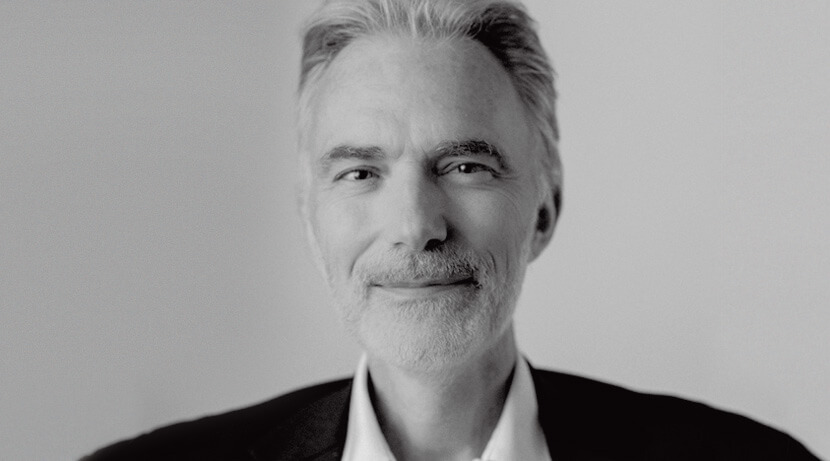
François Robinet, managing partner at AVP
The investor case rests on scale. If industries move toward tighter proof requirements, certification could become a core operating cost. That includes low-carbon fuels, materials, methane reduction and other climate-linked industrial claims.
It also fits a wider policy trend. Governments are demanding stronger evidence behind green claims. Carbon markets face higher integrity thresholds. Corporate climate commitments now require more defensible data.
Blair McDougall, the UK’s minister for economic transformation, called Isometric “exactly the kind of frontier AI success story we want to see built and scaled in the UK.”
For the C-suite, the message is practical. Certification is no longer a back-office compliance task. It now affects capital access, procurement, market entry and climate credibility.
Isometric’s bet is that industrial companies will accept AI as part of that trust infrastructure. If it works, certification could become faster, cheaper and more continuous. If it fails, the market will fall back on the same slow checks that have limited confidence in climate-linked claims.
Either way, the demand for proof is rising. London’s latest AI funding round shows where investors think the next layer of industrial climate infrastructure may be built.
Subscribe to the newsletter
Daily decarbonization data and news delivered to your inbox
Follow the money flow of climate, technology, and energy investments to uncover new opportunities and jobs.
Latest issues
-
Canada's Biggest CCS Deal Has a November 15 Deadline
Inside This Issue 🪨 Pathways CCS: What Still Has to Be Signed Before FID 🌍 Namibia Fires Up Africa's First Green Hydrogen Hub 💂 METLEN Conducts First Fire on Waste at the Protos ERF Plant in Chesh...
-
Heidelberg's $1.36B Edmonton Plant Is on Hold. Here's Why.
Inside This Issue 🚧 Carbon Price Gap Stalls Heidelberg Materials' $1.36B Edmonton Cement Carbon Capture Project ⛽ Shanghai Electric Contributes to World-Record Biomethanol Bunkering Operation ⚖️ I...
-
Mombak Delivered 21,000 Google Carbon Tonnes Two Years Early
Inside This Issue 🌱 Mombak Beat Google's 2028 Carbon Deadline by Two Years 🛫 China's First SAF Compliance Service for Foreign-Registered Business Jets Successfully Implemented ✈️ UMeWorld Advances...
Company Announcements
-
Soil-Gas Surveys for Hydrogen and Helium, and Mineral Exploration Programs to Begin on Highly Prospective Cobequid-Chedabucto Fault Zone in Nova Scotia in August; Situated Along the Same Fault Corr...
-
After more than a year of joint development, the partners have proven that carbon-storing materials perform in one of the industry's most demanding applications, with an embodied carbon reduction o...
-
METLEN Conducts First Fire on Waste at the Protos ERF Plant in Cheshire
ATHENS, Greece and LONDON, Aug. 21, 2026 -- METLEN has successfully conducted the first fire on waste at the Protos Energy Recovery Facility it is developing for Encyclis in Cheshire. First fire is...
-
Namibia Fires Up Africa’s First Green Hydrogen Hub
Namibia has commissioned Africa’s first integrated green hydrogen facility at Walvis Bay, combining solar power, hydrogen production and battery storage for industrial and transport use. The CMB T...