
Boeing just raised the bar for how aerospace companies address the emissions they can't engineer away. On March 4, 2026, the aerospace giant and Carbonfuture announced a multi-year agreement for at least 40,000 tonnes of durable carbon dioxide removal credits, marking one of the largest CDR procurements in aviation history.
This is not a feel-good gesture. It's a calculated, compliance-aligned move designed to address the residual emissions that aircraft redesigns, operational improvements, and fuel innovation simply cannot eliminate on their own.

Boeing’s 40,000-ton biochar deal highlights aviation’s shift toward durable carbon removal, backed by global sourcing and digital tracking systems.
>> In Other News: Second UK CO2 Storage Licensing Round Yields Interest for Over 2 Million North Sea Acres
A Diversified Portfolio, Built on Biochar
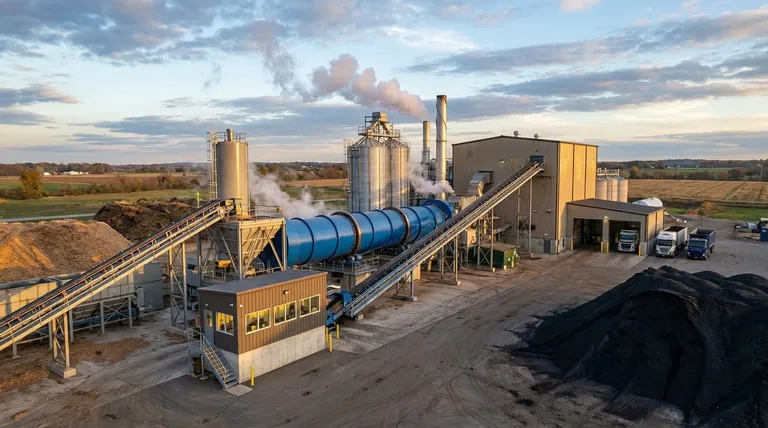
The credits are sourced from a portfolio of four biochar carbon removal projects located across the Global South. Biochar is produced by heating organic material in a low-oxygen environment, turning biomass into a stable, carbon-rich charcoal. When added to soil, it locks carbon away for centuries while improving soil fertility and water retention.

"To support long-term global demand for air travel, the aviation industry has set goals to reduce emissions. We're excited to team up with Carbonfuture to support technological innovation in carbon removals to help meet these needs."
Allison Melia, Vice President, Global Enterprise Sustainability, Boeing
Boeing will apply these credits specifically to its residual Scope 3, Category 6 emissions, which are the greenhouse gases generated by employee business travel. These are hard-to-abate by definition. They persist even after Boeing has invested in next-generation fuel-efficient aircraft, expanded its sustainable aviation fuel partnerships, and tightened its operational footprint.
Every tonne in the portfolio is tracked through Carbonfuture's digital Trust Infrastructure, a monitoring and verification system that follows carbon removal from biochar production all the way through to end use, confirming legal title at each stage. Boeing also gains access to Carbonfuture's integrated portfolio management platform, allowing the company to allocate and track credits across multiple use cases from a single system.
Why Biochar, and Why Now
Biochar's track record in large-scale CDR offtake is growing fast. In 2024, it accounted for 86% of all durable CDR deliveries by volume globally, according to Carbonfuture. By early 2025, buyers had already locked in 62% of that year's supply and 28% of 2026 capacity through forward agreements, according to carbon removal marketplace Supercritical. Supply is tightening, and early movers are gaining clear advantages.
Boeing's deal positions the company ahead of that curve. The agreement also includes an option to purchase additional credits, signaling room to scale as the company's sustainability strategy evolves. A diversified portfolio, rather than a single-project purchase, spreads risk while ensuring consistent access to high-quality, verified removals.
Carbonfuture brings significant infrastructure to the table. The company's digital Trust Infrastructure has underpinned major corporate CDR offtake agreements across multiple sectors, and its partners include Microsoft, Swiss Re, and the World Economic Forum's First Movers Coalition. Boeing is joining a proven platform.

Global companies ramp up carbon removal deals, with biochar emerging as a leading method across aviation, tech, and insurance sectors.
>> RELATED: Graphyte Signs First Carbon Removal Purchase Agreement with American Airlines
Aligning with CORSIA and Global Aviation Commitments
The Boeing-Carbonfuture agreement is designed to work alongside international aviation climate frameworks, not as a replacement for them. It explicitly supports CORSIA, the Carbon Offsetting and Reduction Scheme for International Aviation, managed by the International Civil Aviation Organization and set to become mandatory in 2027.

"By structuring a diversified, high-durability portfolio and providing the infrastructure to manage it with full transparency, we are enabling Boeing to address hard-to-abate emissions. We are proud to partner with leaders like Boeing to support the growth of the durable carbon removal sector."
Hannes Junginger-Gestrich, CEO, Carbonfuture
CORSIA-eligible carbon credits are becoming increasingly valuable as the 2027 deadline approaches. Airlines and aerospace companies managing residual emissions will face mounting pressure to demonstrate that their offsets meet high-integrity standards. Boeing's proactive procurement of durable, verified biochar credits puts the company in a strong position for that compliance landscape.
For the aviation decarbonization sector broadly, this deal is a signal. Aircraft are in service for decades. Even with next-generation airframes, improved efficiency, and scaling SAF supply, full emissions elimination is still a long way off. Durable carbon removal is increasingly recognized as the bridge solution, addressing what can't be avoided while longer-term technologies continue to develop.
The Altitude Ahead
Boeing's agreement with Carbonfuture is more than one company's sustainability decision. It raises the standard for what credible climate action looks like in the aviation and aerospace space, and it does so with the kind of verifiable, durable infrastructure the market increasingly demands.
As supply tightens and carbon market integrity standards continue to rise, the companies that move early are the ones securing both access and trust. Boeing has done both, and that matters for everyone watching from the sidelines.
The aviation sector has a long road ahead in its full decarbonization journey. But deals like this one, backed by transparent tracking, diversified sourcing, and compliance-ready frameworks, show that the industry is thinking beyond the easy wins and working seriously on everything that's left.
Subscribe to the newsletter
Daily decarbonization data and news delivered to your inbox
Follow the money flow of climate, technology, and energy investments to uncover new opportunities and jobs.
Latest issues
-
ONE Company Bought 90% of All Carbon Removal. It Just Stopped.
Inside This Issue ⏸️ Microsoft's Carbon Removal Pause Puts A One-Buyer Market To The Test 🧱 Verde Developing Environmental Product Declaration (EPD) For Its Engineered Biochar In Road Materials 🌲 ...
-
This Wheat Plant Now Buries 150,000 Tons of CO2
Inside This Issue 🌽 Kansas Ethanol Plant Gets EPA Green Light for CCS 🔋 Hydrexia Inks Hydrogen Commercial Contract in Vietnam ⏸️ Microsoft Staff Tell Some Carbon Capture Companies It’s Pausing Dea...
-
JPMorgan Just Paid to Bury Carbon. It Might Also Stop Wildfires.
Inside This Issue 🌿 Graphyte Announces 60,000 Ton Carbon Removal Agreement With JPMorganChase ✈️ Montana Renewables Signs Bold 70M-Gallon SAF Agreement ⚡ eFuels SEA Launches Platform to Develop eF...
Company Announcements
-
KAOHSIUNG, April 16, 2026 /PRNewswire/ -- As global industries accelerate toward the dual goals of AI transformation and net-zero carbon emissions, the Metal Industries Research and Development Cen...
-
Carbon180 Defines Responsible Carbon Removal with Industry-First Shared Framework
New framework builds the foundation for a maturing industry, codifies shared standards for increasing public trust and scaling programs safely Carbon180, the first and leading non-profit working a...
-
Exomad Green and Supercritical Sign 500,000-Tonne Biochar Agreement
Three-year deal secures Exomad Green’s remaining 2026 inventory and forward allocations through 2028 amid growing demand for verified, operational carbon removal Santa Cruz, Bolivia / London, UK —...
-
THIS NEWS RELEASE IS NOT FOR DISTRIBUTION TO THE UNITED STATES NEWSWIRE SERVICES OR FOR DISSEMINATION IN THE UNITED STATES CALGARY, Alberta, April 16, 2026 (GLOBE NEWSWIRE) -- Cielo Waste Solution...