
Investment resilience in U.S. carbon capture shows industry strength
Despite inflation and policy turbulence, carbon capture, utilization and storage (CCUS) continues to gain traction across the United States. From first-mover cement producers to energy-tech innovators, companies are pushing ahead with commercial-scale CCUS developments. Their efforts reflect a shared belief: carbon capture isn’t just a compliance tool—it’s an economic and climate opportunity.
Corporate vision meets carbon capture commitment
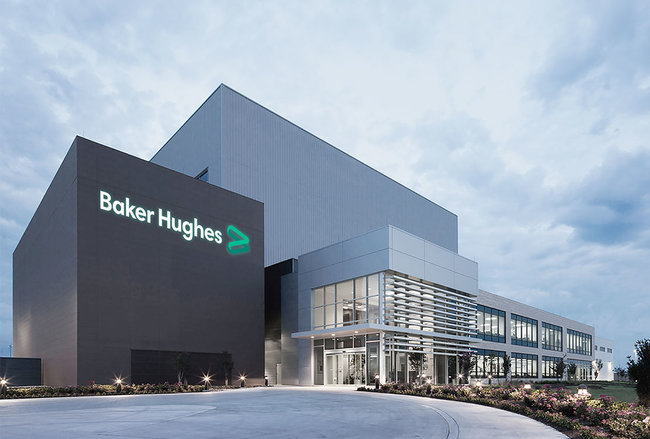
While many CCUS projects are still in the pilot or design stage, big names are stepping up to scale. FuelCell Energy, Baker Hughes, and Heidelberg Materials are among those betting big on CCUS. Each is applying CCUS to power generation or hard-to-abate sectors like cement production, demonstrating sector-wide faith in the tech’s potential.
"By integrating gas-fired energy with the potential for permanent carbon storage, we are creating a direct, reliable power solution tailored to evolving industrial needs," said Robby Rockey, CEO of Frontier Infrastructure, who is partnering with Baker Hughes.
>> RELATED: Resilience and Rethink: Why Hydrogen and Carbon Capture Still Deserve a Seat at the Table
Federal incentives fuel early momentum
The Biden administration's 45Q tax credit, offering up to $85 per ton of CO2 sequestered, was a key spark. It catalyzed over 270 new CCUS projects, according to the Carbon Capture Coalition, pushing innovation across power, manufacturing, and fuel sectors. The Infrastructure Investments and Jobs Act also channeled $1.7 billion in public-private CCUS funding.
However, that momentum faces potential slowdown under the Trump administration's current spending review. While the 45Q credit may stay (as many projects are in Republican-leaning states), DOE grants and pilot funds are under threat. Even so, developers aren't backing down.
Cement, a surprising CCUS frontrunner
Of all sectors, cement is fast becoming a proving ground for carbon capture. Global giant Heidelberg Materials is taking bold steps, with projects underway in both Indiana and Norway. Its Mitchell cement plant in Indiana is expected to capture 2 million tonnes of CO2 per year by 2030, while its Brevik facility in Norway opens this year as Europe’s first commercial-scale cement CCUS plant.
"CCUS could account for 36% of the industry’s carbon reductions by 2050," said a Heidelberg spokesperson, citing projections from the Global Cement and Concrete Association. With strong policy support and DOE funding through the CarbonSAFE program, these initiatives show what’s possible with public-private collaboration.
Strategic partnerships make the model
Tech providers and infrastructure firms are pooling strengths to fast-track projects. Baker Hughes recently partnered with Frontier Infrastructure to co-develop CCUS hubs integrated with gas-fired power and data center facilities. These projects cater directly to the soaring energy needs of AI and cloud storage industries.
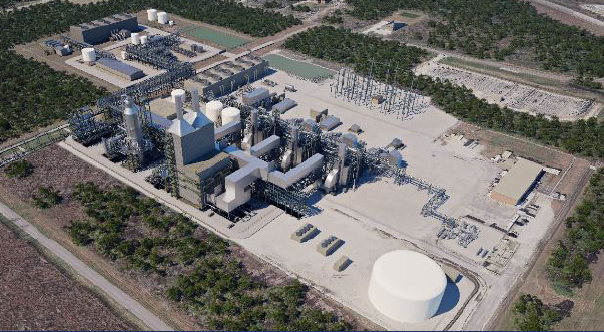
At the same time, Calpine Corporation is negotiating with the DOE for support in scaling CCUS at its Baytown, Texas combined heat and power facility. If approved, it will sequester 2 million tonnes annually, another leap toward durable deployment.
>> In Other News: CCUS Projects Around the World Are Reaching New Milestones
A financing shift is underway
Yes, CCUS is capital-intensive. Developers are navigating inflation-driven cost hikes and a cautious investment climate. According to Howard Herzog, senior engineer at the MIT Energy Initiative, inflation and permitting challenges have raised capital costs by roughly 30% since the pandemic.
But the sector is adapting. Companies like Baker Hughes and FuelCell Energy are funding initial projects internally, while exploring new models that blend energy generation and carbon storage in one revenue-generating system. Investors are warming to the idea of CCUS as a multi-use infrastructure asset.
Data centers could be CCUS's unlikely hero
The rise of energy-hungry data centers presents an unexpected boost for carbon capture. Operators need reliable, grid-independent power that also meets sustainability targets. That’s where hybrid systems—gas-fired power with CCUS, or hydrogen-ready plants —can shine.
Jason Few, CEO of FuelCell Energy, noted the rising demand: "We are excited to support Mike Hill’s agenda to drive top-line growth for the company," he said after announcing a leadership transition aimed at scaling commercial outreach.
FuelCell recently partnered with TESIAC and Diversified Energy Co. to deliver up to 360 megawatts of clean power to data centers in Virginia, West Virginia, and Kentucky.
What lies ahead
Even with near-term policy uncertainty, the long-term trajectory for CCUS is increasingly clear. More than a stopgap, CCUS is now seen as essential infrastructure for decarbonizing energy and industry. The U.S. may well double its CCUS capacity to 104 million tonnes annually by 2034, per forecasts from Wood Mackenzie.
As Peter Findlay, Director of CCUS Economics at Wood Mackenzie, noted: "Increased and more certain incentives to decarbonize would spur this number higher." And with growing pressure from investors, regulators, and the public, the message is being heard.
The CCUS sector is stepping up—from first-of-their-kind cement projects to hybrid data center hubs. What’s clear is that the companies leading the charge aren’t just adapting to climate reality. They’re shaping the infrastructure of a cleaner, more resilient future.
Subscribe to the newsletter
Daily decarbonization data and news delivered to your inbox
Follow the money flow of climate, technology, and energy investments to uncover new opportunities and jobs.
Companies
Latest issues
-
Why Colorado’s Koloma Has Japan’s Largest Utility Hooked
Inside This Issue ⚡ JERA Invests in Koloma to Explore Natural Hydrogen as a Future Low-Carbon Energy 🔬 New CATF Tool Provides Framework for Self-Assessment and Strengthening of Biomass Carbon Remo...
-
LNK Energies Targets $6.50 Hydrogen With No Federal Subsidies
Inside This Issue 🚛 MIT Startup Says It Can Turn Diesel Trucks Into Cheaper Hydrogen Haulers, See It at Disrupt 🏭 Baytown City Council Briefs: ExxonMobil Blue Hydrogen Agreement Approved 🌎 Colorad...
-
Why Gulf Coast CCS Teams Are Watching Liverpool Bay
Inside This Issue 💂 Eni’s Douglas Platform Sets the Offshore CCS Blueprint 🌲 Pacolet Milliken Expands Its Biomass Platform With the Acquisition of Georgia Renewable Power 🧪 Metacon Receives EU Fun...
Company Announcements
-
A new interactive tool from Clean Air Task Force (CATF) provides a practical framework for the self-assessment and strengthening of biomass carbon removal (BiCRS) protocols to help ensure that carb...
-
LanzaJet Secures Financing to Scale SAF Production and Supply Global Customers
CHICAGO, Oct. 15, 2026 (GLOBE NEWSWIRE) -- LanzaJet, Inc., a leading next-gen fuels technology company and fuels producer, today announced fully committed new financing of at least $20 million to s...
-
44.01 and Frontier Advance Permanent CO₂ Storage Through In-Situ Mineralization
44.01's in-situ mineralization (ISM) process turns CO₂ into solid rock underground in a few years, after which the risk of reversal is functionally zero. >> In Other News: JERA Invests in ...
-
JERA Invests in Koloma to Explore Natural Hydrogen as a Future Low-Carbon Energy
JERA Co., Inc. (JERA), through its corporate venture capital arm JERA Ventures, has invested in Koloma, Inc. (Koloma), a U.S.-based natural hydrogen exploration and development company. The invest...