
EP Systems Unveils the EPiC 2.0, Offering Over 90 Minutes of Usable Flight Time
Published by Todd Bush on April 15, 2024
FRIEDRICHSHAFEN, Germany--AERO 2024 – EP Systems, a pioneering leader in innovative energy solutions, is excited to announce its latest innovation: the trailblazing EPiC 2.0 aircraft energy storage system. Compared to today’s battery technology, it provides up to 30 additional minutes of usable flight time. This opens up a host of new applications for electric aircraft.
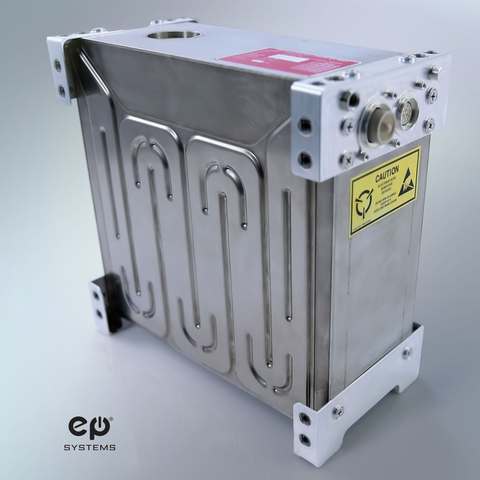
Electric energy systems pioneer EP Systems launched the EPiC 2.0 today at the AERO 2024 trade show and conference in Friedrichshafen, Germany, providing 90 minutes of battery life for electric aviation applications. (Photo: Business Wire)
>> In Other News: NX Group Begins Offering "NX-GREEN SAF Program" in Japan USA
“This really unlocks electrification for so many different customers in so many different segments,” affirmed Nathan Millecam, Chief Executive Officer and Co-Founder of Electric Power Systems. “This is the first time where we've seen the convergence of all the technologies that we've been developing for over a decade now.”
EP Systems encourages industry leaders to get onboard with EPiC 1.0 now for a seamless transition later. EPiC 2.0 is a drop-in replacement for the EPiC 1.0 TSO system so it’s easy to upgrade.
Currently, one of the challenges with energy density is that it's targeted toward short-range missions. The EPiC 2.0 module provides a significant increase in the energy density at the pack level. Additionally, it can fast charge in 30 minutes to deliver 80% battery capacity. This makes electric aviation a more viable prospect for commercial applications moving forward.
In 2021, EP Systems released its Electric Propulsion Ion Core Ecosystem. It addressed some of the most prevalent roadblocks to advanced air mobility – including safety, cost, weight, and infrastructure. This lightweight, high-power system offers an impressive 60 minutes of usable flight time with 30 minutes of reserve. And now 2.0 advances the concept even farther, providing 90 minutes of flight time with 30 minutes of reserve.
“Our teams are very, very good at being creative and finding ways to solve difficult problems, making these batteries a possibility and doing it safely,” noted Ryan Bohm, Director of High Voltage Power Distribution and Protections at EP Systems.
Energy density, a core measurement of electric aircraft power systems, refers to the amount of usable energy for a given weight. In EPiC 2.0, the pack level energy density is increased from 205 wh/kg up to 265 wh/kg. As the energy density of a battery module increases, new technologies are needed to manage the challenging, rigorous environment of the thermal runaway and provide safety to the aircraft. EP Systems developed innovate connector and cooling technologies that allow for the adoption of these new chemistries and uphold all critical safety standards.
This longer flight time signals an inflection point for the pilot training. Flight schools can now take better advantage of the lower costs associated with running an electric aircraft fleet. “The average duration of a local training flight is just over an hour. So having one hour plus capacity makes that feasible,” said Dan Sutliff, Assistant Professor at Utah Valley University. “The additional range of these new batteries will allow us to do local flight training and cross-country flight training as well. Everything that needs to be completed for a private pilot certificate.”
This continues to fulfill the initial promise of electric aviation, moving from combustion-based technologies to electric-based solutions. In addition to reducing carbon emissions, the cost of an electric battery system is significantly less than fuel. Ultimately providing a leaner, greener paradigm for the entire air transport industry.
“We had an opportunity to share EPiC 2.0 with some of our aviation partners,” noted Michael Armstrong, Chief Technology Officer at EP Systems. “It's exciting to see the light bulb turn on where they see how this is going to help them. They see the thought process we put into the design and they've seen the development around manufacturing technologies that help us to achieve safety, repeatability and configuration management in a very mature and healthy way. I'm excited for EPiC 2.0 to provide new solutions for new aircraft, to do new things that could never have been done before.”
EPiC 2.0 is currently undergoing its safety of flight development and is scheduled to become available for flight in early 2025.
EPiC 2.0 will be featured at the company’s booth during AERO EXPO April 17-20.
About EP Systems
EP Systems stands as the undisputed leader in providing high-power, scalable powertrains certified for electrified aviation. Their expertise lies in the exclusive development of energy storage systems, DC fast-charging stations, and electric propulsion products tailored for the aerospace industry. The trust placed in them by industry giants such as Boeing, JetBlue, United Airlines, Safran, and Supernal reinforces their pivotal position and underscores their confidence in EP Systems’ ability to revolutionize the aerospace industry.
For more information, please visit www.epsenergy.com.
Subscribe to the newsletter
Daily decarbonization data and news delivered to your inbox
Follow the money flow of climate, technology, and energy investments to uncover new opportunities and jobs.
Latest issues
-
How ADM Is Turning 800,000 Nebraska Tons Into Carbon Credits
Inside This Issue 🌾 ADM's 800,000-Ton Nebraska Bet on Carbon Removal Credits 🏔️ BLM Reaches New Milestone for Southeast Wyoming Carbon Storage Project 🍁 Haffner Energy Receives a €3.2M Firm Order ...
-
California Just Cleared Washington's Path Into Cap-and-Invest
Inside This Issue 🌲 Governor Newsom Announces Key Step Forward in California Plan to Link Carbon Markets With Washington State 🍁 MAX Power's Lawson 4 Puts Western Canada on the Natural Hydrogen Ma...
-
Spiritus Lands 3 Million Tonnes of CO₂ Demand
Inside This Issue 🌬️ Spiritus Signs First Three Letters of Intent With U.S. Oil Producers for On-Site CO₂, Representing More Than 3 Million Tonnes of Annual Demand ✈️ Germany's Uniper Signs Offtak...
Company Announcements
-
Wyoming-based climate-tech company secures its first CDR credit purchase for 2026 delivery GILLETTE, Wyo., Sept. 28, 2026 /PRNewswire/ -- Cowboy Clean Fuels, a climate-tech company delivering perm...
-
Six equipment items already in stock, together with the associated engineering: 75% of the €3.2 million to be received within 30 days of a delivery scheduled before the end of 2026, with no signif...
-
BLM Reaches New Milestone for Southeast Wyoming Carbon Storage Project
RAWLINS, Wyo. — The Bureau of Land Management is moving a southeast Wyoming carbon storage project into its next phase, putting federally managed underground pore space to productive use while supp...
-
Cool Effect Announces Catalyst Award Recipients to Accelerate High-Integrity Carbon Projects
Nonprofit Will Deploy $1 Million in Catalytic Funding to Advance Carbon Removal, Superpollutant Reduction, and Nature-Based Solutions SAN FRANCISCO, CA (September 24, 2026) – Cool Effect, a Bay Ar...