.webp)
The Ontario government has proposed the Resource Management and Safety Act, aiming to address key environmental, safety, and infrastructure concerns.
This sweeping legislation will focus on managing wildland fires, hazardous wells, land surveyor shortages, and carbon emissions.
If passed, the Act promises significant advancements in resource management and public safety.
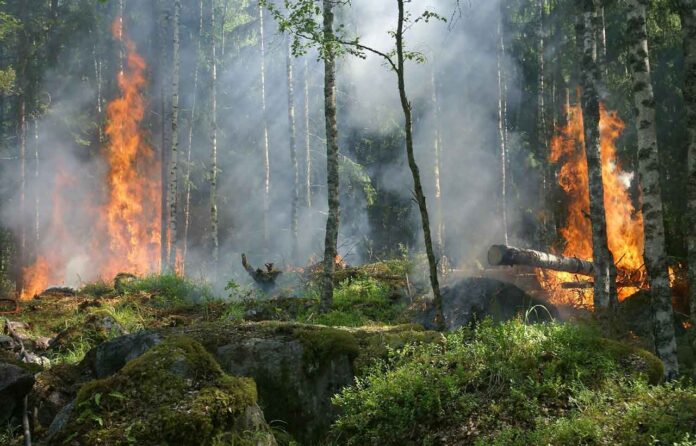
Wildfire and Hazardous Well Management
A critical component of the proposed Act is enhancing Ontario's ability to manage wildfires and hazardous oil and gas wells. The Forest Fires Prevention Act will be updated to include stricter penalties for those violating wildland fire regulations.
These updates also require improved wildfire management plans to mitigate human-caused fires and associated risks.
Amendments to the Oil, Gas, and Salt Resources Act will give the Ministry of Natural Resources more power to address hazardous wells when operators fail to comply.
“Our government is helping communities protect precious resources by taking steps to minimize the adverse environmental, economic, and health impacts of wildland fires and hazardous oil and gas wells,” said GRAYDON SMITH, Minister of Natural Resources.
Supporting Housing and Infrastructure Growth
To meet Ontario’s growing demand for housing and infrastructure, the Act includes proposed changes to the Surveyors Act.
These changes aim to attract more land surveyors, which is a critical need for ensuring safe and affordable development.
By bolstering this profession, Ontario seeks to streamline its housing strategy and support rapid urban growth.
This initiative aligns with the government’s broader vision for creating a balance between urban development and sustainable resource management.
Land surveyors play an essential role in laying the groundwork for critical projects.
>> In Other News: Cook Government Seeks New Ways to Capture and Store Carbon
Advancing Carbon Storage Technology
The Geologic Carbon Storage Act is a standout feature of the proposed legislation, introducing commercial-scale geologic carbon storage regulations.
This innovative technology captures CO2 emissions and stores them deep underground, preventing them from entering the atmosphere.
The government estimates that this could reduce greenhouse gas emissions by 5 to 7 million tonnes annually.
The legislation also highlights significant economic benefits. Carbon storage could create 4,000 short-term jobs and reduce carbon costs for Ontario industries by nearly $1 billion yearly.
“By mitigating emissions, carbon storage has the potential to transform Ontario’s essential natural resource industries into internationally recognized global suppliers of clean building materials,” said DAWN GALLAGHER MURPHY, Parliamentary Assistant to the Minister of Natural Resources.
A Collaborative Approach
The government has emphasized the importance of consulting with key stakeholders to refine the proposed Act.
Indigenous communities will play a vital role in shaping the framework as commercial projects move forward.
If passed, the government will work on creating supporting regulations to ensure effective implementation.
“Our forestry sector is vitally important to Ontario, producing critical building materials, and managing and renewing Ontario’s forests, which can play an important role in reducing the risk of wildland fire,” added KEVIN HOLLAND, Minister of Forestry and Forest Products.
The Act underscores the government’s commitment to balancing economic growth with environmental sustainability.
The Bigger Picture
The Resource Management and Safety Act aims to position Ontario as a leader in resource management and environmental innovation.
With updates to wildfire management, carbon storage technology, and land surveyor recruitment, the Act offers a comprehensive strategy to tackle the province's pressing challenges.
By addressing these issues, the government seeks to ensure that Ontario remains competitive on a global scale while prioritizing the well-being of its communities.
The Act's provisions highlight a proactive approach to safeguarding natural resources and fostering economic resilience.
For more information about the proposed Act and ongoing consultations, visit the Government of Ontario’s website.
Subscribe to the newsletter
Daily decarbonization data and news delivered to your inbox
Follow the money flow of climate, technology, and energy investments to uncover new opportunities and jobs.
Latest issues
-
Can AirCapture’s Microwaves Cut DAC’s Energy Cost?
Inside This Issue 🌬️ Aircapture's Patented Microwave Direct Air Capture Technology Wins Tencent CarbonX 2.0 Award 🗾 Fujifilm, Tokyo Gas and TGES Agree to Supply City Gas Linked to Biomethane Produ...
-
380 MW of AI Power, Powered by Fuel Cells
Inside This Issue ⚡ FuelCell Energy and Fit Energy Announce Strategic Agreement for Up to 380 MW of Clean Power for Data Centers 🧭 China's Renewable Energy Mandates Set the Stage for Expanded Hydr...
-
250,000 Tonnes of CO2: One Shipping Deal
Inside This Issue 🚢 Fortescue and CMB.TECH Sign Milestone Agreement for 12 Ammonia Bulkers to Accelerate Zero-Emissions Shipping 🌱 Mati Carbon Hits New Bar for Carbon Removal Certification With Is...
Company Announcements
-
Aircapture's Patented Microwave Direct Air Capture Technology Wins Tencent CarbonX 2.0 Award
Aircapture will use the award to scale its DAC system engineered to reduce the cost of carbon capture at scale BERKELEY, Calif., June 25, 2026 /PRNewswire -- Aircapture, a Berkeley-based direct ai...
-
Groundwork BioAg Issues First Verified Carbon Credits Under Rootella Carbon® Program
Milestone issuance of high-durability soil carbon credits, the first to be issued under Verra VM0042 standard in the US, delivers highly-scalable carbon removal at a fraction of durable CDR costs. ...
-
HOPA Ports and the Mississaugas of the Credit Business Corporation (“MCBC”), the entity representing the business development interests of the Mississaugas of the Credit First Nation (“MCFN”), have...
-
Deep Sky Corporation today announced a strategic investment from Sumitomo Mitsui Banking Corporation (SMBC), supporting the advancement of Japan's carbon dioxide removal (CDR) and direct air captur...