
XCF Global, Inc. (NASDAQ: SAFX) is a U.S.-based sustainable aviation fuel producer. Its New Rise Reno facility in Nevada could resume SAF production at full nameplate capacity as early as Q2 2026. That timeline comes from an annual report filed with the U.S. SEC on March 31, 2026. It marks a key milestone for one of the few dedicated large-scale SAF facilities actively ramping toward commercial output in North America.
Key Facts
- XCF Global, Inc. (NASDAQ: SAFX) filed its first Annual Report (Form 10-K) with the U.S. SEC on March 31, 2026
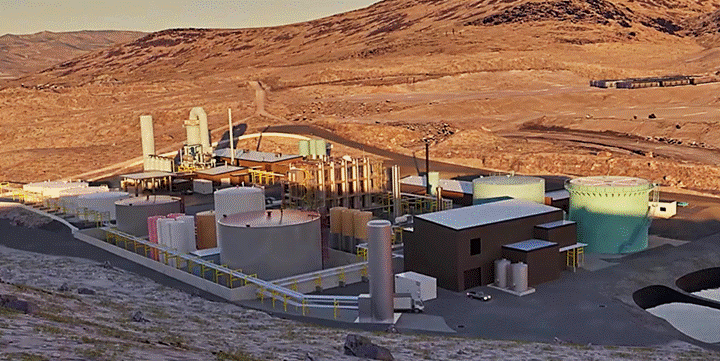
- New Rise Reno, located at the Tahoe Reno Industrial Center in Nevada, has a permitted nameplate capacity of 38 million gallons per year of neat SAF
- The site was converted to SAF production in October 2024 and first produced 20,000 gallons of neat SAF in November 2024
- From April through the end of December 2025, the facility produced approximately 5.8 million gallons of combined neat SAF, renewable diesel, and renewable naphtha
- Phillips 66 holds a 100% supply and offtake agreement with New Rise Reno, with an initial five-year term extendable to a potential 15 years
- SAF can reduce lifecycle greenhouse gas emissions by up to 80% compared to conventional jet fuel (IATA, Air bp)
- All 184 member states of ICAO adopted a net-zero aviation emissions goal by 2050
- The U.S. Inflation Reduction Act allocated $3.3 billion to scaling SAF production toward the 3 billion gallon per year target by 2030
What Is XCF Global's New Rise Reno Facility?
New Rise Reno is XCF Global's flagship SAF production facility, located on a 10-acre plot at the Tahoe Reno Industrial Center in Nevada. The site was converted from renewable diesel production to SAF in October 2024. It uses the HEFA (Hydroprocessed Esters and Fatty Acids) pathway, the only SAF production process commercially available at scale today.
HEFA technology was approved by ASTM International in June 2011. New Rise Reno operates under a hydrotreatment technology license from Axens North America, a wholly-owned subsidiary of IFPEN. Axens is a global leader in process and catalyst development, with more than 3,000 industrial units under license worldwide.
Feedstocks processed at the facility include waste oils, animal fats, agricultural residues, and distillers corn oil. New Rise Reno can store up to 1.5 million gallons of feedstock on-site, with additional capacity on its rail spur. Direct access to on-site rail spurs and truck ports supports both feedstock delivery and finished fuel offtake.

>> In Other News: Vietnam to Allow International Transfer of Up to 90% of Carbon Credits
When Could Full SAF Production Resume at New Rise Reno?
XCF's annual report, filed with the SEC on March 31, 2026, confirms a Q2 2026 target for full nameplate SAF output. That window covers April through June 2026. The company's filing notes it cannot provide assurance on the exact timing of when SAF production will resume within that period.
The facility first produced 20,000 gallons of neat SAF in November 2024. Full ramp-up began in February 2025, initially at approximately 50% of nameplate production capacity. From April through the end of December 2025, New Rise Reno produced approximately 5.8 million gallons of combined neat SAF, renewable diesel, and renewable naphtha.
While SAF ramp-up continues, the facility currently produces renewable diesel at approximately 2,000 barrels per day. That output is sold to energy company Phillips 66 under a supply and offtake agreement. The deal covers 100% of feedstock supply and 100% of finished fuel offtake. The agreement carries an initial five-year term, extendable automatically to a potential total of 15 years.

"By using U.S. waste-based feedstocks and deploying modular, scalable facilities close to major aviation markets, we are striving to build a domestic SAF system that is reliable, repeatable, and ready now. This is how we hope to provide airlines with a drop-in solution that reduces emissions and fuels flights today while reinforcing the nation's long-term energy resilience."
Chris Cooper, CEO, XCF Global (ABLC2026, March 23, 2026)
What Is New Rise Reno's Nameplate Production Capacity?
New Rise Reno has a permitted nameplate production capacity of 38 million gallons per year of neat SAF. At full output, the facility can process up to 130,000 gallons of feedstock per day. Blended with conventional jet fuel, those 38 million gallons of neat SAF can yield up to 100 million gallons of blended SAF annually.
| Facility | Location | SAF Capacity (gal/yr) | Status | Expected SAF Output |
|---|---|---|---|---|
| New Rise Reno | Reno, Nevada | 38 million | Ramp-up / Q2 2026 target | Q2 2026 |
| New Rise Reno 2 | Reno, Nevada (adjacent site) | 40 million | Engineering / Pre-construction | 2028 |
| Fort Myers | Fort Myers, Florida | TBD | Under evaluation | Not determined |
| Wilson | Wilson, North Carolina | TBD | Under evaluation | Not determined |
Aviation accounted for 2.5% of global energy-related CO2 emissions in 2023, according to the International Energy Agency. IATA estimates the global sector will need 120 billion gallons of SAF per year to reach net zero by 2050. Annual global SAF production today remains far below that figure.
Airlines currently blend SAF with conventional Jet-A fuel at ratios ranging from 90/10 to 70/30 (Jet-A to neat SAF). ASTM D7566, the standard governing blended sustainable aviation fuel, allows a maximum blend ratio of 50/50. New Rise Reno is engineered to produce neat SAF that meets those ASTM D7566 specifications for synthetic blending components.
>> RELATED: Twelve Commences Construction of First Commercial-Scale SAF Plant in the US
How Is XCF Expanding Its SAF Platform Beyond Reno?
By the end of 2028, XCF plans to reach 80 million gallons per year of neat SAF across four U.S. sites. New Rise Reno 2, a 10-acre plot adjacent to the current Nevada facility, is expected to contribute 40 million gallons per year to that total.
"As demand for sustainable aviation fuel accelerates globally, the ability to deploy multiple technology pathways under one company creates meaningful flexibility and commercial optionality."
Chris Cooper, CEO, XCF Global (March 10, 2026)
XCF earmarked approximately $300 million for New Rise Reno 2. Engineering and design work are underway, with SAF production from that site targeted to begin in 2028. Two dormant biodiesel plants in Fort Myers, Florida, and Wilson, North Carolina, are under evaluation for potential SAF or renewable fuel conversion.
Wilson sits in a Tier 1 Renewable Chemical Investment Tax Credit area, within 500 miles of New York City and Atlanta. XCF also signed a binding term sheet in October 2025 with New Rise Australia Pty. Ltd., licensing its facility design for SAF production across Australia.
The U.S. SAF Grand Challenge, backed by $3.3 billion from the Inflation Reduction Act, targets 3 billion gallons of SAF per year by 2030. XCF's planned output of 80 million gallons per year of neat SAF by end of 2028 represents approximately 2.7% of that national target.
Why New Rise Reno's SAF Restart Matters for Aviation
New Rise Reno's Q2 2026 SAF target matters because current U.S. SAF production remains below 1% of total domestic jet fuel demand. All 184 ICAO member states committed to net-zero emissions from international aviation by 2050. Closing the gap between today's limited SAF supply and what airlines need at scale requires new production facilities reaching full commercial output.
SAF via the HEFA pathway can reduce lifecycle greenhouse gas emissions by up to 80% compared to conventional jet fuel. That figure comes from IATA and Air bp, factoring in feedstock used, production method, and supply chain logistics. It is a drop-in fuel, compatible with existing aircraft and airport infrastructure without modification.
At full capacity, New Rise Reno's 38 million gallons of neat SAF can support up to 100 million gallons of blended SAF annually. That output flows through a long-term offtake arrangement with Phillips 66, giving XCF a proven commercial pathway to market. Every gallon produced at New Rise Reno moves the aviation industry closer to its 2050 net-zero target.
Subscribe to the newsletter
Daily decarbonization data and news delivered to your inbox
Follow the money flow of climate, technology, and energy investments to uncover new opportunities and jobs.
Latest issues
-
LNK Energies Targets $6.50 Hydrogen With No Federal Subsidies
Inside This Issue 🚛 MIT Startup Says It Can Turn Diesel Trucks Into Cheaper Hydrogen Haulers, See It at Disrupt 🏭 Baytown City Council Briefs: ExxonMobil Blue Hydrogen Agreement Approved 🌎 Colorad...
-
Why Gulf Coast CCS Teams Are Watching Liverpool Bay
Inside This Issue 💂 Eni’s Douglas Platform Sets the Offshore CCS Blueprint 🌲 Pacolet Milliken Expands Its Biomass Platform With the Acquisition of Georgia Renewable Power 🧪 Metacon Receives EU Fun...
-
Who Bought Gevo’s $50M in 45Z Credits?
Inside This Issue ⛽ Gevo Sells $70M in 45Z Credits to a New Kind of Buyer 🌱 South Pole, Gaïago, and Gold Standard Issue European Soil Carbon Credits, Unlocking Verified Regenerative Agriculture Re...
Company Announcements
-
MIT Startup Says It Can Turn Diesel Trucks Into Cheaper Hydrogen Haulers — See It at Disrupt
Diesel fuel powers everything from shipping to agriculture, and with prices hitting record highs in recent weeks, governments around the world are scrambling to contain the fallout. For now, that’...
-
Gevo Announces First Multi-Year Carbon Removal Credits Supply Agreement Through CEEZER
Three-Year Delivery of Durable Carbon Removals from Gevo North Dakota to a Leading Global Enterprise Software Company Gevo will supply durable carbon dioxide removal (CDR) credits from Gevo North...
-
Continental Refining to Double Biodiesel Capacity at Somerset Complex
SOMERSET, Ky. — Continental Refining Company is expanding its biodiesel production facility to double capacity at its Somerset industrial complex, while its soybean processing plant will remain idl...
-
Groundwork BioAg Secures 'BBB' BeZero Carbon Rating
The rating places Groundwork BioAg among the highest-rated agricultural soil carbon projects, opening a scalable pipeline of independently rated, high-integrity removals for corporate buyers. MAZO...