
A green ammonia plant at the University of Minnesota's West Central Research and Outreach Center has moved from experiment to actual production. After more than a decade of research beginning in 2013, the facility in Morris, Minnesota, is now supplying wind-powered ammonia to local farmers. The timing lines up with fresh strain on global fertilizer shipping lanes.
Key Facts
- WCROC commissioned the world's first wind-to-ammonia pilot plant in 2013, more than a decade before this new facility
- The new plant held its ribbon cutting in October 2025 and began producing ammonia this spring
- Current output is roughly a few hundred kilograms of ammonia per day, with a target of scaling to about 1 metric ton daily
- The system can ramp from 10 percent to 100 percent production in about two hours to match wind availability
- Ammonia produced on site fills nurse tanks that supply the local Morris Co-op for area farmers
- This is a university research facility, not a commercial ammonia producer
>> In Other News: Infinium Powers On's CleanCloud Breakthrough: Supplying the eNaphtha Behind the World's First EVA Midsole Made From Captured Carbon Emissions at Commercial Scale
What Just Happened at the WCROC in Morris?
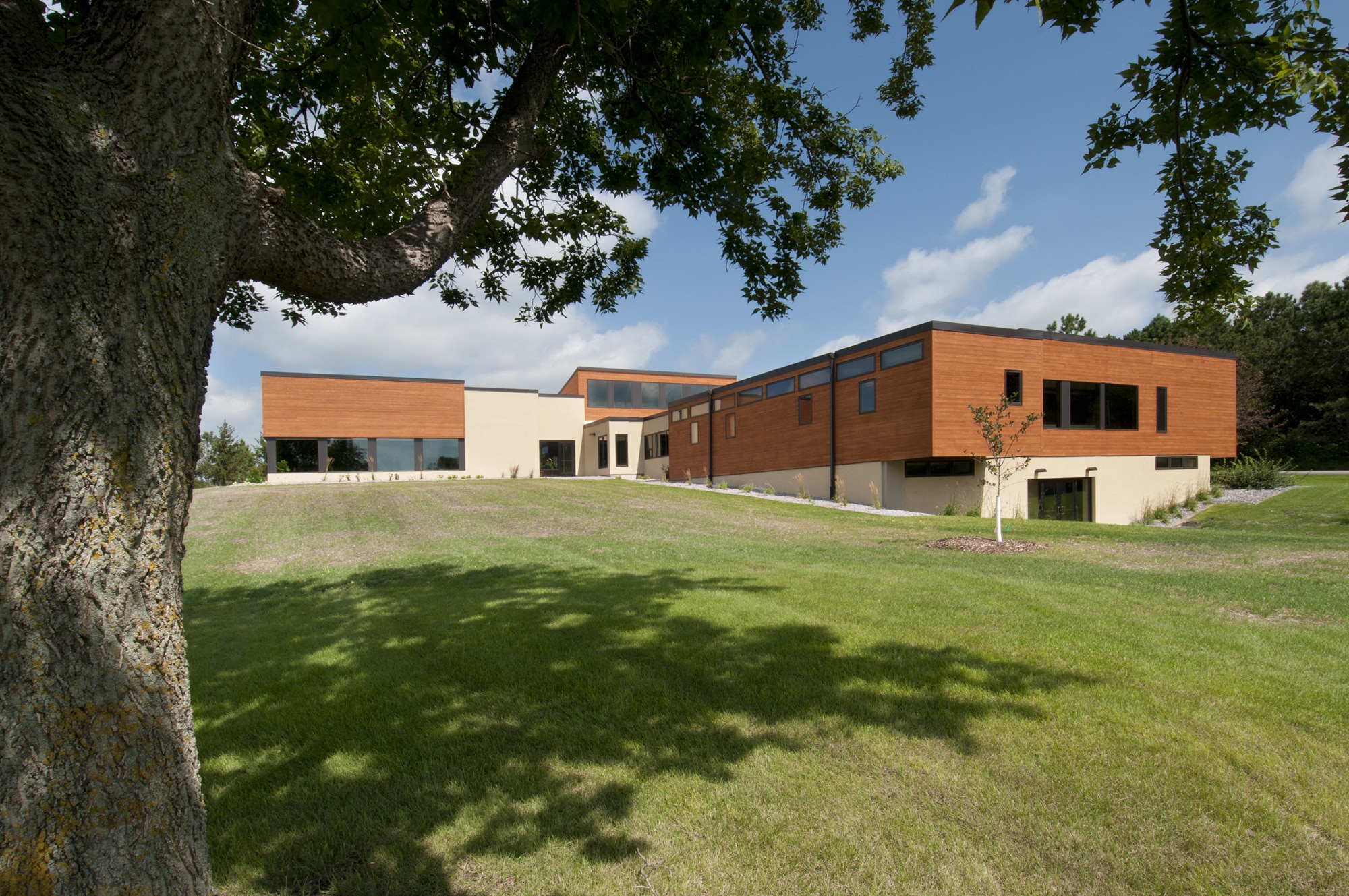
The University of Minnesota's West Central Research and Outreach Center, known as WCROC, has moved its green ammonia pilot from testing into real production. The Morris facility held a ribbon cutting last October. It started making ammonia this spring, according to the University of Minnesota.
The milestone caps more than a decade of research. WCROC commissioned the world's first wind-to-ammonia pilot plant in 2013, powered by a 1.65 megawatt wind turbine already on site. In 2022, the project won 12.5 million dollars from the US Department of Energy's ARPA-E REFUEL program to design a next-generation, modular facility.
That funding paired WCROC with RTI International, an independent research institute, to help build a system targeting roughly 1 metric ton of ammonia daily. Other research groups are testing related pathways. One example is a demonstration-scale green ammonia plant in Japan that also pairs electrolysis-based hydrogen with ammonia synthesis.
Morris is not Minnesota's only stake in clean hydrogen. The state also sits inside the Heartland Hydrogen Hub, one of five regional hubs that kept federal backing this year. That hub is part of a wider group of green hydrogen projects moving toward operation nationwide, even as federal hydrogen hub funding continues to shift.
How Does Wind-Powered Ammonia Production Actually Work?
WCROC's plant does not run at a constant rate like a conventional ammonia facility. Instead, it speeds up and slows down its output to match wind conditions as they change through the day.
Traditional ammonia plants run on natural gas instead of wind or solar power. They operate at a steady rate around the clock, which is the opposite of how wind behaves.
Prodromos Daoutidis, a University of Minnesota chemical engineering professor, spent nearly a decade developing the modeling and control systems that make this possible.
"Essentially, the wind or the sun is our feedstock."
Prodromos Daoutidis, University of Minnesota Chemical Engineering Professor
The result is a plant that can ramp output from 10 percent to 100 percent in about two hours. That flexibility comes from control work described by WCROC green ammonia lead Mike Reese, who has guided the project since its earliest pilot phase.
On-site electrolyzers split water into hydrogen. A separate system pulls nitrogen from the air. The two elements then combine into anhydrous ammonia through the century-old Haber-Bosch process.
Other companies are pursuing a similar philosophy elsewhere. Topsoe's dynamic ammonia loop technology, for instance, is now being licensed for commercial US plants designed to flex with renewable power.

Why Does the Timing Matter Right Now?
This small plant is arriving at a moment when global fertilizer shipping has been anything but stable. Renewed conflict around the Strait of Hormuz has repeatedly disrupted tanker traffic since February 2026. The Gulf region normally supplies a substantial share of the world's traded ammonia and urea.
The United States produces roughly 94 percent of the ammonia it uses domestically. That limits direct exposure to Gulf shipments, according to agricultural economists at the University of Illinois.
Even so, price swings elsewhere in the fertilizer market tend to ripple into farm budgets. Minnesota growers, like farmers across the Corn Belt, import much of the nitrogen fertilizer they apply each spring.
WCROC's plant is not built to offset a global supply shock. It is a small, wind-powered proof of concept, producing a fraction of what a single farm cooperative might use in a season.
What it does offer is a working example of ammonia made without natural gas or seaborne shipping. That matters at a moment when both are drawing new scrutiny.
Here is how the Morris facility compares with other green and blue ammonia projects by scale and timeline:
| Facility | Location | Type | Scale | Status |
|---|---|---|---|---|
| WCROC pilot plant | Morris, Minnesota | Green, wind-powered | Target of 1 metric ton per day | Producing since spring 2026 |
| TalusAg / Landus | Boone, Iowa | Green | 1 to 2 tons per day | Operating since 2025 |
| CF Industries Donaldsonville | Louisiana | Green | Up to 20,000 tons per year | Operating since 2024 |
| Blue Point (CF Industries / JERA / Mitsui) | Ascension Parish, Louisiana | Blue, gas plus carbon capture | 1.4 million tons per year nameplate | Targeted for 2029 |
A Research Facility, Not a Commercial Venture
WCROC's leaders are careful to frame this as research, not a business launch. Ammonia produced on site fills nurse tanks that supply the local Morris Co-op. From there it moves directly onto nearby farmers' fields rather than into a broader market.
Sameer Parvathikar, senior director of sustainable energy solutions at RTI International, attended the plant's commissioning event in April.
"We have done stuff that actually matters."
Sameer Parvathikar, RTI International
A group called the Minnesota Made Ammonia Coalition, with more than a dozen members, wants to turn research like WCROC's into commercial-scale plants. One proposed member facility missed out on an $8 million legislative funding grant this year, leaving its near-term timeline uncertain.
Other electrolyzer-based green ammonia projects are moving toward commercial scale elsewhere in the country. One example is a green ammonia project in the United States built around Electric Hydrogen's electrolyzer technology. That project is not affiliated with WCROC's research program.
For now, the university's focus stays on demonstration and education rather than fertilizer sales. That distinction sets Morris apart from commercial announcements like the commercial-scale green ammonia capacity CF Industries is building in Louisiana.
It also differs from the $4 billion blue ammonia project in Louisiana backed by JERA and Mitsui. Those projects aim at industrial-scale output. WCROC aims at proving the model.
AgweekTV: Green Ammonia Facility Gets Major Upgrade at University of Minnesota WCROC in Morris – Coverage of the new wind-powered green ammonia plant moving into production for local farmers.
What a Small Plant Proves
Morris will not solve a global fertilizer supply crunch. Its backers do not claim it will.
What it shows is that patient, publicly funded research can turn an intermittent power source into usable fertilizer. It happens one tank at a time.
Frequently Asked Questions
How much ammonia is the WCROC plant currently producing?
As of mid-2026, the facility produces roughly a few hundred kilograms of ammonia per day. The target is to scale up to approximately 1 metric ton daily.
Is the WCROC ammonia plant a commercial operation?
No. It is a research and demonstration facility operated by the University of Minnesota. It exists to test wind-powered ammonia production, not to sell fertilizer at commercial volumes.
How does the plant handle inconsistent wind speeds?
Control systems developed over nearly a decade let the plant ramp output from about 10 percent to 100 percent of capacity in roughly two hours. That lets it track changing wind conditions instead of running at a fixed rate.
For ongoing coverage of carbon removal, BECCS, and corporate CDR procurement, subscribe to Decarbonfuse.com.
Subscribe to the newsletter
Daily decarbonization data and news delivered to your inbox
Follow the money flow of climate, technology, and energy investments to uncover new opportunities and jobs.
Latest issues
-
Verra Landed CCP Approval. What Changes for DAC?
Inside This Issue ✅ Verra's CCS Credits Just Got the Integrity Seal Buyers Want 💰 South Korea Unveils $747 Billion Energy Transition Plan Through 2035 💧 Hydrogen and Carbon Capture and Storage in ...
-
Quebec Wood Waste Just Became Jet Fuel
Inside This Issue 🌲 ARC Bio Tests a Refinery Shortcut to Forest-Based SAF 💧 Scientists Just Found a New Way to Make Hydrogen from Water 🤝 How Channel Partnerships Are Helping More Organizations Ta...
-
How Vaulted Deep Turned Offtakes Into $35M Debt
Inside This Issue 🏦 How Carbon Removal Offtakes Are Starting to Unlock Commercial Debt 🌉 California Opens the Door to a Three-Way Carbon Market 🧪 New Material Developed at Oregon State Provides Bo...
Company Announcements
-
CALGARY, AB, Oct. 8, 2026 /CNW/ - Gas Liquids Engineering Ltd. (GLE) is pleased to announce the successful completion of its detailed engineering scope for Enhance Energy Inc.'s Origins Carbon Capt...
-
Ballard Secures 4.8MW Order From Siemens Mobility to Power Hydrogen Trains in Romania
24 FCrail™ fuel cell modules will power 12 Mireo Plus H trains, Romania’s first hydrogen fleet and the platform’s largest deployment to date. VANCOUVER, CANADA and MUNICH, GERMANY – Ballard Power ...
-
Company Update Approval Advances Strategic Growth of XCF's Diversified Alternative Energy Platform and Marks a Major Milestone as the Parties Work Toward Closing as Soon as Practicable HOUSTON, T...
-
On September 20, Yiwu County in Hami, Xinjiang, a centralized project bid opening and launch ceremony drew the attention of the entire hydrogen energy community, Dondel officially launched its Gree...