BHP and Rio Tinto Collaborate on Battery-electric Haul Truck Trials in the Pilbara
Published by Todd Bush on May 28, 2024
PERTH, Australia, May 28, 2024 (GLOBE NEWSWIRE) -- In an industry first, BHP and Rio Tinto will collaborate on the testing of large battery-electric haul truck technology in the Pilbara, Western Australia, to accelerate the potential for its future deployment.
The two companies will work with manufacturers Caterpillar and Komatsu to conduct independent trials of their battery-electric haul trucks, including testing of battery, static and dynamic charging systems, to assess performance and productivity in the Pilbara environment.
The collaboration reflects the individual commitments made by BHP, Rio Tinto, Caterpillar and Komatsu to support BHP’s and Rio Tinto’s shared ambition of net zero operational greenhouse gas emissions by 2050.
As part of the collaboration, two CAT 793 haul trucks will be trialed from the second half of 2024, and two Komatsu 930 haul trucks tested from 2026 at mine sites in Western Australia’s Pilbara region.
Caterpillar and Komatsu will each provide one truck to both BHP and Rio Tinto for these trials. BHP will trial the Caterpillar trucks, while Rio Tinto will trial the Komatsu trucks. Outcomes of the trials will be shared between BHP and Rio Tinto.
These trials represent the first stage of battery-electric haul truck testing at BHP’s and Rio Tinto’s Pilbara operations.
Ongoing testing, development, and refinement of truck and battery design is anticipated with each manufacturer. This will inform the approach for testing a larger number of haul trucks and the potential deployment of battery-electric haul truck fleets into each company’s operations.
BHP President Australia Geraldine Slattery said: “Operational decarbonization relies on breakthroughs in technology and partnerships like this will help drive our industry forward. We are thrilled to work with Rio Tinto, Caterpillar and Komatsu on these trials.
“Replacing diesel as a fuel source requires us to develop a whole new operational ecosystem to surround the fleet. We need to address the way we plan our mines, operate our haulage networks, and consider the additional safety and operational considerations that these changes will bring. This is why trials are so critical to our success as we test and learn how these new technologies could work and integrate into our mines.
“We’ve already seen a step-change reduction in Scope 1 and 2 operational greenhouse gas emissions through switching some of our supply to renewable electricity, and we are looking to build on that progress through development of battery-electric technology to reduce diesel usage across our operations.”
Rio Tinto Iron Ore Chief Executive Simon Trott said: “This collaboration brings together two leading global miners with two of the world’s biggest manufacturers of haul trucks to work on solving the critical challenge of zero-emissions haulage.
“There is no clear path to net zero without zero-emissions haulage, so it’s important that we work together to get there as quickly and efficiently as we can. Testing two types of battery-electric haul trucks in Pilbara conditions will provide better data, and by combining our efforts with BHP we will accelerate learning.
“As we work to repower our Pilbara operations with renewable energy, collaborations like this move us closer to solving the shared challenge of decarbonizing our operations and meeting our net zero commitments.”
Notes for editors/further information
Since 2021, BHP and Rio Tinto worked with both Caterpillar and Komatsu to support the development and validation of their prototype battery-electric haul trucks. The trucks included in these trials are based on these prototypes.
Carbon emissions from the combustion of diesel accounted for around 40% of BHP’s Scope 1 and 2 emissions in FY2020.
Carbon emissions from diesel consumption in our mining equipment and rail fleet accounted for 12% of Rio Tinto’s Scope 1 and 2 emissions in 2023.
Both BHP and RT have been heavily involved with industry bodies such as ICMM and CharIn to accelerate development in battery electrification and supporting infrastructure.
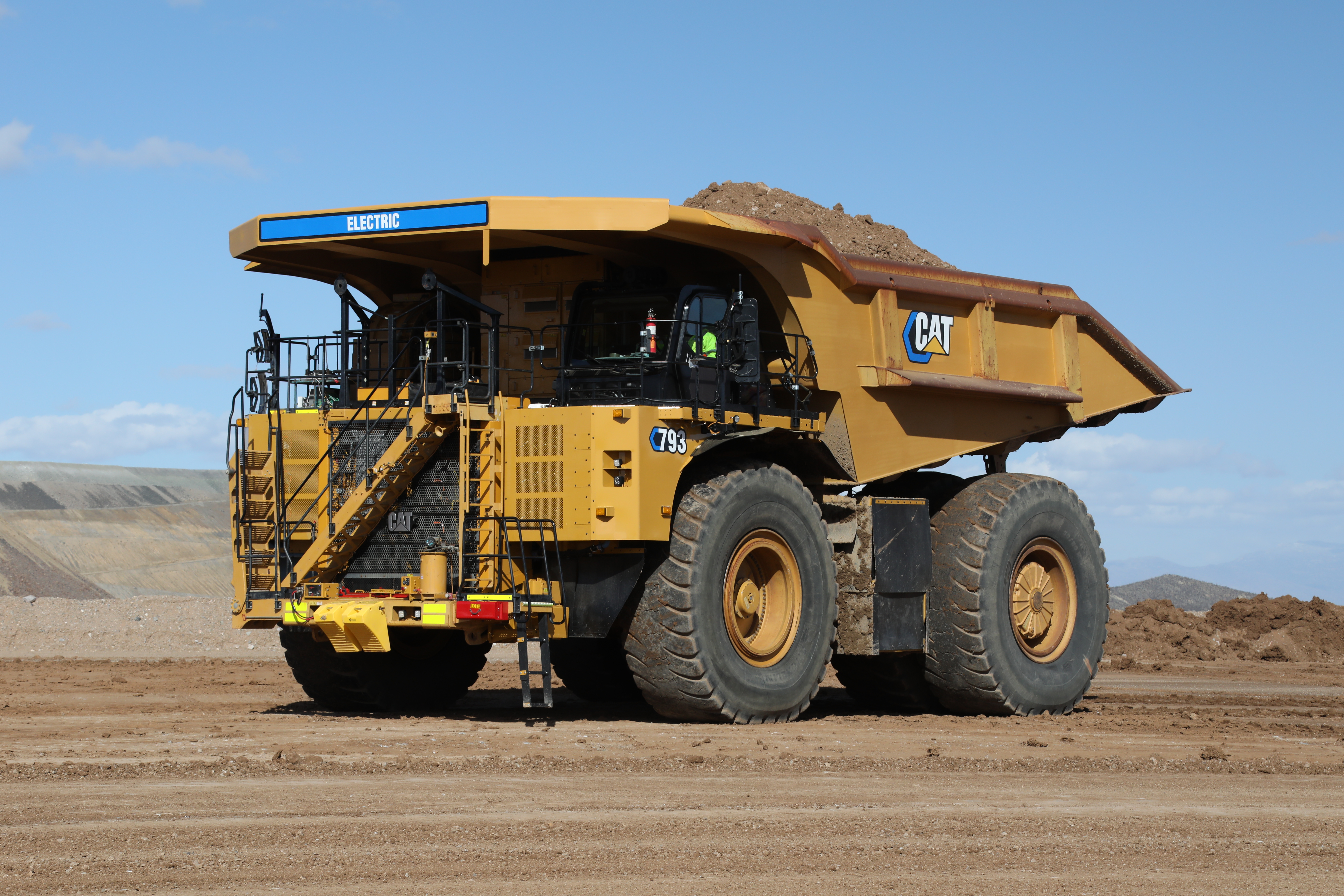
Caterpillar battery-electric haul truck
>> In Other News: IDTechEx Looks at 5 Key Areas Metal-Organic Frameworks Can Help Decarbonize
A photo accompanying this announcement is available at this link.
Subscribe to the newsletter
Daily decarbonization data and news delivered to your inbox
Follow the money flow of climate, technology, and energy investments to uncover new opportunities and jobs.
Latest issues
-
Why Colorado’s Koloma Has Japan’s Largest Utility Hooked
Inside This Issue ⚡ JERA Invests in Koloma to Explore Natural Hydrogen as a Future Low-Carbon Energy 🔬 New CATF Tool Provides Framework for Self-Assessment and Strengthening of Biomass Carbon Remo...
-
LNK Energies Targets $6.50 Hydrogen With No Federal Subsidies
Inside This Issue 🚛 MIT Startup Says It Can Turn Diesel Trucks Into Cheaper Hydrogen Haulers, See It at Disrupt 🏭 Baytown City Council Briefs: ExxonMobil Blue Hydrogen Agreement Approved 🌎 Colorad...
-
Why Gulf Coast CCS Teams Are Watching Liverpool Bay
Inside This Issue 💂 Eni’s Douglas Platform Sets the Offshore CCS Blueprint 🌲 Pacolet Milliken Expands Its Biomass Platform With the Acquisition of Georgia Renewable Power 🧪 Metacon Receives EU Fun...
Company Announcements
-
A new interactive tool from Clean Air Task Force (CATF) provides a practical framework for the self-assessment and strengthening of biomass carbon removal (BiCRS) protocols to help ensure that carb...
-
LanzaJet Secures Financing to Scale SAF Production and Supply Global Customers
CHICAGO, Oct. 15, 2026 (GLOBE NEWSWIRE) -- LanzaJet, Inc., a leading next-gen fuels technology company and fuels producer, today announced fully committed new financing of at least $20 million to s...
-
44.01 and Frontier Advance Permanent CO₂ Storage Through In-Situ Mineralization
44.01's in-situ mineralization (ISM) process turns CO₂ into solid rock underground in a few years, after which the risk of reversal is functionally zero. >> In Other News: JERA Invests in ...
-
JERA Invests in Koloma to Explore Natural Hydrogen as a Future Low-Carbon Energy
JERA Co., Inc. (JERA), through its corporate venture capital arm JERA Ventures, has invested in Koloma, Inc. (Koloma), a U.S.-based natural hydrogen exploration and development company. The invest...