
Bosch Opens Hydrogen Facility in Metro Detroit
Published by Todd Bush on March 20, 2026
Bosch opened a new hydrogen production facility this week in suburban Detroit, part of a broader push for clean, reliable energy.
Why it matters: Detroit wants to remain a global center of mobility innovation. Hydrogen is among the technologies that city and state officials want to harness if it starts moving from pilot projects to real-world use.
>> In Other News: Google Purchases Carbon Removal Credits Generated by AMP’s Organic Waste Processing
Driving the news: Bosch opened a new electrolyzer facility on Tuesday at its Farmington Hills campus.
In plain English, the system uses electricity and water to produce hydrogen for testing and engineering work.
- The company also highlighted a new cryopump technology aimed at making hydrogen refueling infrastructure cheaper and more efficient.
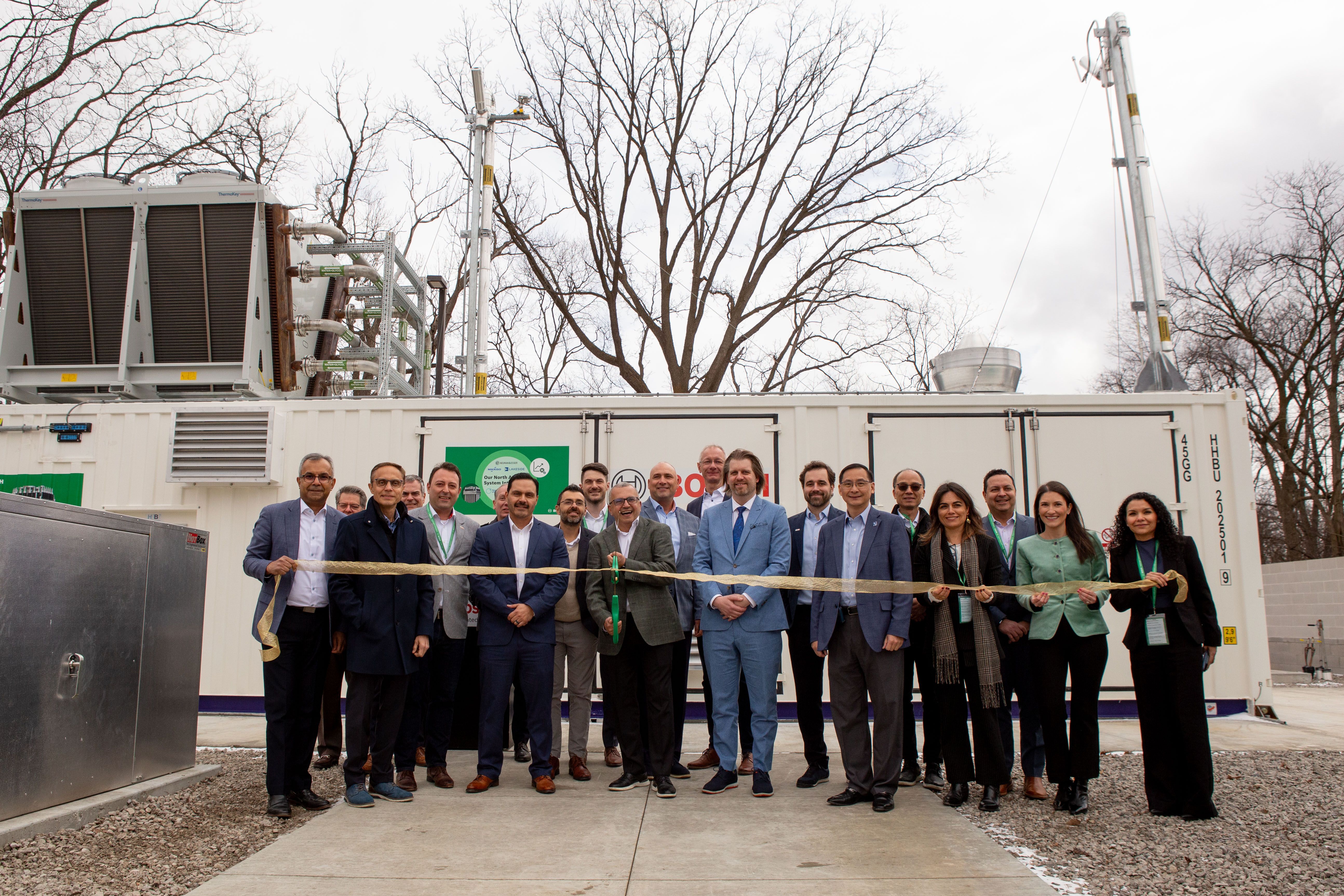
Tuesday's ribbon cutting of the new electrolyzer facility at Bosch's Farmington Hills campus. Photo: Hannah Robar
What they're saying: "We are committed to helping build the hydrogen economy and we are prepared to support its growth at whatever pace it advances," said Peter Tadros, Bosch in North America's regional president of power solutions, in a statement.
The big picture: Hydrogen is still far from a sure thing. It remains expensive, infrastructure is limited, and some national projects have slowed amid shifting federal priorities under President Trump.
Yes, but: Detroit has reasons to keep paying attention.
- Gov. Gretchen Whitmer signed an executive directive in January launching a Michigan geologic hydrogen initiative, saying the state could have significant underground hydrogen potential and directing agencies to study the opportunity.
Between the lines: Vince Keenan of the Detroit Office of Mobility Innovation tells Axios the significance of Tuesday's event is that Bosch is still moving forward with hydrogen in 2026 and doing it here, in a region with deep manufacturing, engineering and supplier expertise.
Detroit is exploring how hydrogen produced at the Bosch site could eventually be used in local mobility or energy applications, he says.
"From our perspective, hydrogen is one of many technologies that fit into mobility innovation," Keenan tells Axios. "We want to make sure it's here and it's available because we want Detroit to continue to be the global center for mobility."
What's next: The announcement comes as Detroit tests a range of mobility technologies through the Toyota Mobility Foundation's Sustainable Cities Challenge, with winners now expected in April.
Subscribe to the newsletter
Daily decarbonization data and news delivered to your inbox
Follow the money flow of climate, technology, and energy investments to uncover new opportunities and jobs.
Latest issues
-
$915 Million Says Carbon Removal Isn't Slowing Down
Inside This Issue 🌐 Frontier Secures $915 Million From Google, Anthropic and Tech Buyers to Scale Permanent Carbon Removal 🧪 IEA Cuts 2030 Clean Hydrogen Outlook by 40% as Investment Stalls 🦘 Aust...
-
Cow Manure → Jet Fuel? The World’s First Full Conversion Just Happened
Inside This Issue 🐄 Circularity Fuels Converts Raw Dairy Biogas to Jet Fuel in World First End-to-End Pilot 🌍 Puro.earth Hits Milestone With 1 Million Retired Carbon Removal Certificates 🍁 Alberta...
-
Google Just Bought 35m Gallons of Jet Fuel It Will Never Use
Inside This Issue ✈️ American Airlines and Google Sign Record 35M-Gallon SAF Deal 🛡️ Isometric Launches CORSIA Insurance RFP With Howden 🍁 TKMS, Heirloom Carbon Technologies and Thyssenkrupp Calv...
Company Announcements
-
Record removals signed: Climeworks Solutions has signed 14 new carbon removal deals in its strongest half-year to date, totaling approximately 450,000 tons of carbon dioxide removal (CDR) across a...
-
Honeywell to Power Sustainable Aviation Fuel and Renewable Diesel Production
Honeywell will provide modular processing technology and automation systems for Acelen Renewables’ biofuels facility in Brazil, supporting large-scale production of sustainable aviation fuel and re...
-
This is the first time in the world that fuel has been produced from certified soybeans without impacting land-use change under the international ISCC CORSIA PLUS protocol; the product has the pote...
-
JERA Co., Inc. (JERA), a global energy leader and Japan’s largest power generation company, today announced that it has entered into time charter agreements with NYK Bulkship (Asia) Pte. Ltd (“NYK”...