
For the first time in California's history, carbon dioxide is being permanently stored underground. On May 26, 2026, CO2 captured from a cryogenic gas plant at Kern County's Elk Hills Field started flowing more than one mile beneath the surface into a depleted reservoir. The state's CCS permitting pathway, long tested only on paper, has now produced an operating project. That changes the conversation entirely.
California Resources Corporation (CRC) and its carbon management subsidiary, Carbon TerraVault (CTV), achieved first injection at Carbon TerraVault I (CTV I), making it California's first operational carbon capture and storage project. The 26R reservoir at CTV I can store up to 1.46 million metric tons of CO2 annually, the equivalent of taking nearly 350,000 cars off the road each year, with a total storage capacity of 38 million metric tons.
Key Facts
- CTV I at Elk Hills Field, Kern County is California's first operational CCS project, as of May 26, 2026.
- The 26R reservoir stores up to 1.46 million metric tons of CO2 annually, with 38 million metric tons of total capacity.
- Annual storage is equivalent to taking nearly 350,000 cars off the road each year (CRC, May 2026).
- CO2 is permanently stored more than one mile underground in a depleted oil and gas reservoir.
- CRC has submitted 8 additional reservoirs for EPA Class VI permitting, representing approximately 352 million metric tons of potential future storage.
- The Carbon TerraVault Joint Venture is owned 51% by CRC and 49% by Brookfield, which committed an initial $500 million to the partnership.
- CRC committed over $1 million to Kern County communities through the CTV I Community Benefits Plan.
>> In Other News: Carbon Dioxide Removal Will Need to Scale Faster Than Solar to Meet Climate Targets
Why Is California's First CO2 Injection a Turning Point?
CTV I is proof that California's CCS permitting pathway actually works from start to finish. For years, industrial emitters in the state had nowhere to send their captured CO2. There was no operational storage site. There were permit applications, feasibility studies, and policy frameworks, but no CO2 going into the ground. That ended on May 26, 2026.
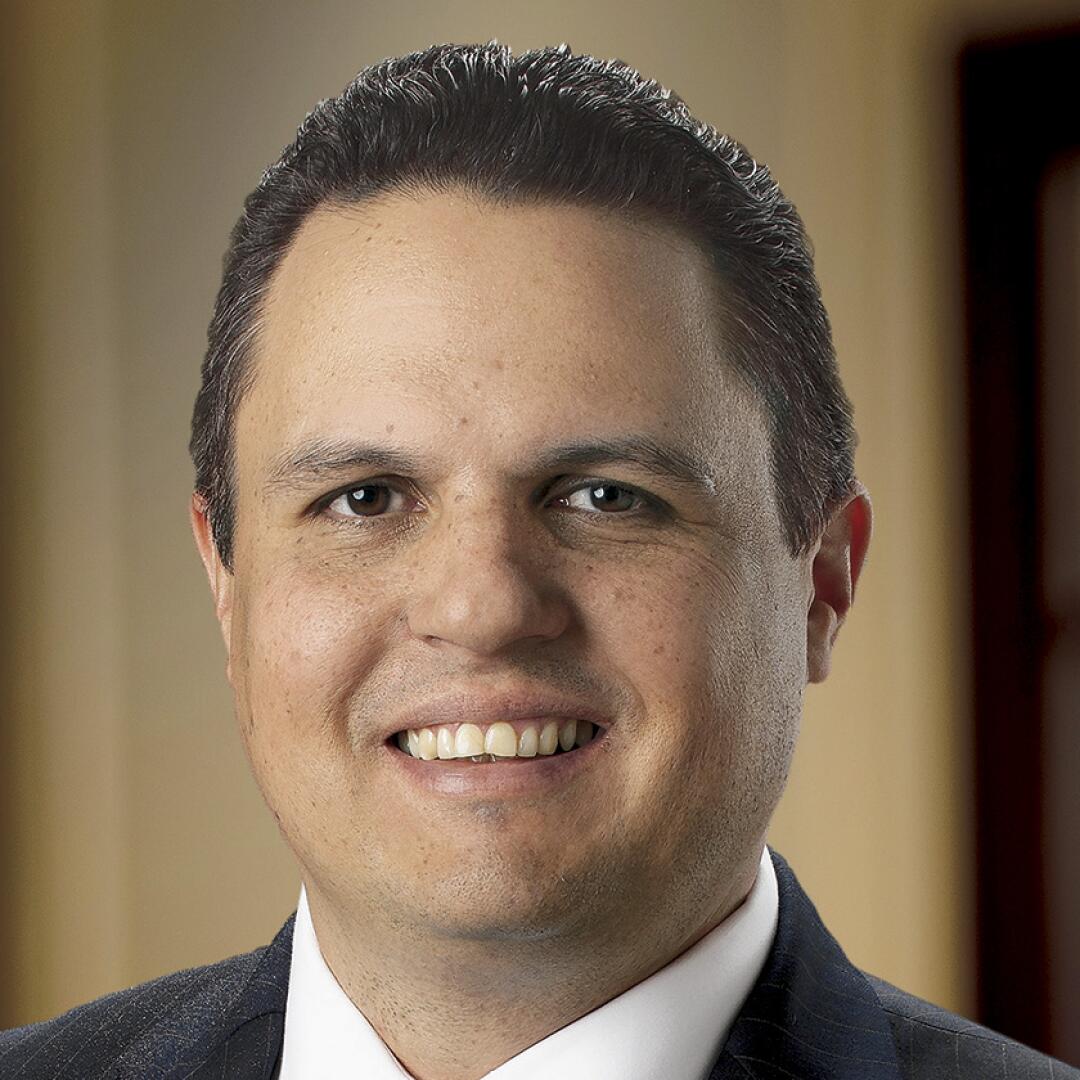
"First injection at CTV I demonstrates that California can lead on climate solutions that are practical, scalable and cost-effective. This project reflects years of technical work, rigorous regulatory review, and collaboration with state and federal agencies to deliver real emissions reductions while strengthening California's energy resilience."
Francisco Leon, President and CEO, California Resources Corporation
The 26R reservoir is the first in California to receive final EPA Class VI permits for underground CO2 injection and storage. Securing that permit took years of technical work and regulatory coordination. That completed pathway now serves as a template for the eight additional reservoirs CRC has already submitted for Class VI permitting.

The CTV I project captures CO2 from CRC’s cryogenic gas plant at Elk Hills, compresses it, and injects it into depleted underground reservoirs for permanent storage. By reusing existing wells, pipelines, and subsurface data, the project lowers development costs and creates a replicable model for carbon storage across California.
How Does the CTV I Project Work?
CTV I sources CO2 directly from CRC's cryogenic gas plant at Elk Hills. The captured gas is compressed and injected into the 26R reservoir, a depleted oil and gas formation that has held hydrocarbons safely underground for millions of years. That geological track record is not incidental. It is the foundation of the project's safety case.
The project uses existing infrastructure from CRC's decades of oil and gas operations at the site. There is no need to build new wells from scratch or construct entirely new surface facilities. Wells, pipelines, and subsurface data were already in place. That reuse model keeps capital costs lower and development timelines shorter, making CTV I a replicable blueprint for sites across the state.
CTV I consists of two depleted reservoirs, 26R and A1-A2. At full capacity, 26R alone can store 1.46 million metric tons of CO2 annually, with 38 million metric tons of total storage potential across the site.
>> RELATED: Shovels Hit the Ground on California's First Carbon Storage Hub
| Project Stage | Reservoirs | Total CO2 Storage Potential | Status |
|---|---|---|---|
| CTV I (26R reservoir) | 1 | 38 million metric tons (1.46M MT/yr max) | Operational, injecting CO2 as of May 2026 |
| Additional CTV Reservoirs | 8 | ~352 million metric tons | EPA Class VI permits submitted, pending |
What Do 8 More Reservoirs Mean for California's CCS Pipeline?
CTV I is the first domino. CRC has already submitted eight additional CTV storage reservoirs for U.S. EPA Class VI permitting, representing approximately 352 million metric tons of total potential CO2 storage capacity across California. That is nearly nine times the total capacity of the 26R reservoir alone.
Each of those eight sites now has something they did not have before May 26: a completed, operational project to point to when regulators, investors, and industrial customers ask whether California CCS can actually work. The answer is yes, and the evidence is sitting one mile underground in Kern County.

How Is Brookfield's Stake Shaping the Project?
The Carbon TerraVault Joint Venture is a 51/49 partnership between CRC and Brookfield Asset Management, a global alternative asset manager with over $1 trillion in assets under management. Brookfield committed an initial $500 million to invest in jointly approved CCS projects through the venture, channeled through the Brookfield Global Transition Fund.
That institutional backing matters for the broader CCS market. Carbon storage has historically struggled to attract patient capital because of long development timelines and permitting uncertainty. A $500 million commitment from one of the world's largest infrastructure investors, paired with a now-operational project, starts to reframe CCS storage as a viable long-term asset class.
"The first CO2 injection at CTV I marks an exciting milestone for carbon management in California. It represents the start of a scalable new chapter for climate solutions, with significant opportunity for growth for CTV. We're proud to be part of a project helping lay the foundation for long-term impact."
Craig Frenette, Senior Vice President, Brookfield
What State Policy Is Backing This?
Both the Governor and the state's top climate regulator tied CTV I directly to California's goal of reaching carbon neutrality by 2045. Governor Gavin Newsom called the project proof that "innovation and ambition are the California way," adding that it "will permanently store carbon pollution underground for the first time in California's history." That kind of executive-level framing signals that CCS is no longer a fringe option in California's climate toolkit. It is now a named priority.
California Air Resources Board (CARB) Chair Lauren Sanchez made the policy stakes explicit: "Carbon capture, utilization, and storage is a critical piece of California's climate solutions puzzle and an important tool we're counting on to help achieve carbon neutrality. Reaching our climate goals requires both reducing and sequestering emissions, and this milestone demonstrates how we're moving every viable solution forward to get there."
That alignment between the Governor's office and CARB sends a durable signal to industrial emitters across California. The state has both the regulatory will and the physical infrastructure to support large-scale carbon storage. Companies with long-term decarbonization targets now have a credible in-state option.
What Does CTV I Mean for Kern County?
CRC committed over $1 million to local communities in Kern County through the CTV I Community Benefits Plan. A Community Advisory Council made up of local stakeholders will be established in 2026 to evaluate and respond to the region's needs on an ongoing basis.
That community structure matters beyond the dollar figure. Carbon storage projects operate on multi-decade timelines. Building a formal structure for community input early, before concerns become opposition, is how projects maintain the social license they need to keep operating. Kern County is already home to significant energy infrastructure, and CTV I positions the region as a destination for carbon management investment alongside its existing energy economy.
Timelapse of the construction and development of Carbon TerraVault I (CTV I), California’s first operational carbon capture and storage project at Elk Hills Field in Kern County. Courtesy of California Resources Corporation (CRC).
How Does California's CCS Progress Compare Nationally?
California joining the list of states with operational CCS infrastructure is a meaningful shift. Texas has led North American CCS development, with the Railroad Commission now holding Class VI primacy after EPA approval. Three states secured Class VI primacy in a single year in 2025, Texas, Arizona, and West Virginia, accelerating the national buildout.
California is taking a different route. Rather than pursuing state primacy over Class VI permitting, CRC navigated the federal EPA process directly. CTV I is the result. That completed federal pathway, with 26R as the first California reservoir to hold a final Class VI permit, now serves as a reference point for every industrial emitter in the state evaluating whether CCS is a viable path for their own operations.
The approximately 352 million metric tons of potential storage capacity sitting in CRC's permitting pipeline represents a serious long-term commitment to making California a carbon storage destination, not just a carbon reduction leader. The starting gun has fired. The rest of that pipeline now knows the track is real.
The Pipeline Behind CTV I Is Already Running
The significance of May 26, 2026 is not what happened at Elk Hills that day. It is what it unlocks for the eight reservoirs that come after it. California now has a completed regulatory pathway, an operating project, institutional capital already committed, and state policy aligned at the highest level. The 26R reservoir holds 38 million metric tons of storage capacity. The eight sites behind it hold approximately 352 million more.
The depleted reservoir model is cost-efficient, replicable, and proven. Industrial emitters across California no longer have to ask whether underground CO2 storage is theoretically possible in the state. The CO2 is already underground.
Frequently Asked Questions
What is Carbon TerraVault I and where is it located?
Carbon TerraVault I is California's first operational carbon capture and storage project. It is located at CRC's Elk Hills Field in Kern County, California. The project captures CO2 from CRC's cryogenic gas plant and stores it permanently in depleted oil and gas reservoirs more than one mile underground.
How much CO2 can Carbon TerraVault I store?
At maximum capacity, the 26R reservoir can store up to 1.46 million metric tons of CO2 annually, equivalent to taking nearly 350,000 cars off the road each year. Total storage potential at the site is 38 million metric tons. Beyond CTV I, CRC has submitted eight additional reservoirs for EPA Class VI permitting, representing approximately 352 million metric tons of additional potential storage across California.
Who is partnering with CRC on Carbon TerraVault?
CRC owns 51% of the Carbon TerraVault Joint Venture. Brookfield, a global alternative asset manager with over $1 trillion in assets under management, holds the remaining 49% and committed an initial $500 million to invest in jointly approved CCS projects through the partnership.
For ongoing coverage of carbon capture, CCS permitting, and industrial decarbonization, subscribe to Decarbonfuse.com.
Subscribe to the newsletter
Daily decarbonization data and news delivered to your inbox
Follow the money flow of climate, technology, and energy investments to uncover new opportunities and jobs.
Latest issues
-
Why Is Wyoming Giving 650,000 Acres to Carbon Storage?
Inside This Issue 🪨 Inside Blm's 650,000-Acre Bet on Wyoming Carbon Storage 🏭 California Advances Carbon Capture and Removal Regulations Under SB 905 ⚡ Why a Japanese Power Giant Is Betting on Den...
-
Colorado Joins the 7-State CCS Permit Fast Lane
Inside This Issue ⚖️ Colorado Takes Over Class VI Permits: What Changes for CCS? 🏭 Hebei Shoulang Facility Using LanzaTech Technology Achieves World’s First ISCC EU RCF Certification for Ethanol P...
-
The US Hasn't Made Heavy Water Since 1982
Inside This Issue ⚛️ Aternium Completes FEED Studies for US Hydrogen, Heavy Water Project 🐄 Google, McKinsey Strike Brazil Carbon Removal Deal With Silvopasture Project 🔧 Cummins Selects Stargate ...
Company Announcements
-
Citi Closes $72 Million Carbon Removal-Linked Note to Support Applied Carbon Biochar Project
HIGHLIGHTS Citi structured an innovative $72 million carbon removal-linked note to provide upfront capital for Applied Carbon's biochar project, marking a first-of-its-kind "outcome bond" for ver...
-
New platform opens access to the same rigorous project evaluations trusted by the world's leading carbon removal procurement programs Today, Relae (formerly Carbon Direct) launched The Diligence C...
-
Inside BLM's 650,000-Acre Bet on Wyoming Carbon Storage
The Bureau of Land Management has offered right-of-way grants covering about 649,438 acres of federal pore space in southwest Wyoming. The September 21, 2026 offers went to Moxa Carbon Storage LLC ...
-
NEW YORK, BUSINESS WIRE, SWITCH Maritime (Switch), a leading developer of zero-emission vessels, secured a Design Basis Agreement (DBA) with the United States Coast Guard (USCG) for the SWITCH-150,...