
The clean hydrogen industry is entering a new chapter in 2026, and it looks nothing like the hype-fueled years that came before. After a period of rapid government support followed by a sharp pullback in 2025, the sector is now reorganizing around something far more durable: signed contracts with real customers.
For companies working at the intersection of chemistry and clean energy, this year promises steady, project-based progress. The dynamic has shifted from "build it and they will come" to "show us the offtake agreement first."

>> In Other News: CHARBONE Announces Hydrogen Sales in Ontario to Support Fuel Cell Generator Operations for the Film Industry
From Speculation to Signed Deals
During the boom years of 2022 to 2024, hydrogen companies scaled up with the assumption that demand would follow supply. That optimism ran headfirst into the reality of 2025, when federal support in the U.S. was significantly curtailed. Now, the industry is recalibrating around bankable projects with clear end-users.
"The clean hydrogen sector is neither collapsing nor taking off in 2026. We will see a shift to the most realistic set of projects that target ammonia, refinery hydrogen replacement, and a handful of early direct-reduced iron steel units. The projects that survive are probably the best structured, backed by a real industrial offtake."
François Le Scornet, Analyst at Carbonexit Consulting
This pivot toward offtake-driven development mirrors what worked in successful 2025 hydrogen projects, where integrated facilities with clear customers outperformed speculative ventures that lacked committed buyers.
>> RELATED: 14 Green Hydrogen Projects Reshaping America's Energy Future
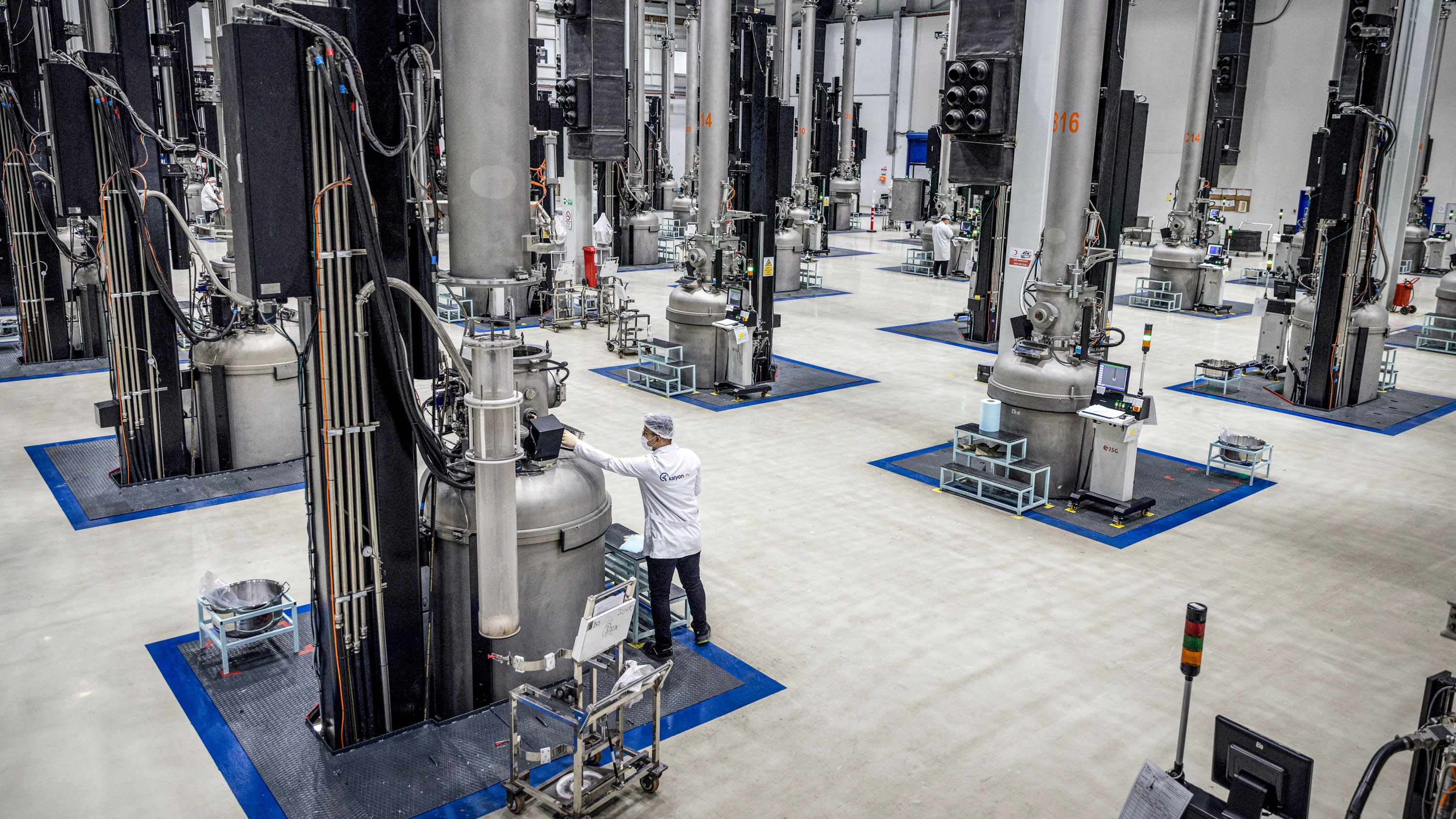
New Production Technologies Hit the Market
Despite the policy turbulence, several companies completed major manufacturing milestones that position them well for 2026 and beyond. These investments signal long-term confidence in the hydrogen economy.
Key Manufacturing Milestones
- Green Hydrogen: Topsoe inaugurated Europe's largest solid-oxide electrolysis cell (SOEC) facility in Herning, Denmark, with 500 MW annual capacity
- Alkaline Electrolysis: Sunfire is now mass-producing alkaline cells in Germany, expanding green hydrogen production options
- Blue Hydrogen: CO₂ sequestration wells are coming online across Europe and the U.S., supporting blue hydrogen's rapid expansion
- Turquoise Hydrogen: Startups like Etch Materials and Huntsman are advancing methane-to-hydrogen reactors that produce solid carbon as a byproduct
"Our SOEC facility will be a game-changer for the energy transition. The technology's unmatched efficiency is pivotal for scaling green hydrogen production for industrial decarbonization."
Roeland Baan, CEO of Topsoe
China's Competitive Push
While Europe and the U.S. navigate policy shifts, China is aggressively scaling its electrolyzer manufacturing capacity. According to Cleantech Group, Chinese manufacturers are refining next-generation materials at speeds that outpace Western competitors.
This creates a strategic dilemma for European developers: accept cheaper Chinese equipment for speed, or protect domestic industry at higher cost.

Europe Emerges as the Key Demand Center
For companies looking to sell low-carbon hydrogen, Europe is becoming the most attractive market. The EU's revised sustainable fuel mandates now support "renewable fuels of non-biological origin", encompassing hydrogen, ammonia, and synthetic fuels.
This policy clarity is driving innovative deal frameworks that balance risk between stakeholders. Projects targeting ammonia production and green steel manufacturing are particularly well-positioned.
Beyond Color Labels: Carbon Intensity Takes Center Stage
The familiar color-coded system is giving way to a focus on verified carbon intensity. End-users and financiers now prioritize upstream methane control and real-world emissions data over broad categorical labels.

The 2026 hydrogen market shows strong momentum with over $110 billion in investments and 6 million tonnes of committed capacity, though securing offtake for projects by 2030 remains a key challenge.
Where the Real Demand Lives
Industry watchers agree that chemicals and fuels will consolidate as the primary demand anchors for clean hydrogen in the near term. The target applications are clear:
- Ammonia production for fertilizers and as a hydrogen carrier for shipping
- Refinery hydrogen replacement to decarbonize existing industrial processes
- Direct-reduced iron steel for low-carbon manufacturing
- Sustainable aviation fuel and e-methanol synthesis
These sectors offer the combination of large-scale demand, willingness to pay a green premium, and regulatory pressure that makes offtake agreements viable.
A Sustainable Foundation for Growth
The hydrogen sector's evolution from hype to pragmatism may disappoint those hoping for explosive growth. But for industry participants focused on building lasting businesses, 2026 offers something more valuable: a sustainable foundation.
Projects backed by real industrial offtake, advanced manufacturing coming online, and maturing policy frameworks all point toward a sector learning to walk before it runs. For the clean hydrogen industry, the age of speculation is ending. The age of execution has begun.
Subscribe to the newsletter
Daily decarbonization data and news delivered to your inbox
Follow the money flow of climate, technology, and energy investments to uncover new opportunities and jobs.
Latest issues
-
113 CCS Projects: What's Driving the Surge?
Inside This Issue 🏭 Global CCS Hits 113 Projects as Americas Lead Capacity 💰 We're Moving $2M+ to Climate Solutions 💧 China Launches World's First Semi-submersible Offshore Wind-to-hydrogen Platfo...
-
Why Is Wyoming Giving 650,000 Acres to Carbon Storage?
Inside This Issue 🪨 Inside Blm's 650,000-Acre Bet on Wyoming Carbon Storage 🏭 California Advances Carbon Capture and Removal Regulations Under SB 905 ⚡ Why a Japanese Power Giant Is Betting on Den...
-
Colorado Joins the 7-State CCS Permit Fast Lane
Inside This Issue ⚖️ Colorado Takes Over Class VI Permits: What Changes for CCS? 🏭 Hebei Shoulang Facility Using LanzaTech Technology Achieves World’s First ISCC EU RCF Certification for Ethanol P...
Company Announcements
-
China Launches World's First Semi-Submersible Offshore Wind-to-Hydrogen Platform
The world's first semi-submersible offshore wind-to-hydrogen platform has floated in Jiangmen, south China's Guangdong Province, opening a new avenue for the development and utilization of clean ma...
-
We’re Moving $2M+ to Climate Solutions
New companies, new ways to back existing ones, and every purchase built to pull in more capital We’re adding new companies to our portfolio and getting creative with how we put more money behind e...
-
Citi Closes $72 Million Carbon Removal-Linked Note to Support Applied Carbon Biochar Project
HIGHLIGHTS Citi structured an innovative $72 million carbon removal-linked note to provide upfront capital for Applied Carbon's biochar project, marking a first-of-its-kind "outcome bond" for ver...
-
New platform opens access to the same rigorous project evaluations trusted by the world's leading carbon removal procurement programs Today, Relae (formerly Carbon Direct) launched The Diligence C...