
Critical Year for Pathways Alliance’s $16.5 Billion Carbon Capture Project
Published by Todd Bush on January 2, 2025
The Pathways Alliance, a coalition of major oilsands producers, faces a pivotal year for its ambitious $16.5 billion carbon capture, utilization, and storage (CCUS) project in northern Alberta.
Despite being billed as one of the largest CCUS networks in the world, the project’s final investment decision (FID) remains uncertain, with 2025 set to determine its future.
Federal Minister of Energy and Natural Resources Jonathan Wilkinson emphasized the urgency, saying, “We need to stop pushing this out . . . We need to fish or cut bait soon.”
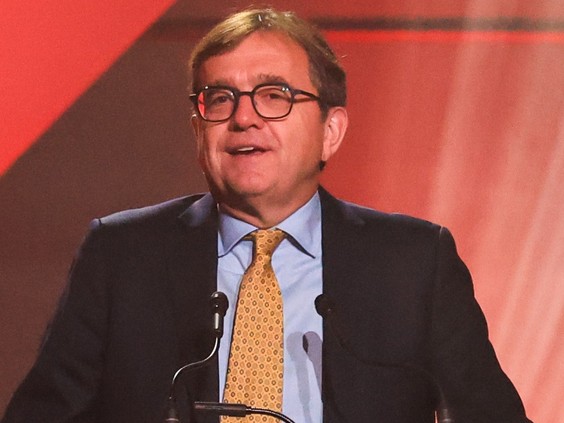
Jonathan Wilkinson, Federal Minister of Energy and Natural Resources, delivered remarks at the opening of the 24th World Petroleum Congress held at Calgary's Telus Convention Centre on Sunday, September 17, 2023.
>> In Other News: SEFA Rebrands to Heidelberg Materials
The Vision: A Game-Changing Carbon Capture Network
The proposed CCUS project involves building a 400-kilometer pipeline to connect more than 20 oilsands facilities with an underground CO2 storage hub near Cold Lake, Alberta.
In its first phase, the project aims to sequester 10 to 12 megatonnes of CO2 annually by 2030, making it a cornerstone of Canada’s decarbonization goals.
This initiative is seen as critical to reducing emissions from the oilsands, which are the largest source of greenhouse gas emissions in Canada. However, progress has been slow, with Pathways Alliance citing insufficient government incentives as a key hurdle.
Government Support: Is It Enough?
The federal government has introduced an investment tax credit covering up to 50% of CCUS capital costs.
Additionally, the Canada Growth Fund is offering carbon contracts for difference (CCFDs) to provide long-term certainty on carbon pricing.
On the provincial level, Alberta launched the Carbon Capture Incentive Program, offering a 12% grant for CCUS projects. This program is expected to cost the province between $3.2 billion and $5.3 billion by 2035, but it could trigger $35 billion in private investment.
Alberta Premier Danielle Smith defended the province’s contributions, stating, “We’ve put our money on the table. We gave the corporate income tax cut, we’ve given the 12 percent carbon capture rebate, and we’re prepared to do whatever we need to do to help with the permitting.”
>> RELATED: Detailed Evaluation to Begin on Pathways Alliance Proposed Carbon Storage Hub
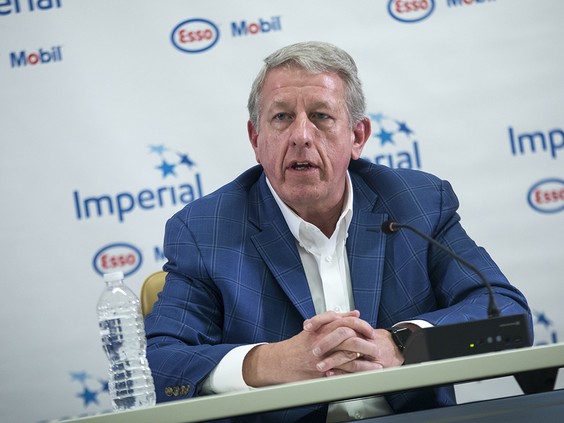
Imperial Oil President and CEO Brad Corson.
The Sticking Points
Despite these measures, Pathways Alliance has expressed that a combined 62% funding support from both governments still falls short of their 75% target.
During a recent earnings call, Brad Corson, CEO of Imperial Oil, noted, “The next big-ticket item for Pathways would be the CO2 trunk line project . . . We’re still in discussions with the governments about the required fiscal support that would be necessary.”
Wilkinson suggested that Alberta, as the resource owner, could do more to secure the project. He also highlighted the importance of greater certainty around carbon credit pricing to improve project economics.
Broader Implications
The CCUS network represents a monumental step toward Canada’s emissions reduction target of 40–45% by 2030 and achieving net-zero by 2050. However, delays could jeopardize these goals and risk billions in potential investment and job creation.
Martha Hall Findlay, former chief sustainability officer at Suncor Energy, warned, “Here we are about to get into 2025, and by far the most ambitious — by far the largest emissions-reduction success story in Canadian history — is at risk.”
Critics argue that oilsands producers, who have reported record profits since 2022, need to demonstrate more urgency.
The Pembina Institute has suggested that the current level of government support should suffice, with analyst Matt Dreis stating, “This is a pretty good deal as it stands. If they really are serious about it, it’s probably in their best interest to move it through FID as fast as possible.”
Moving Forward
With a federal election looming in 2025, the project’s future could be further complicated by political shifts.
Wilkinson stressed the need for a decision before a potential change in government, explaining that existing agreements would likely be honored if substantial costs were already sunk.
Meanwhile, individual companies within the Pathways Alliance continue to advance their own carbon capture projects, and a regulatory application for the pipeline has been filed with the Alberta Energy Regulator.
The clock is ticking for the Pathways Alliance. Decisions made this year will determine whether this ambitious project becomes a landmark achievement or a missed opportunity.
If you want to learn more about the Pathways Alliance or the government's role in CCUS, visit their official website or follow updates from the Government of Canada.
Subscribe to the newsletter
Daily decarbonization data and news delivered to your inbox
Follow the money flow of climate, technology, and energy investments to uncover new opportunities and jobs.
Latest issues
-
Why Is Wyoming Giving 650,000 Acres to Carbon Storage?
Inside This Issue 🪨 Inside Blm's 650,000-Acre Bet on Wyoming Carbon Storage 🏭 California Advances Carbon Capture and Removal Regulations Under SB 905 ⚡ Why a Japanese Power Giant Is Betting on Den...
-
Colorado Joins the 7-State CCS Permit Fast Lane
Inside This Issue ⚖️ Colorado Takes Over Class VI Permits: What Changes for CCS? 🏭 Hebei Shoulang Facility Using LanzaTech Technology Achieves World’s First ISCC EU RCF Certification for Ethanol P...
-
The US Hasn't Made Heavy Water Since 1982
Inside This Issue ⚛️ Aternium Completes FEED Studies for US Hydrogen, Heavy Water Project 🐄 Google, McKinsey Strike Brazil Carbon Removal Deal With Silvopasture Project 🔧 Cummins Selects Stargate ...
Company Announcements
-
Citi Closes $72 Million Carbon Removal-Linked Note to Support Applied Carbon Biochar Project
HIGHLIGHTS Citi structured an innovative $72 million carbon removal-linked note to provide upfront capital for Applied Carbon's biochar project, marking a first-of-its-kind "outcome bond" for ver...
-
New platform opens access to the same rigorous project evaluations trusted by the world's leading carbon removal procurement programs Today, Relae (formerly Carbon Direct) launched The Diligence C...
-
Inside BLM's 650,000-Acre Bet on Wyoming Carbon Storage
The Bureau of Land Management has offered right-of-way grants covering about 649,438 acres of federal pore space in southwest Wyoming. The September 21, 2026 offers went to Moxa Carbon Storage LLC ...
-
NEW YORK, BUSINESS WIRE, SWITCH Maritime (Switch), a leading developer of zero-emission vessels, secured a Design Basis Agreement (DBA) with the United States Coast Guard (USCG) for the SWITCH-150,...