
Duke Energy Florida just switched on something the U.S. power industry has been waiting for. The company's DeBary Hydrogen Production Storage System in Volusia County is now operational, marking the first time a U.S. utility has deployed an end-to-end system that can produce, store, and burn green hydrogen at grid scale.
The entire cycle happens on site. Solar panels generate electricity, electrolyzers split water molecules, reinforced containers store the hydrogen, and when Florida's grid needs extra power, that stored hydrogen fires up a turbine. Co-location eliminates transportation costs, one of the biggest barriers holding back hydrogen deployment.
>> In Other News: JERA Announces Close of Haynesville Shale Gas Asset in Louisiana
How Duke Built It
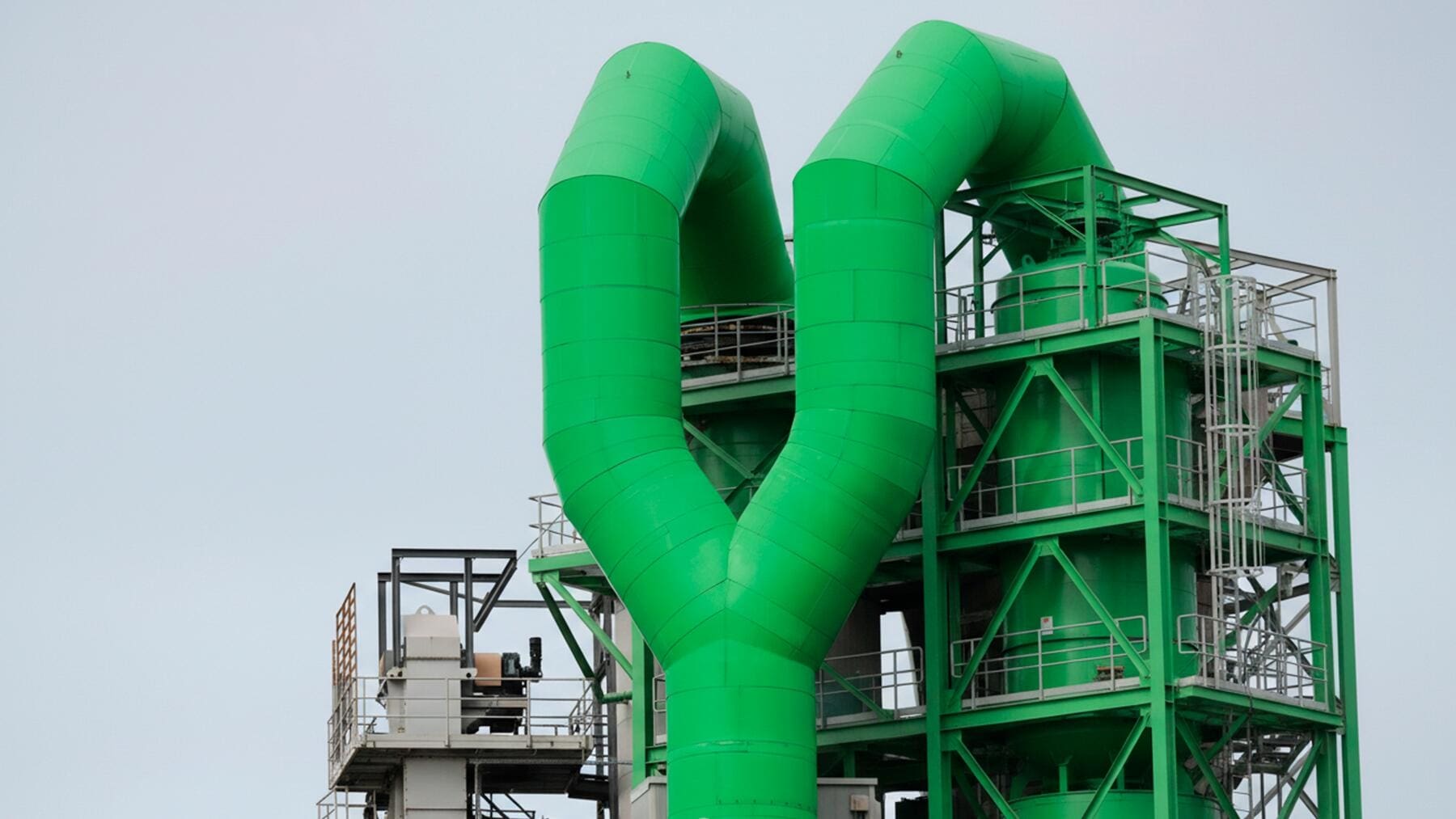
The system starts with Duke Energy Florida's existing 74.5-megawatt DeBary solar site. Two 1-megawatt electrolyzer units use that solar power to separate water into hydrogen and oxygen. The oxygen goes back into the atmosphere, while hydrogen gets stored in reinforced containers.
When energy demand spikes during Florida's summer heat or cold snaps, operators dispatch the stored hydrogen to an existing combustion turbine upgraded with GE Vernova technology. The turbine can run on a blend of natural gas and hydrogen or switch to 100% hydrogen when needed.

"Diverse generation is strong, reliable generation. The DeBary hydrogen project underscores Duke Energy Florida's deep understanding of that notion and our commitment to making strategic infrastructure investments."
Melissa Seixas, Duke Energy Florida State President
This flexibility matters. Unlike solar and wind, which produce power only when conditions are right, hydrogen stored on site becomes dispatchable energy that operators can turn on and off at any time. That's exactly what utilities need as they add more renewable capacity to the grid.

This infographic outlines key facts about Duke Energy Florida's operational DeBary Hydrogen Production Storage System, the first U.S. facility to produce, store, and burn 100% green hydrogen on-site.
Why This Project Stands Out
Several hydrogen projects have launched in recent years, but most focus on a single piece of the puzzle. Some produce hydrogen but ship it elsewhere. Others blend hydrogen into existing gas supplies at low percentages. Large-scale storage projects are being developed in places like Utah, but they're not yet operational.
Duke's DeBary facility integrates all three steps, production, storage, and use, at a single location. That integration slashes the logistical headaches and costs that have stalled other projects. It also demonstrates how existing power infrastructure can adapt to cleaner fuels without requiring completely new facilities.
> RELATED: 14 Green Hydrogen Projects Reshaping America's Energy Future

Grid Reliability Meets Clean Energy Goals
Florida's power demand keeps climbing with population growth, data centers, and electric vehicle adoption. Utilities must balance this with carbon reduction targets and renewable capacity expansion.
Solar and wind can't always match demand patterns. Batteries help but they're expensive at scale. Hydrogen stored on site provides longer duration backup power that complements battery systems and fills gaps when solar production drops.

"The DeBary system allows for safe, reliable generation and storage of clean energy. Duke Energy Florida is proud of this successful innovation and the lasting impact it will have on our industry."
Reggie Anderson, Duke Energy Florida VP of Regulated and Renewable Energy
What Comes Next for Hydrogen at Duke
| Component | Specification |
|---|---|
| Solar Capacity | 74.5 MW (300,000 panels) |
| Electrolyzer Capacity | Two 1 MW units |
| Hydrogen Production | Approximately 36 kg/hour |
| Turbine Technology | GE Vernova upgrade for 0-100% hydrogen |
| Location | DeBary, Volusia County, Florida |
The company's broader clean energy strategy targets net-zero methane emissions from natural gas operations by 2030 and net-zero carbon from electricity generation by 2050. This system proves the technology works at commercial scale and provides operational data for future expansion decisions.
A Blueprint for the Industry
Duke Energy Florida delivered a working system that produces clean hydrogen when solar panels generate excess electricity, stores it safely on site, and burns it in a turbine when Florida needs power. That's operational infrastructure delivering electricity to paying customers.
Other utilities with solar capacity and peaking plants face similar challenges. Duke just showed them one path forward using equipment available today, installed at an existing facility, integrated with current operations.
Duke Energy Florida proved that producing, storing, and using green hydrogen on site at a U.S. power plant isn't just possible. It's happening.
Subscribe to the newsletter
Daily decarbonization data and news delivered to your inbox
Follow the money flow of climate, technology, and energy investments to uncover new opportunities and jobs.
Latest issues
-
Quebec Wood Waste Just Became Jet Fuel
Inside This Issue 🌲 ARC Bio Tests a Refinery Shortcut to Forest-Based SAF 💧 Scientists Just Found a New Way to Make Hydrogen from Water 🤝 How Channel Partnerships Are Helping More Organizations Ta...
-
How Vaulted Deep Turned Offtakes Into $35M Debt
Inside This Issue 🏦 How Carbon Removal Offtakes Are Starting to Unlock Commercial Debt 🌉 California Opens the Door to a Three-Way Carbon Market 🧪 New Material Developed at Oregon State Provides Bo...
-
Canada Wants Foreign Buyers for Its Carbon Removals
Inside This Issue 🍁 Canada Explores Article 6 Path to Global Carbon Buyers 🌲 ARC Bio Demonstrates Canadian Forest Residue Pathway to Sustainable Aviation Fuel 🌾 Business, Forestry and Agriculture ...
Company Announcements
-
MEXICO CITY--BUSINESS WIRE--In the framework of today's World Habitat Day, here is an invitation to reflect on building more sustainable communities, where Mexico is moving firmly toward the energy...
-
Vortex Energy Commissions Hydrogen and Helium Study at Robinsons River Salt Project
Desktop Study Will Use Existing Geological, Geophysical and Well Data to Assess Natural Hydrogen and Helium Potential VANCOUVER, British Columbia, Oct. 05, 2026 (GLOBE NEWSWIRE) -- Vortex Energy C...
-
How Channel Partnerships Are Helping More Organizations Take Action
Organizations of all sizes are looking for credible ways to address their carbon emissions. But to help high-integrity Carbon Dioxide Removal (CDR) solutions reach small-to-medium-sized organizatio...
-
Uniper signs capacity reservation agreement for future SAF supply from Syzygy Plasmonics' NovaSAF™ platform This agreement reflects growing market momentum in biogas to SAF technology and provides...