
A new Singapore-based company called eFuels SEA, Ltd. launched in April 2026 as a regional development platform for electrofuels. It will license technology from Infinium, the world's first producer of commercially available eFuels. Together, they will build commercial-scale production facilities across Southeast Asia. These facilities will convert captured carbon dioxide and renewable power into drop-in sustainable aviation fuel and other ultra-low carbon products.
Key Facts
- eFuels SEA, Ltd. is headquartered in Singapore. It launched on April 9, 2026.
- The company plans to develop 3 to 5 commercial-scale eFuel facilities across multiple Southeast Asian countries.
- Infinium will license its proprietary technology to eFuels SEA projects. The technology converts renewable electricity, water, and waste CO2 into drop-in liquid fuels.
- Infinium has been operating the world's first commercial-scale eFuels plant, Project Pathfinder, in Corpus Christi, Texas since 2023.
- Infinium's second facility, Project Roadrunner near Pecos, Texas, is under construction. It is expected to produce 23,000 tonnes per year of eSAF and other eFuels when it comes online in 2027.
- ASEAN SAF demand is forecast to grow from 15,000 barrels per day in 2030 to over 700,000 barrels per day by 2050, per the ASEAN SAF 2050 Outlook report (January 2026).
- Singapore has mandated 1% SAF blending at Changi and Seletar airports by 2026, rising to 3 to 5% by 2030.
- The global SAF market is projected to grow from USD 4.02 billion in 2026 to USD 40.09 billion by 2034 (Fortune Business Insights, 2026).
What Is eFuels SEA and What Does It Plan to Build?
eFuels SEA, Ltd. is a regional development, financing, and production platform for electrofuels in Southeast Asia. The company launched from Singapore in April 2026. It plans to develop 3 to 5 commercial-scale production facilities across multiple countries in the region.

"By leveraging Infinium's demonstrated technology, we are confident of delivering economic value add, enhancing energy security and achieving climate impact in the region. We plan to work with local partners and community members to accelerate siting of these projects as a complement to local agendas for industrial development, manpower up-skilling and net-zero commitments."
David Wang, Co-founder and CEO, eFuels SEA
Each facility will convert captured carbon dioxide and renewable power into drop-in fuels. The primary product is electronic sustainable aviation fuel (eSAF). Other ultra-low carbon products for shipping and industrial use are also on the production roadmap.
The platform is backed by an Asia-based management team with expertise in energy markets, project finance, and industrial development. eFuels SEA will work with regional partners and local communities to site and advance each project.
>> In Other News: ExxonMobil Plans Major Carbon Storage Project In Southeast Texas
How Does Infinium's eFuels Technology Work?
Infinium's process combines renewable electricity, water, and waste carbon dioxide. These inputs are converted into synthetic liquid fuels that are chemically identical to petroleum-based jet fuel and diesel. Because the fuels are drop-in compatible, they work in existing aircraft engines and fuel infrastructure without any modification.
This compatibility matters. Aviation decarbonization cannot wait for new engine designs or infrastructure overhauls. Drop-in eSAF removes that barrier entirely.
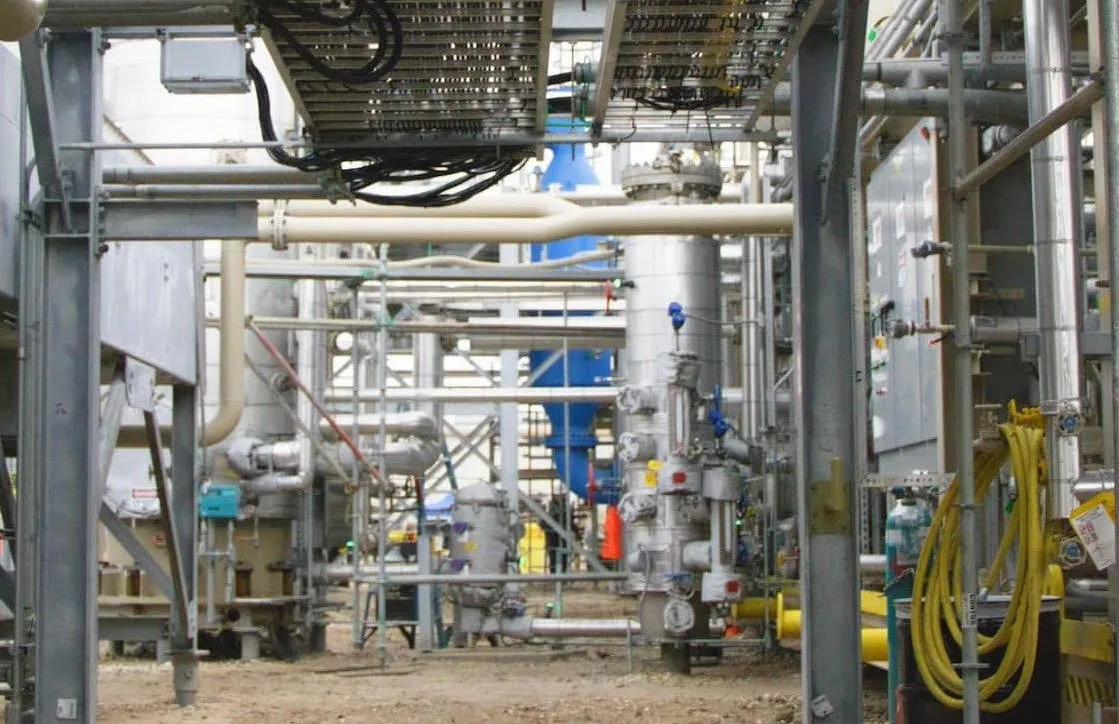
Infinium is not operating from theory. The company has been running Project Pathfinder in Corpus Christi, Texas since 2023, making it the world's first commercial-scale eFuels facility. Infinium shipped commercial volumes of eFuels to customers in the United States and Europe from that plant.
Its second facility, Project Roadrunner near Pecos, Texas, is currently under construction. When it comes online in 2027, it is expected to produce 23,000 tonnes per year (7.6 million gallons) of eSAF and other eFuel products. By licensing this same technology to eFuels SEA, the company brings a commercially proven process to Southeast Asia rather than an unproven concept.
| Country | SAF Policy or Target | Timeline |
|---|---|---|
| Singapore | 1% SAF blend mandate at Changi and Seletar airports | 2026, rising to 3 to 5% by 2030 |
| Indonesia | SAF blending roadmap under development | Beginning ~2027 |
| Malaysia | SAF blending roadmap under development | Beginning ~2027 |
| Thailand | National SAF standards in development; 1% SAF blend piloted by Bangkok Air as of 2024 | Standards expected 2026 to 2027 |
>> RELATED: Infinium Breaks Ground on World's Largest eFuels Plant Near Pecos
Why Is Southeast Asia Well-Positioned for eFuel Production?
Southeast Asia combines growing fuel demand, abundant renewable energy resources, and strengthening policy frameworks. Countries including Singapore, Malaysia, Thailand, and Indonesia are advancing hydrogen and carbon management strategies. Those strategies align directly with the large-scale eFuel deployment that eFuels SEA is planning.
The demand numbers are compelling. The ASEAN SAF 2050 Outlook report, published by the ASEAN Secretariat in January 2026, projects sharp regional growth. SAF demand across ASEAN is forecast to rise from 15,000 barrels per day in 2030 to over 700,000 barrels per day by 2050. Indonesia, Malaysia, Singapore, and Thailand are expected to be the largest demand centers.
That same report found that ASEAN's SAF supply potential from agricultural and forestry biomass could reach 8.5 million barrels per day by 2050. That far exceeds projected domestic demand. The region is positioned to become a net exporter of sustainable aviation fuel to global markets.
Policy momentum is already building. Singapore has mandated 1% SAF blending at Changi and Seletar airports beginning in 2026. The target rises to 3 to 5% by 2030. These mandates create real commercial pull for producers who are ready to supply.
What Does Infinium Bring to This Partnership?
Infinium brings more than a technology license. Its customer base includes American Airlines, Amazon, and IAG. IAG is the parent company of British Airways and Aer Lingus. These customers have already committed to purchasing eSAF from Project Roadrunner once it comes online in 2027.
Brookfield Asset Management committed up to USD 1.1 billion to scale Infinium's eFuels production. Over USD 200 million was directed to Project Roadrunner, with USD 850 million earmarked for future projects. This financial backing signals serious commercial confidence in Infinium's technology platform.
Project Pathfinder in Corpus Christi also serves as Infinium's eFuels Center of Excellence. It generates process optimizations, construction learnings, and standardized procedures that feed directly into every new project. eFuels SEA benefits from all of that accumulated knowledge from day one.

"We are pleased to collaborate with eFuels SEA to expand access to eFuels in Southeast Asia, a region uniquely positioned to scale production of sustainable aviation fuel and other low-carbon fuels."
Robert Schuetzle, CEO and Founder, Infinium
>> RELATED: Jet Fuel from CO₂? How United and Twelve Are Pioneering the Future of Clean Aviation
How Does eSAF Compare to Other SAF Pathways?
Most SAF produced today uses the HEFA pathway, which processes waste oils, animal fats, and agricultural residues through hydrocracking. HEFA is the most commercially mature SAF technology today. But it is constrained by feedstock availability. Supply cannot grow beyond what the feedstock market can provide.
Power-to-liquid eSAF, the pathway Infinium uses, faces no such ceiling. It relies on renewable electricity, water, and captured CO2, inputs that can scale independently of agriculture. The ASEAN SAF 2050 Outlook notes that alternative pathways like power-to-liquid are currently more expensive than HEFA. The cost gap is expected to narrow as these technologies scale and mature.
Drop-in compatibility is a shared advantage for all SAF types. Airlines and airports do not need to modify engines, fuel tanks, or ground infrastructure. That makes SAF adoption practical at scale, regardless of the production pathway.
| Fuel Type | Primary Feedstock | Feedstock Constraint | Infrastructure Compatibility |
|---|---|---|---|
| Conventional Jet Fuel | Petroleum | Finite fossil resource | Full compatibility |
| Bio-Based SAF (HEFA) | Waste oils, animal fats, biomass | Limited by agricultural supply | Drop-in compatible |
| eSAF / Power-to-Liquid | Renewable electricity, water, waste CO2 | Not feedstock-constrained | Drop-in compatible |
What Is the Market Opportunity for eFuels in Southeast Asia?
The global SAF market was valued at USD 4.02 billion in 2026. It is projected to reach USD 40.09 billion by 2034, growing at a compound annual growth rate of 33.3% (Fortune Business Insights, 2026). Asia Pacific accounted for more than 15% of global SAF market revenue in 2024.
Within that Asia Pacific picture, Southeast Asia's demand growth is especially compelling. ASEAN SAF demand is projected to rise from 15,000 barrels per day in 2030 to over 700,000 barrels per day by 2050. That is a nearly 47-fold increase over two decades (ASEAN SAF 2050 Outlook, January 2026). eFuels SEA's 3 to 5 planned projects are aimed directly at this growing market.
Tienleong Tan, Strategic Advisor at eFuels SEA, addressed both the climate case and the energy security argument for acting now:
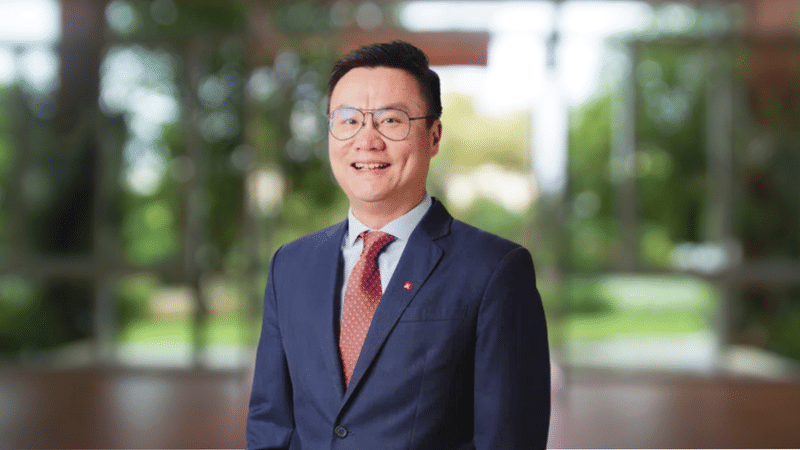
"Southeast Asia has the industrial capability and policy momentum to implement decarbonization projects to truly become a leader in electrofuels. There is also an urgent need to reduce dependency on fossil fuel with sustainable energy thereby enhancing energy security."
Tienleong Tan, Strategic Advisor, eFuels SEA
For readers tracking SAF production milestones globally, the eFuels SEA launch is notable. It marks the first time Infinium's commercially proven technology has been licensed for a multi-project development program in Asia. The deal extends the global eSAF pipeline into a region where policy mandates, demand growth, and renewable energy are all accelerating together.
Southeast Asia's Clean Fuel Window Is Open
eFuels SEA closes a real gap. Southeast Asia has been identified as a future SAF hub for years. Commercial-scale electrofuel projects in the region have been limited. With Infinium's proven process behind it, eFuels SEA enters with a validated technology rather than a development-stage concept.
The 3 to 5 planned projects still need to clear financing, site permitting, and offtake agreements before construction begins. But the foundation is solid: a proven licensor, supportive policy conditions across key markets, and a regional team built to navigate those steps. ASEAN demand for clean aviation fuel is accelerating through the late 2020s. The facilities eFuels SEA builds now will be among the first commercial eSAF production sites in the region. That first-mover position, in a market forecast to grow nearly 47-fold by 2050, is one worth watching.
Subscribe to the newsletter
Daily decarbonization data and news delivered to your inbox
Follow the money flow of climate, technology, and energy investments to uncover new opportunities and jobs.
Latest issues
-
Why Is Wyoming Giving 650,000 Acres to Carbon Storage?
Inside This Issue 🪨 Inside Blm's 650,000-Acre Bet on Wyoming Carbon Storage 🏭 California Advances Carbon Capture and Removal Regulations Under SB 905 ⚡ Why a Japanese Power Giant Is Betting on Den...
-
Colorado Joins the 7-State CCS Permit Fast Lane
Inside This Issue ⚖️ Colorado Takes Over Class VI Permits: What Changes for CCS? 🏭 Hebei Shoulang Facility Using LanzaTech Technology Achieves World’s First ISCC EU RCF Certification for Ethanol P...
-
The US Hasn't Made Heavy Water Since 1982
Inside This Issue ⚛️ Aternium Completes FEED Studies for US Hydrogen, Heavy Water Project 🐄 Google, McKinsey Strike Brazil Carbon Removal Deal With Silvopasture Project 🔧 Cummins Selects Stargate ...
Company Announcements
-
Citi Closes $72 Million Carbon Removal-Linked Note to Support Applied Carbon Biochar Project
HIGHLIGHTS Citi structured an innovative $72 million carbon removal-linked note to provide upfront capital for Applied Carbon's biochar project, marking a first-of-its-kind "outcome bond" for ver...
-
New platform opens access to the same rigorous project evaluations trusted by the world's leading carbon removal procurement programs Today, Relae (formerly Carbon Direct) launched The Diligence C...
-
Inside BLM's 650,000-Acre Bet on Wyoming Carbon Storage
The Bureau of Land Management has offered right-of-way grants covering about 649,438 acres of federal pore space in southwest Wyoming. The September 21, 2026 offers went to Moxa Carbon Storage LLC ...
-
NEW YORK, BUSINESS WIRE, SWITCH Maritime (Switch), a leading developer of zero-emission vessels, secured a Design Basis Agreement (DBA) with the United States Coast Guard (USCG) for the SWITCH-150,...