
A new player has arrived in the carbon removal industry, and it’s already making waves. Elimini, a subsidiary of Drax Group, has officially launched with ambitious plans to deliver large-scale carbon removal while producing 24/7 renewable power.
The company’s focus on bioenergy with carbon capture and storage (BECCS) positions it as a critical player in addressing climate change and global energy needs.
>> RELATED: Introducing Elimini: New Carbon Removal Leader Launches at New York Climate Week
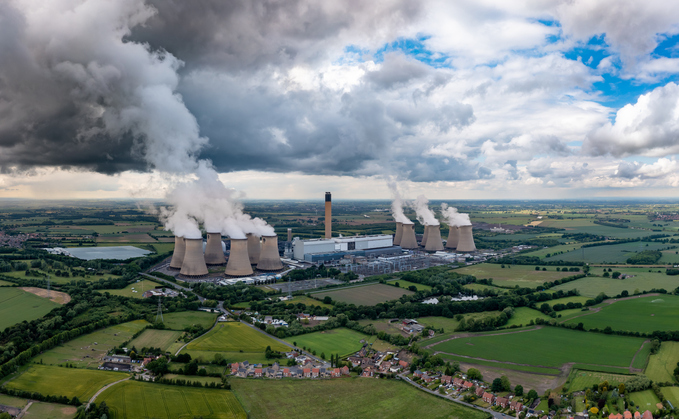
A Strong Foundation
Elimini begins its journey backed by a network of partners, investors, and suppliers. Offtake agreements for carbon removal credits are in place with companies like Ultrabulk, Holborn Trading, Karbon-X, ClimateTrade, and C-Zero Markets.
Sustainably sourced woody biomass for its BECCS operations will come from Manulife Investment Management and Molpus Woodlands, ensuring Elimini's supply chain aligns with its sustainability goals.
The company has also fostered academic partnerships with institutions like the University of Texas and the University of Houston to enhance its carbon management capabilities.
Support extends to programs such as Mission Innovation and scholarships for forestry students at Arthur Temple College of Forestry and Agriculture. This collaborative approach reflects Elimini’s commitment to advancing innovation while building a knowledgeable workforce for the future.
Leading with Expertise
To steer its efforts, Elimini has established an advisory council featuring prominent names in the carbon removal industry. Members include David Hill, former General Counsel to the DOE; Miranda Ballentine, Founding CEO of the Clean Energy Buyers Association; and Melissa Lott, a professor at Columbia Climate School.
This diverse group will provide strategic guidance as Elimini scales its operations.
Highlighting the company’s vision, Will Gardiner, Executive Chair of Elimini and CEO of Drax Group, stated: “Carbon removals are desperately needed to reverse the legacy emissions warming our planet—and that industry represents more than a $1 trillion opportunity once it reaches gigaton scale.”
>> In Other News: Climate Tech Startup Kapture Successfully Embeds Carbon Emissions in Concrete
BECCS in Action
Elimini’s first greenfield BECCS project is already under construction in the U.S. Southeast.
BECCS technology not only captures and stores carbon dioxide during biomass conversion but also generates reliable renewable energy.
By addressing both energy needs and carbon removal, BECCS plays a dual role in advancing sustainability while powering industries and communities.
As explained by John-Paul Backwell, CEO of Elimini: “This transaction marks a significant milestone in the evolution of Fusion Fuel’s business, providing the scale, synergies, and expertise needed to drive growth and deliver exceptional value to our stakeholders.”
The Growing BECCS Market
Recent data shows BECCS is leading the carbon removal space, accounting for 90% of transactions by volume in Q2 2024.
Of the 4.8 million tonnes of carbon dioxide removed globally during that period, BECCS contributed 4.3 million tonnes.
This dominance highlights BECCS’s scalability and growing acceptance as a key solution for addressing climate change.
DNV, a global assurance leader, recently validated a BECCS certification methodology developed with Drax and Stockholm Exergi.
This milestone ensures that BECCS credits meet high-quality standards, offering corporate buyers confidence in their climate impact investments.
Why BECCS Matters
BECCS stands out for its ability to achieve net-negative emissions while producing continuous renewable energy. Unlike traditional carbon capture and storage (CCS), which reduces emissions, BECCS actively removes CO2 from the atmosphere.
By providing both environmental and energy benefits, BECCS is uniquely positioned to support industries like aviation, shipping, and manufacturing in their decarbonization efforts.
The technology begins with sustainably managed forests that absorb CO2 as they grow.
Biomass sourced from these forests is converted into energy, with carbon dioxide captured and stored underground. This process generates carbon credits, which can offset emissions for hard-to-abate industries.
Timing Is Everything
With global demand for energy soaring—fueled by electrification, data centers, and AI workloads—there’s never been a better time to invest in BECCS.
The International Energy Agency (IEA) has identified the technology as essential for achieving decarbonization targets by 2050.
Elimini enters the market at a pivotal moment, offering a solution that balances energy security, growing power demand, and climate goals.
As BECCS continues to dominate carbon removal discussions, Elimini’s strategic approach and industry partnerships position it as a key player in shaping a sustainable future.
Subscribe to the newsletter
Daily decarbonization data and news delivered to your inbox
Follow the money flow of climate, technology, and energy investments to uncover new opportunities and jobs.
Latest issues
-
113 CCS Projects: What's Driving the Surge?
Inside This Issue 🏭 Global CCS Hits 113 Projects as Americas Lead Capacity 💰 We're Moving $2M+ to Climate Solutions 💧 China Launches World's First Semi-submersible Offshore Wind-to-hydrogen Platfo...
-
Why Is Wyoming Giving 650,000 Acres to Carbon Storage?
Inside This Issue 🪨 Inside Blm's 650,000-Acre Bet on Wyoming Carbon Storage 🏭 California Advances Carbon Capture and Removal Regulations Under SB 905 ⚡ Why a Japanese Power Giant Is Betting on Den...
-
Colorado Joins the 7-State CCS Permit Fast Lane
Inside This Issue ⚖️ Colorado Takes Over Class VI Permits: What Changes for CCS? 🏭 Hebei Shoulang Facility Using LanzaTech Technology Achieves World’s First ISCC EU RCF Certification for Ethanol P...
Company Announcements
-
A consortium led by Novacium, together with Axel’One and AD-VENTA, has secured funding from the Defence Innovation Agency (AID) and the Directorate General of Armaments (DGA) under the RAPID progr...
-
Video: The Next Chapter https://youtu.be/LUIHqS35rMg Led by John Douglas, whose development experience includes the $8 billion Champlain Hudson Power Express, the collaboration brings major Nort...
-
Emvolon Raises $22 Million Funding Round to Launch Its Modular, Waste-to-Fuel Chemical Plants
Following its recent offtake agreement and increased commercial demand, Emvolon raises Series A and non-dilutive federal and state grants to launch first commercial system and adds industry growth ...
-
Puro.earth Expands DACCS Certification With CCS+ Methodologies
Puro.earth has published its CCS+ methodology documents, with direct air capture and geological storage (DACCS) as the first activity type implemented under its CCS+ Program. Puro.earth’s multi-pr...