
Emvolon, the Woburn, Massachusetts MIT spinout that converts methane-rich waste gases into biomethanol, has closed $22 million in combined Series A equity and non-dilutive federal and state grants. The round funds its first commercial-scale modular production system, targeting a 2027 production start at landfills, dairy operations, and industrial flare sites.
Key Facts
- $22 million total financing: Series A equity from MassVentures, VX Ventures, and Wagner Carbon, plus non-dilutive federal and state grants (Emvolon, October 2026)
- Builds on Emvolon's completed pilot with Montauk Renewables at a landfill in Humble, Texas
- Emvolon-Montauk joint venture targets up to 50,000 metric tons of annual biomethanol production across multiple sites
- Commercial production target: 2027
- RED-III-compliant biomethanol commands a premium exceeding $1,000 per metric ton (Emvolon, 2026)
- Global methanol market: approximately $40 billion annually (Emvolon, 2026)
- Freepoint Commodities holds a multi-year first-purchase option valued at up to $450 million over seven years
- Eric Bensaude joins Emvolon's board; former Managing Director of LNG Commercial Operations at Cheniere Energy
>> In Other News: MMEX Resources Announces TCEQ Air Authorization for UltraClean Refinery North
What Does This $22 Million Actually Fund?
This round is company-level capital, separate from the project-level co-investment Freepoint Commodities secured in August 2026. Readers can revisit the full details of Emvolon's commercial framework with Freepoint Commodities from our earlier coverage. The distinction matters: Freepoint's capital sits at the project level, tied to individual production sites. This $22 million funds the company itself.

"Emvolon's standardized, modular platform has the potential to fundamentally change the economics of distributed clean fuel production. We've been proud to back Emvolon since 2023, and to watch the team grow in the Commonwealth while moving from field pilot to commercial deployment. This first commercial system marks a critical step toward scaling a repeatable, cost-competitive model across multiple projects."
Priya Yadav, Vice President, Investments, MassVentures
Three priorities drive the deployment. First, it delivers the first commercial-scale modular system. Second, it expands Emvolon's team to manage a growing project pipeline. Third, it provides the operating data needed to replicate the model across additional sites in North America and international markets. The non-dilutive federal and state grant component reduces equity dilution while signaling that the technology meets public-sector clean energy deployment criteria.
MassVentures, the Commonwealth of Massachusetts's strategic venture team, has backed Emvolon since 2023. VX Ventures and Wagner Carbon round out the equity syndicate.
>> RELATED: Emvolon Locks In $450M Buyer and a Capital Partner

Emvolon converts off-the-shelf automotive engines into modular chemical reactors that process waste methane directly at the source, producing biomethanol in containerized units without pipeline infrastructure.
How Does This Build on the Montauk Renewables Pilot?
The first commercial system extends the pilot Emvolon completed with Montauk Renewables at its Humble, Texas landfill. Their joint venture targets up to 50,000 metric tons of annual methanol production across multiple Montauk sites, with commercial production targeted for 2027.
| Milestone | Date | Significance |
|---|---|---|
| Emvolon-Montauk pilot announced | October 2024 | First commercial-scale demonstration at Humble, TX landfill |
| Emvolon-Montauk JV launched; 50,000 mt/year target set | August 2025 | Multi-site production framework formalized |
| Freepoint Commodities agreements signed | August 2026 | $450M+ multi-year offtake and project-level co-investment secured |
| $22M Series A + grants closed | October 2026 | Company-level capital for first commercial-scale production system |
| Commercial production target | 2027 | First revenue-generating biomethanol sales via Freepoint network |
Each of Emvolon's containerized units produces up to 8 metric tons of biomethanol per day from 300,000 standard cubic feet of methane. The unit fits inside a standard 40-foot shipping container. This eliminates the need for pipeline infrastructure and allows deployment at distributed methane sources, from landfills to dairy farms to industrial flare sites. M2X Energy recently reached a similar waste-gas-to-methanol production milestone using comparable distributed-deployment technology, reflecting broad industry momentum behind on-site methane conversion.
Reaching 50,000 metric tons requires multiple units at multiple sites. The first commercial system provides the cost performance, logistics, and yield data needed before replication begins. That's the gate the $22 million is designed to clear.
orporate overview of Emvolon’s modular containerized systems that convert waste methane into biomethanol using engine-based reactors, the same technology advancing from the Montauk pilot to commercial scale.
Why Does Eric Bensaude's Board Appointment Matter?
Eric Bensaude joins Emvolon's Board of Directors as the company moves from technology demonstration to commercial deployment. He brings more than 30 years in energy trading and liquid commodity markets, experience that directly addresses the commercialization challenges ahead.
As Managing Director of LNG Commercial Operations at Cheniere Energy, Bensaude built the company's global LNG trading platform. Before that, he served as Head of Global LNG at EDF Trading and as an Associate at Booz Allen Hamilton's Energy Practice. His expertise in large-scale liquid fuel placement, international distribution, and commodity market structure maps directly to what Emvolon needs to route biomethanol from distributed waste sites into maritime shipping and chemical markets.
Bensaude's appointment signals that Emvolon is building its commercial infrastructure in parallel with its production infrastructure. The technology story is largely established. Placing biomethanol at commercial volumes into the right markets is the next task. The rapid growth in methanol engine technology for marine applications creates the buyer base his expertise is positioned to capture.
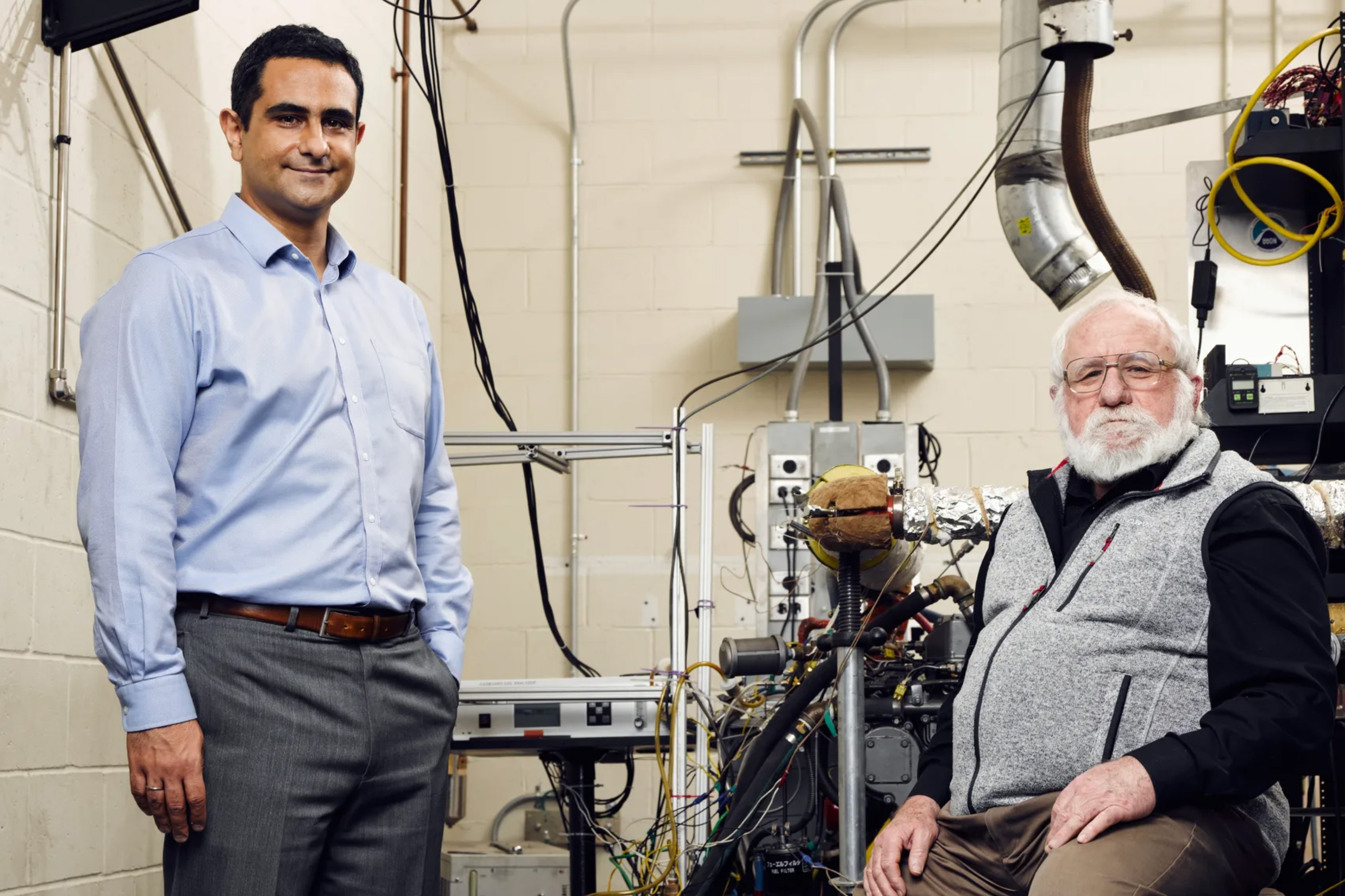
"The world is wasting an enormous energy resource every day. Emvolon has a unique ability to expand available energy sources by deploying onsite, establishing local fuel supply chains, and ensuring regional energy resilience. This round gives us the capital to deploy our first commercial system, prove the model, and start building the supply chains that hard-to-abate industries are actively looking for."
Emmanuel Kasseris, Cofounder and CEO, Emvolon
Where Is the Biomethanol Going?
Freepoint Commodities holds a multi-year first-purchase option for biomethanol and associated liquid fuels across Emvolon's deployment sites. The framework is valued at up to $450 million over seven years, with volumes structured to scale toward 300,000 metric tons annually as Emvolon's portfolio expands. Freepoint's global physical distribution network gives Emvolon an established route to market from the first commercial unit.
Maritime shipping is the primary near-term application. Green methanol is already powering container vessels from major global operators. More than 250 vessels globally have converted to dual-fuel methanol operation, generating demand for low-carbon biomethanol that currently exceeds available supply. RED-III-compliant biomethanol commands a premium exceeding $1,000 per metric ton over fossil methanol. At that price premium, Emvolon's economics work without relying on subsidies.

Industrial distribution infrastructure of the kind Freepoint Commodities operates will route Emvolon's biomethanol into maritime, chemical, and SAF markets once commercial production begins.
How Does Biomethanol Feed the SAF Market?
Emvolon's biomethanol can serve as feedstock for sustainable aviation fuel through the ASTM-approved methanol-to-jet production pathway. Emvolon does not produce SAF directly. It positions biomethanol as an upstream input that SAF refiners can purchase through Freepoint's network, tapping demand from airlines looking beyond used cooking oil for feedstock.
Methanol-to-SAF projects advancing through DOE financing signal growing commercial confidence in this pathway. Waste-derived biomethanol carries a strong carbon intensity advantage over fossil methanol, which matters both for carbon intensity scoring under transportation fuel standards and for SAF buyers with lifecycle emission targets. The global methanol market stands at approximately $40 billion annually, with maritime and SAF demand both expanding that ceiling.
Other capital is flowing in the same direction. Green methanol facilities in Louisiana and similar projects across North America reflect rising investor confidence in distributed production. Major bioenergy investments targeting waste-derived fuels have expanded through 2025 and 2026, as the commercial case for localized methanol production strengthens. Green methanol's broader role in distributed energy is increasingly well understood by the investor community Emvolon just brought on board.
Frequently Asked Questions
What is the difference between the $22 million Emvolon just raised and the Freepoint Commodities investment?
The $22 million is company-level capital for operations, team growth, and the first commercial production system. Freepoint's August 2026 investment is project-level, giving Freepoint co-investment rights in specific production sites. Both are necessary, and neither duplicates the other.
When will Emvolon's commercial biomethanol production begin?
Emvolon targets commercial production in 2027. The first commercial-scale system is being built through the company's joint venture with Montauk Renewables, starting at the Humble, Texas landfill site. Production is not yet operating as of October 2026.
Does Emvolon produce sustainable aviation fuel?
No. Emvolon produces biomethanol, which can serve as feedstock for SAF production through the ASTM-approved methanol-to-jet pathway. Emvolon is an upstream supplier in the SAF value chain, not a direct SAF producer.
With project capital from Freepoint, company capital from MassVentures and its co-investors, board expertise from Eric Bensaude, and a 2027 production target backed by $450 million in committed offtake, Emvolon enters commercial deployment with more aligned capital than most early-stage fuel companies carry at this stage. The first commercial system will be the critical proof point, providing the cost, yield, and logistics data needed to replicate the model at the additional sites required to hit the joint venture's 50,000 metric ton annual production target.
For ongoing coverage of carbon removal, BECCS, and corporate CDR procurement, subscribe to Decarbonfuse.com.
Subscribe to the newsletter
Daily decarbonization data and news delivered to your inbox
Follow the money flow of climate, technology, and energy investments to uncover new opportunities and jobs.
Latest issues
-
CRC Vows to Fight Kern County CCS Ruling
Inside This Issue ⚖️ Court Sets Aside Kern County Approval of California’s First Carbon Storage Project, Carbon TerraVault I 🌲 The Integrity Council Approves Methodologies for Coal Transition and ...
-
400 Tons of Hydrogen Daily to Power Data Centers
Inside This Issue ⚡ HDF Energy Selects Topsoe for 250 MW Power Plant in Texas 🍁 Deep Conduit Signature Identified Near Lawson 4 Expands Commercial Potential of Canada’s First Subsurface Natural Hy...
-
Why Meta Wants 200,000 Tons of Cement Credits
Inside This Issue 🤝 Fortera and Meta Sign Multi-Year Environmental Attribute Certificate (EAC) Purchase Agreement for Low Carbon Cement ✈️ Massachusetts Marks 1st Barge Delivery of SAF to Boston L...
Company Announcements
-
MMEX Resources Announces TCEQ Air Authorization for UltraClean Refinery North
30,000-barrel-per-day facility marks second permitting milestone for West Texas refining development with planned combined capacity of 60,000 barrels per day MMEX Resources Corporation (MMEX:OTCPK...
-
Calumet Announces CMR Asset Lease Details and Revised Agreement with Warburg Pincus
INDIANAPOLIS, Nov. 5, 2026 /PRNewswire/ -- Calumet, Inc. (NASDAQ: CLMT) ("Calumet," "we," "our," "the company," or "us") today announced two transactions designed to support the continued developme...
-
Brutus Mining to Acquire the Bay of Islands Hydrogen Project
VANCOUVER, British Columbia, Nov. 05, 2026 (GLOBE NEWSWIRE) -- Brutus Mining Inc. (“Brutus” or the “Company”) (CSE: BRU) (FSE: ZI3) is pleased to announce it has entered into a Property Option Agre...
-
Robinson Carbon Takes Biochar Production to Industrial Scale in Central Louisiana
A Robinson Carbon hard hat sits on a pile of biochar at the future site, the company’s first industrial-scale biochar facility, in Alexandria, La. [company photo] The project is expected to crea...