
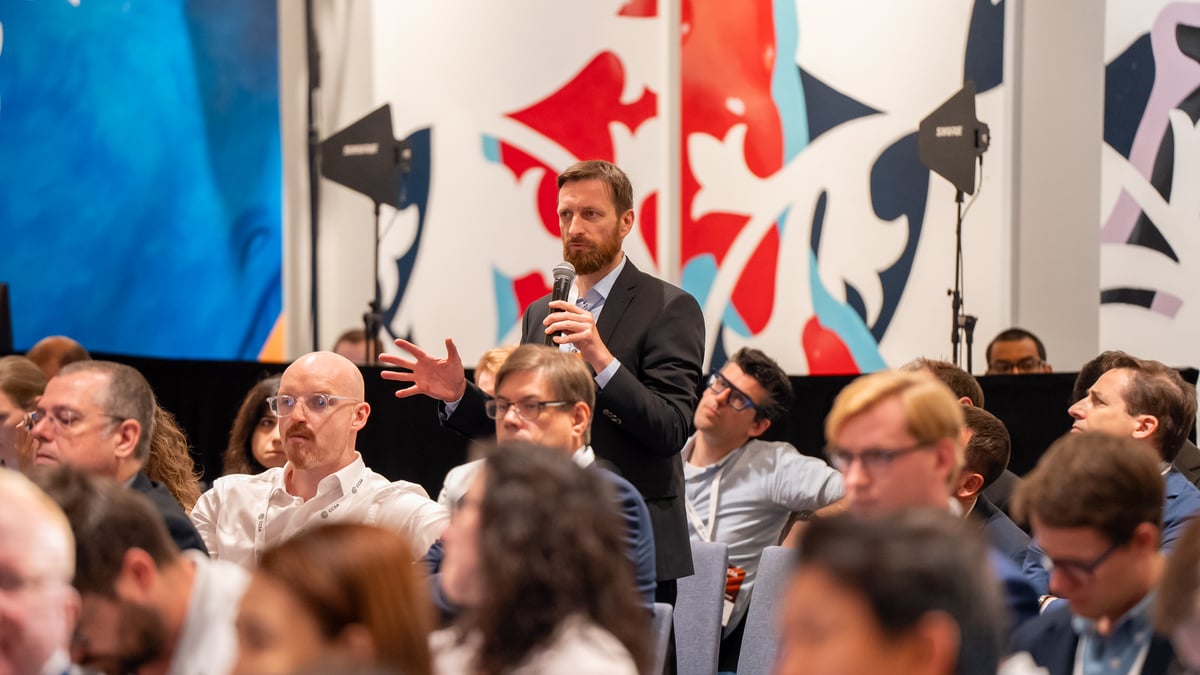
Europe's carbon capture and storage sector took stock of its progress on June 30, 2026, when the Carbon Capture and Storage Association (CCSA) hosted the third edition of its annual EU Conference in Brussels. More than 250 delegates, including policymakers, industry leaders, and civil society representatives, gathered to discuss how carbon capture, utilisation and storage (CCUS) can move from pilot projects to a fully integrated European market.
The tone centered less on proving the technology and more on building the commercial and regulatory scaffolding needed to scale it, with funding certainty and cross-border coordination flagged as the biggest hurdles ahead.
>> In Other News: Canada and Alberta Tie New West Coast Pipeline to 16-MTPA Pathways Carbon Capture Deal
Industry Leaders Call For Policy Certainty
Opening the conference, Olivia Powis, CEO, CCSA, said the sector has reached an inflection point. "Projects are moving, industry is ready and the need is undeniable," she said, adding that a coordinated approach to funding and regulation is needed to turn fragmented national efforts into an integrated European CCUS market at scale.
The opening panel brought together MEP Jeannette Baljeu, MEP Niels Flemming Hansen, and representatives from Gasunie, Shell, and Holcim, who agreed Europe can lead globally on CCUS but needs stronger cross-border cooperation and long-term clarity on the EU Emissions Trading System. Dr. Daniel Kitscha of the European Commission's DG CLIMA called 2026 a pivotal year for carbon management, pointing to rising storage permitting activity and strong demand for the EU Innovation Fund.
Building A Cross-Border Transport Network
A separate session with the Flemish Energy Agency, Eni Netherlands CCUS, Gasunie, and Bellona Europa examined how to build a functioning CO2 transport market through risk-sharing and investable regulatory tools.
Regional sessions covered the Mediterranean, North Sea, and Eastern Europe. Mediterranean speakers pointed to Italy's use of emergency legislation to fast-track the Ravenna CCS project, while Greece's ApolloCO2 initiative is working to link industrial emitters to storage via Ravenna. On the North Sea, Matt Taylor, Director for CCUS Strategy and Policy at the UK Department for Energy Security and Net Zero, said working together as North Sea partners can unlock the full value of CO2 storage capacity and help industry decarbonise faster and at lower cost. Eastern Europe got its own spotlight, framed as a lever for industrial competitiveness in regions where manufacturing has declined.
Financing Remains The Central Question
Thierry Grauwels, EU Director at the CCSA, closed the day by tying discussions back to the association's Europe Market Study, noting that major legislation is on the table but policy needs to give industry confidence to invest today. A related finance session agreed there's no single funding model for CCUS, but diversified strategies are emerging as the best way to de-risk investment across the value chain.

Key Facts
- The CCSA EU Conference 2026 took place June 30 in Brussels with 250+ delegates.
- It marked the third annual edition of the conference.
- Sessions covered cross-border CO2 transport, project finance, and regional deployment.
- Ravenna CCS (Italy) and ApolloCO2 (Greece) were named as near-term Mediterranean opportunities.
- The CCSA represents more than 120 member companies.
The message from Brussels was one of cautious momentum. Europe's CCUS sector no longer needs to prove the technology works. What remains is aligning governments, emitters, and investors around funding and regulation that can turn scattered national projects into one investable market.
About The CCSA
The Carbon Capture and Storage Association is the trade association accelerating commercial deployment of CCUS, with offices in Belgium and the UK.
Subscribe to the newsletter
Daily decarbonization data and news delivered to your inbox
Follow the money flow of climate, technology, and energy investments to uncover new opportunities and jobs.
Latest issues
-
Colorado Joins the 7-State CCS Permit Fast Lane
Inside This Issue ⚖️ Colorado Takes Over Class VI Permits: What Changes for CCS? 🏭 Hebei Shoulang Facility Using LanzaTech Technology Achieves World’s First ISCC EU RCF Certification for Ethanol P...
-
The US Hasn't Made Heavy Water Since 1982
Inside This Issue ⚛️ Aternium Completes FEED Studies for US Hydrogen, Heavy Water Project 🐄 Google, McKinsey Strike Brazil Carbon Removal Deal With Silvopasture Project 🔧 Cummins Selects Stargate ...
-
Why Colorado’s Koloma Has Japan’s Largest Utility Hooked
Inside This Issue ⚡ JERA Invests in Koloma to Explore Natural Hydrogen as a Future Low-Carbon Energy 🔬 New CATF Tool Provides Framework for Self-Assessment and Strengthening of Biomass Carbon Remo...
Company Announcements
-
Citi Closes $72 Million Carbon Removal-Linked Note to Support Applied Carbon Biochar Project
HIGHLIGHTS Citi structured an innovative $72 million carbon removal-linked note to provide upfront capital for Applied Carbon's biochar project, marking a first-of-its-kind "outcome bond" for ver...
-
New platform opens access to the same rigorous project evaluations trusted by the world's leading carbon removal procurement programs Today, Relae (formerly Carbon Direct) launched The Diligence C...
-
Inside BLM's 650,000-Acre Bet on Wyoming Carbon Storage
The Bureau of Land Management has offered right-of-way grants covering about 649,438 acres of federal pore space in southwest Wyoming. The September 21, 2026 offers went to Moxa Carbon Storage LLC ...
-
NEW YORK, BUSINESS WIRE, SWITCH Maritime (Switch), a leading developer of zero-emission vessels, secured a Design Basis Agreement (DBA) with the United States Coast Guard (USCG) for the SWITCH-150,...