
Europe's carbon capture and storage sector took stock of its progress on June 30, 2026, when the Carbon Capture and Storage Association (CCSA) hosted the third edition of its annual EU Conference in Brussels. More than 250 delegates, including policymakers, industry leaders, and civil society representatives, gathered to discuss how carbon capture, utilisation and storage (CCUS) can move from pilot projects to a fully integrated European market.
The tone centered less on proving the technology and more on building the commercial and regulatory scaffolding needed to scale it, with funding certainty and cross-border coordination flagged as the biggest hurdles ahead.
>> In Other News: Canada and Alberta Tie New West Coast Pipeline to 16-MTPA Pathways Carbon Capture Deal
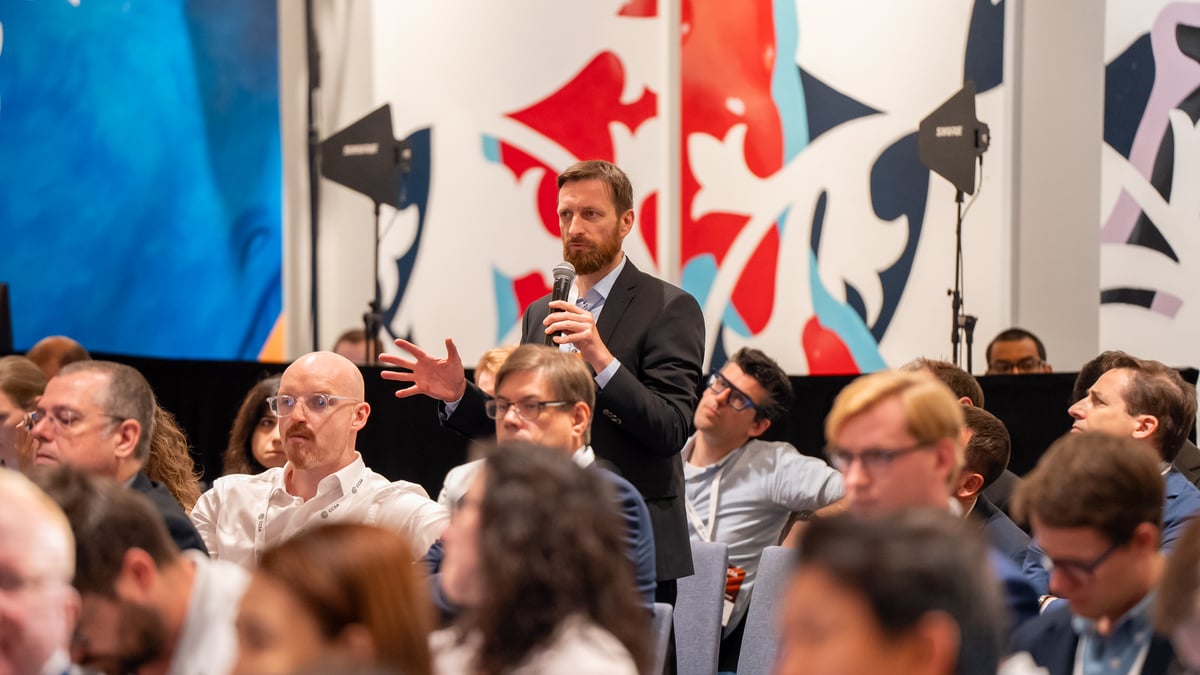
Industry Leaders Call For Policy Certainty
Opening the conference, Olivia Powis, CEO, CCSA, said the sector has reached an inflection point. "Projects are moving, industry is ready and the need is undeniable," she said, adding that a coordinated approach to funding and regulation is needed to turn fragmented national efforts into an integrated European CCUS market at scale.
The opening panel brought together MEP Jeannette Baljeu, MEP Niels Flemming Hansen, and representatives from Gasunie, Shell, and Holcim, who agreed Europe can lead globally on CCUS but needs stronger cross-border cooperation and long-term clarity on the EU Emissions Trading System. Dr. Daniel Kitscha of the European Commission's DG CLIMA called 2026 a pivotal year for carbon management, pointing to rising storage permitting activity and strong demand for the EU Innovation Fund.
Building A Cross-Border Transport Network
A separate session with the Flemish Energy Agency, Eni Netherlands CCUS, Gasunie, and Bellona Europa examined how to build a functioning CO2 transport market through risk-sharing and investable regulatory tools.
Regional sessions covered the Mediterranean, North Sea, and Eastern Europe. Mediterranean speakers pointed to Italy's use of emergency legislation to fast-track the Ravenna CCS project, while Greece's ApolloCO2 initiative is working to link industrial emitters to storage via Ravenna. On the North Sea, Matt Taylor, Director for CCUS Strategy and Policy at the UK Department for Energy Security and Net Zero, said working together as North Sea partners can unlock the full value of CO2 storage capacity and help industry decarbonise faster and at lower cost. Eastern Europe got its own spotlight, framed as a lever for industrial competitiveness in regions where manufacturing has declined.
Financing Remains The Central Question
Thierry Grauwels, EU Director at the CCSA, closed the day by tying discussions back to the association's Europe Market Study, noting that major legislation is on the table but policy needs to give industry confidence to invest today. A related finance session agreed there's no single funding model for CCUS, but diversified strategies are emerging as the best way to de-risk investment across the value chain.

Key Facts
- The CCSA EU Conference 2026 took place June 30 in Brussels with 250+ delegates.
- It marked the third annual edition of the conference.
- Sessions covered cross-border CO2 transport, project finance, and regional deployment.
- Ravenna CCS (Italy) and ApolloCO2 (Greece) were named as near-term Mediterranean opportunities.
- The CCSA represents more than 120 member companies.
The message from Brussels was one of cautious momentum. Europe's CCUS sector no longer needs to prove the technology works. What remains is aligning governments, emitters, and investors around funding and regulation that can turn scattered national projects into one investable market.
About The CCSA
The Carbon Capture and Storage Association is the trade association accelerating commercial deployment of CCUS, with offices in Belgium and the UK.
Subscribe to the newsletter
Daily decarbonization data and news delivered to your inbox
Follow the money flow of climate, technology, and energy investments to uncover new opportunities and jobs.
Latest issues
-
Shell Will Help Delta Reach 23 Million SAF Gallons
Inside This Issue ✈️ Delta and Shell Ink 5-Year SAF Deal Across 5 US Hubs 🌲 Plumas County Receives Top Bioenergy Rating, Opening Door for Biomass Investment 📜 Rep. Kiley Introduces Bill to Incenti...
-
Why Bloom Energy Just Landed $1.7B Bet
Inside This Issue 🔋 Why $1.7B Is Betting on Fuel Cells Over Nuclear for AI 🍁 Air Canada and Airbus Launch Joint Initiative to Scale Domestic Canadian SAF and Help Reduce the Life-Cycle Emissions o...
-
Oil Sands Alliance Faces $43.7 Billion Price Tag
Inside This Issue 🍁 Alberta Cuts Carbon Costs to Fast-Track Pathways CCS 🏛️ EU Unveils Sweeping ETS Overhaul With €100 Billion Industrial Decarbonisation Bank 🌱 Consultation: Major Revision to Bio...
Company Announcements
-
Acquisition of additional permits covering 660,263 acres or 2,672 sq. km, including the Aurora Project adjoining Lawson and striking southeast toward Moose Jaw, enhances Natural Hydrogen commercial...
-
Climeworks Solutions Launches Compliance-Ready Carbon Removal Offering As Policy Advances
Expanded offering helps organizations source carbon removal portfolios aligned with evolving compliance frameworks including CORSIA, Article 6.2 mechanisms, and the EU Carbon Removal and Carbon Far...
-
Three QIMC field crews now active on the ground conducting soil-gas sampling to densify hydrogen anomalies and ground magnetic surveying along the Cobequid-Chedabucto Fault Zone QIMC's record DDH-...
-
Sustainable aviation fuel (SAF) could become a major driver of Canada's industrial and economic growth, while contributing to the global aerospace industry's aspirational goal to achieve 'net-zero ...