
Green Hydrogen Breakthrough: Lancaster to Host North America’s Largest Hydrogen Plant
Published by Todd Bush on June 5, 2025
A $1.85 Billion Investment That Could Reshape Clean Energy on the West Coast
In a move that cements California’s leadership in the clean hydrogen space, Element Resources has announced plans to build what will become North America’s largest green hydrogen production facility. Backed by a massive $1.85 billion investment, the Lancaster Clean Energy Center (LCEC) is set to begin construction later this year and will begin commercial operations by mid-2027.
The facility will span 2,100 acres in Lancaster, California, located roughly 70 miles north of Los Angeles. Once operational, the plant will produce up to 22,000 tons of renewable hydrogen annually, or around 60,000 kilograms per day. This zero-carbon fuel will primarily support heavy- and medium-duty transport sectors, including public transit, port operations, and rail.
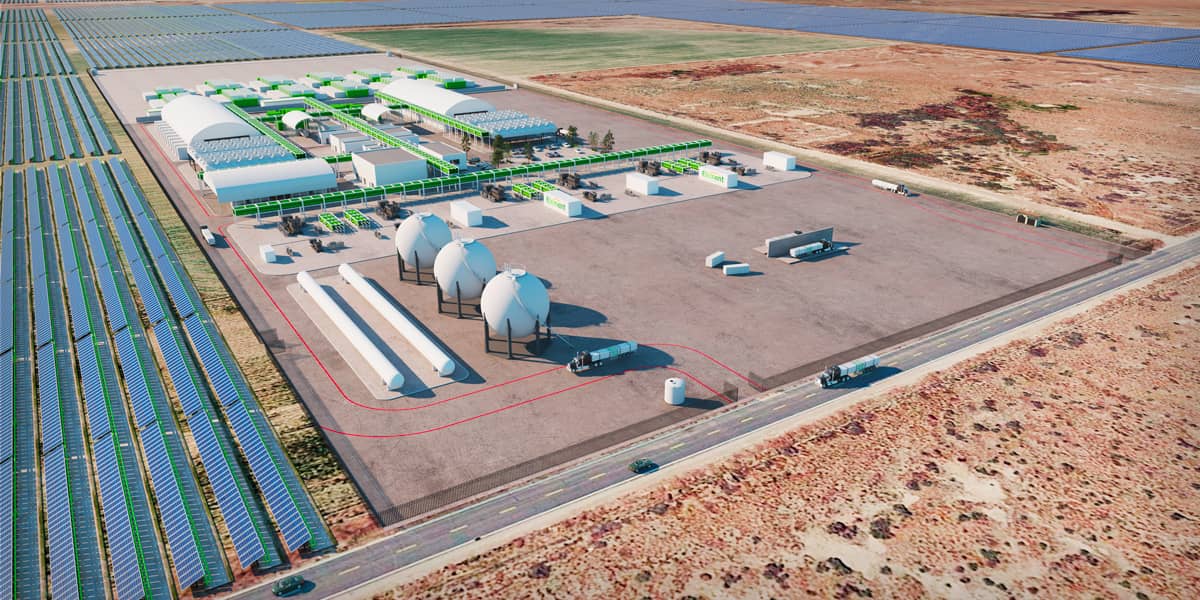
Locally Produced Green Hydrogen
100% Renewable Energy
Zero-Carbon Fuels
- Largest off-grid renewable green hydrogen production project in the U.S.
- Acreage: 1,380 acres
- Jobs created: ~250 during construction phase, 36 permanent
- Transportation Access: California State Highways 14 and 138, Union Pacific Railroad
- Primary activity: Green Hydrogen production
- H2 Production: ~21,000 mt per annum base (expandable)
- Targeted to begin production operations in early 2026
Powered by the Sun, Not the Grid
What makes this project even more remarkable is its complete independence from the grid. Instead of relying on external power, LCEC will be powered entirely by on-site solar energy paired with long-duration battery storage.
According to Steve Meheen, CEO of Element Resources, "The LCEC will be powered fully by on-site solar energy and use groundwater from the aquifer under the land. The facility will only use 15 to 20% of the water formerly being used to irrigate carrots, onions and potatoes on the land, significantly minimizing water usage."
This off-grid approach not only cuts emissions but also futureproofs the facility against power fluctuations and water scarcity. In a state regularly battling both energy and drought challenges, LCEC’s model could set a new standard for sustainable hydrogen production.
In addition, the use of long-duration battery energy storage enables continuous hydrogen output, even when the sun isn’t shining. This ensures the facility remains productive during nighttime hours or periods of reduced solar input. Such technology integration showcases how renewables and storage can work hand in hand to create a truly resilient hydrogen ecosystem.
Strong Partnerships & Government Backing
Element Resources isn’t going it alone. The project is receiving strong public and private sector backing, including $30.5 million in tax credits through the California Jobs First initiative announced by Governor Gavin Newsom.
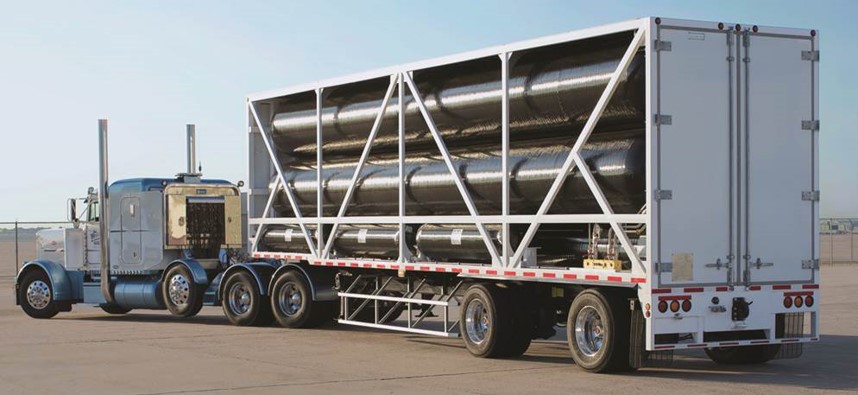
To support distribution and operations, Element is working with the First Public Hydrogen Authority - a new utility formed by the City of Lancaster and the City of Industry. Hydrogen will be distributed via zero-emission hydrogen fuel cell trucks, further amplifying the project’s clean energy profile.
Project collaborators also include ARCHES, the California Hydrogen Business Council, California Transit Association, and the Center for Hydrogen Safety. These partnerships reflect a broader statewide push to scale hydrogen infrastructure and support the federal Hydrogen Hub vision.
Notably, this multi-stakeholder effort positions the LCEC to play a central role in achieving California’s 2045 net-zero carbon goals. With support from both local government and industry alliances, the project has broad-based momentum. This kind of collaboration will be critical to unlocking hydrogen’s full potential nationwide.
>> In Other News: Policy Shortcomings Puts SAF Production at Risk
Timing Is Everything
With California racing toward its decarbonization goals, LCEC is poised to become a cornerstone of the state’s energy future. The project arrives amid a wave of hydrogen developments, including Avina Clean Hydrogen breaking ground in Vernon, California, and new funding pathways from the Department of Energy’s hydrogen initiatives.
By producing hydrogen at scale using renewable resources and deploying it across transportation and industrial markets, Element Resources is showing how green hydrogen can become a commercially viable, regionally scalable solution.
"This key initiative aligns with California’s clean energy goals and supports the buildout of infrastructure necessary to reduce emissions in hard-to-electrify sectors," said Steve Meheen, emphasizing the project’s regional and national significance.
Building a Blueprint for the Future
What’s being built in Lancaster isn’t just a plant - it’s a blueprint. From off-grid solar integration and groundwater sustainability to public-private collaboration, the LCEC encapsulates what a modern hydrogen facility should look like.
As companies and governments around the world look to meet net-zero targets, all eyes are on projects like this. Hydrogen remains a crucial pathway in hard-to-decarbonize industries, and Lancaster’s leadership could inspire similar innovations across the United States.
California’s commitment to climate action, combined with Element’s ambitious execution, may soon turn Lancaster into the beating heart of America’s green hydrogen economy.
Subscribe to the newsletter
Daily decarbonization data and news delivered to your inbox
Follow the money flow of climate, technology, and energy investments to uncover new opportunities and jobs.
Latest issues
-
Colorado Joins the 7-State CCS Permit Fast Lane
Inside This Issue ⚖️ Colorado Takes Over Class VI Permits: What Changes for CCS? 🏭 Hebei Shoulang Facility Using LanzaTech Technology Achieves World’s First ISCC EU RCF Certification for Ethanol P...
-
The US Hasn't Made Heavy Water Since 1982
Inside This Issue ⚛️ Aternium Completes FEED Studies for US Hydrogen, Heavy Water Project 🐄 Google, McKinsey Strike Brazil Carbon Removal Deal With Silvopasture Project 🔧 Cummins Selects Stargate ...
-
Why Colorado’s Koloma Has Japan’s Largest Utility Hooked
Inside This Issue ⚡ JERA Invests in Koloma to Explore Natural Hydrogen as a Future Low-Carbon Energy 🔬 New CATF Tool Provides Framework for Self-Assessment and Strengthening of Biomass Carbon Remo...
Company Announcements
-
Citi Closes $72 Million Carbon Removal-Linked Note to Support Applied Carbon Biochar Project
HIGHLIGHTS Citi structured an innovative $72 million carbon removal-linked note to provide upfront capital for Applied Carbon's biochar project, marking a first-of-its-kind "outcome bond" for ver...
-
New platform opens access to the same rigorous project evaluations trusted by the world's leading carbon removal procurement programs Today, Relae (formerly Carbon Direct) launched The Diligence C...
-
Inside BLM's 650,000-Acre Bet on Wyoming Carbon Storage
The Bureau of Land Management has offered right-of-way grants covering about 649,438 acres of federal pore space in southwest Wyoming. The September 21, 2026 offers went to Moxa Carbon Storage LLC ...
-
NEW YORK, BUSINESS WIRE, SWITCH Maritime (Switch), a leading developer of zero-emission vessels, secured a Design Basis Agreement (DBA) with the United States Coast Guard (USCG) for the SWITCH-150,...