
Transition Industries has signed a definitive EPC agreement with Siemens Energy and Techint E&C for the roughly 210 MW electrolyzer at Pacifico Mexinol in Sinaloa. The deal moves the plant from engineering into a construction contract. Construction is expected to start in early 2027, once conditions precedent, including project financing, are met.
Siemens Energy says the facility would be its largest electrolyzer installation in the Americas. It's a real execution milestone for one of North America's largest planned low-carbon chemical projects.
Key Facts
- Deal: definitive EPC agreement signed October 28, 2026, for an approximately 210 MW electrolyzer facility
- Partners: Transition Industries (developer), Siemens Energy (electrolyzer technology), Techint E&C (construction)
- Technology: Siemens Energy Elyzer P-300 PEM electrolyzers
- Hydrogen design rate: about 4,000 kilograms per hour, per the August 2025 FEED announcement
- Methanol complex: about 6,130 metric tons per day near Topolobampo, Sinaloa, Mexico
- Construction start: early 2027, subject to conditions precedent, including project financing
- Operations: 2030 in the EPC release, within the late 2029 to early 2030 window set in February 2026
- Contract value: not disclosed
>> In Other News: [x](x)
What Did Transition Industries Sign with Siemens Energy and Techint?
Transition Industries signed a definitive engineering, procurement and construction agreement on October 28, 2026, covering the roughly 210 MW electrolyzer facility. Siemens Energy brings the electrolysis technology, and Techint E&C brings construction capability.

"Moving from front-end engineering to a signed EPC agreement is a significant milestone for Pacifico Mexinol. This agreement brings together Siemens Energy's electrolysis technology and Techint's construction capabilities to deliver a critical component of our project and a landmark for renewable hydrogen in the Americas."
Rommel Gallo, CEO, Transition Industries
Transition Industries is a Houston-based developer of world-scale, net-zero carbon methanol and hydrogen projects in North America. Siemens Energy is a German energy technology company that builds PEM electrolyzers. Techint E&C is an engineering and construction contractor whose Mexico City unit dates back to 1954.
The agreement is subject to customary conditions precedent, including completion of project financing. No contract value was disclosed.
Transition Industries is co-developing the project with the International Finance Corporation, a member of the World Bank Group. Total investment in the complex is expected to exceed US$3.3 billion, according to a February 2026 Transition Industries announcement.
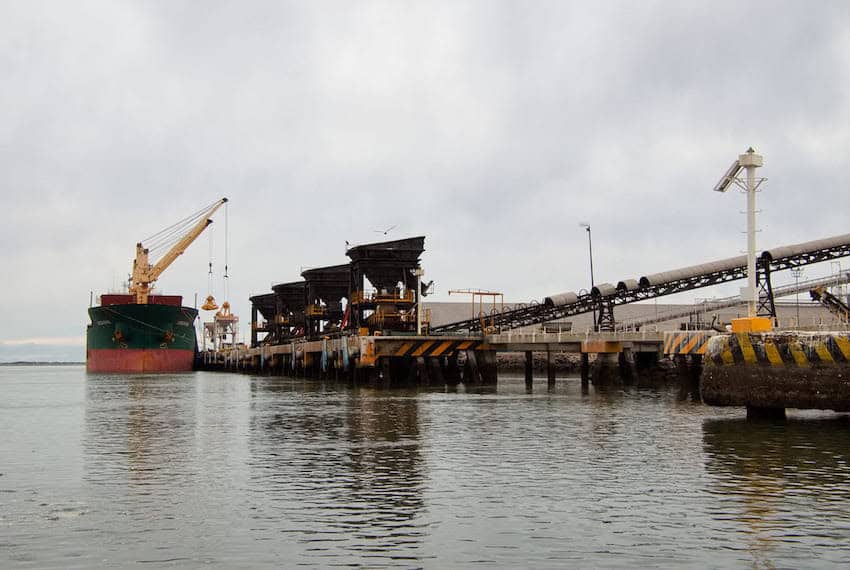
Pipe bridges and process units like these link hydrogen supply to methanol synthesis inside large chemical complexes.
How Will Siemens Energy's Elyzer P-300 Make Renewable Hydrogen?
The facility will use Siemens Energy's Elyzer P-300, a proton exchange membrane (PEM) electrolyzer line that splits water into hydrogen and oxygen with electricity. Its hydrogen will support production of renewable fuels of non-biological origin, known as RFNBO, inside the methanol complex.
The plant was designed for about 4,000 kilograms of hydrogen per hour, according to Transition Industries' August 2025 FEED announcement. That works out to roughly 96 metric tons a day at full, continuous output.
Siemens Energy makes its PEM stacks at a Berlin electrolyzer factory it opened with Air Liquide on November 8, 2023. The company also won a 280 MW electrolyzer order from German utility EWE in July 2024, one of several large electrolysis projects moving forward worldwide.

"At approximately 210 MW, this hydrogen plant would be Siemens Energy's largest electrolyzer installation in the Americas. The project has the potential to accelerate low-carbon fuel production in the region and advance the global decarbonization of hard-to-abate industries."
Dan Restrepo, Head of Electrolyzer Sales Americas, Siemens Energy
Hydrogen demand keeps branching out, even into hydrogen-powered data centers. Methanol is one of the most practical outlets, because it stays liquid at ambient conditions and ships with existing infrastructure.
How Did Pacifico Mexinol Move from FEED to EPC?
The electrolyzer moved from a front-end engineering design (FEED) contract in August 2025 to a signed EPC agreement in October 2026, about 14 months later. Both stages involved the same three companies.
| Stage | FEED | EPC |
|---|---|---|
| Announced | August 2025 | October 28, 2026 |
| Scope | Front-end engineering and design | Engineering, procurement and construction |
| Pricing terms | Binding not-to-exceed lump sum, then a final lump sum price for EPC | Not disclosed |
| Status | Engineering development | Signed, subject to conditions precedent, including financing |
Under the FEED terms, Siemens Energy and Techint E&C were to provide a binding not-to-exceed lump sum price first. A final lump sum turnkey price for EPC would follow, but the October release doesn't share that figure.
The electrolyzer deal adds to earlier execution contracts. Techint E&C is already part of the main-plant EPC agreement with Samsung E&A, signed in July 2025. Italian contractor Bonatti signed a heads of agreement for port, pipeline and water reuse works in August 2025.
Where Does the Electrolyzer Fit in the Methanol Complex?
The electrolyzer serves one of three production routes inside the 6,130 metric ton per day complex. Most of the volume comes from natural gas paired with carbon capture.
According to Transition Industries' October 2026 EPC release, planned annual output breaks down like this:
- About 175,000 metric tons of RFNBO methanol, supported by renewable hydrogen from the electrolyzer
- About 175,000 metric tons of recycled carbon fuel (RCF) methanol
- About 1.8 million metric tons of ultra-low carbon methanol from natural gas with carbon capture
Earlier releases described about 350,000 metric tons of green methanol a year, matching the first two routes combined. The gas route relies on a separate long-term supply contract with CFEnergía, a subsidiary of Mexico's Federal Electricity Commission. It covers about 160 million cubic feet of gas per day.

Pacifico Mexinol plans three methanol production pathways at its 6,130-metric-ton-per-day complex in Sinaloa, Mexico. The project includes a 210 MW Siemens Energy electrolyzer supporting 175,000 metric tons of RFNBO methanol annually, alongside 175,000 metric tons of RCF methanol and 1.8 million metric tons of natural-gas-based methanol with carbon capture. Construction is expected in early 2027, subject to financing and other conditions.
Japan's Mitsubishi Gas Chemical signed a long-term ultra-low carbon methanol purchase agreement in November 2025 for about 1 million metric tons a year. Methanol can also feed methanol-to-jet routes, a pathway drawing sustainable aviation fuel investment from airlines.

Utility-scale solar in arid terrain, a common source of the renewable electricity that RFNBO hydrogen production depends on.
What Has to Happen Before Construction Starts in 2027?
Construction on the electrolyzer is expected to begin in early 2027, subject to conditions precedent, including completion of project financing. Until those conditions are satisfied, the signed contract can't move into full construction.
The wider site held a symbolic groundbreaking in April 2026, with field engineering and site preparation scheduled to follow. The EPC release targets operations in 2030, inside the late 2029 to early 2030 window Transition Industries set in February 2026.
Siemens Energy video on its PEM electrolyzer technology for green hydrogen production, the same modular platform (Elyzer) selected for the ~210 MW facility at Pacifico Mexinol.
The project is expected to create more than 6,000 construction jobs in Sinaloa, per Transition Industries' February 2026 announcement. At least 450 permanent roles will follow in operations.
What Does This Deal Mean for North American Hydrogen?
A signed 210 MW EPC contract gives North America a contractor-backed renewable hydrogen project tied to a named methanol buyer. Siemens Energy says it would be the company's largest electrolyzer installation in the Americas.
It also lands as the region builds other decarbonization infrastructure, from direct air capture facilities in Louisiana to onshore CO2 storage projects. Pacifico Mexinol pairs renewable hydrogen and carbon capture at one coastal site.
Frequently Asked Questions
Is the Pacifico Mexinol electrolyzer contract final?
It's a definitive EPC agreement, but it's subject to conditions precedent, including completion of project financing. Construction is expected to start in early 2027 once those conditions are met.
What is RFNBO methanol?
RFNBO stands for renewable fuels of non-biological origin. At Pacifico Mexinol, it's methanol made with renewable hydrogen from the 210 MW electrolyzer, about 175,000 metric tons a year.
Will the whole plant run on green hydrogen?
No. About 1.8 million of the plant's roughly 2.15 million metric tons a year will come from natural gas with carbon capture. The electrolyzer supports the RFNBO route.
Financing is the next gate. Once it closes, a 210 MW electrolyzer could start rising on Mexico's Pacific coast in early 2027.
For ongoing coverage of carbon removal, BECCS, and corporate CDR procurement, subscribe to Decarbonfuse.com.
Subscribe to the newsletter
Daily decarbonization data and news delivered to your inbox
Follow the money flow of climate, technology, and energy investments to uncover new opportunities and jobs.
Latest issues
-
CRC Vows to Fight Kern County CCS Ruling
Inside This Issue ⚖️ Court Sets Aside Kern County Approval of California’s First Carbon Storage Project, Carbon TerraVault I 🌲 The Integrity Council Approves Methodologies for Coal Transition and ...
-
400 Tons of Hydrogen Daily to Power Data Centers
Inside This Issue ⚡ HDF Energy Selects Topsoe for 250 MW Power Plant in Texas 🍁 Deep Conduit Signature Identified Near Lawson 4 Expands Commercial Potential of Canada’s First Subsurface Natural Hy...
-
Why Meta Wants 200,000 Tons of Cement Credits
Inside This Issue 🤝 Fortera and Meta Sign Multi-Year Environmental Attribute Certificate (EAC) Purchase Agreement for Low Carbon Cement ✈️ Massachusetts Marks 1st Barge Delivery of SAF to Boston L...
Company Announcements
-
MMEX Resources Announces TCEQ Air Authorization for UltraClean Refinery North
30,000-barrel-per-day facility marks second permitting milestone for West Texas refining development with planned combined capacity of 60,000 barrels per day MMEX Resources Corporation (MMEX:OTCPK...
-
Calumet Announces CMR Asset Lease Details and Revised Agreement with Warburg Pincus
INDIANAPOLIS, Nov. 5, 2026 /PRNewswire/ -- Calumet, Inc. (NASDAQ: CLMT) ("Calumet," "we," "our," "the company," or "us") today announced two transactions designed to support the continued developme...
-
Brutus Mining to Acquire the Bay of Islands Hydrogen Project
VANCOUVER, British Columbia, Nov. 05, 2026 (GLOBE NEWSWIRE) -- Brutus Mining Inc. (“Brutus” or the “Company”) (CSE: BRU) (FSE: ZI3) is pleased to announce it has entered into a Property Option Agre...
-
Robinson Carbon Takes Biochar Production to Industrial Scale in Central Louisiana
A Robinson Carbon hard hat sits on a pile of biochar at the future site, the company’s first industrial-scale biochar facility, in Alexandria, La. [company photo] The project is expected to crea...