
The IRS issued Notice 2026-50 on August 14, 2026, expanding the 45Q safe harbor to cover enhanced oil recovery projects and recapture calculations. Applicability now extends well beyond the original 2025 sunset. But the EPA has not finalized its proposed Subpart RR repeal, permanent MRV regulations are still forthcoming, and public comments are due October 30.
Key Facts
- Notice 2026-50 was issued August 14, 2026, by Treasury and the IRS (IRS IRB 2026-36).
- The safe harbor now covers EOR projects using carbon as a tertiary injectant, a gap left by Notice 2026-1 (December 19, 2025).
- The prior 2025 calendar-year sunset is replaced with an open-ended applicability period tied to future Treasury guidance.
- Recapture calculations under Section 1.45Q-5 are now explicitly covered by the safe harbor.
- The EPA proposed removing Subpart RR on September 16, 2025 (90 F.R. 44591). That rule is not yet final.
- Public comments on Notice 2026-50 are due October 30, 2026.
- More than 270 publicly announced U.S. carbon capture projects representing $77.5 billion in capital investment were tracked through 2024, according to DOE and industry data.
>> In Other News: City of Oulu and ABO Energy Have Signed a Cooperation Agreement Regarding a Hydrogen Plant
What Problem Did Notice 2026-1 Leave Unsolved?
Notice 2026-1, released December 19, 2025, was the first patch. It gave carbon capture developers an alternative compliance path if the EPA shut down its e-GGRT reporting tool before 2025 filings were submitted. Under that safe harbor, projects using Class VI injection wells could substitute third-party certification from a qualified independent engineer for the Subpart RR annual report.
But it only covered one type of storage. Projects using CO2 as a tertiary injectant in enhanced oil or natural gas recovery were excluded. An alternative standard, CSA/ANSI ISO 27916:2019, was technically available for those sites.
Stakeholders pushed back quickly. Switching to the ISO standard mid-project would impose real engineering costs and timeline delays. Some operators said it simply could not be done in time for the 2025 credit year.
The result was a population of active Class II EOR wells with no safe harbor fallback. Uncertainty over substantiation and recapture can complicate tax-equity diligence and financing, especially for projects with long investment horizons.
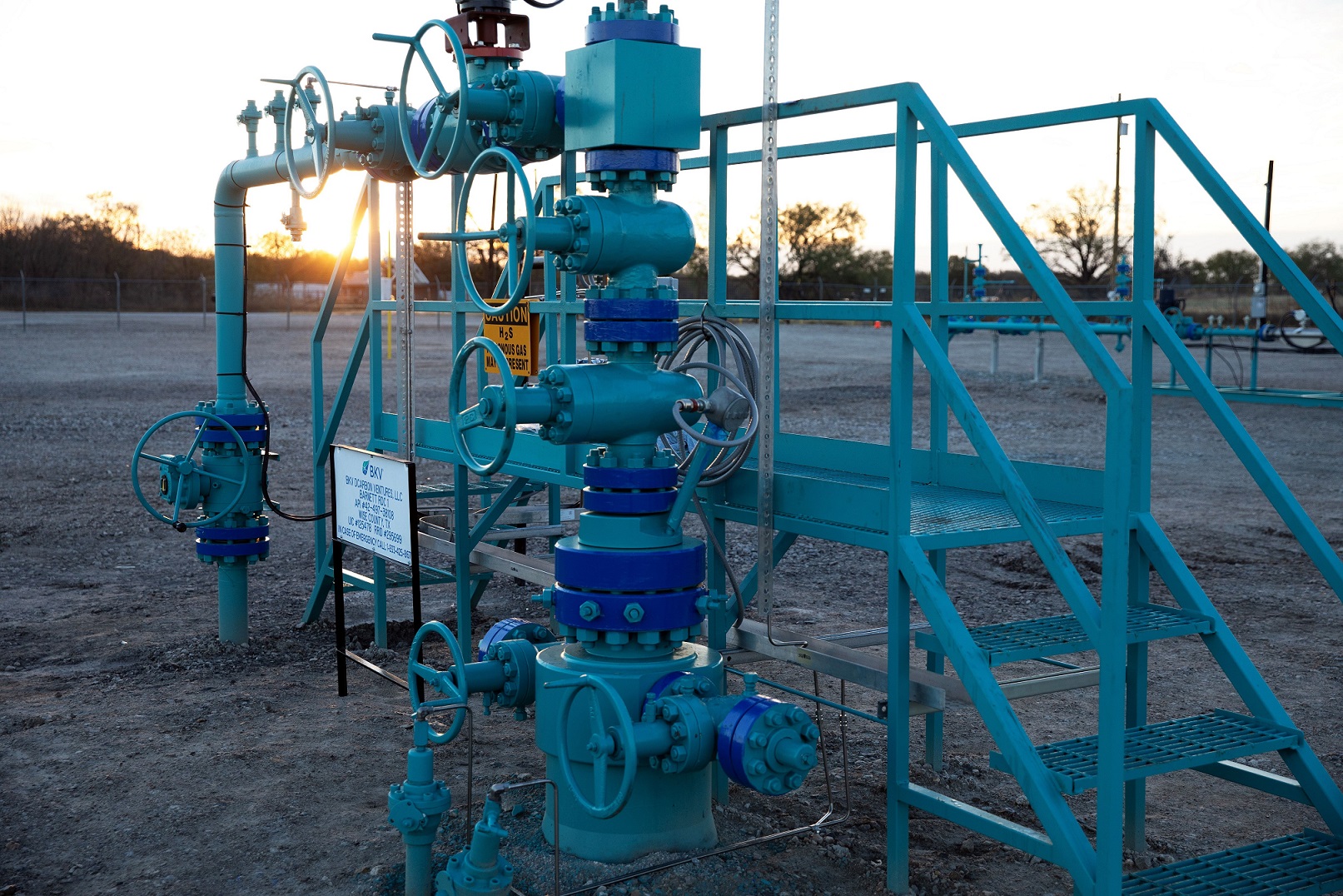
Carbon capture infrastructure relies on clear MRV standards to qualify for Section 45Q credits. Notice 2026-50 preserves that path for EOR projects that previously had no safe harbor.
What Does Notice 2026-50 Actually Change?
Notice 2026-50 makes three substantive changes to the existing safe harbor. Each one addresses a documented gap that had generated stakeholder inquiries to Treasury since Notice 2026-1 was released.
First, EOR projects are now covered. Carbon oxide used as a tertiary injectant in a qualified enhanced oil or natural gas recovery project is now eligible for the engineer certification pathway. The taxpayer must hold an EPA-approved MRV plan and comply with Subpart RR requirements as they stood on December 31, 2025.
Second, recapture calculations are covered. The safe harbor now explicitly addresses how much qualified carbon oxide has leaked to the atmosphere under Section 1.45Q-5. The same certified annual report process quantifies both stored volumes and any leakage, removing ambiguity that had complicated tax-equity diligence.
Third, the calendar-year 2025 sunset is replaced. The safe harbor now covers storage occurring from January 1, 2025, through the end of the year Treasury issues permanent regulations or further guidance. That open-ended period gives projects a stable planning horizon while the regulatory framework is worked out.
The safe harbor still requires an EPA-approved MRV plan. It does not eliminate the underlying substantiation requirement. It provides a certification path when the e-GGRT is unavailable, with the Subpart RR requirements as of December 31, 2025, as the operational baseline.
"Long-term certainty regarding Section 45Q eligibility is essential to reaching final investment decisions; even short-term gaps in guidance can create material uncertainty and deter investment."
Jessie Stolark, Executive Director, Carbon Capture Coalition
How Does Notice 2026-50 Compare to Notice 2026-1?
The two notices are sequential, with Notice 2026-50 building directly on Notice 2026-1. The table below shows where each lands on the key issues.
| Issue | Notice 2026-1 (Dec. 19, 2025) | Notice 2026-50 (Aug. 14, 2026) |
|---|---|---|
| Pure geological storage (Class VI) | Covered | Covered (unchanged) |
| EOR / tertiary injectant projects | Not covered | Now covered |
| Recapture calculations (Sec. 1.45Q-5) | Not addressed | Now covered |
| Applicability period | Calendar year 2025 only | Jan. 1, 2025 through permanent guidance |
| Verification method | Independent engineer/geologist certification | Same, extended to EOR and recapture |
| EPA Subpart RR finalized? | No (proposed Sept. 16, 2025) | Still not final as of Aug. 2026 |
More than 270 publicly announced U.S. carbon capture projects representing $77.5 billion in capital investment were tracked through 2024, according to DOE and industry data. The 45Q framework is the primary federal revenue mechanism supporting them. How storage volumes are verified determines whether tax-equity transactions close, making the expanded safe harbor more than a regulatory technicality.
Construction progress at STRATOS, 1PointFive’s Direct Air Capture facility in Ector County, Texas, where captured CO₂ is intended for secure geological storage under the 45Q framework.
What Is Still Open, and Why It Matters for Financing
The EPA's proposed rule to remove Subpart RR was published September 16, 2025. As of Notice 2026-50, it has not been finalized. That is the regulatory overhang this notice was designed to bridge.
Treasury and the IRS are soliciting public comments on what should permanently replace Subpart RR. The notice specifically asks whether ISO 27914:2026, the recently updated international standard for geological carbon storage, is an appropriate long-term replacement. Comments are due October 30, 2026.
For developers on Gulf Coast CCS projects or the emerging California carbon storage sector, the open-ended safe harbor is a real improvement. But the absence of final EPA action means the verification standard is still technically in a proposed-repeal state. Uncertainty over substantiation and recapture can complicate tax-equity diligence and financing, even when interim guidance exists.
The One Big Beautiful Bill Act preserved 45Q at $85 per metric ton for point-source capture, and $180 per metric ton for direct air capture. The credit itself is not in question. What remains unsettled is the verification apparatus that proves eligible tons were actually stored.
"45Q has fundamentally changed the revenue situation and return on investment for carbon capture projects."
Curt Graham, Vice President, Fluor Corporation
Which Projects Benefit Most from the Expanded Safe Harbor?
The projects that gain the most are those that had no workable path under Notice 2026-1. Active Class II EOR wells were excluded because the ISO 27916:2019 standard was theoretically available. In practice, switching mid-project was not feasible for the 2025 credit year.
Projects like those run by BKV Corporation across the Barnett Shale and South Texas now have a clearer compliance path. The $77.5 billion U.S. carbon capture investment pipeline is not limited to dedicated storage projects. A meaningful share runs through EOR infrastructure, and those projects needed this coverage.
The recapture clarification benefits tax-equity investors across the board. For the credit transfer market that has grown around 45Q, knowing exactly how recapture is measured reduces a specific category of transaction risk. That matters for deals moving through diligence right now.
Monitoring, reporting, and verification of stored carbon volumes is the technical foundation of 45Q credit eligibility. The transition from Subpart RR to a permanent alternative is what both notices are bridging.
Where the 45Q Framework Goes from Here
The October 30 comment deadline is the next substantive milestone. Treasury and the IRS are asking what should permanently replace Subpart RR, with ISO 27914:2026 named as one candidate. The industry response will shape the permanent MRV framework that follows.
Proposed regulations under Section 45Q are still forthcoming, and both notices are explicit that this is interim guidance. The compliance framework for geological carbon storage and carbon capture projects navigating a shifting regulatory landscape is still being written.
The broad carbon capture sector has proven it can build through policy uncertainty, and more than $77.5 billion in announced U.S. capital investment reflects that. Notice 2026-50 gives developers and tax-equity investors the substantiation framework they need while permanent regulations are drafted. The October 30 comment window is the industry's direct path to shape what comes next.
Frequently Asked Questions
Does Notice 2026-50 apply to projects that are not yet operating?
Yes. The safe harbor applies to qualifying geological storage occurring from January 1, 2025, through the end of the year in which Treasury issues permanent regulations or further interim guidance. That open-ended applicability period is one of the key improvements over Notice 2026-1, which covered only 2025 storage. Projects currently in development can rely on the safe harbor for future credit years, provided they hold an EPA-approved MRV plan and comply with Subpart RR requirements as they stood on December 31, 2025.
What happens if the EPA finalizes the Subpart RR repeal?
The safe harbor is designed to bridge the gap until a permanent replacement framework is in place. If the EPA finalizes the repeal, the e-GGRT system would no longer accept Subpart RR filings. Under the safe harbor, taxpayers would instead submit their annual report to a qualified independent engineer or geologist for certification, using the same data and methodology Subpart RR required as of December 31, 2025. Treasury has asked for public comment by October 30, 2026, on whether ISO 27914:2026 or other standards should serve as the permanent replacement.
Can taxpayers use the safe harbor for recapture determinations right now?
Yes, and that is new. Notice 2026-1 did not address recapture explicitly. Notice 2026-50 confirms that the independent certification process can be used to determine the amount of qualified carbon oxide securely stored versus the amount that has leaked to the atmosphere, satisfying the Section 1.45Q-5 recapture calculation requirements. This matters for both project operators and tax-equity investors assessing deal risk.
For ongoing coverage of carbon removal, CCUS policy, and Section 45Q developments, subscribe to Decarbonfuse.com.
Subscribe to the newsletter
Daily decarbonization data and news delivered to your inbox
Follow the money flow of climate, technology, and energy investments to uncover new opportunities and jobs.
Latest issues
-
LNK Energies Targets $6.50 Hydrogen With No Federal Subsidies
Inside This Issue 🚛 MIT Startup Says It Can Turn Diesel Trucks Into Cheaper Hydrogen Haulers, See It at Disrupt 🏭 Baytown City Council Briefs: ExxonMobil Blue Hydrogen Agreement Approved 🌎 Colorad...
-
Why Gulf Coast CCS Teams Are Watching Liverpool Bay
Inside This Issue 💂 Eni’s Douglas Platform Sets the Offshore CCS Blueprint 🌲 Pacolet Milliken Expands Its Biomass Platform With the Acquisition of Georgia Renewable Power 🧪 Metacon Receives EU Fun...
-
Who Bought Gevo’s $50M in 45Z Credits?
Inside This Issue ⛽ Gevo Sells $70M in 45Z Credits to a New Kind of Buyer 🌱 South Pole, Gaïago, and Gold Standard Issue European Soil Carbon Credits, Unlocking Verified Regenerative Agriculture Re...
Company Announcements
-
MIT Startup Says It Can Turn Diesel Trucks Into Cheaper Hydrogen Haulers — See It at Disrupt
Diesel fuel powers everything from shipping to agriculture, and with prices hitting record highs in recent weeks, governments around the world are scrambling to contain the fallout. For now, that’...
-
Gevo Announces First Multi-Year Carbon Removal Credits Supply Agreement Through CEEZER
Three-Year Delivery of Durable Carbon Removals from Gevo North Dakota to a Leading Global Enterprise Software Company Gevo will supply durable carbon dioxide removal (CDR) credits from Gevo North...
-
Continental Refining to Double Biodiesel Capacity at Somerset Complex
SOMERSET, Ky. — Continental Refining Company is expanding its biodiesel production facility to double capacity at its Somerset industrial complex, while its soybean processing plant will remain idl...
-
Groundwork BioAg Secures 'BBB' BeZero Carbon Rating
The rating places Groundwork BioAg among the highest-rated agricultural soil carbon projects, opening a scalable pipeline of independently rated, high-integrity removals for corporate buyers. MAZO...