
A new agreement between Topsoe and J Westling & Co will bring the first fertilizer-dedicated SynCOR Ammonia™ plant to Gothenburg, Nebraska. The facility exists to eliminate one specific cost, the $100 to $120 per ton it takes to truck ammonia in from the Gulf Coast. Production is moving inland, closer to the farmers who actually buy it.
Key Facts
- Location: Gothenburg, Nebraska, part of J Westling & Co's Project Meadowlark
- Technology: Topsoe's SynCOR Ammonia™ autothermal reforming, the first deployment built specifically for fertilizer rather than export or energy use
- Capacity: approximately 500 short tons per day of blue ammonia
- Feedstock: natural gas, paired with carbon capture to produce low-carbon ammonia
- Target startup: 2029
- Full complex output once complete: 365,000 tons of urea ammonium nitrate and 140,000 tons of ammonium thiosulfate per year
- Investment: more than $1 billion, with $50 million in development capital raised to date
- Transport savings: eliminates the $100 to $120 per ton cost of hauling ammonia in from the Gulf Coast
>> In Other News: New Law Establishes Clean Fuel Standard in Hawaii
Why Does Moving Ammonia From The Gulf Coast Cost So Much?
Trucking and rail transport add $100 to $120 per ton onto every load of ammonia moved from Gulf Coast plants to Nebraska farms. That markup falls on regional buyers before a single acre gets fertilized.
Most of the new blue ammonia capacity announced across the United States is being built along the Gulf Coast. That region sits close to natural gas supply and export ports, hundreds of miles from Nebraska farms.
Nebraska's farm sector generates close to $40 billion in cash receipts annually. Yet local nitrogen fertilizer production still falls far short of what farmers need each season.
Every mile of that haul adds cost. For farmers working on thin margins, transportation alone can decide whether a growing season pencils out.
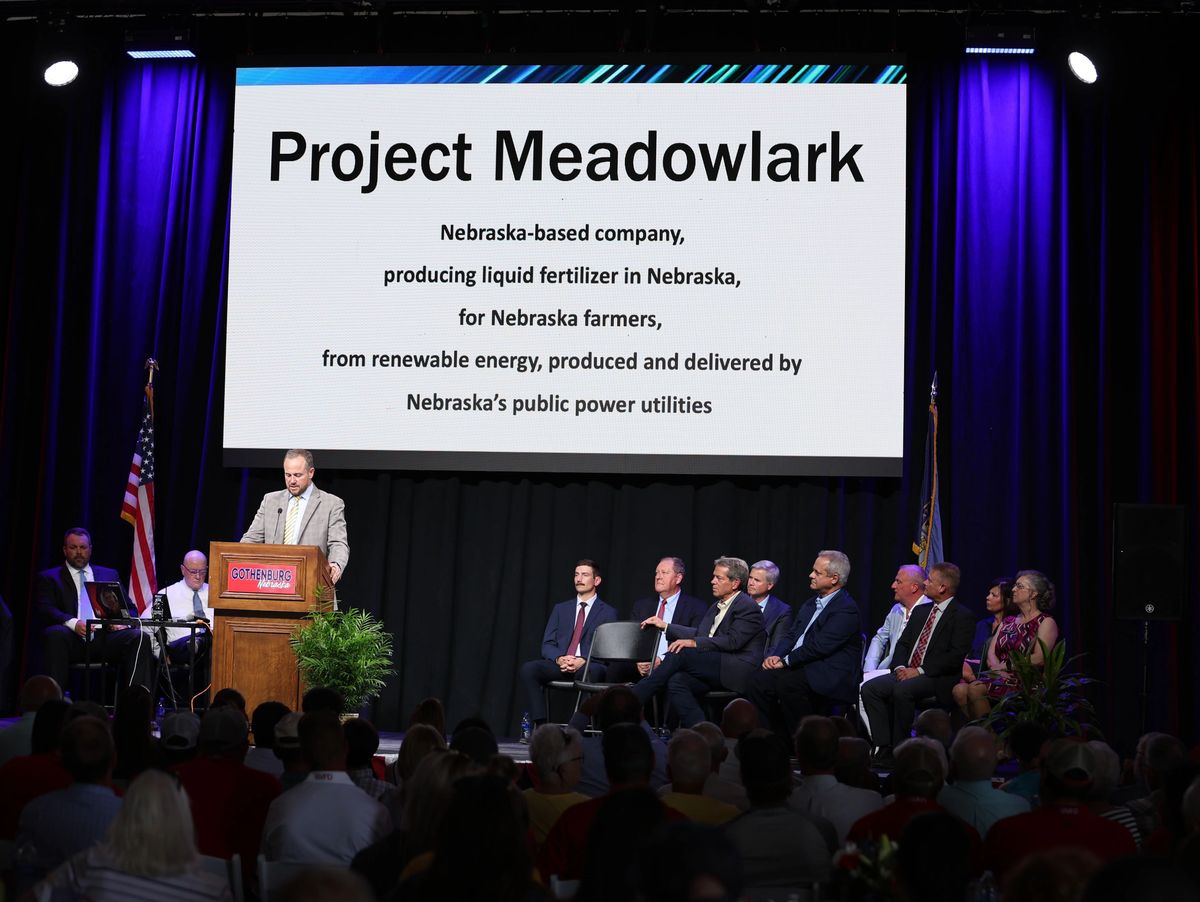
J Westling & Co Is Building The Fix In Gothenburg, Nebraska
Joshua Westling founded J Westling & Co, known as JWC, to build fertilizer capacity directly in farm country instead of shipping it in. Project Meadowlark is the result, a fully integrated complex now under contract with Topsoe.
JWC is not a household name. Westling built the company after developing Fortigen in 2018. Fortigen was one of only three greenfield nitrogen fertilizer plants built in the United States in more than 30 years.
Project Meadowlark represents more than $1 billion in total investment. The Gothenburg site is fully zoned, with its air permit already issued. JWC has also raised $50 million in development capital, largely from Nebraska's farming community.
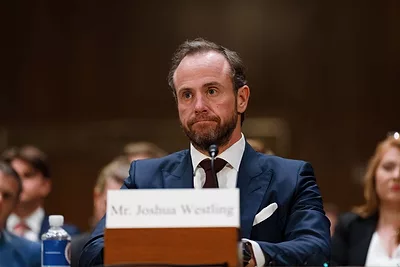
"Nebraska farmers help feed the world."
Joshua Westling, Founder and CEO, J Westling & Co
Once complete, the complex will convert every pound of ammonia on-site into ready-to-use products. That includes the UAN and ATS fertilizer volumes above, plus 52,000 tons of diesel exhaust fluid per year.
What Makes Topsoe's SynCOR Ammonia Technology Different?
SynCOR Ammonia™ replaces the two-step reforming process used in most ammonia plants with a single oxygen-fired autothermal reformer. Topsoe calls it a genuine breakthrough for the industry.
Conventional ammonia plants rely on tubular steam methane reforming paired with an air-fired secondary reformer. SynCOR Ammonia™ collapses that into one autothermal reforming step that uses oxygen instead of air.
Autothermal reforming generally supports higher carbon capture rates than older reforming methods, since it produces a more concentrated CO2 stream. Pairing that process with natural gas feedstock and carbon capture is what makes the Gothenburg output blue ammonia rather than conventional gray ammonia.
Topsoe, a global provider of energy transition technology, will supply the proprietary equipment and catalysts for the JWC facility under the new agreement.
:max_bytes(150000):strip_icc()/iStock-92024215-2000-45f7d0c0492b4bc38e3c8dc5a2ffb020.jpg)
This Is The First SynCOR Ammonia Plant Built For Fertilizer, Not Energy
Topsoe confirms this marks the first deployment of SynCOR Ammonia™ dedicated specifically to low-carbon fertilizer production. Every prior application targeted export markets or hydrogen energy carrier use instead.

"This project is about strengthening domestic supply chains that farmers depend on every day."
Henrik Rasmussen, Managing Director, The Americas, Topsoe
Most blue ammonia projects announced across North America exist to serve overseas buyers or power generation customers. Woodside's Beaumont plant in Texas reached first large-scale blue ammonia production in the country in late 2025, built to serve both domestic and international buyers.
Louisiana's Blue Point Complex is a joint venture among CF Industries, JERA, and Mitsui, set to become the world's largest ammonia plant by nameplate capacity. Linde separately committed more than $400 million to build and operate the site's air separation unit, supporting a project aimed at global ammonia buyers.
Gothenburg breaks that pattern. Every ton produced there is intended for farmers within trucking distance, not a ship headed overseas.
| Project | Location | Primary Purpose | Target Start |
|---|---|---|---|
| Project Meadowlark (JWC) | Gothenburg, Nebraska | Domestic fertilizer for regional farmers | 2029 |
| Beaumont New Ammonia (Woodside) | Beaumont, Texas | Export and energy carrier | Operational, late 2025 |
| Blue Point Complex (CF/JERA/Mitsui) | Ascension Parish, Louisiana | Export and energy carrier | 2029, targeted |
How Does This Fit Into The Broader Blue Ammonia Boom?
The blue ammonia market's rapid growth has concentrated almost entirely on the Gulf Coast until now. Most of that expansion still points toward export terminals rather than domestic farm demand.
New ownership structures between Air Products and Yara show how much capital is chasing that export model. Deals of that size rarely get built for a regional customer base the way Gothenburg is.
The sector has also seen setbacks. Close to 60 clean hydrogen projects were canceled worldwide in 2025, wiping out more than 4.9 million tonnes of planned annual output. That kind of pattern keeps showing up in recent project cancellations across the sector.
Elsewhere in the country, carbon capture progress outside the Gulf Coast is building infrastructure that inland projects like this one depend on. LSB Industries completed a stratigraphic injection well in Arkansas that supports similar low-carbon ammonia output away from the coast.
>> RELATED: Texas Emerges as Blue Ammonia Capital in $5B Investment Wave
By comparison, CF Industries, the world's largest ammonia producer, still routes most of its blue ammonia growth through Gulf Coast megaprojects. Gothenburg shows a smaller, demand-driven alternative can work too.
Topsoe explains its SynCOR autothermal reforming technology for producing blue (low-carbon) ammonia at scale with integrated carbon capture — the same breakthrough technology powering the new J Westling & Co fertilizer plant in Gothenburg, Nebraska. This professional overview highlights how blue ammonia supports decarbonization while leveraging existing infrastructure for fertilizer and energy applications. (Published May 2025 on Topsoe’s official channel.)
The Inland Ammonia Playbook
Gothenburg won't come close to matching the output of a Gulf Coast megaproject. Its logic runs differently, built to solve a cost problem for one customer base rather than chase export contracts.
Westling put it plainly. Farmers should be able to source fertilizer closer to home instead of absorbing steep Gulf Coast trucking costs.
If Gothenburg proves out, it offers a template other agricultural states could copy. Build smaller, build inland, and build for the customer already standing there.
Frequently Asked Questions
When will the Gothenburg, Nebraska plant start producing ammonia?
J Westling & Co expects Project Meadowlark to reach commercial operation in 2029, based on the most recent project timeline.
Is this the same as the Gulf Coast blue ammonia projects?
No. Most Gulf Coast blue ammonia projects are built for export or as a hydrogen energy carrier. This Nebraska facility is Topsoe's first SynCOR Ammonia™ deployment built specifically for fertilizer.
What makes ammonia "blue" instead of "green" or "gray"?
Blue ammonia is made from natural gas with carbon capture added to cut emissions. Gray ammonia skips the capture step, while green ammonia is made from renewable electricity and water.
For ongoing coverage of carbon removal, BECCS, and corporate CDR procurement, subscribe to Decarbonfuse.com.
```
Subscribe to the newsletter
Daily decarbonization data and news delivered to your inbox
Follow the money flow of climate, technology, and energy investments to uncover new opportunities and jobs.
Latest issues
-
Who Bought Gevo’s $50M in 45Z Credits?
Inside This Issue ⛽ Gevo Sells $70M in 45Z Credits to a New Kind of Buyer 🌱 South Pole, Gaïago, and Gold Standard Issue European Soil Carbon Credits, Unlocking Verified Regenerative Agriculture Re...
-
Verra Landed CCP Approval. What Changes for DAC?
Inside This Issue ✅ Verra's CCS Credits Just Got the Integrity Seal Buyers Want 💰 South Korea Unveils $747 Billion Energy Transition Plan Through 2035 💧 Hydrogen and Carbon Capture and Storage in ...
-
Quebec Wood Waste Just Became Jet Fuel
Inside This Issue 🌲 ARC Bio Tests a Refinery Shortcut to Forest-Based SAF 💧 Scientists Just Found a New Way to Make Hydrogen from Water 🤝 How Channel Partnerships Are Helping More Organizations Ta...
Company Announcements
-
Mineral Europa: A Game Changer for Shipping
Antwerp, Oct. 09, 2026 (GLOBE NEWSWIRE) -- Antwerp, 9 October 2026 – CMB.TECH NV (“CMB.TECH” or the “Company”) (NYSE: CMBT, Euronext Brussels: CMBT and Euronext Oslo Børs: CMBTO) today announces th...
-
Download PDF (170.95 KB) Eni CCUS Holding, owned jointly by Eni and Global Infrastructure Partners ("GIP"), part of BlackRock, announces that Liverpool Bay CCS has completed the installation of th...
-
First-of-its-kind project in France and Belgium marks a major breakthrough for carbon credit buyers seeking high-integrity, high-impact regenerative agriculture removals in Europe; providing buyer...
-
Gevo and ClimeFi Complete Carbon Removal Transaction, Advancing Gevo's Growing Carbon Business
Transaction supports Gevo's path toward a carbon business exceeding $30 million in annual revenue from existing operations ENGLEWOOD, Colo., Oct. 08, 2026 (GLOBE NEWSWIRE) -- Gevo, Inc. (NASDAQ: G...