
Nikola Highlights Benefits to Integrated Truck and Energy Business Model from The Inflation Reduction Act
Published by Todd Bush on October 20, 2022
- The Inflation Reduction Act (IRA) is expected to provide a significant boost to Nikola's low carbon hydrogen energy business strategy, enabling lower cost hydrogen supply and dispensing infrastructure
- Nikola's energy business aims to develop access of up to 300 metric-tons of low carbon hydrogen supply and up to 60 hydrogen dispensing stations by 2026
- The IRA energy and other climate incentives are anticipated to lower costs across Nikola's expected portfolio creating greater value for Nikola's integrated business model
- The IRA's incentives for energy and zero-emissions truck manufacturing businesses are expected to further enable Nikola's zero-emission trucks to be competitive on a total cost of ownership basis when compared to traditional diesel vehicles
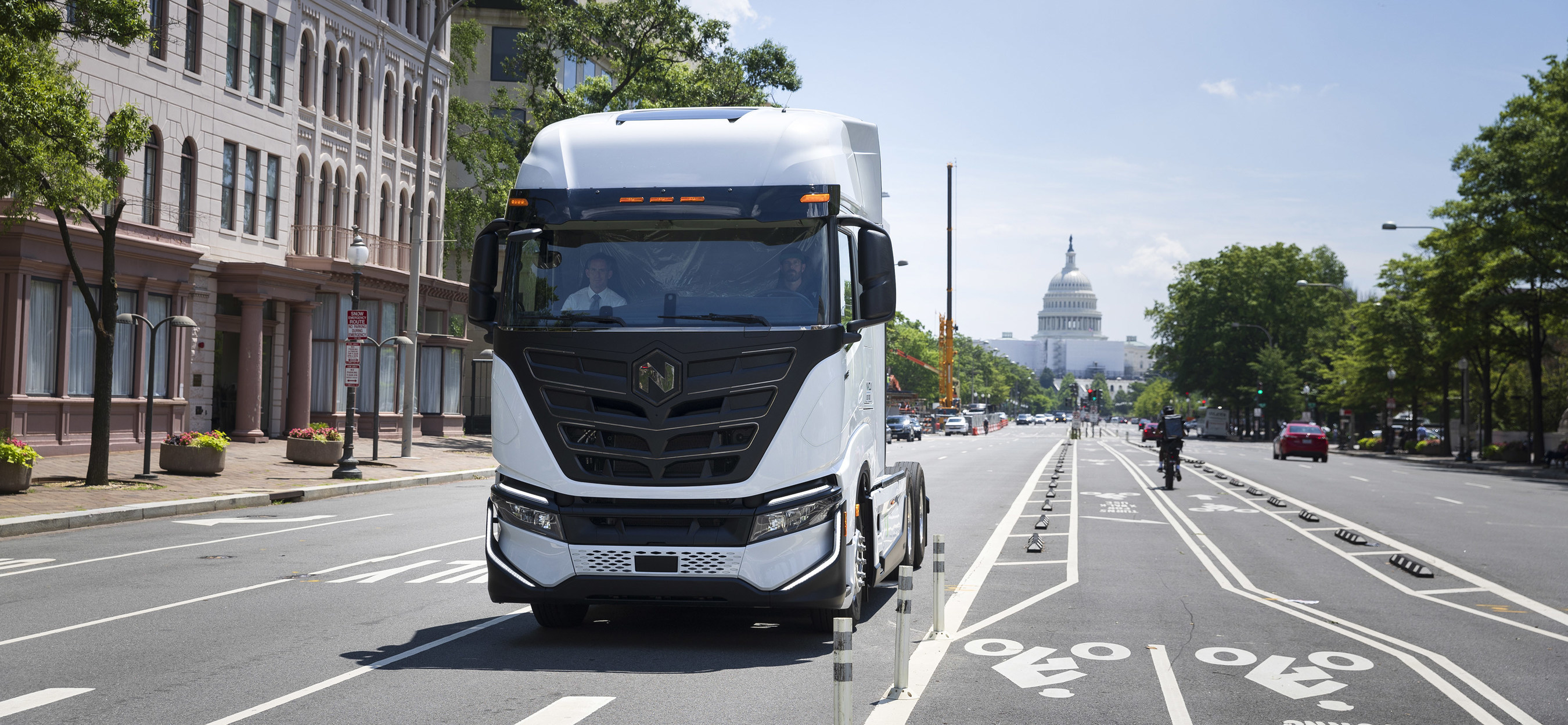
Nikola Corporation (Nasdaq: NKLA), a global leader in zero-emissions transportation and energy supply and infrastructure solutions, today issued the following statement highlighting key elements of the Inflation Reduction Act (IRA), signed into law by President Biden this past August. The legislation supports every aspect of Nikola's integrated truck and energy business model from the development of zero-emissions vehicle technology through and including low-cost hydrogen production and dispensing infrastructure deployment.
>> In Other News: Solidia Technologies Pivots to Commercialization with Headquarter Move to San Antonio
"The energy and climate investments included in the IRA are anticipated to help accelerate our strategic initiatives and drive new growth opportunities," said Michael Lohscheller, President, Nikola Corporation. "Given the expected scale of our hydrogen business model, and our early mover advantage, we believe Nikola is ideally positioned to benefit from nearly every aspect of the legislation at a scale ahead of current industry participants. The Act is expected to provide significant benefits to Nikola through production and investment tax credits, direct pay provisions, and other incentives that are expected to lower the cost of hydrogen, dispensing infrastructure and trucks for Nikola and our customers. The legislation is projected to enable Nikola and our strategic partners to create more jobs, play a key role in the transition to a low carbon economy, and build on our leadership position in zero-emission transportation."
Significantly Enhances Nikola's Integrated Business Through Lower Costs
Nikola's energy business model supports the needs of truck customers who require low carbon hydrogen supply and dispensing stations to support the adoption of fuel cell electric vehicle (FCEV) fleets. The IRA, when combined with other state-based incentives, such as the California Low Carbon Fuel Standard (LCFS), will reduce the overall cost of hydrogen production and dispensing. The required scale of hydrogen supply and dispensing infrastructure for the heavy-duty sector does not yet exist, and Nikola believes the IRA will help support its development activities as the Company and its partners take a leading role in building this critical infrastructure – enabling more sales of zero-emission vehicles (ZEVs) and creating additional value to Nikola's future energy business.
Scaled Clean Hydrogen Production
- Nikola and its strategic partners are working to build a large-scale hydrogen supply and dispensing infrastructure business to support Nikola's truck customers, as well as third-party demand. Specifically, this business aims to develop access of up to 300 metric-tons per day of hydrogen supply and up to 60 hydrogen dispensing stations by 2026, with significant growth plans over the decade. Several of these infrastructure projects are actively underway, including a hydrogen production hub in Arizona, which will be engineered to produce 30 metric-tons per day in its first phase, and will scale up to 150 metric-tons per day upon completion, which will help to support adoption of Nikola's trucks and hydrogen demand in regional markets including California. Nikola has made progress in advancing the development of this hub and have recently acquired a land parcel in Buckeye County, Arizona on which the hub will be located. With the land now secured, the permitting and rezoning process, as well as the procurement of long-lead equipment, has begun. This hub, when completed, will allow Nikola to supply its dispensing infrastructure in regional markets, including California
- Wabash Valley Resources (WVR) in Indiana is designed to produce over 250 metric-tons of low-carbon hydrogen per day, once built, of which Nikola has a 20% ownership interest. Hydrogen produced at the WVR facility is expected to ensure that Nikola will be able to supply the Midwest region with approximately 50 metric-tons of hydrogen per day.
- These and several other hydrogen production and infrastructure projects planned across the country are expected to benefit from the incentives provided by the IRA, including the following IRA Clean Energy Production, Investment and Carbon Management Tax Credits:
- The Clean Hydrogen Production Tax Credit (45V) provides up to $3.00 per kilogram of hydrogen produced. The tax credit is a direct pay source of revenue for the first five years of a facility's production.
- The Carbon Sequestration Credit (45Q) has been extended and expanded and provides up to $85 per metric-ton of carbon, which equals up to $1.00 per kilogram, that is captured and sequestered. This benefit adds a financial incentive to Nikola's planned hydrogen supply projects that will use advanced technologies, such as those being implemented by WVR, to capture carbon.
- The extension of existing energy Investment Tax Credits (48) promotes the development of renewable electricity projects that provide zero-carbon electricity used in the production of hydrogen via electrolysis.
- The addition of a technology neutral energy Investment Tax Credit (48D) will benefit various critical parts of the hydrogen manufacturing process, including hydrogen storage, by up to 30% of the eligible investment.
Accelerates Deployment of a Commercial Hydrogen Fueling Network and Commercial Hydrogen Vehicles
Nikola has begun to implement its hydrogen dispensing station development program in California and announced three station locations in August 2022. Additional stations across the U.S. are in progress and are expected to be announced in the near future. These projects are anticipated to benefit Nikola through the application of the IRA's incentives for hydrogen supply and dispensing station infrastructure development.
IRA Alternative Fuel Infrastructure Tax Credits
- The Alternative Fuel Refueling Property Credit (30C) supports Nikola's plans to build with its partners up to 60 dispensing stations by 2026. This provision promotes station development by offsetting the cost of construction for up to $100,000 per dispensing equipment item. When considered against the cost of a station, this could provide a significant reduction in cost.
- The IRA benefits for dispensing infrastructure, when combined with state hydrogen dispensing incentive programs such as California's Low Carbon Fuel Standard (LCFS), will allow low carbon hydrogen to earn an additional $1.00 - $2.00 per kilogram of hydrogen dispensed into a Nikola Tre FCEV, depending on the market-based demand for an LCFS credit. With LCFS, the price of hydrogen becomes significantly more cost competitive compared to costly diesel prices in the state. Oregon and British Columbia have enacted similar programs, and Canada (federally) and Washington will begin programs in 2023 and 2024, respectively, making these areas key targets as first movers to adopt the technology.
Advances Nikola's Manufacturing Capabilities and Broadens Customer Base
Nikola's vehicle and components production is expected to benefit from provisions of the IRA that will reduce the cost of vehicle manufacturing and accelerate customer acquisition.
- The expansion of Nikola's Coolidge manufacturing facility may benefit from an up to 30% Advanced Energy Project Credit (48C) through a $10 billion grant for advanced energy projects that expand manufacturing facilities for the production of heavy-duty battery-electric vehicles (BEVs) and FCEVs.
- Nikola may benefit $10 per kilowatt hour from the Advanced Manufacturing Production Credit (45X) for producing battery modules for BEVs and FCEVs, in the event Nikola produces battery modules in-house.
- Additionally, the new $40,000 Commercial Clean Vehicle Credit (45W) may reduce the upfront purchase cost of a Nikola Tre BEV or FCEV vehicle for fleets looking to transition from carbon-emitting Class 8 diesel engines.
Together, these incentives are expected to provide value across Nikola's integrated truck and energy business model by driving down the production costs of low carbon hydrogen, reducing infrastructure costs for the construction of hydrogen dispensing stations, and reducing the cost of ownership of a Nikola FCEV to be competitive on a total cost of ownership basis with traditional diesel vehicles.
About Nikola Corporation
Nikola Corporation is globally transforming the transportation industry. As a designer and manufacturer of zero-emission battery-electric and hydrogen-electric vehicles, electric vehicle drivetrains, vehicle components, energy storage systems, and hydrogen station infrastructure, Nikola is driven to revolutionize the economic and environmental impact of commerce as we know it today. Founded in 2015, Nikola Corporation is headquartered in Phoenix, Arizona. For more information, visit https://www.nikolamotor.com or Twitter @nikolamotor.
SOURCE Nikola Corporation
Subscribe to the newsletter
Daily decarbonization data and news delivered to your inbox
Follow the money flow of climate, technology, and energy investments to uncover new opportunities and jobs.
Latest issues
-
Why Is Wyoming Giving 650,000 Acres to Carbon Storage?
Inside This Issue 🪨 Inside Blm's 650,000-Acre Bet on Wyoming Carbon Storage 🏭 California Advances Carbon Capture and Removal Regulations Under SB 905 ⚡ Why a Japanese Power Giant Is Betting on Den...
-
Colorado Joins the 7-State CCS Permit Fast Lane
Inside This Issue ⚖️ Colorado Takes Over Class VI Permits: What Changes for CCS? 🏭 Hebei Shoulang Facility Using LanzaTech Technology Achieves World’s First ISCC EU RCF Certification for Ethanol P...
-
The US Hasn't Made Heavy Water Since 1982
Inside This Issue ⚛️ Aternium Completes FEED Studies for US Hydrogen, Heavy Water Project 🐄 Google, McKinsey Strike Brazil Carbon Removal Deal With Silvopasture Project 🔧 Cummins Selects Stargate ...
Company Announcements
-
Citi Closes $72 Million Carbon Removal-Linked Note to Support Applied Carbon Biochar Project
HIGHLIGHTS Citi structured an innovative $72 million carbon removal-linked note to provide upfront capital for Applied Carbon's biochar project, marking a first-of-its-kind "outcome bond" for ver...
-
New platform opens access to the same rigorous project evaluations trusted by the world's leading carbon removal procurement programs Today, Relae (formerly Carbon Direct) launched The Diligence C...
-
Inside BLM's 650,000-Acre Bet on Wyoming Carbon Storage
The Bureau of Land Management has offered right-of-way grants covering about 649,438 acres of federal pore space in southwest Wyoming. The September 21, 2026 offers went to Moxa Carbon Storage LLC ...
-
NEW YORK, BUSINESS WIRE, SWITCH Maritime (Switch), a leading developer of zero-emission vessels, secured a Design Basis Agreement (DBA) with the United States Coast Guard (USCG) for the SWITCH-150,...