
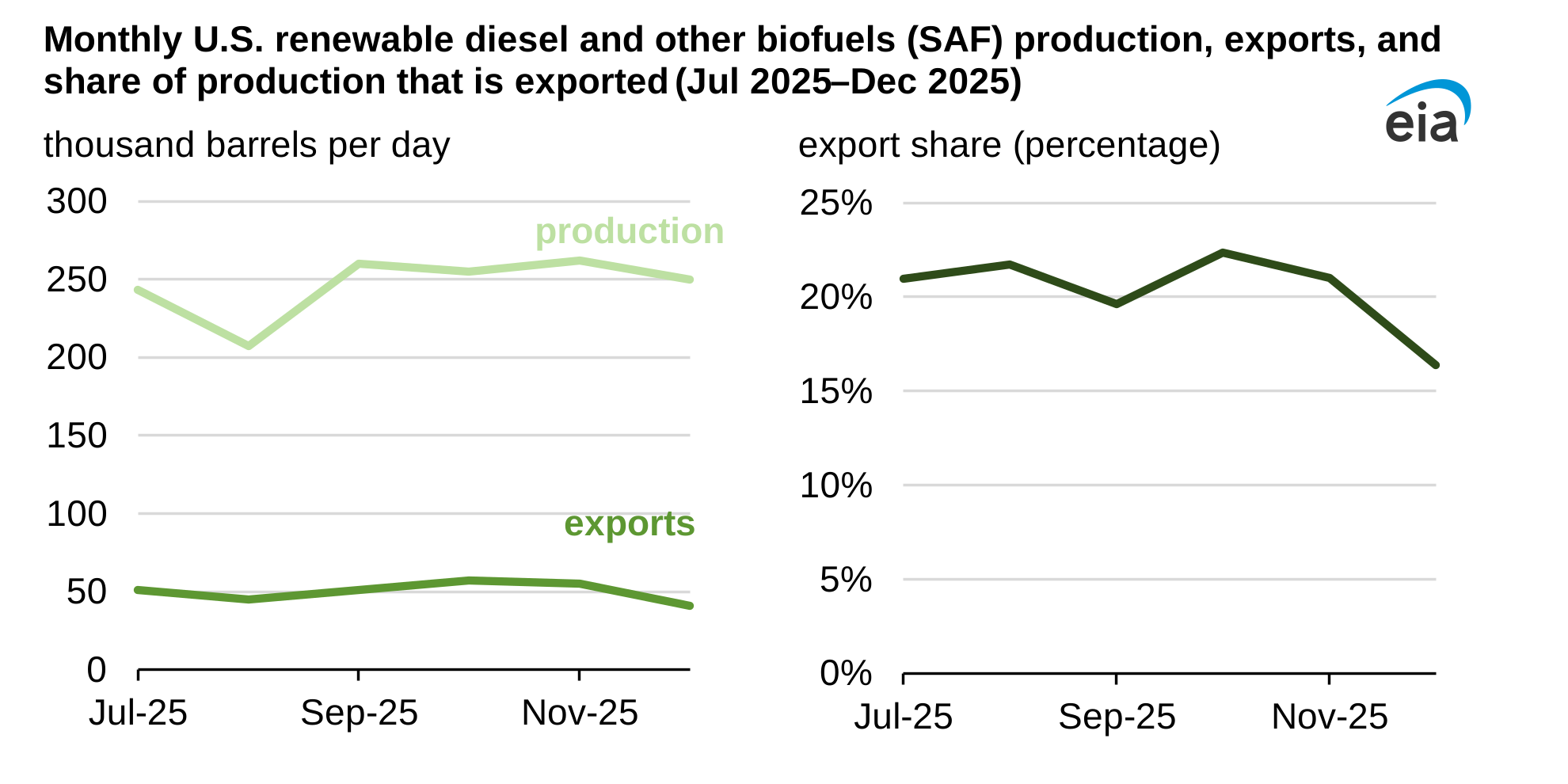
Note: Production is calculated as the sum of renewable diesel production and other biofuels production; exports are calculated as the sum of renewable diesel exports and other biofuels exports. SAF=sustainable aviation fuel
The United States exported nearly 50,000 barrels per day (b/d) of renewable diesel and other biofuels—a category which includes sustainable aviation fuel (SAF)—in the second half of 2025 (2H25), about 20% of the combined production for those fuels. About half of these exports went to Canada, with the rest mostly going to Europe.
A year ago, in our March 2025 Petroleum Supply Monthly (PSM), we introduced data on renewable diesel exports. These new data added to our existing renewable diesel data of production, imports, interregional movements, and stock changes to provide a more complete understanding of how much renewable diesel is consumed in different U.S. regions.
>> In Other News: Remove Carbon Today Opens Certified Carbon Removal to Individuals Worldwide With Public Registry Proof Within One Month
We generally calculate renewable diesel consumption as refinery and blender net inputs plus product supplied.
Refinery and blender net inputs are the volumes that refiners and blenders report that they blended with petroleum distillate.
Product supplied is calculated as net production plus imports minus inventory withdrawals, exports, and refinery and blender net inputs.
The inclusion of renewable diesel export data allows us to account for volumes that were previously categorized under product supplied, our proxy for consumption. Before we started tracking exports, our estimates for renewable diesel product supplied and, therefore, consumption were considerably higher because they included volumes that were actually exported.
Renewable diesel export data are collected by the U.S. Census Bureau under the Harmonized Tariff Schedule (HTS) code 2710.19.4550, which also includes exports of SAF. We currently assume most exports are renewable diesel because of the relatively low volume of U.S. SAF production, which we capture in our Other Biofuels category. The inclusion of SAF in the code means we incidentally include exports of SAF under the renewable diesel category instead of under the Other Biofuels category, where it belongs. This also means that when there are SAF exports, we overstate renewable diesel exports and understate other biofuels exports.
In addition to SAF, our Other Biofuels category also includes renewable heating oil, renewable naphtha, renewable propane, renewable gasoline, and other emerging biofuels that are in various stages of development and commercialization. Other biofuels are produced as byproducts at biofuels production facilities that primarily produce renewable diesel or a combination of renewable diesel and SAF. Combining total production and exports of both renewable diesel and other biofuels provides a more accurate account of exports of total renewable fuels produced at renewable diesel and SAF plants.
In 2H25, the United States exported about 20% of its renewable diesel and other biofuels production, the largest share among biofuels for which we publish data. In comparison, the United States exported 13% of fuel ethanol production and 7% of biodiesel production in 2H25.
Canada was the most popular destination for U.S. renewable diesel exports, accounting for slightly more than half of the export volume. The Netherlands accounted for about one-third of exports, and the remainder mostly went to other destinations in Europe.
TEXT
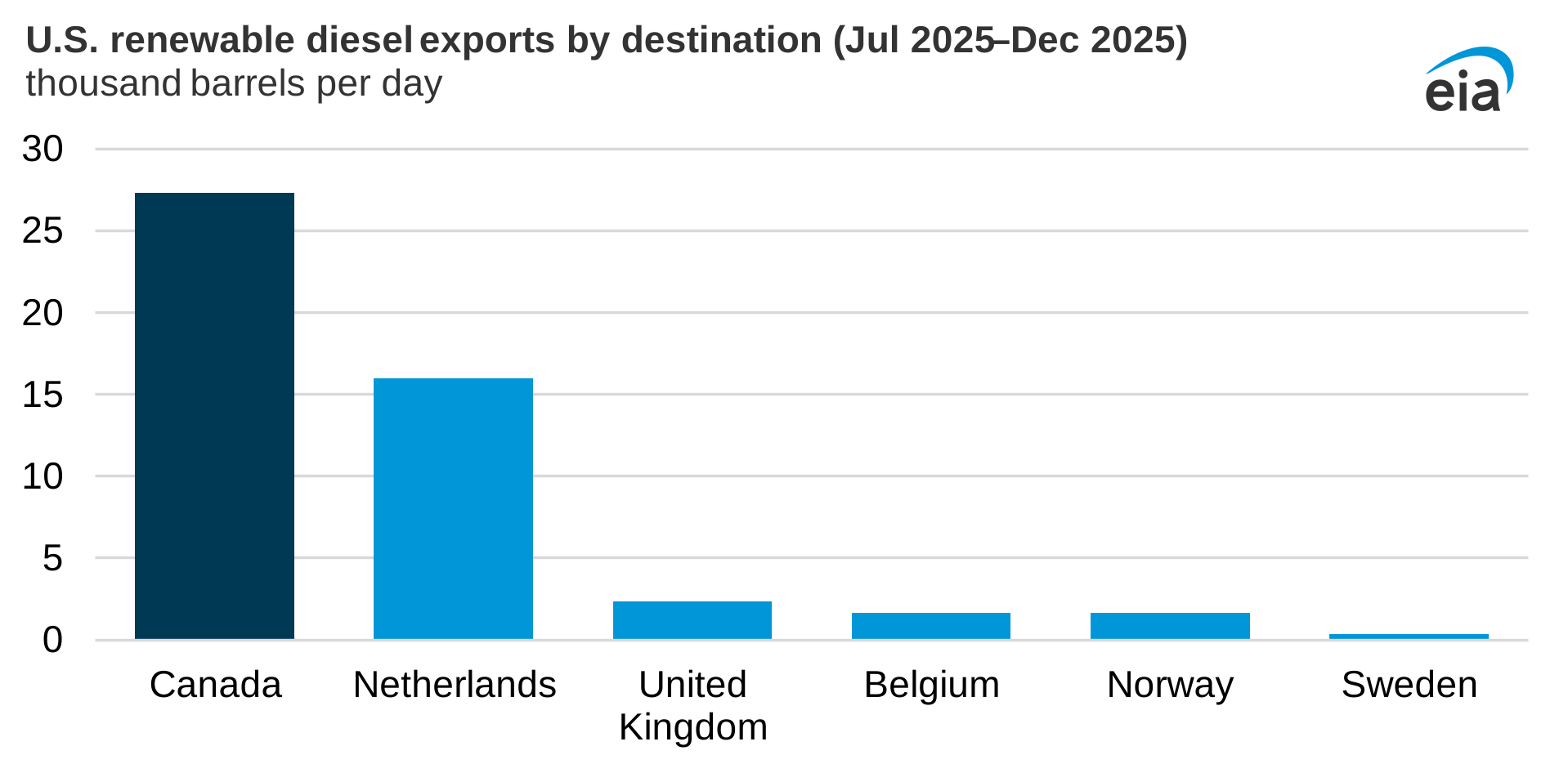
Data source: U.S. Energy Information Administration, (Petroleum Supply Monthly), April 2026
Note: Renewable diesel exports include exports of sustainable aviation fuel.
By U.S. region, most renewable diesel exports were shipped from the U.S. Gulf Coast (PADD 3) followed by the West Coast (PADD 5), with most of the shipments from both regions going to Europe and some to Canada. The remaining exports departed from the Midwest (PADD 2) and Rocky Mountains (PADD 4), with all those volumes going to Canada.
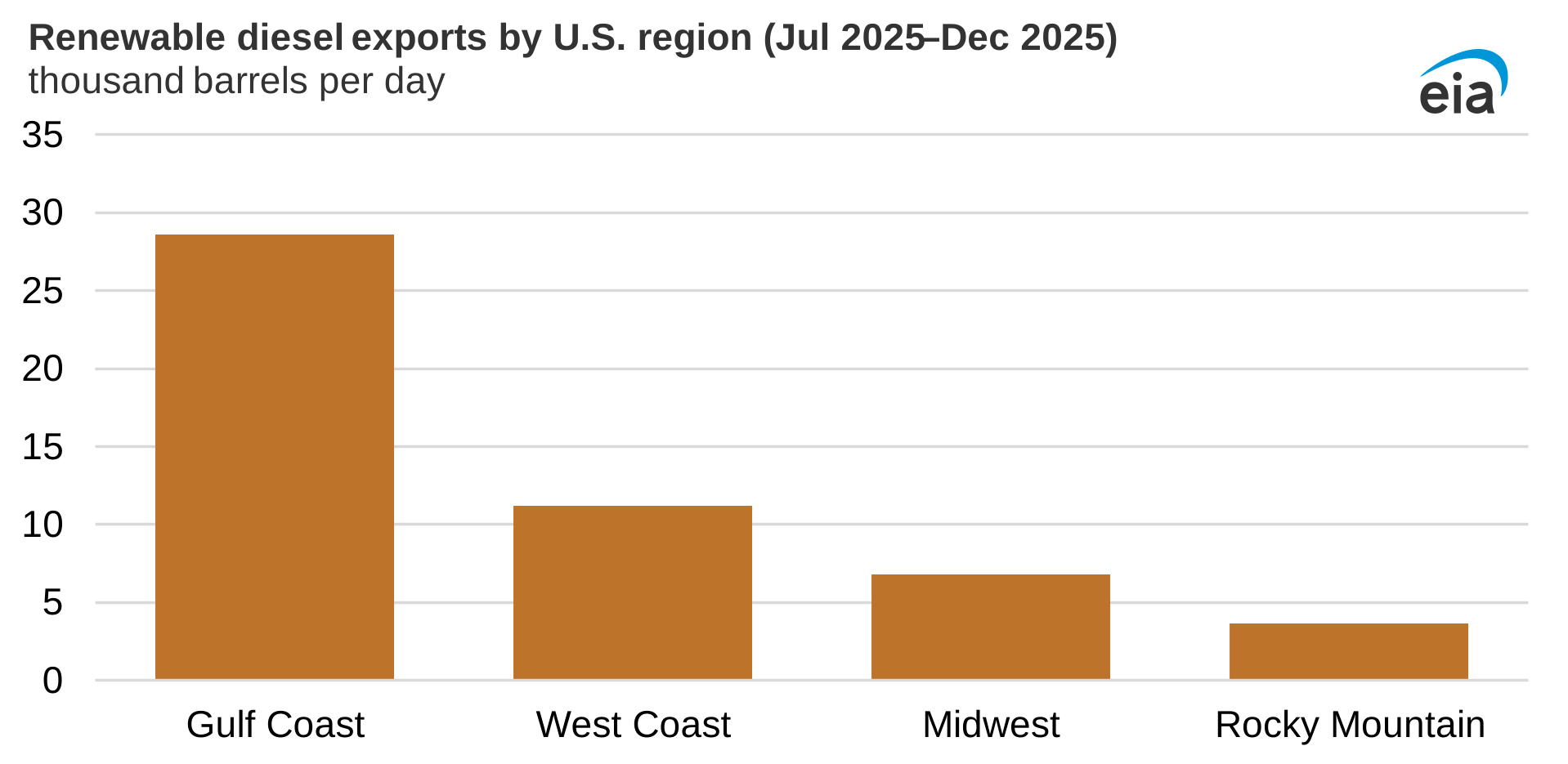
Data source: U.S. Energy Information Administration, Petroleum Supply Monthly, April 2026
Note: Renewable diesel exports include exports of sustainable aviation fuel.
In the first two months of 2026, exports of renewable diesel and other biofuels averaged less than 35,000 b/d, compared with almost 50,000 b/d in 2H25. The lower exports mostly reflected lower production, as many renewable diesel producers idled capacity as they waited for the release of final blending targets for 2026 under the Renewable Fuel Standard, which were announced on March 27.
Subscribe to the newsletter
Daily decarbonization data and news delivered to your inbox
Follow the money flow of climate, technology, and energy investments to uncover new opportunities and jobs.
Latest issues
-
Why Is Wyoming Giving 650,000 Acres to Carbon Storage?
Inside This Issue 🪨 Inside Blm's 650,000-Acre Bet on Wyoming Carbon Storage 🏭 California Advances Carbon Capture and Removal Regulations Under SB 905 ⚡ Why a Japanese Power Giant Is Betting on Den...
-
Colorado Joins the 7-State CCS Permit Fast Lane
Inside This Issue ⚖️ Colorado Takes Over Class VI Permits: What Changes for CCS? 🏭 Hebei Shoulang Facility Using LanzaTech Technology Achieves World’s First ISCC EU RCF Certification for Ethanol P...
-
The US Hasn't Made Heavy Water Since 1982
Inside This Issue ⚛️ Aternium Completes FEED Studies for US Hydrogen, Heavy Water Project 🐄 Google, McKinsey Strike Brazil Carbon Removal Deal With Silvopasture Project 🔧 Cummins Selects Stargate ...
Company Announcements
-
Citi Closes $72 Million Carbon Removal-Linked Note to Support Applied Carbon Biochar Project
HIGHLIGHTS Citi structured an innovative $72 million carbon removal-linked note to provide upfront capital for Applied Carbon's biochar project, marking a first-of-its-kind "outcome bond" for ver...
-
New platform opens access to the same rigorous project evaluations trusted by the world's leading carbon removal procurement programs Today, Relae (formerly Carbon Direct) launched The Diligence C...
-
Inside BLM's 650,000-Acre Bet on Wyoming Carbon Storage
The Bureau of Land Management has offered right-of-way grants covering about 649,438 acres of federal pore space in southwest Wyoming. The September 21, 2026 offers went to Moxa Carbon Storage LLC ...
-
NEW YORK, BUSINESS WIRE, SWITCH Maritime (Switch), a leading developer of zero-emission vessels, secured a Design Basis Agreement (DBA) with the United States Coast Guard (USCG) for the SWITCH-150,...