.webp)
The Ontario government has proposed the Resource Management and Safety Act, aiming to address key environmental, safety, and infrastructure concerns.
This sweeping legislation will focus on managing wildland fires, hazardous wells, land surveyor shortages, and carbon emissions.
If passed, the Act promises significant advancements in resource management and public safety.

Wildfire and Hazardous Well Management
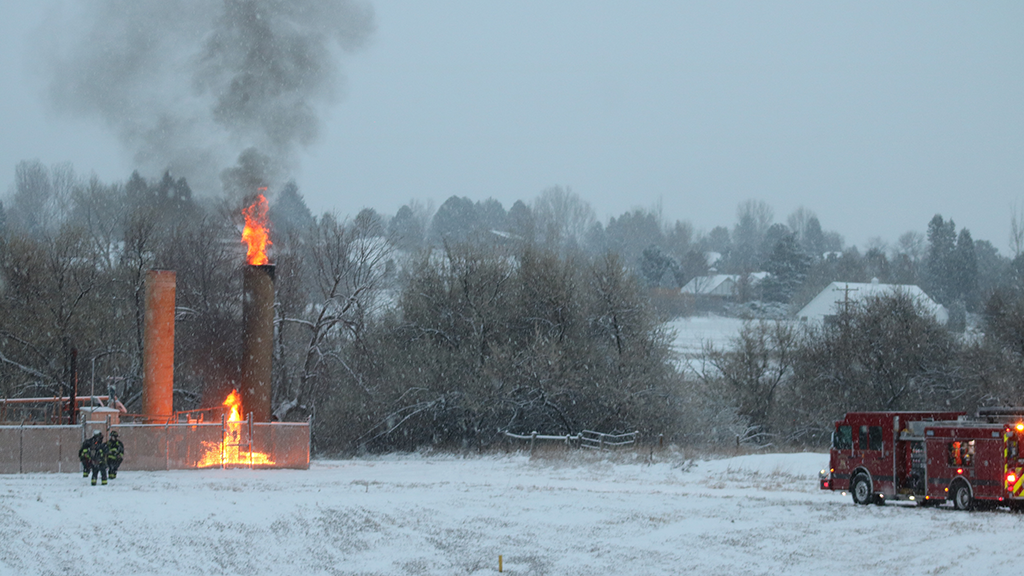
A critical component of the proposed Act is enhancing Ontario's ability to manage wildfires and hazardous oil and gas wells. The Forest Fires Prevention Act will be updated to include stricter penalties for those violating wildland fire regulations.
These updates also require improved wildfire management plans to mitigate human-caused fires and associated risks.
Amendments to the Oil, Gas, and Salt Resources Act will give the Ministry of Natural Resources more power to address hazardous wells when operators fail to comply.
“Our government is helping communities protect precious resources by taking steps to minimize the adverse environmental, economic, and health impacts of wildland fires and hazardous oil and gas wells,” said GRAYDON SMITH, Minister of Natural Resources.
Supporting Housing and Infrastructure Growth
To meet Ontario’s growing demand for housing and infrastructure, the Act includes proposed changes to the Surveyors Act.
These changes aim to attract more land surveyors, which is a critical need for ensuring safe and affordable development.
By bolstering this profession, Ontario seeks to streamline its housing strategy and support rapid urban growth.
This initiative aligns with the government’s broader vision for creating a balance between urban development and sustainable resource management.
Land surveyors play an essential role in laying the groundwork for critical projects.
>> In Other News: Cook Government Seeks New Ways to Capture and Store Carbon
Advancing Carbon Storage Technology
The Geologic Carbon Storage Act is a standout feature of the proposed legislation, introducing commercial-scale geologic carbon storage regulations.
This innovative technology captures CO2 emissions and stores them deep underground, preventing them from entering the atmosphere.
The government estimates that this could reduce greenhouse gas emissions by 5 to 7 million tonnes annually.
The legislation also highlights significant economic benefits. Carbon storage could create 4,000 short-term jobs and reduce carbon costs for Ontario industries by nearly $1 billion yearly.
“By mitigating emissions, carbon storage has the potential to transform Ontario’s essential natural resource industries into internationally recognized global suppliers of clean building materials,” said DAWN GALLAGHER MURPHY, Parliamentary Assistant to the Minister of Natural Resources.
A Collaborative Approach
The government has emphasized the importance of consulting with key stakeholders to refine the proposed Act.
Indigenous communities will play a vital role in shaping the framework as commercial projects move forward.
If passed, the government will work on creating supporting regulations to ensure effective implementation.
“Our forestry sector is vitally important to Ontario, producing critical building materials, and managing and renewing Ontario’s forests, which can play an important role in reducing the risk of wildland fire,” added KEVIN HOLLAND, Minister of Forestry and Forest Products.
The Act underscores the government’s commitment to balancing economic growth with environmental sustainability.
The Bigger Picture
The Resource Management and Safety Act aims to position Ontario as a leader in resource management and environmental innovation.
With updates to wildfire management, carbon storage technology, and land surveyor recruitment, the Act offers a comprehensive strategy to tackle the province's pressing challenges.
By addressing these issues, the government seeks to ensure that Ontario remains competitive on a global scale while prioritizing the well-being of its communities.
The Act's provisions highlight a proactive approach to safeguarding natural resources and fostering economic resilience.
For more information about the proposed Act and ongoing consultations, visit the Government of Ontario’s website.
Subscribe to the newsletter
Daily decarbonization data and news delivered to your inbox
Follow the money flow of climate, technology, and energy investments to uncover new opportunities and jobs.
Latest issues
-
LNK Energies Targets $6.50 Hydrogen With No Federal Subsidies
Inside This Issue 🚛 MIT Startup Says It Can Turn Diesel Trucks Into Cheaper Hydrogen Haulers, See It at Disrupt 🏭 Baytown City Council Briefs: ExxonMobil Blue Hydrogen Agreement Approved 🌎 Colorad...
-
Why Gulf Coast CCS Teams Are Watching Liverpool Bay
Inside This Issue 💂 Eni’s Douglas Platform Sets the Offshore CCS Blueprint 🌲 Pacolet Milliken Expands Its Biomass Platform With the Acquisition of Georgia Renewable Power 🧪 Metacon Receives EU Fun...
-
Who Bought Gevo’s $50M in 45Z Credits?
Inside This Issue ⛽ Gevo Sells $70M in 45Z Credits to a New Kind of Buyer 🌱 South Pole, Gaïago, and Gold Standard Issue European Soil Carbon Credits, Unlocking Verified Regenerative Agriculture Re...
Company Announcements
-
MIT Startup Says It Can Turn Diesel Trucks Into Cheaper Hydrogen Haulers — See It at Disrupt
Diesel fuel powers everything from shipping to agriculture, and with prices hitting record highs in recent weeks, governments around the world are scrambling to contain the fallout. For now, that’...
-
Gevo Announces First Multi-Year Carbon Removal Credits Supply Agreement Through CEEZER
Three-Year Delivery of Durable Carbon Removals from Gevo North Dakota to a Leading Global Enterprise Software Company Gevo will supply durable carbon dioxide removal (CDR) credits from Gevo North...
-
Continental Refining to Double Biodiesel Capacity at Somerset Complex
SOMERSET, Ky. — Continental Refining Company is expanding its biodiesel production facility to double capacity at its Somerset industrial complex, while its soybean processing plant will remain idl...
-
Groundwork BioAg Secures 'BBB' BeZero Carbon Rating
The rating places Groundwork BioAg among the highest-rated agricultural soil carbon projects, opening a scalable pipeline of independently rated, high-integrity removals for corporate buyers. MAZO...