
The Andersons will pay $915 million for Harvestone Low Carbon Partners, a three-plant ethanol platform in North Dakota and Indiana. Roughly half the price reflects expected 45Z and 45Q tax credit cash flows. Carbon capture is now priced directly into ethanol deals.
Key Facts
- Price: $915 million enterprise value, including a normalized level of working capital
- Seller: Energy Capital Partners
- Capacity: about 215 million gallons of ethanol per year
- Plants: Blue Flint (Underwood, ND), Dakota Spirit (Spiritwood, ND) and IBEC (Rensselaer, IN)
- Credit split: roughly half the price is tied to expected 45Z and 45Q tax credit cash flows
- Combined platform: about 730 million gallons per year at closing, up more than 40 percent
- Closing: expected in the fourth quarter of 2026 or early in the first quarter of 2027, subject to regulatory approvals
>> In Other News: [x](x)
What Is The Andersons Buying From Energy Capital Partners?
The Andersons is buying a platform of three corn ethanol plants with about 215 million gallons of annual capacity. The seller is Energy Capital Partners (ECP), an investment firm that acquired the platform less than four years ago.
Harvestone owns Blue Flint in Underwood, North Dakota. It also owns Dakota Spirit near Spiritwood, North Dakota, and Iroquois Bio-Energy Company (IBEC) in Rensselaer, Indiana. ECP developed and implemented the carbon capture projects at these sites.
Harvestone’s official video explains carbon capture and permanent geologic storage of more than 200,000 metric tons of CO₂ per year at its Blue Flint ethanol plant near Underwood, North Dakota (the operating CCS asset in the Harvestone platform).
The Andersons is an agribusiness and renewables company based in Maumee, Ohio. Its renewables platform grows by more than 40 percent, to about 730 million gallons of annual capacity, once the deal closes. The company announced the agreement on November 4, 2026.
How Do the 45Z and 45Q Tax Credits Differ?
The 45Z credit pays for producing low-carbon fuel. The 45Q credit pays for carbon dioxide that is captured and stored or used.
The 45Z Clean Fuel Production Credit rewards each gallon based on its carbon intensity score. Lower scores earn larger credits. The One Big Beautiful Bill Act extended the credit through December 31, 2029.
Producers are still learning how to max out their 45Z credit. The 45Q credit works differently. It pays per metric ton of CO2, with a base rate of $17 and a rate of $85 when labor requirements are met.

"We have been evaluating ethanol plant acquisition opportunities for several years, and HLCP is exactly what we have been looking for."
Bill Krueger, President and CEO, The Andersons
The Andersons cites both credits as expected cash flows. Federal anti-stacking rules limit which credits one facility can claim in the same year. The final mix will depend on how each plant is structured.
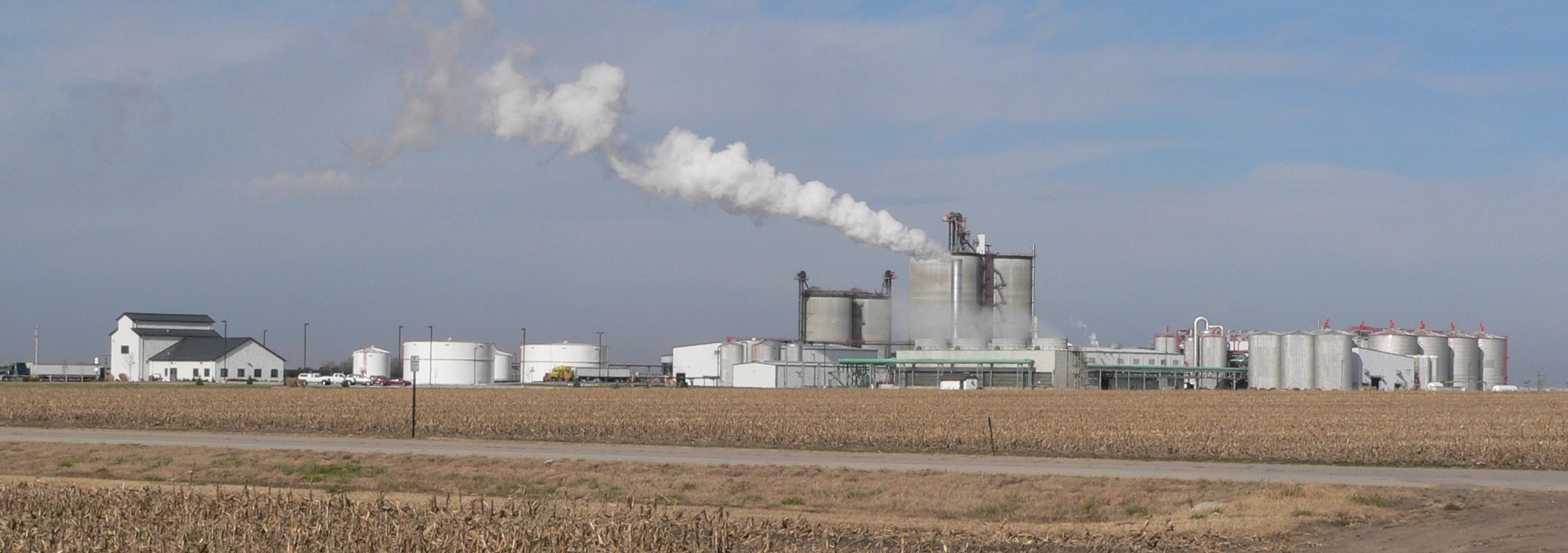
A corn ethanol plant near Fairmont, Nebraska, is similar in type to the three facilities in the Harvestone platform.
Which Harvestone Plants Are Storing CO2 Today?
One Harvestone plant is injecting CO2 today. Andersons management expects the other two to begin sequestration in 2027 and 2028.
- Blue Flint: CO2 injection began in October 2023 under a Class VI permit from the North Dakota Industrial Commission. The plant captures more than 200,000 metric tons a year. The CO2 goes into the Broom Creek Formation, about one mile underground.
- Dakota Spirit: Andersons management expects sequestration to begin in early 2027.
- IBEC: The Class VI permit application is in technical review at the U.S. Environmental Protection Agency. Management expects sequestration in late 2028.
The Andersons says Harvestone is among a very limited number of U.S. ethanol producers with demonstrated Class VI injection capabilities. The company also notes that much of the planned sequestration capacity remains in development.

"Our state is a top energy producer with suitable geology, so it makes sense for us to lead the way in carbon capture."
U.S. Sen. Kevin Cramer, North Dakota
Blue Flint also drew financing built around 45Q. Bank of America provided $205 million in tax equity in a deal that closed on September 5, 2024. Harvestone described it as the first of its kind.

Harvestone began injecting CO₂ at Blue Flint in October 2023. Storage of CO₂ from Dakota Spirit is expected to begin at Blue Flint in early 2027, followed by IBEC’s proposed Indiana project in late 2028.
North Dakota has held Class VI permitting authority since 2018, and more states have since taken control of Class VI permitting. Indiana permits still run through the EPA, so IBEC follows a federal timeline. A three-plant ethanol CCS effort in Nebraska shows other producers pairing capture with credits.
How Does the Deal Compare With Gevo's Red Trail Purchase?
Gevo paid $210 million for one 65 million gallon plant with operating carbon capture. The Andersons is paying $915 million for three plants at different stages of carbon storage.
Gevo, Inc., a renewable fuels company in Englewood, Colorado, announced the Red Trail Energy purchase on September 12, 2024. The deal closed on January 31, 2025. Red Trail in Richardton, North Dakota, was the first U.S. ethanol plant with carbon capture and storage.
| Detail | The Andersons and HLCP | Gevo and Red Trail |
|---|---|---|
| Announced | November 4, 2026 | September 12, 2024 |
| Price | $915 million | $210 million |
| Ethanol capacity | About 215 million gallons per year | 65 million gallons per year |
| Plants | Three (North Dakota and Indiana) | One (Richardton, North Dakota) |
| CCS status | Blue Flint injecting since October 2023, Dakota Spirit expected early 2027, IBEC in EPA review | Operating since 2022, about 160,000 metric tons per year stored at announcement |
| Stated strategy | Ethanol scale and low-carbon premiums | Site for sustainable aviation fuel expansion |
Gevo's North Dakota plant had issued more than 500,000 carbon removal credits as of January 22, 2026. Stored CO2 at that site now supports a separate credit market beyond the ethanol itself.
Why Is Carbon Capture Now Part of Ethanol Pricing?
Buyers now value tax credit cash flows and premium markets alongside ethanol output. Roughly half of the $915 million Harvestone price rests on expected 45Z and 45Q credits.
The Andersons points to premium pricing for lower-carbon ethanol. The North Dakota plants serve U.S. and Canadian low-carbon markets. The company also cites regenerative agriculture programs as an added opportunity.
>> RELATED: Tidewater Midstream and Tidewater Renewables to Combine
Other producers are lowering carbon intensity on the farm side. CF Industries, POET and agriculture co-operatives launched a low-carbon fertilizer pilot. POET expects 5 to 6 million gallons of lower-carbon ethanol from the first applications.
Regional co-ops are also working to close the gap in low-carbon ethanol. Lower carbon intensity scores translate directly into larger 45Z credits per gallon.
From Corn Rows to Carbon Credits
Corn grown in North Dakota now feeds a plant that stores CO2 about one mile underground. The Andersons is paying $915 million to bring that model across 215 million gallons of capacity.
Frequently Asked Questions
When is The Andersons expected to close the Harvestone deal?
Closing is expected in the fourth quarter of 2026 or early in the first quarter of 2027. Regulatory approvals and customary conditions apply.
Are all three Harvestone plants storing carbon today?
No. Blue Flint has injected CO2 since October 2023. Management expects Dakota Spirit to start in early 2027 and IBEC in late 2028.
How large will The Andersons' ethanol platform be after the deal?
The renewables platform grows by more than 40 percent. It reaches about 730 million gallons of annual capacity at closing.
For ongoing coverage of carbon removal, BECCS, and corporate CDR procurement, subscribe to Decarbonfuse.com.
Subscribe to the newsletter
Daily decarbonization data and news delivered to your inbox
Follow the money flow of climate, technology, and energy investments to uncover new opportunities and jobs.
Latest issues
-
Which Texas Project Got Verra’s First CCS Credits?
Inside This Issue ✅ Verra Approves First Credits Under CCS Methodology ⚡ Houston-Based Transition Industries Signs EPC Deal for 210 MW Electrolyzer at Pacifico Mexinol 🏗️ Investing in Wyoming’s In...
-
CRC Vows to Fight Kern County CCS Ruling
Inside This Issue ⚖️ Court Sets Aside Kern County Approval of California’s First Carbon Storage Project, Carbon TerraVault I 🌲 The Integrity Council Approves Methodologies for Coal Transition and ...
-
400 Tons of Hydrogen Daily to Power Data Centers
Inside This Issue ⚡ HDF Energy Selects Topsoe for 250 MW Power Plant in Texas 🍁 Deep Conduit Signature Identified Near Lawson 4 Expands Commercial Potential of Canada’s First Subsurface Natural Hy...
Company Announcements
-
PHILADELPHIA--(BUSINESS WIRE)-- Datavault AI Inc. (“Datavault” or the “Company”) (Nasdaq: DVLT), today announced a global strategic collaboration with Biochar Now to expand the distribution of veri...
-
U.S. Researchers Test Sunlight-Powered Technology to Capture Carbon From Air
Washington, Nov. 9 (SANA) U.S. researchers are testing a new technology that uses sunlight and special dyes to remove carbon dioxide from the atmosphere, aiming to reduce the high energy costs asso...
-
Web hosting and cloud provider outlines sustainability commitments, including 100% renewable-powered data centers, carbon-offsets and investments in solar. Rad Web ...
-
Verra Approves First Credits Under CCS Methodology
WASHINGTON – Nov. 6, 2026 | Verra has approved the first carbon credits under its carbon capture and storage (CCS) methodology for a project in northern Texas. Credits can now be issued to the Barn...