
Toshiba and Bekaert Sign a Partnership Agreement on MEA Technology for PEM Electrolyzers to Accelerate the Advance Towards Green Hydrogen Production at Scale
Published by Todd Bush on March 4, 2024
TOKYO, Feb. 29, 2024 /PRNewswire/ -- Toshiba Energy Systems and Solutions Corporation ("Toshiba") and Bekaert, have entered into a global partnership which includes a strategic cooperation agreement, and a manufacturing technology license for Membrane Electrode Assemblies (MEA), a key component for Proton Exchange Membrane (PEM) electrolyzers, that will help to accelerate the advance towards green hydrogen production. The agreement formalizes recent collaboration to leverage both companies' technological, manufacturing and commercial strengths since signing an MoU in September 2023*.
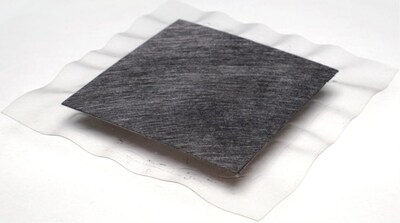
Image of Toshiba's Membrane Electrode Assembly (MEA)
>> In Other News: Fusion Fuel Receives €1 Million Grant from European Innovation Fund for Alentejo Green Hydrogen Valley through H2tALENT Consortium
PEM electrolyzers use electricity to split water into its component elements of oxygen and hydrogen. When the electricity is from a renewable energy source, the hydrogen is produced without any greenhouse gas emissions. The catalyst in PEM anode electrodes uses iridium, one of the scarcest traded metals. Consequently, solutions that reduce iridium content present a significant break-through towards the scale adoption of these technologies.
Under the agreement, Bekaert's leading expertise in Porous Transport Layers (PTL), a key component in the MEA of water electrolyzers, will be coupled with Toshiba's innovative iridium-saving technology for MEA, which will enable a 90% reduction in iridium usage in the production of PEM electrolyzers. This reduction in iridium will enable a more stable supply of MEA and support the scale expansion of green hydrogen production.
Bekaert will undertake commercialization of MEA production, leveraging its global network and established manufacturing base in Belgium, to serve its hydrogen customers. Toshiba will license its iridium-saving MEA technology to Bekaert, granting them the ability to manufacture and distribute MEAs. Meanwhile, Toshiba will focus on further enhancing its technical performance of the technology. The agreement is global, with the exception of Japan-related projects, which will be subject to a separate agreement.
Inge Schildermans, Senior Vice-President of Bekaert's Energy Transition business commented: "Bekaert is a leading player in the development of green hydrogen production and is therefore delighted to partner with Toshiba on the industrialization and commercialization of this innovative new PEM MEA technology. Furthermore, we are delighted to be able to offer this to our green hydrogen customers and help them achieve their cost and sustainability challenges. Bekaert is establishing itself as a green hydrogen technology and industrialization partner, helping the electrolyzer industry to scale and deliver the energy transition."
Shigehiro Kawahara, Vice-President of Toshiba ESS commented: "Addressing the surging demand for green hydrogen requires wider adoption of PEM electrolysis equipment. Our advanced iridium-saving MEA technology, coupled with Bekaert's longstanding expertise in PTL, forms a promising partnership. We believe this collaboration will effectively meet the rapid growth in demand and contribute significantly to the realization of a green hydrogen society."
- Press Release: Bekaert and Toshiba sign Memorandum of Understanding to develop global partnership around MEA for PEM electrolysis - Bekaert.com
About Bekaert
Bekaert's ambition is to be the leading partner for shaping the way we live and move, and to always do this in a way that is safe, smart, and sustainable. As a global market and technology leader in material science of steel wire transformation and coating technologies, Bekaert also applies its expertise beyond steel to create new solutions with innovative materials and services for markets including new mobility, low-carbon construction, and green energy.
About Bekaert Hydrogen
Bekaert's ultrathin metal fiber porous media are used as porous transport layers enhancing the durability and performance of electrochemical devices such as water electrolyzers for the production of green hydrogen. Bekaert has established a technology and market leadership position in Porous Transport Layers (PTL) for both PEM and AEM electrolyzers with the brandname Currento®. The company invests in the development of next generations of innovative solutions for green hydrogen production as well as in expanding its production footprint to multiple GW capacity over the coming years.
About Toshiba Energy Systems & Solutions Corporation
Toshiba Energy Systems & Solutions Corporation, a wholly owned subsidiary of Toshiba Corporation, handles Toshiba Group's energy businesses. With its long experience and expertise in a wide range of power generation and transmission systems, and in energy management technologies, the company delivers innovative, reliable, and efficient energy solutions across the globe.
Find out more about Toshiba ESS at https://www.global.toshiba/ww/company/energy.html
SOURCE Toshiba Corporation; Toshiba Energy Systems Solutions Corporation
Subscribe to the newsletter
Daily decarbonization data and news delivered to your inbox
Follow the money flow of climate, technology, and energy investments to uncover new opportunities and jobs.
Latest issues
-
LNK Energies Targets $6.50 Hydrogen With No Federal Subsidies
Inside This Issue 🚛 MIT Startup Says It Can Turn Diesel Trucks Into Cheaper Hydrogen Haulers, See It at Disrupt 🏭 Baytown City Council Briefs: ExxonMobil Blue Hydrogen Agreement Approved 🌎 Colorad...
-
Why Gulf Coast CCS Teams Are Watching Liverpool Bay
Inside This Issue 💂 Eni’s Douglas Platform Sets the Offshore CCS Blueprint 🌲 Pacolet Milliken Expands Its Biomass Platform With the Acquisition of Georgia Renewable Power 🧪 Metacon Receives EU Fun...
-
Who Bought Gevo’s $50M in 45Z Credits?
Inside This Issue ⛽ Gevo Sells $70M in 45Z Credits to a New Kind of Buyer 🌱 South Pole, Gaïago, and Gold Standard Issue European Soil Carbon Credits, Unlocking Verified Regenerative Agriculture Re...
Company Announcements
-
LanzaJet Secures Financing to Scale SAF Production and Supply Global Customers
CHICAGO, Oct. 15, 2026 (GLOBE NEWSWIRE) -- LanzaJet, Inc., a leading next-gen fuels technology company and fuels producer, today announced fully committed new financing of at least $20 million to s...
-
44.01 and Frontier Advance Permanent CO₂ Storage Through In-Situ Mineralization
44.01's in-situ mineralization (ISM) process turns CO₂ into solid rock underground in a few years, after which the risk of reversal is functionally zero. >> In Other News: JERA Invests in ...
-
JERA Invests in Koloma to Explore Natural Hydrogen as a Future Low-Carbon Energy
JERA Co., Inc. (JERA), through its corporate venture capital arm JERA Ventures, has invested in Koloma, Inc. (Koloma), a U.S.-based natural hydrogen exploration and development company. The invest...
-
Company Update First-quarter contracts mark Karbon‑X's rapid and successful commercial entry into European low-carbon fuel markets Rapidly established European commercial relationships, market ac...