
Towards Net Zero: Sustainability Meets Efficiency with E-Drive
Published by Todd Bush on June 6, 2025
In the first blog of this series, we introduced the roadmap that will make Woodfibre LNG one of the lowest-emission LNG facilities in the world. A key component of that strategy is the E-Drive system, an innovation that replaces traditional gas turbines with electric motor-driven compressors powered by electricity. In this article, we take a deeper dive into how E-Drives enhance efficiency, significantly reduce emissions, and outperform the conventional gas turbines that are commonplace in most LNG facilities around the world.
>> In Other News: ClimeFi provides access to CDR portfolio of XPRIZE competition Winners and Finalists
The Role of E-Drives in Sustainable LNG Production
At the heart of Woodfibre LNG’s low-emission design is its transition to an all-electric liquefaction process. Traditionally, LNG facilities rely on gas-fired turbines to drive their refrigeration compressors, which are responsible for the highest proportion of greenhouse gas (GHG) emissions in the production process. By replacing these turbines with electric motors, powered entirely by BC Hydro’s renewable hydroelectric grid, Woodfibre LNG achieves an emissions profile that is 14 times lower than conventional liquefaction processes.
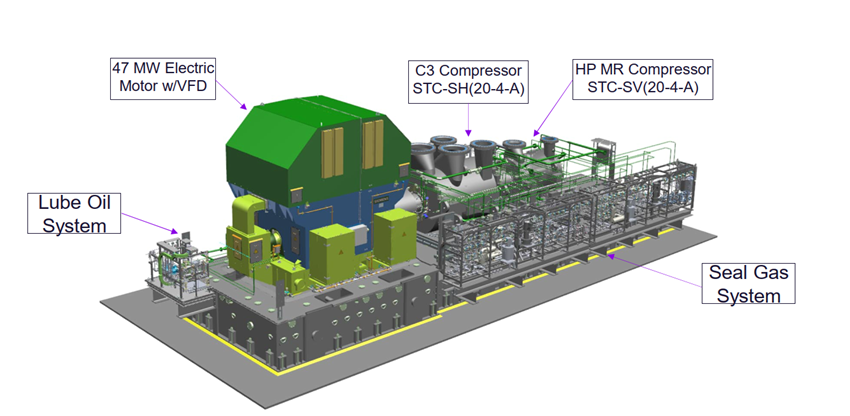
Schematics for an e-drive compressor train.
The benefits of E-Drives extend beyond emissions reduction. These systems offer:
Higher Energy Efficiency: Electric motors can convert over 95 per cent of electrical energy into usable power, making them far more efficient than gas turbines, which typically convert only about 60 per cent of energy into usable power. This leads to less energy waste and lower operational costs.
Lower Maintenance Requirements: Unlike gas turbines, which may require 10 to 15 days of scheduled maintenance after three years of operation, electric motors can run for up to five years without major servicing, enhancing operational uptime and reliability.
Operational Flexibility: With E-Drives, LNG plants can vary the speed of motors based on current needs, which helps optimize energy consumption and production efficiency. This flexibility allows the plant to respond to fluctuations in demand, maintain consistent performance, and reduce waste by only using the necessary amount of energy.
Reduced Flaring: Flaring occurs when excess gas is burned off during processes upsets that require depressurizing or restarting. Suitably sized E-drives reduces the need for depressurizing, allowing for quicker restarts at settle-out pressures, resulting in less or even no flaring. This is something that is not feasible with single-shaft gas turbine-driven compressors, which require flaring in the depressurization process and a longer overall restart time.
Decarbonizing LNG Production with Renewable Hydroelectricity
Electrifying LNG facilities is only half the equation as the source of electricity plays a crucial role in determining overall emissions. BC Hydro generates 98 per cent of its power from hydroelectric facilities from around the province and therefore has an extremely small GHG emission footprint. Woodfibre LNG’s strategic location in British Columbia allows it to tap into BC Hydro’s abundant supply of renewable power instead of generating their own power from natural gas on-site.
If a conventional LNG facility were to switch to E-Drives in a jurisdiction powered by coal or even lower-carbon gas-fired electricity generation, the emissions reduction would be more limited. The availability of hydroelectric power provides a definitive advantage for Woodfibre LNG for emissions reduction and reliability.
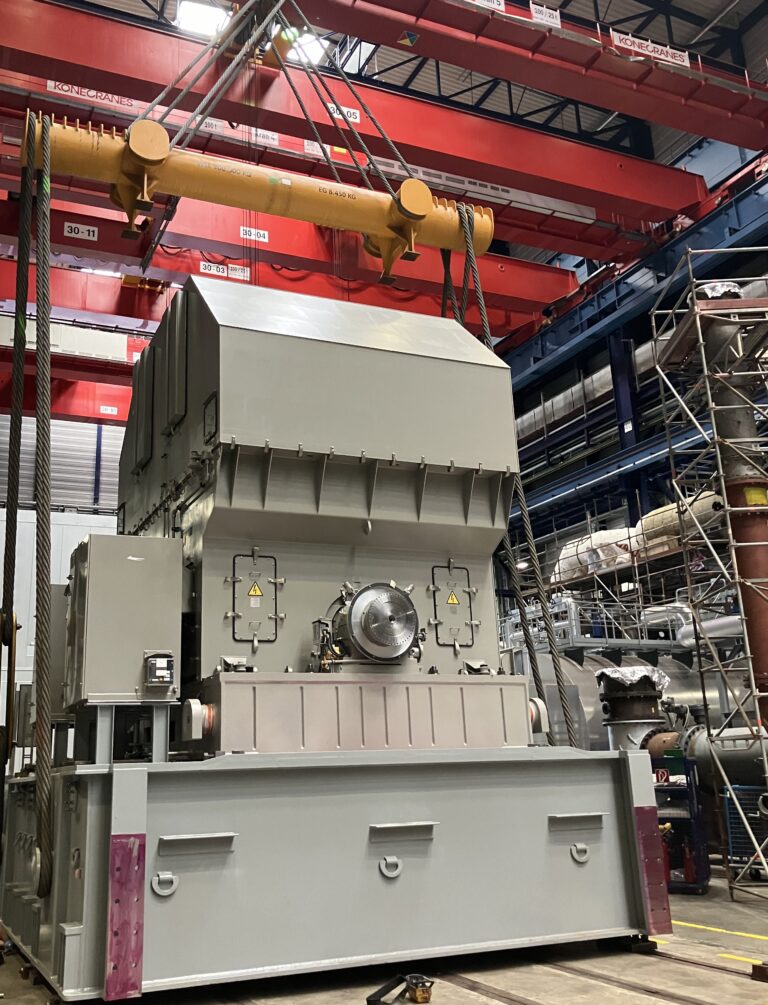
Testing Siemens Energy compression train e-house, motor and e-drive systems for the Woodfibre LNG facility.
Overcoming Challenges in E-Drive Implementation
Choosing to use E-Drives does pose some technical challenges, particularly for facilities connected to an external power grid like Woodfibre LNG.
Maintaining voltage stability, managing harmonics (unwanted distortions in the electrical signal that can be caused by large motors), and ensuring seamless integration with the liquefaction process require advanced engineering solutions.
Woodfibre LNG has partnered with industry experts from Siemens Energy to create an improved electrical system that addresses challenges and boosts plant reliability and efficiency by using high efficiency synchronous motors, variable speed drives and harmonic filters.
A Blueprint for the Future of LNG
Woodfibre LNG’s commitment to E-Drive technology is more than just an operational choice – it’s a model for the future of lower-carbon LNG production. By combining cutting-edge efficiency with clean electricity integration, the use of E-Drives in the Woodfibre LNG facility demonstrates how the LNG industry can better support global climate goals while maintaining economic viability and improving reliability.
Stay tuned as we continue our “Towards Net Zero” series, exploring additional innovations that are making Woodfibre LNG the world’s first net-zero LNG export facility.
Subscribe to the newsletter
Daily decarbonization data and news delivered to your inbox
Follow the money flow of climate, technology, and energy investments to uncover new opportunities and jobs.
Latest issues
-
Why Is Wyoming Giving 650,000 Acres to Carbon Storage?
Inside This Issue 🪨 Inside Blm's 650,000-Acre Bet on Wyoming Carbon Storage 🏭 California Advances Carbon Capture and Removal Regulations Under SB 905 ⚡ Why a Japanese Power Giant Is Betting on Den...
-
Colorado Joins the 7-State CCS Permit Fast Lane
Inside This Issue ⚖️ Colorado Takes Over Class VI Permits: What Changes for CCS? 🏭 Hebei Shoulang Facility Using LanzaTech Technology Achieves World’s First ISCC EU RCF Certification for Ethanol P...
-
The US Hasn't Made Heavy Water Since 1982
Inside This Issue ⚛️ Aternium Completes FEED Studies for US Hydrogen, Heavy Water Project 🐄 Google, McKinsey Strike Brazil Carbon Removal Deal With Silvopasture Project 🔧 Cummins Selects Stargate ...
Company Announcements
-
Citi Closes $72 Million Carbon Removal-Linked Note to Support Applied Carbon Biochar Project
HIGHLIGHTS Citi structured an innovative $72 million carbon removal-linked note to provide upfront capital for Applied Carbon's biochar project, marking a first-of-its-kind "outcome bond" for ver...
-
New platform opens access to the same rigorous project evaluations trusted by the world's leading carbon removal procurement programs Today, Relae (formerly Carbon Direct) launched The Diligence C...
-
Inside BLM's 650,000-Acre Bet on Wyoming Carbon Storage
The Bureau of Land Management has offered right-of-way grants covering about 649,438 acres of federal pore space in southwest Wyoming. The September 21, 2026 offers went to Moxa Carbon Storage LLC ...
-
NEW YORK, BUSINESS WIRE, SWITCH Maritime (Switch), a leading developer of zero-emission vessels, secured a Design Basis Agreement (DBA) with the United States Coast Guard (USCG) for the SWITCH-150,...