.webp)
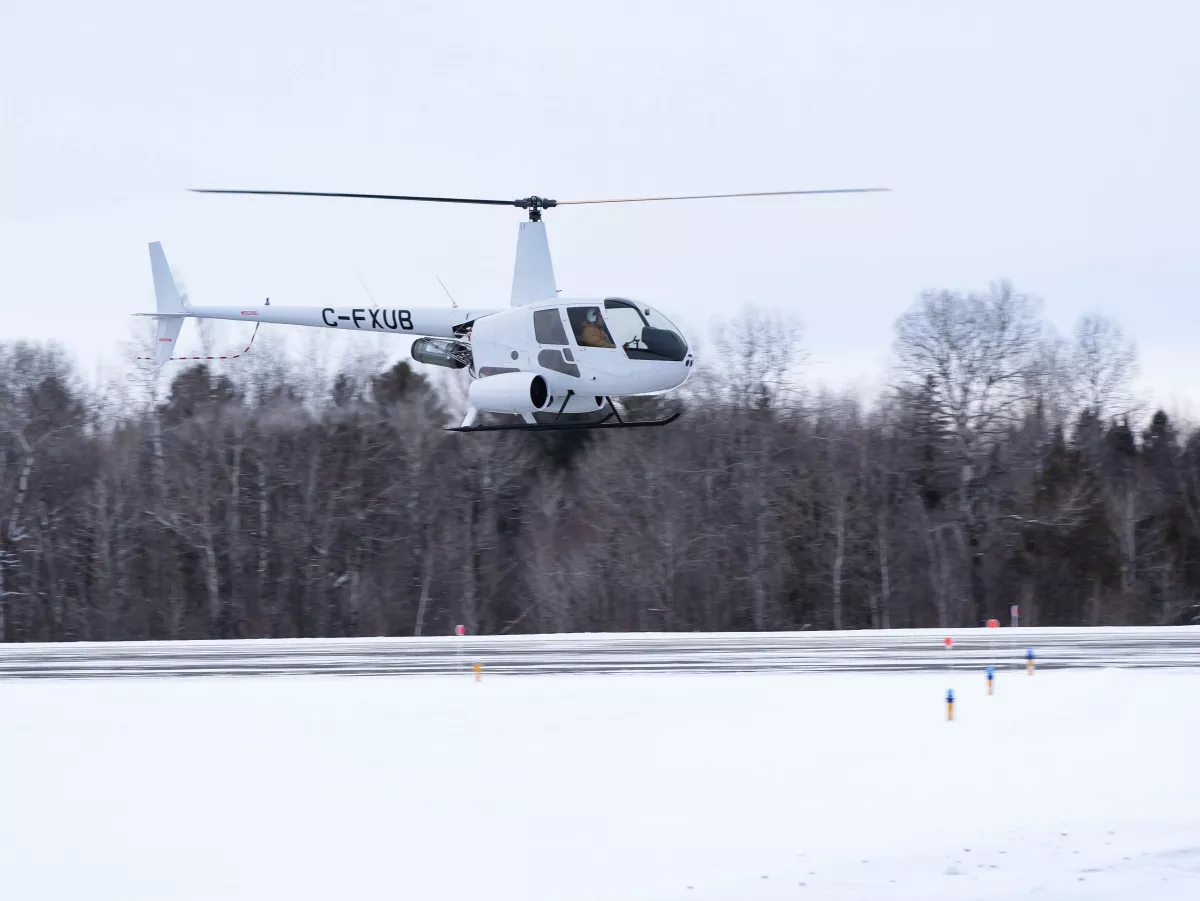
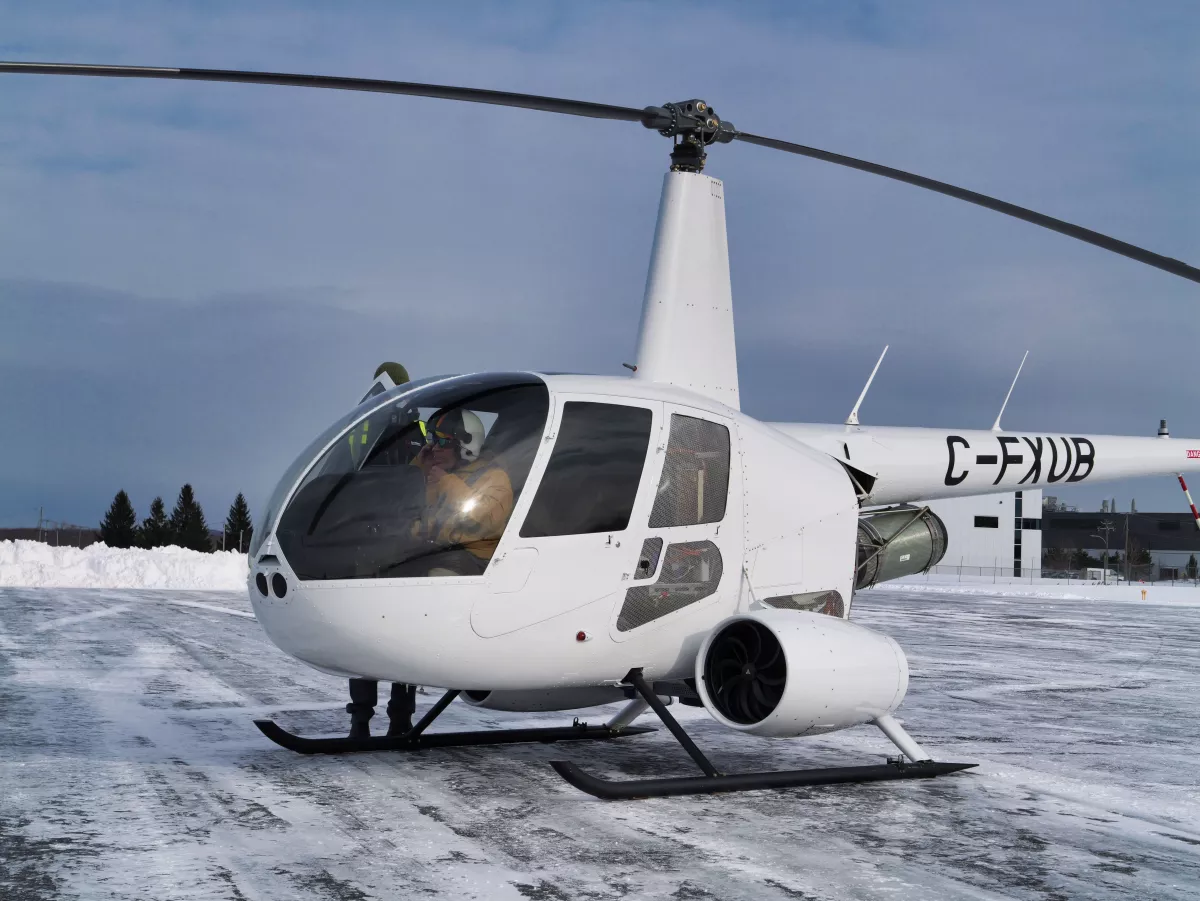
Last month, a modified Robinson R44 lifted off from Roland-Désourdy Airport in Bromont, Quebec, and completed what may be the most consequential short flight in rotorcraft history. It was the first hydrogen-powered helicopter to complete a full operational circuit – takeoff, climb, pattern flight, approach, and landing – under real-world conditions.
That distinction matters more than it sounds. A previous test in March 2025 had already shown the system could hover for just over three minutes. Impressive, but hovering is not flying. The April flight was the difference between a lab result and a proof of concept regulators can actually use.

>> In Other News: The Ocean Is Fighting Climate Change: How People Are Trying to Help It
Behind the milestone is Unither Bioélectronique, a Canadian subsidiary of biotech company United Therapeutics, and its Project Proticity program. The goal isn't tourism or air taxis – it's delivering transplant organs.
"This milestone shows that piloted hydrogen-electric vertical flight can move from theory to repeatable, safe, real-world testing," said Mikaël Cardinal, vice president of program management & business development, organ delivery systems for Unither Bioélectronique. "For Unither, the goal is clear: build the aircraft and aerial logistics systems needed to help deliver manufactured organ alternatives to patients in need while creating a scalable zero-emission transportation network."
The prototype swaps the R44's conventional combustion engine for a compact electric powertrain built around two PEM (Proton Exchange Membrane) fuel cells – devices that convert hydrogen and oxygen into electricity, producing only water as a byproduct – housed in the rear cabin. A magniX electric motor sits in the original engine bay, and a lithium-ion battery pack handles sudden power spikes, like during takeoff or sharp maneuvers.
During early flights, the system hit a peak output of around 178 kW (239 hp), with roughly 155 kW (208 hp) at the rotor shaft during hover. More than 90% of that power came from the fuel cells, with the battery covering the rest.
The current version runs on compressed gaseous hydrogen, which is limited by tank volume and energy density. But the company's target is liquid hydrogen (LH2), which stores far more energy in the same space and is essential for long-range missions carrying the kinds of payloads needed for organ transport.
The next step is scaling the entire architecture up to the Robinson R66, a larger turbine-powered platform better suited to earning type certification – the formal regulatory approval that clears a design for commercial production – from Transport Canada and the FAA. The target range is between 200 and 250 nautical miles (370 to 463 km).
Unither isn't alone in the race. Piasecki Aircraft is developing the PA-890, a seven-passenger helicopter using high-temperature PEM fuel cells with a similar 200-nautical-mile (370 km) range target. Startup Hydroplane, founded by former NASA engineer Anita Sengupta, is building a modular 200-kW hydrogen system designed as a drop-in replacement for existing helicopters and cargo drones. And Joby Aviation has already flown a hydrogen-electric air taxi 523 miles (840 km) on liquid hydrogen.
For aircraft, the energy math heavily favors hydrogen over batteries. Fuel cells today achieve power densities of around 2,900 W/kg, with targets of 4,500 W/kg by 2030 – compared to roughly 380–400 W/kg for the best lithium batteries currently available. Engineering studies for light helicopters suggest hydrogen-fuel-cell configurations can deliver between 1.8 and 2.2 times the range of a fully battery-electric equivalent.
The remaining obstacle is regulatory. Certifying hydrogen aircraft requires new airworthiness standards covering fuel cells, high-pressure hydrogen storage, and high-voltage systems – a process still underway at the FAA and Transport Canada. For now, operators must fly under experimental permits in controlled environments.
Unither already has a track record here. In 2021, the company used its own drone to transport a pair of donor lungs between two Toronto hospitals in a six-minute urban flight. The hydrogen helicopter is the next step in that same vision.
"Hydrogen flight is no longer a distant concept sitting on a roadmap," said R Hammond, executive director of the Canadian Advanced Air Mobility (CAAM). "It is flying, completing circuits, being tested, being learned from, and being built into a pathway for healthcare, emergency response, and regional logistics. CAAM’s role is to help ensure that the ecosystem around this technology – regulation, infrastructure, investment, and public trust – moves with the same urgency."
Subscribe to the newsletter
Daily decarbonization data and news delivered to your inbox
Follow the money flow of climate, technology, and energy investments to uncover new opportunities and jobs.
Latest issues
-
This Box Makes Jet Fuel Out of Thin Air
Inside This Issue ✈️ AIRCO's Pennsylvania Hub Makes Jet Fuel from CO2 On-Site 🛡️ Initial Partners Selected in Air Force Geologic Hydrogen Energy Resilience Initiative 🍁 Alberta Releases Updated Qu...
-
They Pulled Hydrogen Straight Out of Rock. A World First.
Inside This Issue 🛢️ No CCUS, No Pipeline: The $100 Billion Bet Behind Alberta's West Coast Oil Route 🌋 GeoRedox and Canada Nickel Launch the World's First Stimulated Geologic Hydrogen Well in Ont...
-
It's Buried. California's First Underground CO₂ Project Goes Live.
Inside This Issue 🏜️ California Resources Corporation Achieves First CO₂ Injection at Carbon TerraVault I, a Major Milestone for Carbon Management in California 💂 Plug and Carlton Power, Barrow Gr...
Company Announcements
-
Hydrogen modules measuring 1.92 m² (20.7 ft²), built with SunHydrogen's latest catalyst integration and coating improvements, installed at UT Austin's Hydrogen ProtoHub, demonstrate efficiencies co...
-
Parties Clarify That the Business Combination Agreement Remains in Full Force and Effect; Form S-4 Registration Statement Expected to Be Filed in the Coming Weeks CALGARY, Alberta -- DevvStream Co...
-
REV Corporate Video: https://youtu.be/biOHmBtI8ns VANCOUVER, British Columbia, June 01, 2026 (GLOBE NEWSWIRE) -- REV Exploration Corp. (“REV” or the “Company”) (TSXV: REVX; OTC: REVFF; FSE: 7FF) i...
-
Valmet and Linde Bring Electric CO2 Capture to Pulp Mills
Pulp and paper mills in the U.S. and Canada emit roughly 144 million metric tonnes of CO2 every year, yet the sector has been almost entirely left out of the global CCS buildout. A new partnership ...