
Redefining Clean Tech Manufacturing in North America
In a bold move that underscores the momentum building in climate tech, Svante has officially launched the world's first commercial gigafactory for carbon capture and removal filters. Located in Burnaby, British Columbia, the Redwood facility is a massive 141,000-square-foot operation designed to scale the production of Svante’s patented solid sorbent filters. These filters are engineered to trap carbon dioxide directly from industrial emissions and even from the air itself.
Claude Letourneau, President & CEO of Svante, opened the “GO25” grand opening event by calling the gigafactory a “generational leap forward” for the carbon management sector. “Today, we are making history,” he said, noting that the facility is a demonstration of what’s possible when innovation meets global climate ambition.
>> RELATED: Svante Launches World's First Commercial Gigafactory for Carbon Capture & Removal Filters

Why This Gigafactory Matters
The Redwood facility isn’t just big—it’s built for impact. With the capacity to manufacture enough filters to capture up to 10 million tonnes of CO₂ annually, this facility sets a new global benchmark. That’s equivalent to removing more than 27 million cars from the road each year.
The filters use metal-organic frameworks (MOFs)—highly porous structures ideal for trapping gas molecules. Svante’s version of MOF-coated sorbent filters are already in demand for industrial applications where post-combustion carbon concentrations are high and carbon removal costs can be optimized.
This isn’t theory—it’s already in action. Svante’s filters are currently deployed at Chevron's Kern River site in California and at Lafarge's Richmond Cement Plant in British Columbia through Project CO₂MENT. These collaborations underscore the technology’s adaptability across industries like cement, ethanol, pulp and paper, and waste-to-energy.
Global Investors Backing the Vision
The commissioning of the Redwood gigafactory follows a $145 million capital investment, supported by a diverse group of strategic partners including Chevron New Energies, Temasek, Canada Growth Fund, United Airlines Ventures, Samsung, M&G, and GE Vernova.
This funding has not only enabled the gigafactory’s completion but also signals deep confidence in Svante’s capacity to deliver commercial solutions at scale. The company expects to build additional gigafactories within the decade to meet the surging demand for carbon capture infrastructure worldwide.
Supporting the Direct Air Capture Boom
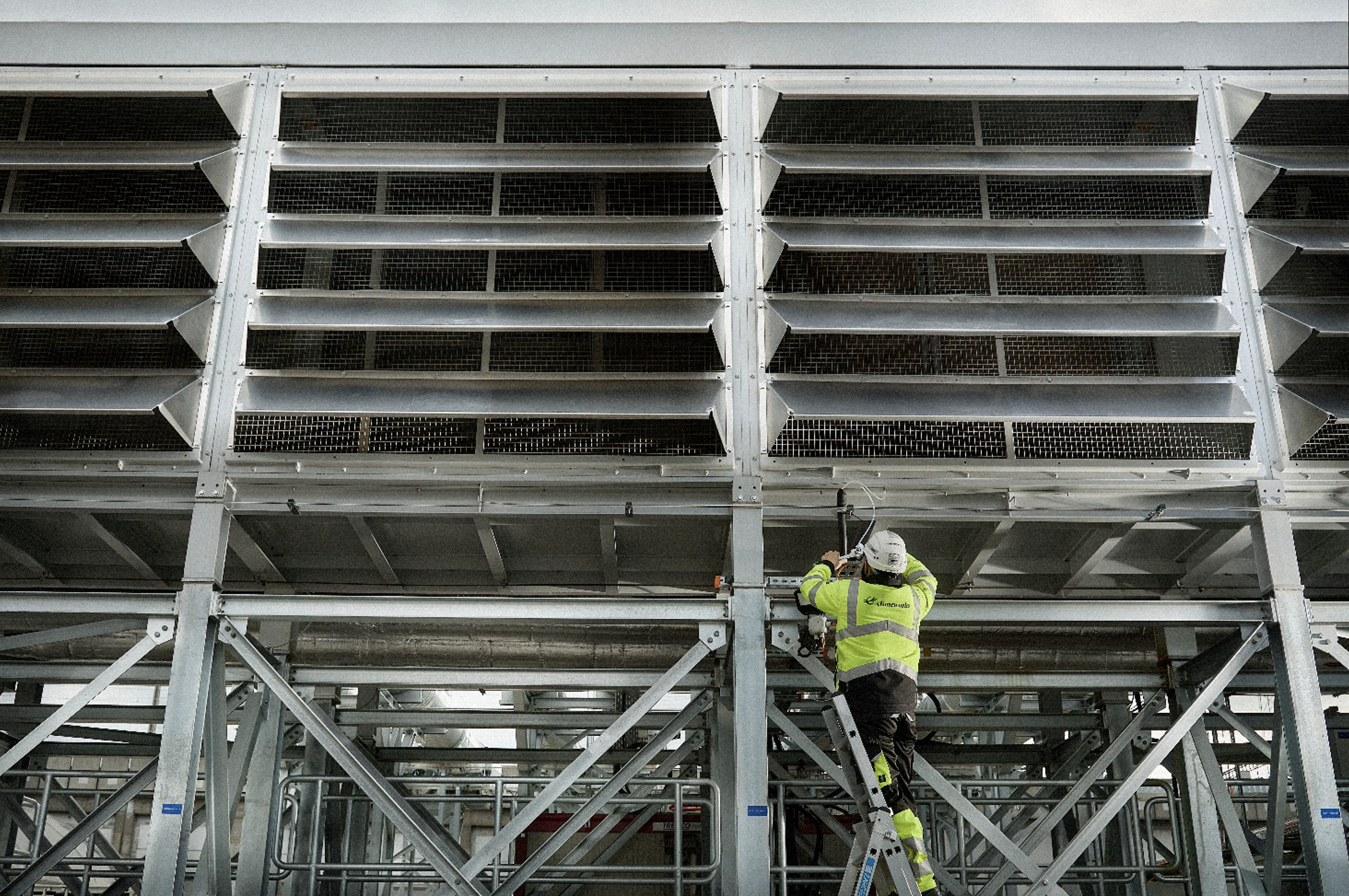
While Svante made its name in point-source capture, it’s also making waves in direct air capture (DAC). One of its major clients is Climeworks, the Swiss-based DAC leader. Svante’s filters are part of Climeworks’ Gen 3 DAC systems, which the company claims can double CO₂ capture capacity while slashing energy costs in half.
With DAC projects being deployed across Europe and North America, Svante’s production capabilities are arriving at the perfect time. The U.S. Department of Energy has announced billions in funding for carbon removal hubs, including several that will require large-scale DAC technology.
>> In Other News: CEO Update on Adapting for Long-term Impact
A Growing Industry With Lasting Impact
The International Energy Agency estimates that to meet net-zero goals, carbon capture must scale to 1.2 gigatonnes annually by 2030. Svante’s gigafactory is helping bridge that gap. And with organizations like TIME and Statista listing Svante among the _Top Greentech Companies of 2025_, it's clear the industry is watching.
But what makes Svante’s approach stand out is not just the science—it’s the speed and scalability. By standardizing production and embracing automation, the company has reduced manufacturing costs and increased output efficiency.
Local Strength, Global Reach
Located in Canada, the Redwood facility also brings regional advantages. Letourneau emphasized that “bringing the supply chain to our shores” ensures greater resilience and independence from overseas markets.
North America is becoming a carbon tech powerhouse, and Svante is a key player in that transformation. With partners like United Airlines and Chevron backing their expansion, the company’s technology is moving from pilot-scale to mainstream.
What Industry Leaders Are Saying
“Scaling up the carbon management industry and building a marketplace for physical CO₂ is essential for meeting global climate targets,” said Claude Letourneau during the launch. His statement mirrors what many experts in the space are beginning to acknowledge: industrial-scale carbon removal is no longer optional.
Industry voices are aligned. According to Jennifer Wilcox, Principal Deputy Assistant Secretary for Fossil Energy and Carbon Management at the U.S. DOE, “Carbon capture is critical to decarbonizing the industrial sector and securing a clean energy economy.”
The Road Ahead
With this first-of-its-kind facility now online, Svante is poised to help shape the future of global decarbonization. Its blend of high-performance technology, strategic backing, and ambitious scalability makes it one of the most exciting companies in the climate tech arena.
As demand for carbon solutions rises, projects like Redwood remind us that progress doesn’t just come from policy—it comes from building the tools that make a cleaner future possible.
Subscribe to the newsletter
Daily decarbonization data and news delivered to your inbox
Follow the money flow of climate, technology, and energy investments to uncover new opportunities and jobs.
Companies

Latest issues
-
Colorado Joins the 7-State CCS Permit Fast Lane
Inside This Issue ⚖️ Colorado Takes Over Class VI Permits: What Changes for CCS? 🏭 Hebei Shoulang Facility Using LanzaTech Technology Achieves World’s First ISCC EU RCF Certification for Ethanol P...
-
The US Hasn't Made Heavy Water Since 1982
Inside This Issue ⚛️ Aternium Completes FEED Studies for US Hydrogen, Heavy Water Project 🐄 Google, McKinsey Strike Brazil Carbon Removal Deal With Silvopasture Project 🔧 Cummins Selects Stargate ...
-
Why Colorado’s Koloma Has Japan’s Largest Utility Hooked
Inside This Issue ⚡ JERA Invests in Koloma to Explore Natural Hydrogen as a Future Low-Carbon Energy 🔬 New CATF Tool Provides Framework for Self-Assessment and Strengthening of Biomass Carbon Remo...
Company Announcements
-
Citi Closes $72 Million Carbon Removal-Linked Note to Support Applied Carbon Biochar Project
HIGHLIGHTS Citi structured an innovative $72 million carbon removal-linked note to provide upfront capital for Applied Carbon's biochar project, marking a first-of-its-kind "outcome bond" for ver...
-
New platform opens access to the same rigorous project evaluations trusted by the world's leading carbon removal procurement programs Today, Relae (formerly Carbon Direct) launched The Diligence C...
-
Inside BLM's 650,000-Acre Bet on Wyoming Carbon Storage
The Bureau of Land Management has offered right-of-way grants covering about 649,438 acres of federal pore space in southwest Wyoming. The September 21, 2026 offers went to Moxa Carbon Storage LLC ...
-
NEW YORK, BUSINESS WIRE, SWITCH Maritime (Switch), a leading developer of zero-emission vessels, secured a Design Basis Agreement (DBA) with the United States Coast Guard (USCG) for the SWITCH-150,...