
Alaska Airlines and Microsoft join Twelve to mark commercial operation of AirPlant One — the first plant in the United States to produce E-Jet fuel from CO2, renewable electricity, and water at scale.
MOSES LAKE, Wash., June 10, 2026 /PRNewswire/ -- Twelve, a next-gen industrial company on a mission to electrify fuel and chemical production, today opened AirPlant One, the first commercial-scale facility in the United States to produce E-Jet fuel – a power-to-liquid (PtL), drop-in sustainable aviation fuel (SAF) made from CO2 and renewable electricity – and E-Naphtha™, a foundational building block for thousands of everyday products. The ribbon cutting, held at the Moses Lake, Washington facility with Alaska Airlines and Microsoft, marks the beginning of commercial-scale production and sets the stage for commercial flights in the U.S. powered by jet fuel made from air.
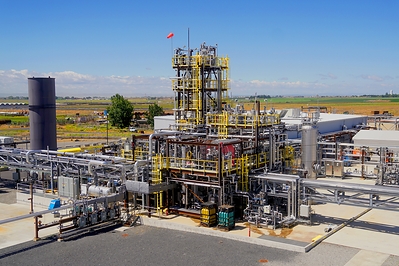
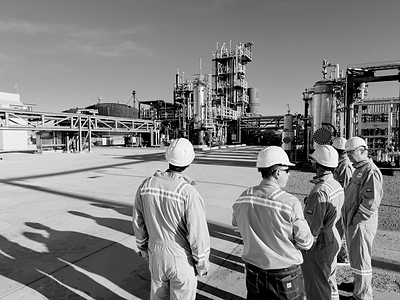
The opening of AirPlant One proves that American manufacturing can produce fuels and chemicals by using abundant, onshore feedstocks — no upstream extraction required. Cost is anchored to long-term power contracts rather than commodity markets or OPEC decisions.
>> In Other News: Inside Holcim’s CaptureLab, Our Industry’s First Carbon Capture Test Platform
AirPlant One is successfully producing on-spec jet fuel that meets ASTM International (American Society for Testing and Materials) certification standards for use in commercial aircraft — it requires no modifications to aircraft, engines, or existing airport infrastructure. The on-spec jet fuel is being delivered and sold for commercial aviation use as planned. Alaska Airlines will operate regular domestic flights using E-Jet SAF manufactured at AirPlant One.
"We broke ground on AirPlant One with a simple thesis: that the fuels powering the global economy could be made from renewable electricity and air, anywhere in the world," said Nicholas Flanders, Co-Founder and CEO of Twelve. "Today, that thesis is operational and Alaska Airlines will fly on fuel made right here in Washington State. This is what American industrial electrification looks like."
The Power-to-Liquid Advantage
E-Jet fuel is a Power-to-Liquid (PtL) e-fuel — a fundamentally different category from bio-based SAF. Where conventional SAF pathways depend on agricultural feedstocks with inherent land and supply constraints, E-Jet fuel is produced from CO2 and renewable electricity: abundant, onshore, and scalable. Twelve's eManufacturing process captures CO2 from the air, combines it with water and renewable electricity, and converts those inputs into hydrocarbon fuel molecules using an electrolyzer. The result is a certified jet fuel chemically identical to conventional fuel.
E-Jet Key Advantages:
E-Jet SAF is produced from CO2 and renewable electricity — both abundant onshore feedstocks with no upstream extraction
Drop-in synthetic aviation fuel compatible with today's aircraft and infrastructure, meeting ASTM D7566 Annex A1 specifications
Delivers up to 90% lower lifecycle CO2 emissions compared to conventional jet fuel
Offers 10+ years of potential price predictability through electricity-based inputs
Requires less water and land to produce than many biofuel pathways
Diversifies fuel supply and strengthens energy security
Supports domestic industrial growth, jobs, and fuel resilience
Enables airlines and corporate buyers to advance emissions reduction goals without fleet changes
Scalable pathway for addressing emissions from long-haul aviation where electrification is difficult
E-Naphtha™: A New Era of eChemicals
In addition to aviation fuel, AirPlant One produces E-Naphtha – a versatile eChemical derived from CO2, water, and renewable energy. Chemically identical to traditional naphtha, it serves as a drop-in substitute and foundational building block for thousands of everyday products — from plastics and packaging to solvents and synthetic fibers.
Twelve partners with brands to produce E-Made products made with E-Naphtha, providing an upstream solution for decarbonizing everyday products without compromise. To date, the company has delivered proof-of-concept projects to global manufacturers including Mercedes-Benz, PANGAIA, and Procter & Gamble.
Consumer demand is already forming. A Twelve survey of over 1,000 U.S. consumers found that 74% would choose a CO2-based product over a conventional oil-derived product if quality is equal, with 90% saying it is important for brands to eliminate fossil fuels from the everyday products they sell. Consumer interest is strongest in apparel, accessories, and footwear (67%), followed by technology and personal electronics (57%) and beauty and personal care products (53%).
E-Naphtha is the opening chapter of an entirely new industry: eChemicals. For the first time, manufacturers can source the building blocks of their products from domestic electricity and captured CO2. That translates directly to supply chain resilience, predictable input costs, and American industrial leadership.
A New Model for Fuel Supply
AirPlant™ One reframes what domestic fuel production means as the plant's inputs of electricity and captured CO2 are widely available across the United States. Its output is a certified, drop-in jet fuel that can be uplifted at commercial airports today. Where oil and gas production is constrained by geology, E-Jet production is constrained only by energy access that the United States is actively expanding.
Twelve's power-to-liquid process also enables something conventional fuel suppliers have been unable to offer: fixed-price, long-term fuel contracts. Because E-Jet fuel costs are anchored to power purchase agreements rather than crude oil markets, Twelve can offer airlines price predictability across a decade-long horizon. For carriers managing billion-dollar fuel budgets, that is a structural shift, not an incremental one.
The Alaska Airlines Partnership
Alaska Airlines' early commitment was foundational to AirPlant One coming online. In 2022, Alaska and Microsoft jointly committed to purchase output from Twelve's facility — the commercial signal that made financing and construction possible. Alaska Star Ventures also participated in Twelve's $645M funding round as an investor, deepening a partnership that spans procurement, capital, and flight operations.
"As Seattle's hometown airline, we are committed to supporting in-state production of sustainable aviation fuel, which is currently the best technology for the airline industry to reach net-zero carbon emissions", said Ryan Spies, Alaska Airlines Managing Director of Sustainability. "Our partnership with Twelve and Microsoft demonstrates the power of innovation and collaboration to successfully advance SAF, while creating new jobs, diversifying fuel supply chains and strengthening energy security."
Microsoft's Role in AirPlant One
Microsoft supported the scale-up of AirPlant One through a strategic investment from its Climate Innovation Fund and a Sustainable Aviation Fuel (SAF) offtake agreement. Utilizing a book-and-claim accounting model, pioneered alongside Alaska Airlines, this agreement will allow Microsoft to reduce its reported emissions associated with business travel. This partnership underscores Microsoft's commitment to advancing clean energy solutions with transformative impacts for aviation and global industry.
"Climate progress depends on collaborations that send signals to investors and innovators to move markets," said Melanie Nakagawa, CVP and Chief Sustainability Officer, Microsoft. "Our investment in Twelve helps scale energy solutions while laying the groundwork for cleaner aviation at a global scale. We look forward to sourcing future gallons of Washington-produced SAF to help reduce our business travel emissions."
Built for the Emerging Global Demand Environment
AirPlant One is purpose-built for the domestic energy leadership moment. Producing critical fuels and chemicals from American renewable electricity and air vs. imported crude, it strengthens supply chain resilience and reduces exposure to commodity market volatility.
Internationally, European SAF mandates represent a structural demand floor that is not reversing. Changi Airport in Singapore now requires that SAF be physically loaded onto aircraft at Changi Airport itself — not purchased elsewhere and credited on paper. This means airlines flying through Changi must source SAF locally, creating a guaranteed, location-specific pool of demand that suppliers must be positioned to serve. Twelve's geographic flexibility and fixed-price model are built for exactly this environment.
Supply and infrastructure to uplift SAF at Pacific Northwest airports remain uniquely constrained. AirPlant One directly addresses that gap, producing fuel domestically for flights departing domestically, reducing dependence on foreign fuel sources and the supply chain disruptions that come with them.
What Comes Next
The commissioning of AirPlant™ One is the opening chapter of a larger story. AirPlant One has demonstrated the ability to consistently produce on-spec jet fuel at commercial scale — an important validation of Twelve's power-to-liquid technology. Alaska Airlines, in partnership with Microsoft, intends to operate regular domestic PtL flights using E-Jet® SAF manufactured at AirPlant One. In the meantime, on-spec fuel being produced at AirPlant One is being delivered and sold for commercial aviation use. Twelve's technology is designed to scale to additional production sites and airline partners, and fuel and chemical products. AirPlant One establishes that power-to-liquid production is commercially viable in the United States today, and positions Twelve to expand domestic production capacity as U.S. energy infrastructure continues to grow.
About Twelve
Twelve is a next-gen industrial company on a mission to electrify fuel and chemical production. Twelve's power-to-liquid technology converts CO2 and renewable electricity into essential fuels and chemicals using abundant, onshore feedstocks. E-Jet fuel, Twelve's power-to-liquid sustainable aviation fuel, is ASTM-certified and drop-in ready for commercial aviation. AirPlant One in Moses Lake, Washington is Twelve's first commercial-scale E-Jet production facility. Learn more at www.twelve.co.
Subscribe to the newsletter
Daily decarbonization data and news delivered to your inbox
Follow the money flow of climate, technology, and energy investments to uncover new opportunities and jobs.
Latest issues
-
LNK Energies Targets $6.50 Hydrogen With No Federal Subsidies
Inside This Issue 🚛 MIT Startup Says It Can Turn Diesel Trucks Into Cheaper Hydrogen Haulers, See It at Disrupt 🏭 Baytown City Council Briefs: ExxonMobil Blue Hydrogen Agreement Approved 🌎 Colorad...
-
Why Gulf Coast CCS Teams Are Watching Liverpool Bay
Inside This Issue 💂 Eni’s Douglas Platform Sets the Offshore CCS Blueprint 🌲 Pacolet Milliken Expands Its Biomass Platform With the Acquisition of Georgia Renewable Power 🧪 Metacon Receives EU Fun...
-
Who Bought Gevo’s $50M in 45Z Credits?
Inside This Issue ⛽ Gevo Sells $70M in 45Z Credits to a New Kind of Buyer 🌱 South Pole, Gaïago, and Gold Standard Issue European Soil Carbon Credits, Unlocking Verified Regenerative Agriculture Re...
Company Announcements
-
MIT Startup Says It Can Turn Diesel Trucks Into Cheaper Hydrogen Haulers — See It at Disrupt
Diesel fuel powers everything from shipping to agriculture, and with prices hitting record highs in recent weeks, governments around the world are scrambling to contain the fallout. For now, that’...
-
Gevo Announces First Multi-Year Carbon Removal Credits Supply Agreement Through CEEZER
Three-Year Delivery of Durable Carbon Removals from Gevo North Dakota to a Leading Global Enterprise Software Company Gevo will supply durable carbon dioxide removal (CDR) credits from Gevo North...
-
Continental Refining to Double Biodiesel Capacity at Somerset Complex
SOMERSET, Ky. — Continental Refining Company is expanding its biodiesel production facility to double capacity at its Somerset industrial complex, while its soybean processing plant will remain idl...
-
Groundwork BioAg Secures 'BBB' BeZero Carbon Rating
The rating places Groundwork BioAg among the highest-rated agricultural soil carbon projects, opening a scalable pipeline of independently rated, high-integrity removals for corporate buyers. MAZO...