
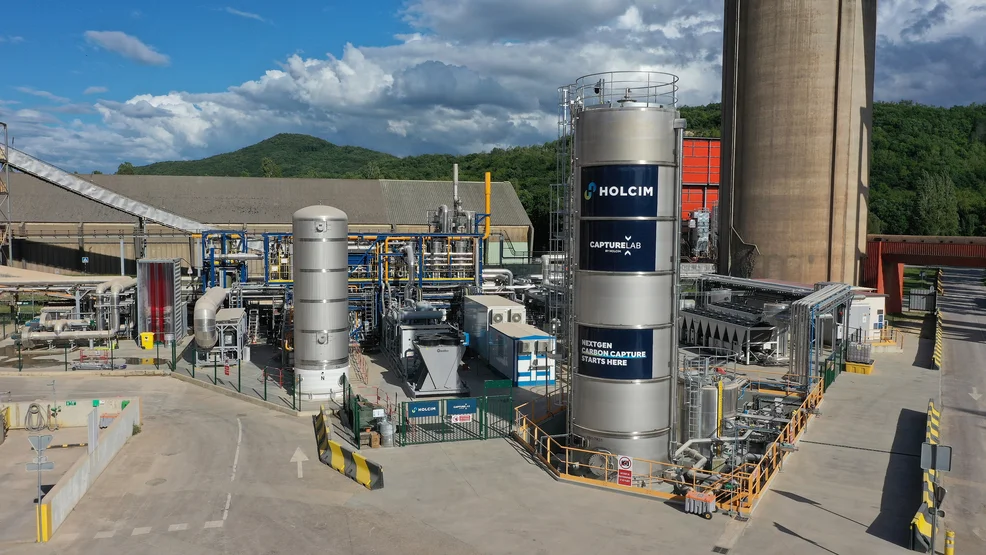
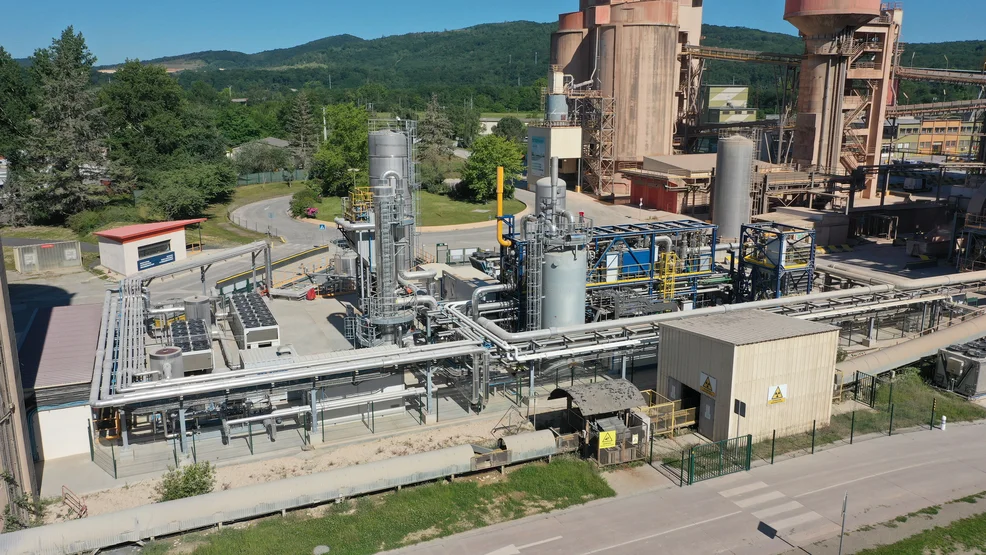
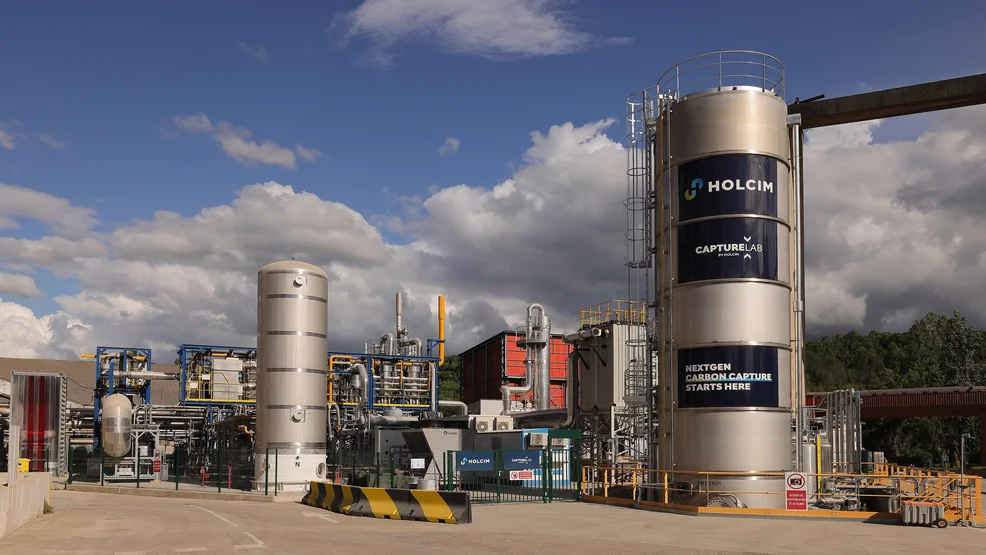
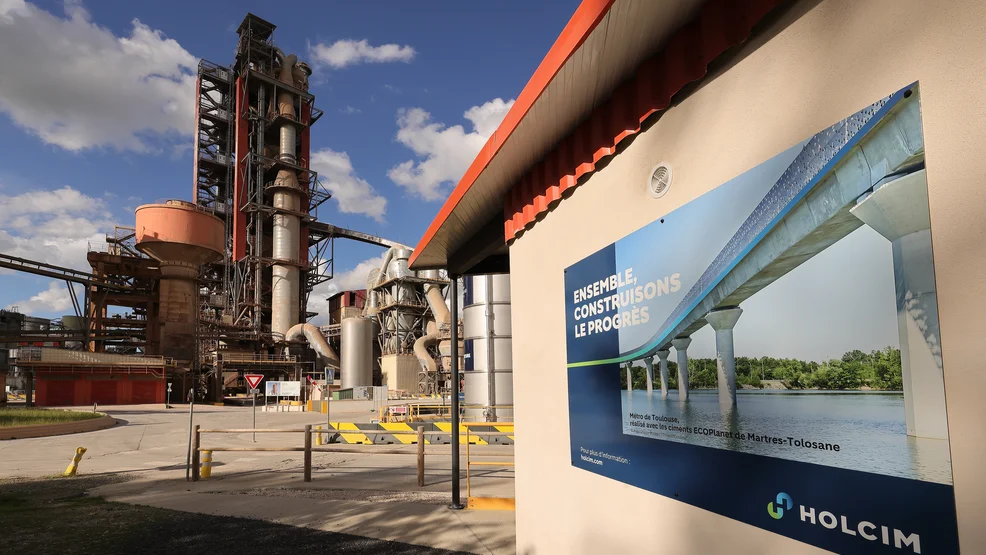
In Martres-Tolosane, France, a breakthrough facility at Holcim’s cement plant is pioneering next generation decarbonization. CaptureLab, the world’s first carbon capture test platform designed for the cement industry, has recently opened. It serves as a high-tech "plug-and-play" hub where Holcim and its partners – from manufacturers and startups to researchers – can prove, refine and scale breakthrough carbon capture technologies.
In doing so, the 2 500 m2 CaptureLab facility bridges the gap between innovative research and full-scale industrial operation, and will strengthen Holcim – as well as our industry partners – as we work to achieve our ambitious carbon capture, utilization, and storage (CCUS) goals.
>> In Other News: FASTECH and Bosch Rexroth to Build World's Largest Hydrogen Refueling Station for Transit Buses
Desrisking the Path to Net Zero
Holcim is committed to becoming a net zero company by 2050, and advanced technologies including CCUS are an important lever alongside our work on formulation and energy. Eight of our full-scale CCUS projects in Europe have been awarded grants by the European Union Innovation Fund.
Holcim is steadfast in its ambition to decarbonize its operations through CCUS, and to bring near-zero cement and concrete to market and scale from 2030, when and where the requisite infrastructure is available. This is where innovative facilities like CaptureLab make the difference.
The "flue gas" is the mixture of gases produced during the cement-making process that exits through a plant's stack. Since this gas contains the CO2 we want to capture, the key is isolating the carbon dioxide from the rest of the stream. The composition of this stream differs from other industries, so the technology must be adjusted to the cement industry needs.

"Although carbon capture has existed for over 50 years, the reality is that it’s a new technology for the cement industry. Given the high CAPEX and OPEX of CCUS projects, there is no room for error, and we must be ready to operate from day one," says Matthieu Aragones, CaptureLab Project Manager at Holcim. "CaptureLab allows us to 'derisk' these major investments by proving the technology works at a pilot scale before we commit to full-scale operations."
Developed by Holcim R&D teams in Switzerland and France, CaptureLab operates with a capacity of 5–30 tons of CO2 treated and captured per day, while a full-scale operation will capture about 100 times more. This allows engineers to simulate real-world industrial conditions, testing how everyday plant operations, like modifying the raw meal composition or the fuel mix, impact the efficiency of the capture units.
Once validated at CaptureLab, the technologies tested can be scaled at Holcim’s full-scale CCUS projects around the world with confidence, and in a way that makes business sense.
Plug and Play Model for Carbon Capture
What makes CaptureLab truly unique is its "plug-and-play" model. Rather than being tied to a single technology, the platform is designed to be a flexible, open innovation hub.
The infrastructure is divided into two distinct parts. Holcim owns and operates the "fixed" side of the lab: the flue gas pre-treatment system hooked up to the plant’s stack, as well as the utilities and analysis equipment. Our partners come in on the pilot side: technology providers and startups can "plug" their proprietary carbon capture pilots directly into Holcim’s system.
“This plug-and-play approach allows Holcim to easily install new pilots, and to test both mature and breakthrough technologies over time on the same installation, with the option to also adjust the flue gas composition," explains Matthieu.
"By providing the necessary pretreatment and utilities, we enable partners to focus exclusively on the performance of their capture technology, accelerating the time it takes to move from the pilot stage to a commercial plant."
The first CaptureLab pilot is currently underway in partnership with Air Liquide, a leader in gases, technologies, and services for industry and healthcare.
Ensuring High-Quality CO2
While the goal of CCUS is to keep CO2 out of the atmosphere, the quality of the captured gas is just as important as the quantity. In a typical cement plant, the flue gas is composed of roughly 60% nitrogen, 20% CO2, 12% water vapor, and 8% oxygen.
Yet 0.1% is composed of trace elements such as sulfur and nitrogen oxides measured in parts per million (ppm). This sounds like a drop in the ocean, but for CCUS these microscopic traces present challenges.
To transport CO2 via pipelines or store it deep underground, CO2 pipeline or storage operators require it to be extremely pure. When transport companies mix CO2 from various sources, trace elements at the ppm level must be monitored..
Maintaining these precise specifications ensures the stability of the mixed stream and protects the integrity of the infrastructure. CaptureLab helps us master this purification process, ensuring that the CO2 captured at Holcim plants isn't just "removed”, it’s refined to a professional grade, ready for a second life or safe, permanent storage.
“Our objective is to ensure the removal of trace elements down to the specifications required for safe transport and permanent storage," Matthieu notes. "We’re aiming to transform industrial flue gas into a stream that is at least 99.7% pure CO2. At this level, we ensure the captured carbon meets the highest quality standards for the global value chain.”
Partnering for Progress in CCUS
CaptureLab stands as a powerful testament to partnership in CCUS. This collaborative, cross-industry effort moves beyond pilot testing, as we industrialize the solutions required to make sustainable construction a global reality.
With CaptureLab, Holcim has built a unique facility to test and scale the most advanced carbon capture technologies through an agile, open innovation model with our valued partners. Validated technologies will be used at Holcim’s own sites, advancing our industry-shaping decarbonization roadmap and contributing to the production of near-zero cement. CaptureLab will advance our vision to be the leading partner for sustainable construction.
RAM MUTHU | Head of Group Operational Excellence
Subscribe to the newsletter
Daily decarbonization data and news delivered to your inbox
Follow the money flow of climate, technology, and energy investments to uncover new opportunities and jobs.
Latest issues
-
Montana Renewables Cuts SAF Cost to $137M
Inside This Issue ✈️ Montana Renewables Announces Innovative, Capital-Efficient Expansion to 200 Million Gallons of Sustainable Aviation Fuel ⚗️ Live Oak Starts Competitive FEED for Nebraska E-Met...
-
CF Industries Breaks Ground on $3.7B Blue Point
Inside This Issue 🏗️ Construction Begins on Blue Point Project 🧪 Commencement of FEED for the Live Oak Project for e-NG Production in Nebraska 🍁 Mercer International Secures C$20 Million Canadian ...
-
Freepoint Commits $450M to Emvolon's Modular Fuel Play
Inside This Issue ⛽ Emvolon and Freepoint Commodities Execute Multi-Year Definitive Agreements to Scale High-Value Liquid Fuels 🧪 Ammobia and Lummus Technology to Commercialize Ammonia for Low-Car...
Company Announcements
-
New report identifies onboard carbon capture as a viable CO₂ emissions reduction solution for global fleet, but warns that offloading infrastructure (ports, terminals, offshore facilities etc.) and...
-
JFE Steel Selected for DeepStar CO2 Pipeline Project
Japanese steelmaker JFE Steel will advance carbon dioxide (CO2) pipeline technology for carbon capture and storage (CCS) and carbon capture, utilisation and storage (CCUS) as part of the Nippon Fou...
-
Aemetis Praises Unanimous Legislative Passage of California E15 Implementation Legislation
CUPERTINO, Calif., Sept. 02, 2026 (GLOBE NEWSWIRE) -- Aemetis, Inc. (NASDAQ: AMTX), a diversified renewable natural gas and biofuels company, praised the unanimous passage of California Senate Bill...
-
Field trials across tropical smallholder systems to test if crushed basalt raises yields, restores degraded soils and improves resilience to heat and drought KIGALI, RWANDA, September 2, 2026 /EIN...