
As Policy Changed, CarbonCapture Moved Its Pilot Project From Arizona to Alberta
Published by Todd Bush on October 8, 2025
This innovative climate tech startup just moved its first big project from the U.S. to Canada as Trump threatens the industry.
At the beginning of this year, a climate tech startup called CarbonCapture was ready to break ground on its first commercial pilot at a site in Arizona.
But the project is now about to open 2,700 miles away, in Alberta, Canada. The company started considering new locations shortly after the inauguration, as the political climate around climate projects quickly changed.
“We were looking for regions where we felt we could get support for deployment,” says CarbonCapture CEO Adrian Corless. “Canada was an obvious choice given the existence of good government programs and incentives that are there.”
>> In Other News: HyTerra Limited Announces Positive Results From McCoy 1 Well
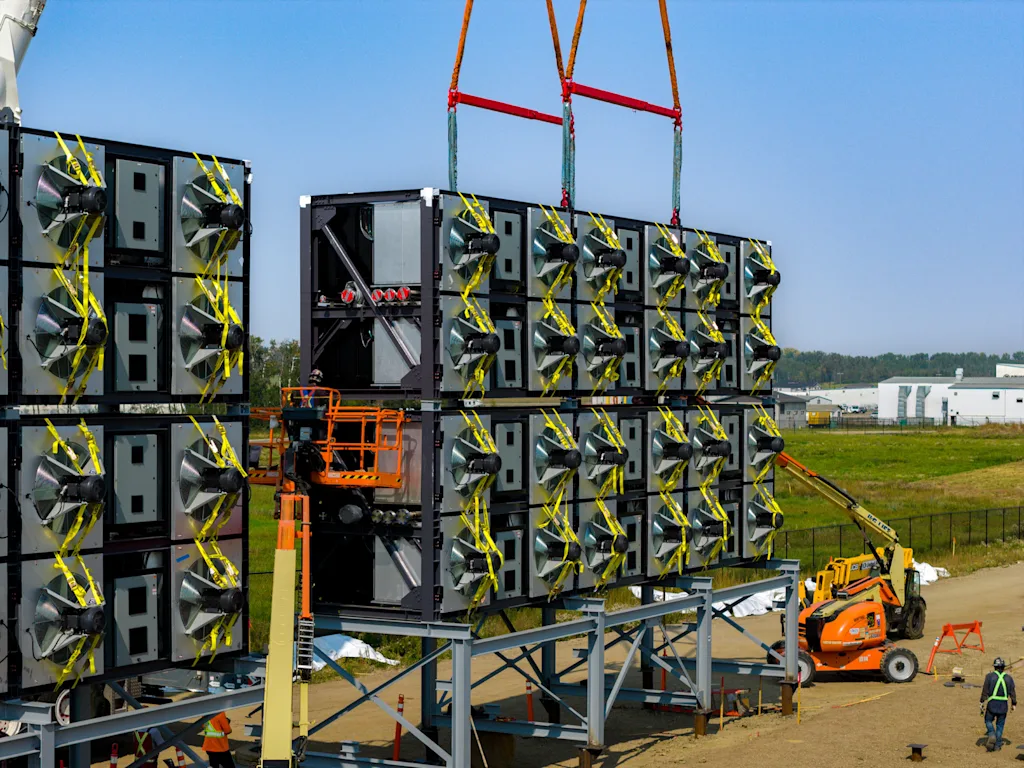
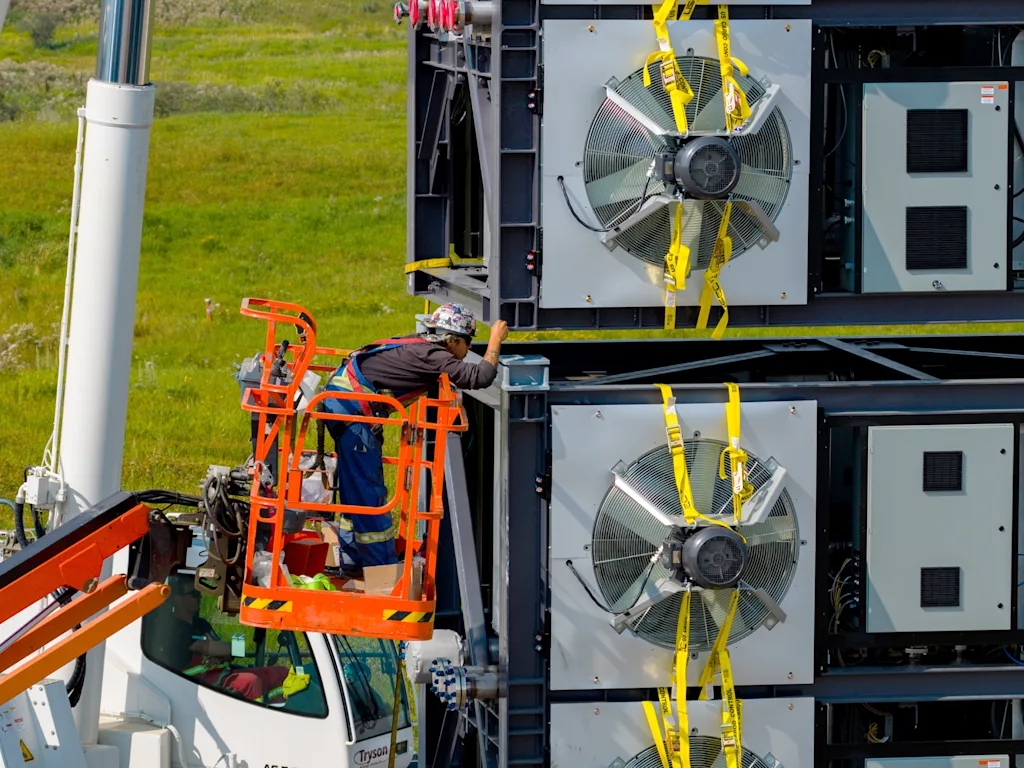
CarbonCapture makes modular direct air capture technology (DAC), units that remove CO2 from the air. In late March, reports came out that the Department of Energy (DOE) was considering cancelling grants for two other large DAC projects, including one in Louisiana that involved the company. By the end of May, by the time the DOE’s Office of Clean Energy Demonstrations announced that it was cancelling $3.7 billion in other grants, the startup had already signed an agreement with Deep Sky Alpha, a facility in Canada that is simultaneously deploying and testing multiple direct air capture projects to help the industry grow.
The startup had already self-funded its planned project in Arizona and built the modules for the site. Because it didn’t rely on government funding for the project, it could have moved forward in the U.S. But it saw that it would be harder to move from the pilot to later commercial projects in Arizona. Now, it’s planning to build its first full commercial project in Canada as well. (The company wouldn’t disclose the cost for either project.)
“We just didn’t see a pathway in the U.S. to be able to show that linkage between doing a commercial pilot, starting to generate [carbon dioxide removal] credits and selling them, and then being able to raise the capital for something that’s much larger,” Corless says.
Canada offers an investment tax credit of 60% for direct air capture equipment, plus an additional 12% for projects in Alberta, the heart of Canada’s oil and gas industry. The country also has strong support for R&D and first-of-a-kind deployments for early-stage companies, and multiple programs supporting climate tech specifically.
The Canada Growth Fund, for example, is a $15 billion fund designed to advance decarbonization. And while Mark Carney, Canada’s prime minister, has taken steps backward on climate policy, he’s also said that he wants the country to be the “world’s leading energy superpower” both for conventional energy and clean energy.
The situation in the U.S. is very different. Trump recently called climate change a “con job” in a speech to the United Nations. When Chris Wright, the energy secretary, recently canceled another $13 billion for renewable energy projects, he said, “if you can’t rock on your own after 33 years, maybe that’s not a business that’s going places,” despite the fact that fossil fuels have gotten subsidies from the U.S. for three times as long. Fossil fuel subsidies are now nearly $35 billion a year, or as much as $760 billion if you include health and environmental costs.
Direct air capture tech arguably hasn’t been hit quite as hard as other forms of climate tech, like offshore wind power. When the “One Big Beautiful Bill” gutted other funding, from tax credits for EVs to solar panels, it left in place some credits that facilities can earn for capturing carbon as they operate. But the Department of Energy recently cut multiple grants that would have helped new DAC projects get built. One of the large projects CarbonCapture was supporting—the Louisiana facility previously under review—lost funding, and the company just received official notice of its cancellation.
Corless says that the startup is still carefully watching what happens in D.C.—and the company still hasn’t made any announcements about whether it might move its whole company, not just particular projects. Right now, it’s headquartered in L.A. with around 50 employees. It also has a small factory for its equipment in Arizona, next to the site where it had planned to build its first carbon capture facility.
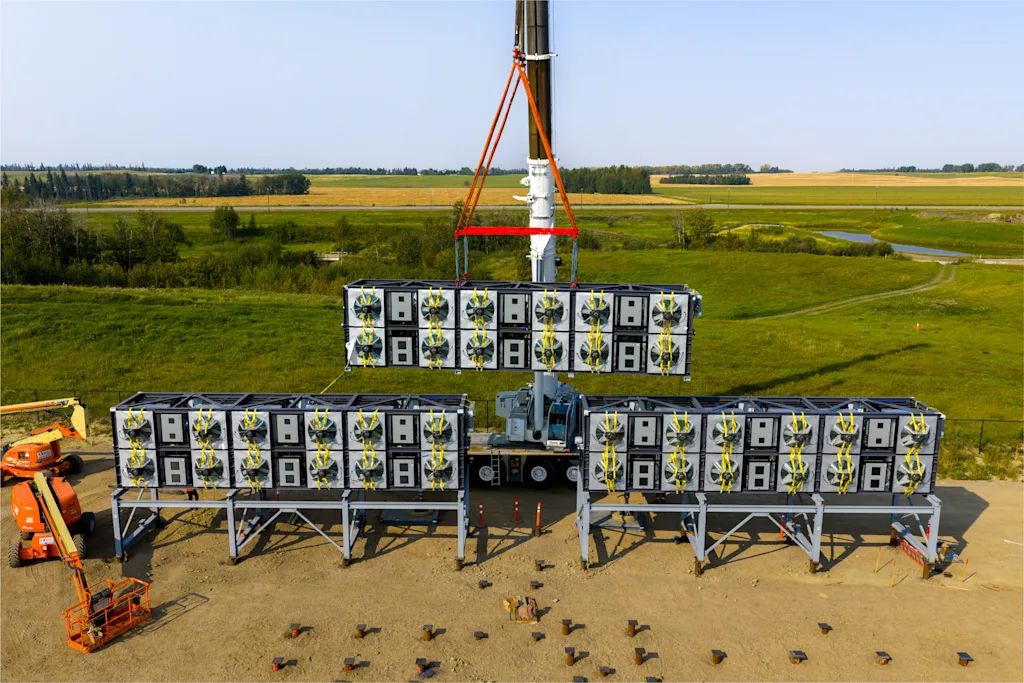
Moving the first project to Canada happened quickly. Five weeks ago, the site in Alberta was an empty field. Four weeks ago, the company shipped the modules it had built in Arizona to Canada. Construction crews have been finishing the final touches, and the company plans to begin commissioning the system next week. Deep Sky Alpha already had some key infrastructure in place, including access to solar power to run the equipment. The pilot will ultimately be able to capture 2,000 tons of CO2 a year, which will be buried underground.
It’s possible that other companies might follow CarbonCapture’s move. “I think that there definitely are going to be several companies that are looking at the same data that we’re looking at,” Corless says. “And I think that it’s not lost on the Canadian government that they have an opportunity as well to step up and potentially take a leadership role in this space, which the U.S. has really owned for the last five years.”
“The U.S. does have a real advantage, even without DOE support,” says Erin Burns, director at the nonprofit Carbon180. “But it’s very likely that uncertainty around DOE programs will weaken that edge. Some projects will move abroad. Some that might have thrived here will not. Others will achieve only a fraction of their potential. Each outcome is a setback on its own. Together they add up to millions, possibly billions, in lost investment and slower American innovation.”
Subscribe to the newsletter
Daily decarbonization data and news delivered to your inbox
Follow the money flow of climate, technology, and energy investments to uncover new opportunities and jobs.
Companies

Latest issues
-
Frontier’s 750,000 Credits Won’t Wait For Pipelines
Inside This Issue 🌽 Frontier Infrastructure Holdings & Carbonfuture Announce Largest Ethanol BECCS Carbon Removal Partnership Agreement to Date ♻️ Puro.earth Certifies World's First Biogas BEC...
-
Could MAX Power Have Found Commercial Hydrogen?
Inside This Issue ⛏️ First Well of Lawson Commercial Validation Drill Program (Still in Progress) Encounters Continuous Natural Hydrogen Readings Over 831 Meters and Highest Readings to Date in Ma...
-
Shell Will Help Delta Reach 23 Million SAF Gallons
Inside This Issue ✈️ Delta and Shell Ink 5-Year SAF Deal Across 5 US Hubs 🌲 Plumas County Receives Top Bioenergy Rating, Opening Door for Biomass Investment 📜 Rep. Kiley Introduces Bill to Incenti...
Company Announcements
-
EWPORT BEACH, Calif.--BUSINESS WIRE--Clean Energy Fuels Corp. (NASDAQ: CLNE), a leader in construction of alternative transportation stations, announced it has been awarded a $27.5 million contract...
-
NTT Data, Engie Launch Clean Energy Partnership to Decarbonize Global Data Center Footprint
Japan-based IT services and digital transformation company NTT Data announced today that it has signed a new strategic agreement with French energy company Engie, aimed at supporting the decarboniz...
-
The Carbon to Sea Initiative has awarded $225,000 to a cross-sector team of scientists, engineers, and industry professionals to study how ocean alkalinity enhancement (OAE) can be integrated into ...
-
Intesa Sanpaolo Joins £500m Financing for Eni CCUS Holding
Intesa Sanpaolo, through its IMI Corporate & Investment Banking Division, has taken part, alongside a pool of international banks, in a financing facility of more than £500 million in favour of...