
Alder Renewables, Boeing Canada, and Bioénergie AE Côte-Nord (AECN) have launched Project Avance, a strategic partnership to produce sustainable aviation fuel (SAF) from sawmill residues in Port-Cartier, Québec. Boeing is contributing CAD $10 million (US $7.2 million) to the project. Production is expected to begin in 2027. At full scale, the project is forecasted to enable future Québec facilities to produce 10 million gallons (approximately 37,854,000 liters) of unblended SAF annually, using forest residues that would otherwise go to waste.
Key Facts
- Boeing invested CAD $10 million (US $7.2 million) in Project Avance as part of its Industrial and Technological Benefits (ITB) commitment tied to Canada's purchase of 16 Boeing P-8A Poseidon aircraft (announced November 2023)
- The $10 million for Project Avance is part of a total CAD $17.48 million Boeing SAF investment package in Canada, announced May 28, 2025
- Project Avance targets 10 million gallons (approximately 37,854,000 liters) of unblended SAF production annually in Québec at full scale
- Production at the Port-Cartier facility is expected to begin in 2027
- Alder's ARC process can cut lifecycle greenhouse gas emissions by up to 80% compared to conventional jet fuel
- Canada's Aviation Action Plan calls for 1 billion liters of SAF by 2030, representing 10% of projected jet fuel consumption
- Project Avance will be one of the first biomass-to-SAF production facilities in North America
- Feedstock: certified sustainable sawmill residues from the Bioénergie AECN plant, a joint venture between Arbec Forest Products and Groupe Rémabec
>> In Other News: CPCFA Adopts Initial Resolution Supporting Up to $1.1 Billion of Tax-Exempt Financing for Aemetis Projects
What Is Project Avance?
Project Avance is a SAF production initiative designed to convert certified sustainable forest residues into low-carbon jet fuel using infrastructure that already exists in Québec. The project will be located at Arbec Lumber's integrated plant in Port-Cartier, which already produces renewable fuel oil and biochar. That existing setup lowers both capital costs and deployment risk.
The feedstock is sawmill residue, the wood waste left over after lumber processing. It is abundant, sustainably certified, and otherwise underutilized. Channeling it into a SAF supply chain is precisely the kind of practical, scalable approach North America needs to meet its growing demand for advanced biofuels.
The project will demonstrate the entire pathway from certified sustainable forest residuals into low-carbon Alder Renewable Crude (ARC), which will then be refined into SAF and other low-carbon transportation fuels.
>> RELATED: ESAF Takes Flight: Power-to-Liquid Tech Sparks 48% Growth
How Does Alder Renewables Convert Wood Waste into Jet Fuel?

Alder Renewables’ Project Avance converts biomass into refinery-ready crude that can be processed into sustainable aviation fuel using existing refinery infrastructure.
Alder Renewables uses a proprietary process called Alder Renewable Crude (ARC). The process starts with pyrolysis, the thermal breakdown of biomass at high heat in the absence of oxygen. The resulting pyrolysis oil is then upgraded through Alder's patented, low-capital separation process into ARC, a stable, refinery-ready biocrude intermediate.
That ARC can be hydrotreated into SAF or co-processed in existing refinery fluid catalytic cracking (FCC) units to produce a range of low-carbon fuels. The key advantage is infrastructure compatibility. ARC works with refineries that already exist, eliminating the need for purpose-built facilities and dramatically reducing the time and cost to commercial-scale production.
For Project Avance, the pyrolysis oil comes from the existing Bioénergie AECN plant. Alder upgrades it into ARC on-site. The ARC is then refined into SAF, capable of cutting lifecycle greenhouse gas emissions by up to 80% compared to conventional jet fuel, per Alder Renewables. A pilot campaign under Project Avance has already met performance targets, confirming that the technology is advancing not only scientifically but operationally toward commercial deployment.
"By converting underutilized and sustainably sourced forest residuals into high-value renewable fuels, we're creating a solution that reduces greenhouse gas emissions by up to 80% compared to conventional jet fuel. Our technology creates a novel viable pathway to help aviation meet its ambitious decarbonization goals, maximizes optionality for our refiners, and supports job growth in regional Québec communities."
Darren Fuller, Chief Commercial Officer, Alder Renewables
Why Is Boeing Investing CAD $10 Million in a Québec Forestry SAF Project?
Boeing's CAD $10 million investment is part of its Industrial and Technological Benefits (ITB) commitment to Canada, tied specifically to Canada's November 2023 decision to purchase 16 Boeing P-8A Poseidon maritime patrol aircraft. ITB obligations require companies winning major Canadian government procurement contracts to reinvest an equivalent value into Canada's economy through local innovation and industrial partnerships.
The $10 million for Project Avance is part of a larger CAD $17.48 million Boeing SAF investment package announced May 28, 2025. The second portion, CAD $7.48 million, goes to Dimensional Energy in Richmond, British Columbia, for a power-to-liquid technology project. Both are part of Boeing's over CAD $280 million commitment to Canadian clean technology through the P-8 ITB program.
The investments also reflect Boeing's broader decarbonization strategy. Airlines and aerospace manufacturers are racing to secure scalable SAF supply as regulatory pressure and corporate sustainability commitments intensify. Backing a project that converts Québec's forest byproducts into jet fuel using existing infrastructure gives Boeing a direct stake in a credible, cost-competitive SAF pathway.
What Role Does Bioénergie AECN Play?
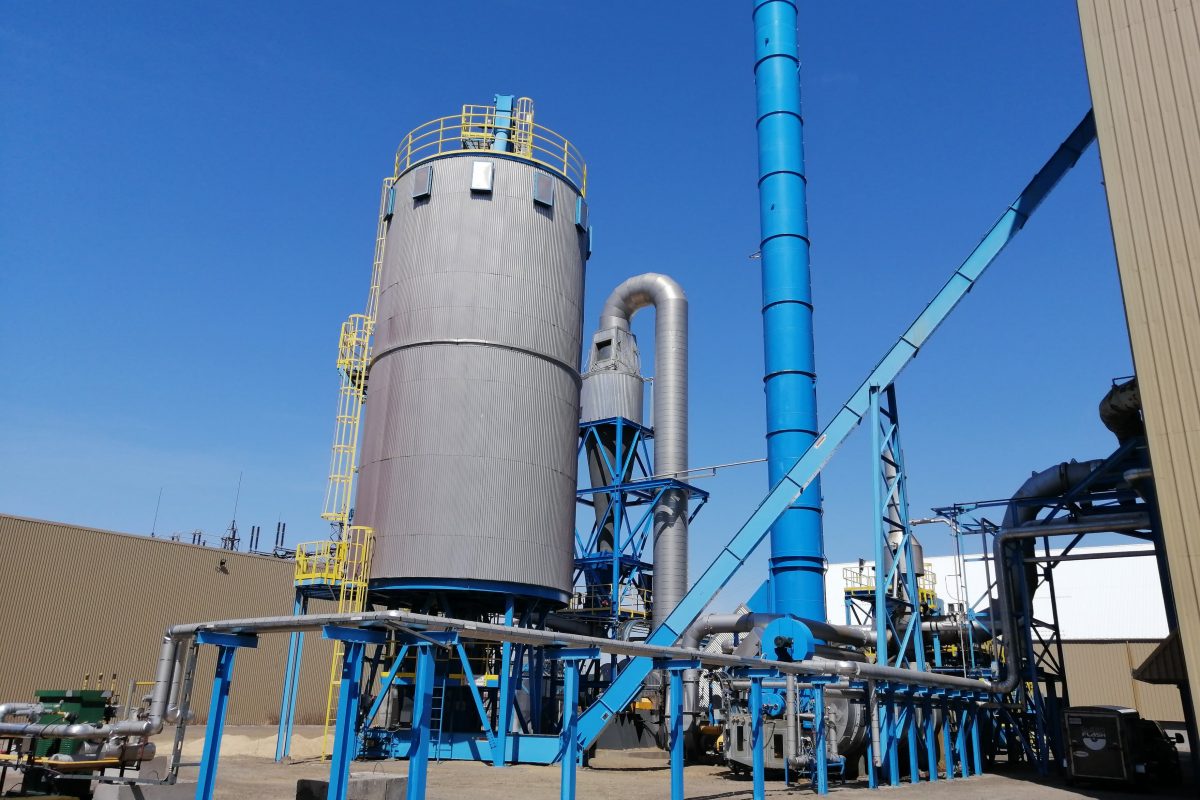
Bioénergie AE Côte-Nord is a joint venture between sawmill operator Arbec Forest Products and integrated forestry operations company Groupe Rémabec. The company already operates a plant in Port-Cartier that produces renewable fuel oil and biochar from certified sustainable forest and sawmill residuals. For Project Avance, AECN's existing bio-oil production is the feedstock that Alder upgrades into ARC.
The practical significance is hard to overstate. There is no greenfield development required. AECN's bio-oil production line is already running. Alder's ARC process layers onto the existing operation. That approach eliminates major capital expenditure, reduces project risk, and shortens the path to commercial SAF output.

"Our facility in Port-Cartier already converts forest and sawmill residuals into bio-oil renewable products — Project Avance will take this to the next level. The technology that we will utilize with our friends at Alder Renewables has the potential for full commercial deployment across Québec's forest regions, creating new revenue streams for a legacy industry, and helping to decarbonize one of the hardest-to-abate sectors: aviation."
Serge Mercier, CPA, President, Bioénergie AECN
How Does Project Avance Support Canada's 2030 SAF Target?
Canada's Aviation Climate Action Plan (2022–2030) sets an aspirational target of 10% SAF use across all aviation fuel consumed domestically by 2030. The Canadian Energy Regulator projects jet fuel demand in Canada will reach approximately 10.6 billion liters by 2030. Hitting the 10% target means producing more than 1 billion liters of SAF domestically, per the Canadian Council for Sustainable Aviation Fuels (C-SAF), which represents more than 110 member organizations including Air Canada, WestJet, and Bombardier.
Canada currently has virtually no commercial SAF supply. The gap between current SAF reality and the 2030 target remains enormous, even as global production climbs. Projects like Avance represent critical domestic infrastructure, and Québec's active lumber sector gives it a structural feedstock advantage that few regions in North America can match.
At full scale, Project Avance is forecasted to enable future Québec facilities to produce 10 million gallons (approximately 37,854,000 liters) of unblended SAF annually. The same up-to-80% lifecycle emission reduction applies, making the fuel eligible for CORSIA compliance pathways that become mandatory for international aviation in 2027, the same year Project Avance targets first production.
| Project Element | Verified Detail |
|---|---|
| Project Name | Project Avance |
| Location | Port-Cartier, Québec, Canada |
| Partners | Alder Renewables, Boeing Canada, Bioénergie AECN (JV: Arbec Forest Products + Groupe Rémabec) |
| Feedstock | Certified sustainable sawmill residues (bio-oil from existing AECN plant) |
| Technology | Alder Renewable Crude (ARC) process; pyrolysis oil upgrading then hydrotreating into SAF |
| Boeing Investment | CAD $10 million (US $7.2 million), part of total CAD $17.48 million Boeing Canadian SAF package |
| ITB Program Context | Tied to Canada's purchase of 16 P-8A Poseidon aircraft; part of CAD $280M+ Boeing P-8 ITB investment |
| Production Start (Target) | 2027 |
| Annual SAF Potential | 10 million gallons (approximately 37,854,000 liters) of unblended SAF at full scale |
| Emission Reduction | Up to 80% vs. conventional jet fuel (lifecycle basis) |
| Canada 2030 SAF Target | 1 billion liters (10% of projected national jet fuel consumption of ~10.6 billion liters) |
What Comes Next for Project Avance?
Project Avance is designed as both a production facility and an innovation hub for SAF development, testing, and certification. The partners say it will offer testing and certification capabilities for other renewable fuel technologies, helping establish Québec as a leader in sustainable aviation solutions across Canada.
Alder, Boeing, and Bioénergie AECN are currently working with both the federal government and the Government of Québec to secure additional funding and policy support. The Canadian government has already signaled backing: Minister of Industry Mélanie Joly stated that Boeing's investments in Québec and British Columbia will generate high-value jobs and support Canada's goal of reducing aviation emissions.
Demand for next-generation SAF made from non-food biomass is growing rapidly, and Québec's boreal forests and active lumber sector give it a structural supply advantage few regions can match. Forest residue feedstocks do not compete with food production and require no new land use, making them a strong long-term foundation for a scalable SAF supply chain.
As North American SAF production continues to scale, Project Avance gives Canada a credible, shovel-ready contribution to the continental supply base, with 2027 as the target for first production and the potential to enable 10 million gallons of annual output at full scale.
Project Avance: Alder Renewables, Boeing Canada, and Bioénergie AECN partner to produce sustainable aviation fuel (SAF) from Québec sawmill residues in Port-Cartier. Boeing’s CAD $10 million investment supports up to 10 million gallons of unblended SAF per year starting in 2027, cutting lifecycle emissions by up to 80%.
Frequently Asked Questions
What is Alder Renewable Crude (ARC)?
ARC is Alder Renewables' patented biocrude product. It is produced by upgrading pyrolysis oil through a proprietary low-capital separation process, resulting in a stable, refinery-compatible intermediate. ARC can be hydrotreated into SAF or co-processed in existing refinery fluid catalytic cracking (FCC) units to produce a range of low-carbon fuels including SAF, diesel, and marine fuel.
How much SAF can Project Avance produce?
Project Avance is forecasted to enable future Québec projects to produce 10 million gallons (approximately 37,854,000 liters) of unblended SAF annually at full scale. Production is expected to begin in 2027, per the project announcement and multiple industry sources.
Why does Canada need projects like this to meet its 2030 SAF goal?
Canada's Aviation Climate Action Plan calls for 1 billion liters of SAF by 2030, which represents 10% of the Canadian Energy Regulator's projected 10.6 billion liter jet fuel demand that year. Canada currently has virtually no commercial SAF production. Projects built on existing forestry and pyrolysis infrastructure, like Project Avance, are among the fastest and most cost-effective ways to start closing that gap before the 2030 deadline.
Subscribe to the newsletter
Daily decarbonization data and news delivered to your inbox
Follow the money flow of climate, technology, and energy investments to uncover new opportunities and jobs.
Latest issues
-
Why Gulf Coast CCS Teams Are Watching Liverpool Bay
Inside This Issue 💂 Eni’s Douglas Platform Sets the Offshore CCS Blueprint 🌲 Pacolet Milliken Expands Its Biomass Platform With the Acquisition of Georgia Renewable Power 🧪 Metacon Receives EU Fun...
-
Who Bought Gevo’s $50M in 45Z Credits?
Inside This Issue ⛽ Gevo Sells $70M in 45Z Credits to a New Kind of Buyer 🌱 South Pole, Gaïago, and Gold Standard Issue European Soil Carbon Credits, Unlocking Verified Regenerative Agriculture Re...
-
Verra Landed CCP Approval. What Changes for DAC?
Inside This Issue ✅ Verra's CCS Credits Just Got the Integrity Seal Buyers Want 💰 South Korea Unveils $747 Billion Energy Transition Plan Through 2035 💧 Hydrogen and Carbon Capture and Storage in ...
Company Announcements
-
Former Saskatchewan cabinet minister Rob Norris takes the helm as MAX Power prepares to begin completions and pursues a dual listing in the United States, with Ran Narayanasamy moving to the newly...
-
CORALVILLE, IA, Oct. 13, 2026 (GLOBE NEWSWIRE) -- SunHydrogen, Inc. (OTCQB: HYSR), the developer of a breakthrough technology to produce renewable hydrogen using sunlight and water, today provided ...
-
Verde Secures Landmark ASTM EPD Verification for Engineered Biochar Road Application
Among the first independently verified EPDs for biochar in road construction, validating low-carbon data to accelerate commercialization with Ergon and global licensing ST. LOUIS, Oct. 13, 2026 (G...
-
Industrial-scale project brings new approach to brine management and water security to the region PERTH, Australia, Oct. 13, 2026 /PRNewswire/ -- Capture6 yesterday launched Project Tortuga, an in...