
Newfoundland just took a concrete step toward becoming a major global hydrogen supplier. On May 15, 2026, Exploits Valley Renewable Energy Corporation (EVREC) filed its Environmental Impact Statement for a wind-to-green hydrogen project in Central Newfoundland. At full output, the project could produce 180,000 tonnes of green hydrogen or up to 1 million tonnes of green ammonia per year for international export.
Key Facts
- EIS filed: May 15, 2026, with the Newfoundland and Labrador Department of Environment and Climate Change
- Wind capacity: approximately 3+ gigawatts of onshore generation, plus energy storage
- Green hydrogen output: up to 180,000 tonnes per year (RFNBO-certified)
- Green ammonia output: up to 1 million tonnes per year for export
- CO2 offset potential: over 1.5 million tonnes annually
- Total investment: CAD $14 billion, with a projected $9.3 billion GDP contribution
- Joint venture partners: Abraxas Power Corp. (Toronto) and EDF Group (France)
- Export hub: Port of Botwood, the closest deep-water port in North America to Northern Europe
>> In Other News: Ohio Senate Passes Substitute Bill on Carbon Capture and Storage Activity
What Is the EVREC Project and Who Is Behind It?
EVREC is a joint venture between Toronto-based energy transition developer Abraxas Power Corp. and EDF Group, one of the world's largest low-carbon energy companies headquartered in France. The two partners formalized their agreement in November 2024 and have since been advancing engineering, environmental studies, and offtake negotiations in parallel.

"The submission of our Environmental Impact Statement represents a major step forward in advancing a project that has been carefully designed with environmental responsibility and long-term regional and community benefits in mind. The EIS reflects extensive technical work, environmental studies, and engagement with communities, Indigenous partners, and regulators."
Dean Comand, Chief Operating Officer, EVREC
Note: EVREC is a separate project from EverWind Fuels, which operates in Nova Scotia. The two are unrelated companies with distinct projects and ownership.
The project site sits in Central Newfoundland, adjacent to the Port of Botwood. EVREC secured access to over 300 square kilometres of Crown lands from the provincial government in 2023. The project will convert onshore wind power into green hydrogen through electrolysis, then convert that hydrogen into green ammonia for export.

Why Does Filing an EIS Actually Matter?
An Environmental Impact Statement isn't just a box to check. It opens the formal regulatory review window, allowing government agencies, Indigenous groups, and the public to assess the project on record. That's a qualitatively different stage than concept announcements or early-stage registrations.
The EIS covers every project phase: construction, operation, maintenance, and eventual decommissioning. It includes analysis of wildlife, vegetation, water resources, air quality, land use, and socio-economic effects. Regulators don't just receive it; they review it, consult on it, and use it to decide whether development can proceed.
Reaching this stage took real work. EVREC submitted its Environmental Assessment Registration in October 2024. The provincial Department of Environment and Climate Change then screened it and formally directed EVREC to prepare a full EIS, the most rigorous assessment level under Newfoundland's process. Filing that EIS in May 2026 is the result of roughly 18 months of fieldwork, technical studies, and stakeholder engagement.
For a project of this scale, that pace signals genuine institutional commitment, not speculative positioning.
>> RELATED: Hydrogen Without the Hype: North Atlantic's Bold Bet on Liquid Energy
How Does EVREC Compare to Other Newfoundland Hydrogen Bids?
Newfoundland once had six wind-to-hydrogen projects holding Crown land reserves. By February 2026, three of those reserves were cancelled by the provincial government for non-payment of fees and lack of progress. EVREC was not among them. The province explicitly extended EVREC's Crown land reserve through February 2027, confirming it had paid its required fees and continued advancing development.
That's a meaningful distinction. The projects that lost their reserves had either failed to secure offtake agreements, gone quiet on engineering work, or both. EVREC, by contrast, has paid its land fees, secured a 30-year lease at the Port of Botwood, brought in a globally recognized partner in EDF, and now filed the full EIS. It is one of only two wind-to-hydrogen projects still actively progressing in the province.
| Project | Status (May 2026) | Crown Land Reserve |
|---|---|---|
| EVREC (Abraxas / EDF) | EIS filed May 2026; FEED ongoing | Extended to Feb 2027 |
| NARL / North Atlantic | Environmental Preview Report filed Mar 2026 | Extended to Jan 2027 |
| World Energy GH2 | Project shelved; no offtake secured | Cancelled Feb 2026 |
| EverWind NL | No updates since Sep 2024 | Cancelled Feb 2026 |
| Toqlukuti'k (ABO Wind / Braya) | Last update Nov 2025 | Cancelled Feb 2026 |
How Is EVREC Structured to Reach Export Markets?
Scale alone doesn't get hydrogen to Europe. Infrastructure does. EVREC has a 30-year lease at the Port of Botwood, which the company identifies as the closest deep-water port in North America to Northern Europe. That geography matters. Shorter shipping routes reduce transport costs and carbon intensity per tonne delivered.

"If the first quarter of 2026 has taught us anything, it is that energy security remains a global priority and reliably produced Canadian energy is sought after."
Charlene Johnson, CEO, Energy NL
At full capacity, the project is designed to produce up to 180,000 tonnes per year of RFNBO-certified hydrogen or up to 1 million tonnes per year of RFNBO-certified ammonia. Both the hydrogen and ammonia qualify under the EU's Renewable Energy Directive III as Renewable Fuels of Non-Biological Origin, making them eligible toward European industry and transport decarbonization targets.
The EU's RED III requires that 42 percent of industrial hydrogen use come from RFNBOs by 2030. Germany has gone further, introducing its own phased RFNBO quota starting at 0.1 percent in 2026 and rising to 1.2 percent by 2030. Infrastructure is already in place on the European side to receive green ammonia at scale. That's the market EVREC is targeting.
What Does the EDF Partnership Add to the Project?
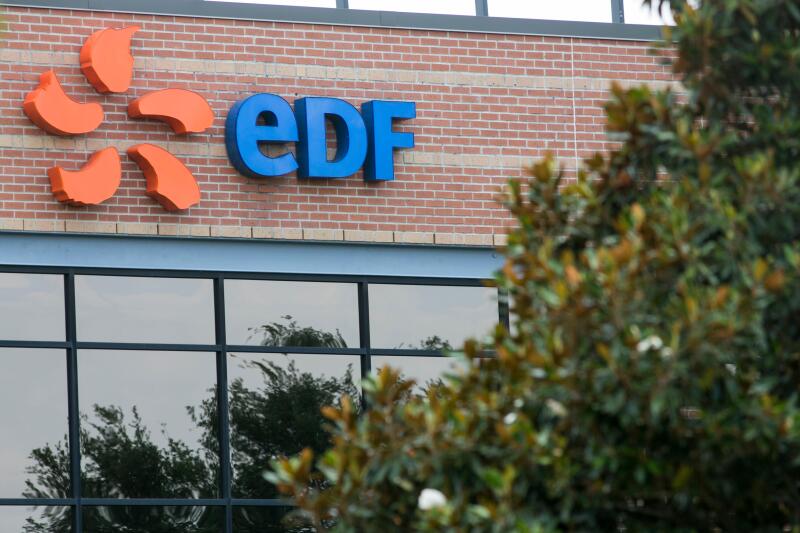
EDF Group is one of the world's largest low-carbon energy companies, with operations spanning nuclear, renewables, and hydrogen across multiple continents. The company has been active in Canada since 2008 and in North American renewables for over 35 years.
Bringing EDF in as an equity partner adds credibility on both the technical and commercial sides. European industrial buyers evaluating long-term offtake agreements for green ammonia are more likely to move forward when one of the project's developers is a well-capitalized European energy major with existing customer relationships on the continent. That's not a minor factor in a market where offtake security is often the deciding variable between projects that advance and those that stall.
Abraxas Power, the Canadian co-developer and EVREC's founding entity, has previously been awarded over USD $9 billion in capital projects through competitive government processes. The joint venture combines Abraxas's Canadian project development expertise with EDF's global balance sheet and European market access.
Both partners are targeting a Final Investment Decision in 2026, with construction to follow. The CAD $14 billion project is expected to generate 40,700 person-years of employment and contribute $9.3 billion to Newfoundland's GDP. North American green hydrogen investment at this scale is rare outside of U.S. federal hub programs.
>> RELATED: Canada Just Solved Hydrogen's Biggest Problem

Where Does Newfoundland Stand in the Global Green Hydrogen Race?
Atlantic Canada's hydrogen ambitions took some hits in early 2026. Three Crown land reserves were cancelled, and earlier export timelines to Europe fell short. But the projects that are still standing, including EVREC, carry something the collapsed ones lacked: verifiable regulatory progress backed by paid land fees, active engineering work, and credible international partners.
Global low-emissions hydrogen production grew 10 percent in 2024, according to the IEA's Global Hydrogen Review 2025, and is on track to reach 1 million tonnes in 2025. That's still less than 1 percent of total global production, meaning the market for certified RFNBO hydrogen remains undersupplied relative to European mandates. Projects that can demonstrate regulatory progress and export infrastructure today are well-positioned to meet that demand.
The European Commission approved EUR 200 million in German state aid in January 2026 specifically for Canadian-produced renewable hydrogen exports to the EU. That's a direct demand signal for what EVREC is building. Clean ammonia export infrastructure is actively being built on both sides of the Atlantic.
Newfoundland's geographic advantage is real. The province's position between North America and Northern Europe, combined with its world-class onshore wind resources, gives projects like EVREC a structural edge. The 180,000 tonnes of green hydrogen and 1 million tonnes of green ammonia EVREC could produce annually would represent a meaningful slice of Europe's RFNBO import needs through the 2030s.
Learn how Newfoundland is advancing its green hydrogen ambitions. This official announcement highlights government support for large-scale wind-to-hydrogen projects aimed at producing clean renewable fuels for export to Europe.
What Comes Next for EVREC?
With the EIS now in the hands of regulators, the Environmental Assessment process enters its public review phase. Government agencies, Indigenous groups, and community members can formally weigh in. EVREC has committed to ongoing engagement throughout this process.
In parallel, the project team continues to advance Front-End Engineering and Design, commercial structuring, and discussions with prospective offtake partners in international markets. A Final Investment Decision is targeted for 2026. If reached on schedule, it would put EVREC on a construction timeline aimed at first production before the end of the decade.
At 180,000 tonnes of annual green hydrogen output, the project would slot directly into European RFNBO supply chains at a time when demand is mandated and supply is still taking shape. For Newfoundland, and for Atlantic Canada's credibility as a clean energy export region, EVREC moving through regulatory review on schedule is exactly the kind of signal the market needs.
FAQ: EVREC and Newfoundland's Green Hydrogen Outlook
What is the difference between EVREC and EverWind?EVREC (Exploits Valley Renewable Energy Corporation) is a joint venture between Abraxas Power and EDF Group, based in Central Newfoundland. EverWind Fuels is a separate Nova Scotia-based company with distinct ownership and projects. The two are not affiliated.
What does RFNBO certification mean for EVREC's hydrogen and ammonia?
RFNBO stands for Renewable Fuels of Non-Biological Origin. It's the EU classification for hydrogen produced entirely from renewable electricity. RFNBO-certified fuels count toward the EU's binding industry and transport decarbonization targets under the Renewable Energy Directive III, making them commercially valuable to European buyers.
When could EVREC begin exporting?
The company is targeting a Final Investment Decision in 2026, with construction to follow. First production is expected before the end of the decade, with exports directed primarily to Western Europe via the Port of Botwood.
Subscribe to the newsletter
Daily decarbonization data and news delivered to your inbox
Follow the money flow of climate, technology, and energy investments to uncover new opportunities and jobs.
Latest issues
-
How Vaulted Deep Turned Offtakes Into $35M Debt
Inside This Issue 🏦 How Carbon Removal Offtakes Are Starting to Unlock Commercial Debt 🌉 California Opens the Door to a Three-Way Carbon Market 🧪 New Material Developed at Oregon State Provides Bo...
-
Canada Wants Foreign Buyers for Its Carbon Removals
Inside This Issue 🍁 Canada Explores Article 6 Path to Global Carbon Buyers 🌲 ARC Bio Demonstrates Canadian Forest Residue Pathway to Sustainable Aviation Fuel 🌾 Business, Forestry and Agriculture ...
-
How ADM Is Turning 800,000 Nebraska Tons Into Carbon Credits
Inside This Issue 🌾 ADM's 800,000-Ton Nebraska Bet on Carbon Removal Credits 🏔️ BLM Reaches New Milestone for Southeast Wyoming Carbon Storage Project 🍁 Haffner Energy Receives a €3.2M Firm Order ...
Company Announcements
-
Uniper signs capacity reservation agreement for future SAF supply from Syzygy Plasmonics' NovaSAF™ platform This agreement reflects growing market momentum in biogas to SAF technology and provides...
-
Anew Climate Expands European Forest Carbon Portfolio Through Ten-Year Agreement with Sweden's EKEN
Partnership brings Swedish improved forest management credits, developed under Verra's VM0045, to Anew's corporate buyers. Anew Climate (Anew), one of the world’s largest developers and marketers ...
-
Ocean Visions Launches Comprehensive Knowledge Platform on Marine Carbon Dioxide Removal
mCDR Knowledge Platform New public platform connects organizations, technologies, projects, and field trials to provide a more integrated view of the rapidly evolving mCDR landscape "This user-fr...
-
Reverion builds world-record efficiency solid oxide fuel cell (SOFC) power plants that generate electricity from gas, provide flexible energy storage through reversibility and can be run carbon-ne...