
ExxonMobil begins transporting and storing up to 1.2 million metric tons of CO₂ annually from the New Generation Gas Gathering project in Louisiana, expanding its commercial CCS operations.
ExxonMobil has commenced transportation and storage of captured CO₂ from the New Generation Gas Gathering (NG3) project in Louisiana. The start-up marks the company’s second active commercial carbon capture and storage (CCS) operation in the state and expands its Gulf Coast decarbonization portfolio.
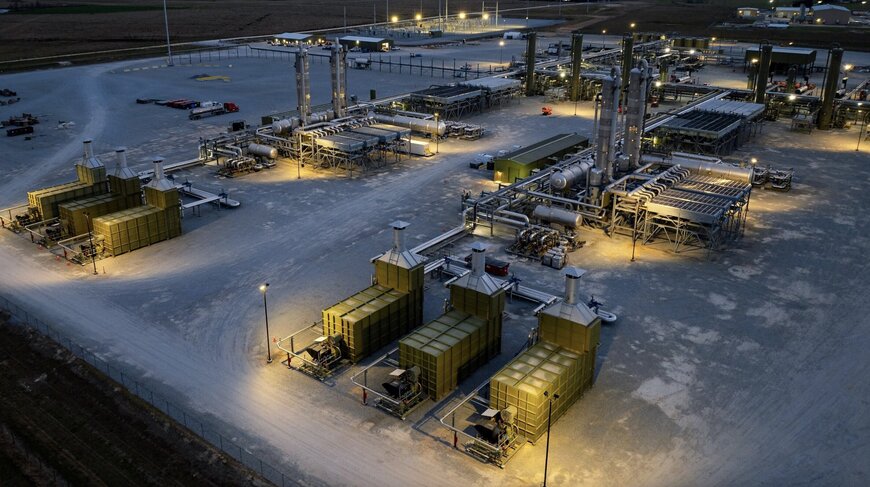
CO₂ Removal From Natural Gas Processing
Natural gas produced in East Texas and Louisiana is transported via the NG3 gathering system to the NG3 Gillis treatment facility. At this site, up to 1.2 million metric tons per annum (MTA) of CO₂ are expected to be removed from the natural gas stream before the processed gas is delivered to Gulf Coast markets, including LNG export facilities.
>> In Other News: ExxonMobil Starts CO₂ Transport and Storage from NG3 Project
Removing CO₂ during gas processing reduces the carbon intensity of downstream applications and ensures compliance with pipeline and liquefaction specifications. The captured CO₂ is transported and injected into permanent geologic formations.
Expanding Commercial CCS Operations
The NG3 start-up follows ExxonMobil’s July 2025 commissioning of CO₂ transport and storage services for the CF Industries Donaldsonville Complex in Louisiana, supporting low-carbon ammonia production. Combined, the two active projects account for contracted volumes of up to 3.2 MTA, approximately one-third of the company’s committed CCS capacity.
Currently, CO₂ from both projects is stored through enhanced oil recovery (EOR) operations, with plans to transition to dedicated permanent storage sites. ExxonMobil has announced two additional CCS projects scheduled to begin operations in 2026.
Across sectors such as steel, ammonia, natural gas processing, industrial gases, methanol and power generation, ExxonMobil reports contracted CO₂ volumes exceeding those of other companies operating in the region.
Strategic Role of Louisiana in CCS Deployment
Louisiana’s geology, including deep saline formations and depleted hydrocarbon reservoirs, combined with extensive industrial infrastructure, supports large-scale CCS deployment. The NG3 and CF projects position the state as a hub for lower-carbon industrial production, including ammonia, LNG and natural gas.
According to the company, Louisiana has attracted approximately $61 billion in investments in emissions reduction projects. Expanding CCS capacity may enhance competitiveness of energy-intensive industries such as steel, fertilizer and petrochemicals, while contributing to U.S. energy security.
CCS in Hard-to-Abate Industries
Carbon capture and storage is applied primarily in sectors where direct electrification or alternative fuels are not yet technically or economically feasible. By capturing process-related CO₂ emissions at source and permanently storing them, CCS enables continued operation of carbon-intensive facilities with reduced net emissions.
With the NG3 project online and additional projects planned, ExxonMobil continues to expand its Gulf Coast CCS network, targeting long-term CO₂ management solutions for industrial and energy production facilities.
Subscribe to the newsletter
Daily decarbonization data and news delivered to your inbox
Follow the money flow of climate, technology, and energy investments to uncover new opportunities and jobs.
Latest issues
-
Who Bought Gevo’s $50M in 45Z Credits?
Inside This Issue ⛽ Gevo Sells $70M in 45Z Credits to a New Kind of Buyer 🌱 South Pole, Gaïago, and Gold Standard Issue European Soil Carbon Credits, Unlocking Verified Regenerative Agriculture Re...
-
Verra Landed CCP Approval. What Changes for DAC?
Inside This Issue ✅ Verra's CCS Credits Just Got the Integrity Seal Buyers Want 💰 South Korea Unveils $747 Billion Energy Transition Plan Through 2035 💧 Hydrogen and Carbon Capture and Storage in ...
-
Quebec Wood Waste Just Became Jet Fuel
Inside This Issue 🌲 ARC Bio Tests a Refinery Shortcut to Forest-Based SAF 💧 Scientists Just Found a New Way to Make Hydrogen from Water 🤝 How Channel Partnerships Are Helping More Organizations Ta...
Company Announcements
-
Mineral Europa: A Game Changer for Shipping
Antwerp, Oct. 09, 2026 (GLOBE NEWSWIRE) -- Antwerp, 9 October 2026 – CMB.TECH NV (“CMB.TECH” or the “Company”) (NYSE: CMBT, Euronext Brussels: CMBT and Euronext Oslo Børs: CMBTO) today announces th...
-
Download PDF (170.95 KB) Eni CCUS Holding, owned jointly by Eni and Global Infrastructure Partners ("GIP"), part of BlackRock, announces that Liverpool Bay CCS has completed the installation of th...
-
First-of-its-kind project in France and Belgium marks a major breakthrough for carbon credit buyers seeking high-integrity, high-impact regenerative agriculture removals in Europe; providing buyer...
-
Gevo and ClimeFi Complete Carbon Removal Transaction, Advancing Gevo's Growing Carbon Business
Transaction supports Gevo's path toward a carbon business exceeding $30 million in annual revenue from existing operations ENGLEWOOD, Colo., Oct. 08, 2026 (GLOBE NEWSWIRE) -- Gevo, Inc. (NASDAQ: G...