
ExxonMobil, the Texas-based energy company, has reportedly moved its challenge to Europe's carbon storage mandate into formal arbitration. The case targets the rule requiring oil and gas producers to build 50 million tonnes of annual CO2 injection capacity by 2030. No tribunal has ruled, and the obligation stays in force.
The dispute centers on who builds Europe's first storage sites, and how fast, while capture projects and pipelines are still being contracted.
Key Facts
- ExxonMobil affiliates in Belgium, Luxembourg and the UK filed an Energy Charter Treaty notice of dispute in July 2026.
- The FT reported the notice of arbitration on November 11, 2026, citing a Commission memo.
- Article 23 of the Net-Zero Industry Act sets at least 50 million tonnes of annual CO2 injection capacity by 2030.
- 44 oil and gas producers share that target under a Commission decision dated May 22, 2025.
- Entities majority-owned by ExxonMobil carry 8.89 million tonnes per year, nearly 18% of the target, per Carbon Balance Initiative.
- No tribunal has ruled on the case or the interim relief request.
What Did ExxonMobil File Against the EU?
ExxonMobil has started arbitration against the European Union over its CO2 storage rules, according to a November 11, 2026 Financial Times report. The FT cited a European Commission memo, and Reuters carried the story.
The proceeding is confidential. The Commission told the Council's Trade Policy Committee about the notice in October and is preparing a response.
ExxonMobil is also reportedly seeking interim relief that would suspend the storage build-out requirements. No tribunal has ruled on that request, and no finding has been made that the EU rules are unlawful.
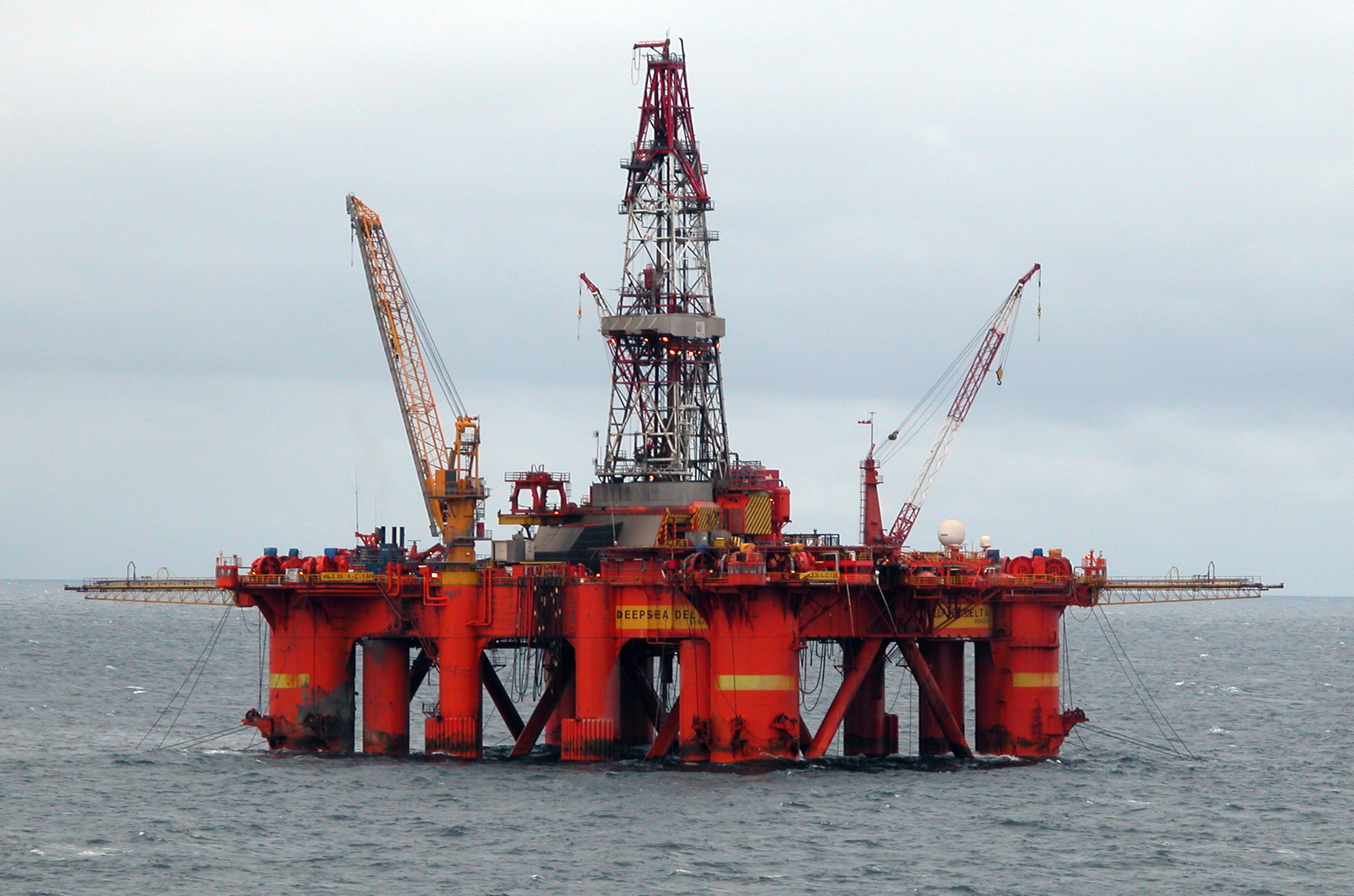
A drilling rig in the North Sea, where depleted oil and gas reservoirs are now being developed for permanent CO2 storage.
Photo: Erik Christensen via Wikimedia Commons, CC BY-SA 3.0
The arbitration builds on the ExxonMobil notice of dispute over the EU storage mandate filed in July. That notice opened a three-month settlement window under the treaty.
What Does Article 23 of the Net-Zero Industry Act Require?
Article 23 of the Net-Zero Industry Act requires at least 50 million tonnes of annual CO2 injection capacity across the EU by 2030. The Commission split that goal among 44 oil and gas producers in May 2025.
Each producer's share follows its EU oil and gas output between 2020 and 2023. The figure measures injection capacity. It does not guarantee that 50 million tonnes will be stored in 2030.
Carbon Balance Initiative, a nonprofit tracking the rule, says entities at least 50% owned by ExxonMobil hold 8.89 million tonnes per year of obligations. That equals nearly 18% of the EU-wide figure.

The EU's Net-Zero Industry Act established a 2030 CO₂ injection capacity target of 50 million tonnes annually. This timeline traces the subsequent producer obligations, Energy Charter Treaty withdrawal, and ExxonMobil's reported arbitration challenge through November 11, 2026.
The legal route is still untested. The EU's exit from the Energy Charter Treaty took effect June 28, 2025, but the treaty's 20-year survival clause may still cover existing investments.
The UK-incorporated affiliate could also matter, since EU case law restricts intra-EU investor arbitration. Bellona Europa called its inclusion particularly significant. Separately, two ExxonMobil units have challenged Article 23 at the EU General Court in Case T-714/25.
How Do ExxonMobil and the Commission Frame the Case?
ExxonMobil argues that Article 23 asks producers to build storage before a full CCS market exists. In a statement on the rules, the company said:
"Oil and gas companies are now compelled to provide CO₂ storage capacity despite the absence of a viable market for carbon capture and transportation, saddling industry with unrealistic timelines and increasing energy costs for all Europeans."
The Commission has defended the law. In July, a spokesperson said: "We are confident that the measures adopted by the EU comply with the Energy Charter Treaty and any other applicable rules of international law." Reuters reported the Commission did not immediately comment on the new filing.
Is Europe's CO2 Storage Market Already Taking Shape?
Yes. The EU's first full-scale offshore storage site began commercial operation off Denmark on September 18, 2026.
Greensand, led by INEOS Energy with Harbour Energy and Nordsøfonden, can store up to 400,000 tonnes of CO2 per year in phase one. The depleted Nini West field could later take 4 to 8 million tonnes annually.
Norway's Northern Lights, owned by Equinor, Shell and TotalEnergies, began injecting in August 2025 with 1.5 million tonnes of yearly capacity. Phase 2 targets at least 5 million tonnes. More is coming through the EUR 223 million Atlas CO2 transport and storage award and Eni's Douglas offshore CCS platform.

"With the launch, here in Esbjerg, of the first fully operational site for offshore carbon storage in the European Union, we prove that carbon storage is a practical reality."
Dan Jørgensen, European Commissioner for Energy and Housing
Operators stored a record 43.6 million tonnes of CO2 underground worldwide in 2024, per the London Register of Subsurface CO2 Storage's 2026 report. Europe's 2030 capacity goal of 50 million tonnes tops that entire global total.
>> RELATED: Carbon Storage Isn't the Limit: It's the Launchpad
How Does Europe's Mandate Compare With the US 45Q Model?
The United States supports storage through tax credits instead of producer mandates. Under Section 45Q, point-source storage earns up to $85 per tonne and direct air capture storage up to $180 per tonne.
Those top rates apply only when projects meet prevailing wage and apprenticeship requirements. Otherwise the base credit is $17 per tonne, or $36 for direct air capture.
| Feature | European Union | United States |
|---|---|---|
| Policy tool | Producer obligations to deliver storage capacity | Tax credits that improve project economics |
| Headline figure | 50 million tonnes per year of CO2 injection capacity by 2030 | Section 45Q: up to $85 per tonne point-source storage, $180 per tonne DAC storage |
| Who carries the burden | 44 obligated oil and gas producers, allocated by 2020 to 2023 EU output | Developers claim credits based on capture source, disposition and labor rules |
| Main friction | Whether storage is mandated before a full-chain market exists | Permits, pipelines, storage access and contracted emitters |
Both models depend on permitting. US states are taking over well approvals, as the Colorado Class VI primacy decision shows. Treasury has also expanded the 45Q reporting safe harbor.

Petrochemical plants in metro Houston, part of the Gulf Coast industrial base that US carbon capture networks are built to serve.
Photo: Ken Lund via Wikimedia Commons, CC BY-SA 2.0
How Is ExxonMobil Building CCS in North America?
ExxonMobil expanded its Gulf Coast CCS business with the $4.9 billion Denbury acquisition announced in July 2023. The deal added a 1,300-mile CO2 pipeline network, including nearly 925 miles in Louisiana, Texas and Mississippi.

"Acquiring Denbury reflects our determination to profitably grow our Low Carbon Solutions business by serving a range of hard-to-decarbonize industries with a comprehensive carbon capture and sequestration offering."
Darren Woods, Chairman and CEO, ExxonMobil
Nucor's carbon capture agreement with ExxonMobil covers up to 800,000 tonnes of CO2 per year from its Convent, Louisiana plant.
In September 2026, the Railroad Commission of Texas approved ExxonMobil's Rose CCS project in Jefferson County. The site is designed to inject up to 5 million tonnes of CO2 a year.
Official INEOS live coverage of the September 18, 2026 inauguration of Project Greensand, the EU’s first full-scale commercial offshore CO₂ storage site in the Danish North Sea (led by INEOS Energy with Harbour Energy and Nordsøfonden). The event includes remarks by European Commissioner for Energy and Housing Dan Jørgensen and the formal opening by King Frederik X.
The two markets start from different places. In the US, ExxonMobil signs emitters and earns credits. In Europe, Article 23 asks producers to deliver capacity first.
What Happens Next in the Arbitration?
The Commission is preparing its response, and a tribunal must still decide on interim relief. Until then, the 50 million tonne capacity goal and each producer's 2030 share remain EU law.
Capture plants and pipelines must grow alongside storage, and Europe now has working sites at Greensand and Northern Lights to build on.
Frequently Asked Questions
Has the EU carbon storage obligation been suspended?
No. ExxonMobil has reportedly requested interim relief, but no tribunal has ruled. Article 23 and each producer's 2030 share remain in force.
Is 50 million tonnes a storage target or a capacity target?
It is a capacity target. The Net-Zero Industry Act requires at least 50 million tonnes of annual CO2 injection capacity by 2030, not a set volume of CO2 injected that year.
Why can ExxonMobil use a treaty the EU has left?
The EU's withdrawal from the Energy Charter Treaty took effect June 28, 2025. The treaty's 20-year survival clause may still protect earlier investments, though that point is likely to be contested.
For ongoing coverage of carbon removal, BECCS, and corporate CDR procurement, subscribe to Decarbonfuse.com.
Subscribe to the newsletter
Daily decarbonization data and news delivered to your inbox
Follow the money flow of climate, technology, and energy investments to uncover new opportunities and jobs.
Latest issues
-
Can GE Vernova’s Turbine Really Run 100% Hydrogen?
Inside This Issue ⚙️ GE Vernova’s Greenville Lab Moves Turbines Closer to 100% H2 🚗 Geely Holding Announces Evsa’s Global Launch at COP31 🚢 Ethanol Blends Run Successfully in Pilot Marine Engine T...
-
Who Gets Canada’s C$10 Million Carbon Removal Buy?
Inside This Issue 🔩 Stegra and Meta Sign Agreement for Environmental Attribute Certificates to Advance Green Steel 🧱 Sublime Systems and Meta Sign Agreement to Scale U.S. Manufacturing of Next Gen...
-
Google’s $17B Wyoming Plan Has a CCS Catch
Inside This Issue 💡 Google’s $17B Wyoming Plan Pairs Fuel Cells With CCS 🍁 Canada Needs C$2.2 Billion and Stronger Policy to Close Its Carbon Removal Gap by 2030 🛢️ Occidental Signs Long-Term CO2 ...
Company Announcements
-
New integrated plant offering combines proven PEM technology with a standardized outdoor-ready 20 MW block architecture to reduce costs, accelerate execution and streamline utility-scale hydrogen d...
-
Fujitsu Limited today announced that it is strengthening its initiatives to achieve the key target of its Environmental Action Plan Stage XII: "Net-zero GHG 1 emissions equivalent for Scope 1 and 2...
-
Senken's annual climate benchmark reads the 2025 CSRD climate statements of Fortune 500 Europe companies: who cut emissions, who grew, what they have promised and which carbon credits they used. B...
-
Repsol Takes FID on Spain 150 MW Green Hydrogen Plant
The initiative represents an investment of approximately €400 million and has been selected to receive up to €104 million in funding as one of the strategic projects under Spain’s Hydrogen Valleys ...