
A government watchdog says regulators still can't confirm whether America's 45Q carbon capture tax credit is meeting its goals. The Government Accountability Office found real compliance delays for companies converting captured carbon into products. It issued seven recommendations to close data gaps and speed up reviews, not to shrink the credit.
Key Facts
- GAO-26-107711 was publicly released on August 6, 2026, following two site visits to carbon capture facilities in Houston, Texas.
- 33 carbon capture facilities were operating in the United States as of March 2026, per GAO's review of IRS records.
- 45Q credit claims more than tripled between 2019 and 2023, based on IRS data cited in the report.
- The One Big Beautiful Bill Act set matching credit values of $85 per metric ton for industrial point-source capture and $180 per metric ton for direct air capture.
- GAO issued seven total actions: one matter for Congress, four recommendations to the IRS, and two recommendations to the DOE.
>> In Other News: Hystar and BHEL Partner to Accelerate India’s Green Hydrogen Economy with Local PEM Electrolyser Manufacturing
What Did The GAO Actually Find?
GAO examined how the Internal Revenue Service and Department of Energy administer the credit. As of March 2026, 33 carbon capture facilities were operating nationwide, with more planned. Investigators also visited two carbon capture sites in Houston, Texas, and interviewed officials at the IRS, DOE, and Environmental Protection Agency.
The number of 45Q credit claims more than tripled between 2019 and 2023, according to IRS data cited in the report. That growth reflects the credit's expansion under the 2022 Inflation Reduction Act and its later extension to more capture pathways.
Even with that growth, investigators found no single federal agency responsible for measuring whether the credit is working. GAO summed up the core problem in its own words.

"No agency is tasked with measuring results and the law didn't set clear goals."
U.S. Government Accountability Office
That gap doesn't mean the credit failed. It means Congress never assigned anyone the job of checking the math, something GAO's report is now asking lawmakers to fix.
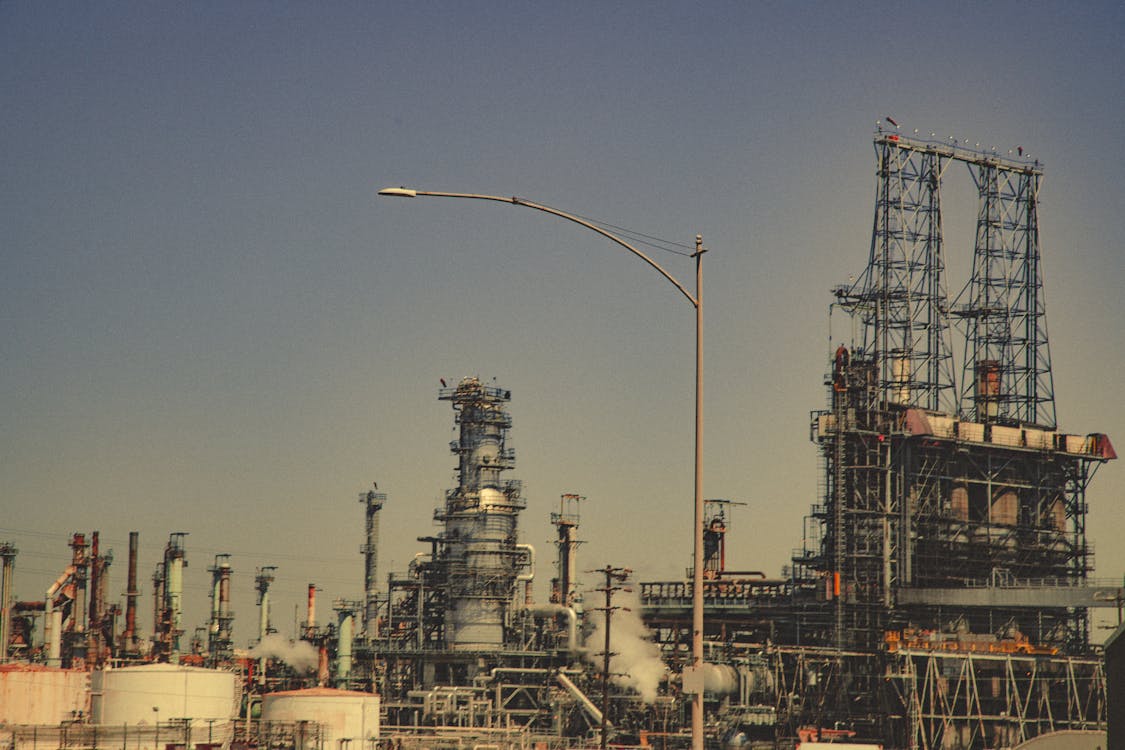
GAO's review covered carbon capture facilities like this one, including two site visits to projects in Houston, Texas.
Where Are Companies Getting Stuck?
| Year | Legislative Action | Key Change |
|---|---|---|
| 2008 | Energy Improvement and Extension Act | Created the Section 45Q credit for carbon oxide sequestration |
| 2018 | Bipartisan Budget Act | Removed the 75 million ton cap and added direct air capture and utilization as eligible pathways |
| 2022 | Inflation Reduction Act | Raised credit values and extended the construction deadline to 2033 |
| 2025 | One Big Beautiful Bill Act | Set equal credit values for storage and utilization pathways |
| 2026 | GAO Report GAO-26-107711 | Recommended stronger data collection and streamlined compliance review |
Companies that store captured carbon underground report the smoothest path to claiming 45Q. Those converting carbon into products, like concrete or jet fuel, face a much rougher one.
The credit requires a pre-approved lifecycle analysis built on direct production data through the end of the tax year. That requirement applies no matter when in the year a facility actually starts operating. Many developers end up filing amended returns instead of claiming the credit on their original one.
These delays land hardest on utilization projects tied to enhanced oil recovery, a pathway common across the Gulf Coast CCS buildout. Developers behind hubs like the Bayou Bend carbon storage hub near Houston depend on predictable timelines to attract investors.
Bayou Bend CCS, a Chevron-operated joint venture with Equinor and TotalEnergies, is developing large-scale carbon dioxide transportation and storage along the Texas Gulf Coast to help industrial facilities lower their carbon intensity.
What Is The GAO Recommending?
GAO issued seven total actions covering Congress, the IRS, and the DOE. One matter asks Congress to track the credit's progress toward its goals. It also asks for a look at efficiency and how 45Q compares to other policy tools.
The other six recommendations target the utilization approval process directly. Four go to the IRS. They cover data timing, technology baselines, and a simplified emissions model already used for the 45V and 45Z credits.
Two go to the DOE. They cover that same emissions model guidance and a process for fixing lifecycle analysis errors without restarting the review.
The IRS partially agreed with one recommendation. It disagreed, along with the DOE, on the other five, though GAO maintains all seven are warranted.
"Congress has revised the statute on several recent occasions."
Frank Bisignano, CEO, Internal Revenue Service
Bisignano pointed to the agency's recent safe harbor guidance for carbon reporting as evidence the IRS already responds to industry feedback. That guidance addressed timing gaps tied to the EPA's greenhouse gas reporting program.

GAO's seven recommended actions split across one congressional matter, four IRS items, and two DOE items.
Why This Doesn't Change 45Q's Trajectory
None of GAO's findings target the credit's value or its purpose. The report focuses on measurement and paperwork, the kind of routine fix that eventually follows most large federal tax expenditures.
45Q already survived its biggest test when the One Big Beautiful Bill Act preserved and expanded it in 2025. That outcome followed the industry's open letter to Congress, signed by groups spanning the American Chemistry Council to the United Steelworkers. The credit now anchors much of the $77 billion U.S. carbon capture industry.

GAO's matter for congressional consideration asks lawmakers, not agencies, to decide how the 45Q credit's performance gets tracked going forward.
45Q isn't the only federal tool developers lean on. Some pair it with other federal clean energy tax credits or with DOE's direct air capture hub funding to close financing gaps. Oversight fixes like these tend to make that stacking easier once agencies clarify the rules.
>> RELATED: The Credit That Refused to Die: 45Q's New Chapter
Texas's Class VI primacy and the broader reshaping of America's carbon storage map already point toward faster project timelines. A cleaner federal compliance process would only add to that momentum.
Frequently Asked Questions
What is the 45Q tax credit?
Section 45Q is a federal tax credit that pays companies for capturing carbon oxide and either storing it permanently underground or putting it to use, such as in enhanced oil recovery or manufacturing.
Does the GAO report recommend ending the 45Q credit?
No. GAO's recommendations focus on improving data collection, reducing compliance delays, and clarifying agency guidance, not on reducing or eliminating the credit itself.
What happens next with GAO's recommendations?
Congress and the agencies decide whether to act. The IRS partially agreed with one recommendation, and the IRS and DOE disagreed with the other five, though GAO maintains all seven are warranted.
Routine oversight like this is how big federal programs stay accountable without losing their footing. The 45Q credit isn't going anywhere. It's just getting a closer look.
For ongoing coverage of carbon removal, BECCS, and corporate CDR procurement, subscribe to Decarbonfuse.com.
Subscribe to the newsletter
Daily decarbonization data and news delivered to your inbox
Follow the money flow of climate, technology, and energy investments to uncover new opportunities and jobs.
Latest issues
-
Colorado Joins the 7-State CCS Permit Fast Lane
Inside This Issue ⚖️ Colorado Takes Over Class VI Permits: What Changes for CCS? 🏭 Hebei Shoulang Facility Using LanzaTech Technology Achieves World’s First ISCC EU RCF Certification for Ethanol P...
-
The US Hasn't Made Heavy Water Since 1982
Inside This Issue ⚛️ Aternium Completes FEED Studies for US Hydrogen, Heavy Water Project 🐄 Google, McKinsey Strike Brazil Carbon Removal Deal With Silvopasture Project 🔧 Cummins Selects Stargate ...
-
Why Colorado’s Koloma Has Japan’s Largest Utility Hooked
Inside This Issue ⚡ JERA Invests in Koloma to Explore Natural Hydrogen as a Future Low-Carbon Energy 🔬 New CATF Tool Provides Framework for Self-Assessment and Strengthening of Biomass Carbon Remo...
Company Announcements
-
Citi Closes $72 Million Carbon Removal-Linked Note to Support Applied Carbon Biochar Project
HIGHLIGHTS Citi structured an innovative $72 million carbon removal-linked note to provide upfront capital for Applied Carbon's biochar project, marking a first-of-its-kind "outcome bond" for ver...
-
New platform opens access to the same rigorous project evaluations trusted by the world's leading carbon removal procurement programs Today, Relae (formerly Carbon Direct) launched The Diligence C...
-
Inside BLM's 650,000-Acre Bet on Wyoming Carbon Storage
The Bureau of Land Management has offered right-of-way grants covering about 649,438 acres of federal pore space in southwest Wyoming. The September 21, 2026 offers went to Moxa Carbon Storage LLC ...
-
NEW YORK, BUSINESS WIRE, SWITCH Maritime (Switch), a leading developer of zero-emission vessels, secured a Design Basis Agreement (DBA) with the United States Coast Guard (USCG) for the SWITCH-150,...