
The U.S. carbon storage landscape is being reshaped right now, permit by permit. Texas gained full state-level authority over carbon storage well permitting in December 2025. Indiana's first construction-ready CCS project landed its EPA permit in April 2026. Both milestones signal that commercial-scale carbon capture and storage is spreading inland, opening new economic options for mid-continent emitters who had limited access to shared CCS infrastructure before.
Key Facts
- On November 12, 2025, the EPA granted Texas Class VI primacy, making it the sixth U.S. state to receive that authority (EPA, November 2025)
- Texas primacy became effective December 15, 2025, with 18 pending applications transferred to the Railroad Commission of Texas
- As of September 2025, 64 of 239 Class VI well permit applications pending at EPA were for Texas wells (Bipartisan Policy Center, 2025)
- As of August 2025, the EPA had issued only 11 final Class VI permits since the program launched in 2011 (Carbon Capture Coalition, 2025)
- On April 9, 2026, Vault 44.01 and Cardinal Ethanol received a final Class VI permit for Indiana's first construction-ready CCS project (Vault 44.01 press release, April 2026)
- The One Carbon Partnership project will capture up to 450,000 metric tons of CO2 per year, with pore space for approximately 13.5 million metric tons over 30 years (Vault 44.01, 2026)
- CCUS projects across 12 Texas counties could add an average of $1.8 billion to the state economy and support roughly 7,500 full-time jobs (Texas Association of Business / Angelou Economics, September 2024)
What Did Texas's Class VI Primacy Actually Change?
Texas receiving Class VI primacy from the EPA on November 12, 2025 is the biggest single shift in U.S. carbon storage permitting in years. The Railroad Commission of Texas (RRC), the state agency that already regulates oil and gas operations statewide, now holds full authority to issue permits for CO2 injection wells used for permanent geologic sequestration. Projects no longer need both a state and a separate federal authorization. A single RRC-issued Class VI permit now covers the entire permitting process.
That change removes a genuine obstacle. The EPA had issued only 11 final Class VI permits since the program launched in 2011, as of August 2025, even as hundreds of applications piled up nationally. Texas alone accounted for 64 of the 239 applications pending at EPA as of September 2025, the largest state-level backlog in the country. With the RRC now running its own program, that backlog can start moving. The RRC had 18 applications under active review when primacy took effect and has targeted issuing roughly 25 Class VI permits within its first two years.

"This approval by the EPA recognizes RRC's expertise to add Class VI wells to our UIC program, to continue our work of protecting Texans and our natural resources. Primacy will streamline the application process and provide regulatory certainty critical to one of the most productive energy regions in the world."
Wei Wang, Executive Director, Railroad Commission of Texas
States with primacy have a consistent record of processing permits faster than the federal agency. North Dakota, which received Class VI primacy in 2018, issued its first approval in roughly eight months from submission. Wyoming, which gained primacy in 2020, approves wells in under a year, compared to 24 months or longer under EPA-only review. North Dakota has issued eight permits and Wyoming has issued nine, all operational or under construction. That combined total of 17 state-issued permits stands against the 11 EPA-issued permits accumulated over 14 years of federal administration.
>> RELATED: The Gulf Is Ready to Store Carbon. Washington Just Needs to Move.

How Is Texas Positioned to Lead U.S. Carbon Storage?
Texas does not just have permitting authority now. It has the geology, the infrastructure, and the workforce to use it at scale. Gulf Coast saline formations are among the most thoroughly characterized CO2 storage reservoirs in North America. Existing pipelines, compression equipment, and industrial corridors give CCS developers in Texas a head start that most other states cannot match.
A September 2024 economic impact study by the Texas Association of Business, conducted by Angelou Economics, analyzed four CCUS project scenarios across 12 Texas counties. The study found an average state-level economic impact of $1.8 billion, with roughly 7,500 full-time jobs created or supported at an average hourly wage of $45. Local tax revenues from construction and operations were projected to increase by $33.4 million across the study counties.
Those projections cover just 12 counties. The full Gulf Coast industrial corridor, running from Houston through Port Arthur and into Louisiana, contains some of the highest concentrations of industrial CO2 emitters on the continent. Major CCS hubs in the region, including the Bayou Bend project in Southeast Texas, are now operating under a single permitting authority for the first time. That simplifies project timelines and reduces legal exposure for developers who previously managed parallel state and federal review tracks simultaneously.
| State | Primacy Year | Permits Issued | Status Notes |
|---|---|---|---|
| North Dakota | 2018 | 8 | All operational; first approved in ~8 months |
| Wyoming | 2020 | 9 | Under construction; approvals in under 1 year |
| Louisiana | 2023 | 1 (Hackberry, Sept. 2025) | Moratorium on new applications since Oct. 2025 |
| West Virginia | Feb. 2025 | 0 issued yet | Reviewing first wave of applications |
| Arizona | Sept. 2025 | 0 issued yet | No pending applications inherited from EPA |
| Texas | Dec. 2025 (effective) | 18 under review at RRC | Largest inherited backlog of any primacy state |
Why Does Indiana's First Construction-Ready CCS Permit Matter Beyond Indiana?
On April 9, 2026, Vault 44.01 Ltd., a Denver-based CCS project developer backed by private equity firm Grey Rock Investment Partners, announced that EPA Region 5 had issued a final Class VI permit for the One Carbon Partnership CCS project near Union City, Indiana. The joint venture partner is Cardinal Ethanol, an Indiana-based producer whose facility generates approximately 400,000 metric tons of CO2 per year as a by-product of corn fermentation.
The permit authorizes Vault and Cardinal to construct injection infrastructure, capture CO2 from Cardinal's existing ethanol production process, and inject it into deep geologic formations for permanent storage. Once operational, the project will store up to 450,000 metric tons of CO2 annually. Pore space secured at the site can hold approximately 13.5 million metric tons over 30 years. The capital investment totals more than $60 million in Randolph County, Indiana, supporting more than 30 local construction jobs and providing corn growers in the area with access to the growing low-carbon ethanol market.
"This is a defining moment for Vault and Cardinal Ethanol and a powerful validation of Vault's technical expertise, commitment to stakeholder engagement, and disciplined approach to project execution. We have developed our company with a core objective of advancing the CCS industry in partnership with business, community, government, and capital partners, and with EPA's recent approval, we are excited to build our first project in Indiana."
Scott Rennie, President and CEO, Vault 44.01
The significance goes beyond Indiana. The state sits above a large portion of the Mt. Simon Sandstone, one of the deepest and most viable saline storage formations in North America. That formation extends across Indiana, Illinois, Michigan, and parts of Ohio. Researchers at the Indiana Geological and Water Survey have described Indiana as having "high potential as a candidate for CCS projects," citing both the availability of industrial CO2 sources and the presence of multiple storage-ready geologic formations.
Vault 44.01 currently has a pipeline of more than 10 CCS projects across five states, focused on near-site sequestration at ethanol facilities and other industrial emitters. The Indiana permit demonstrates that EPA Region 5 can issue final Class VI approvals for mid-continent projects, not just Gulf Coast ones. That matters for the dozens of developers evaluating similar sites across the Corn Belt.
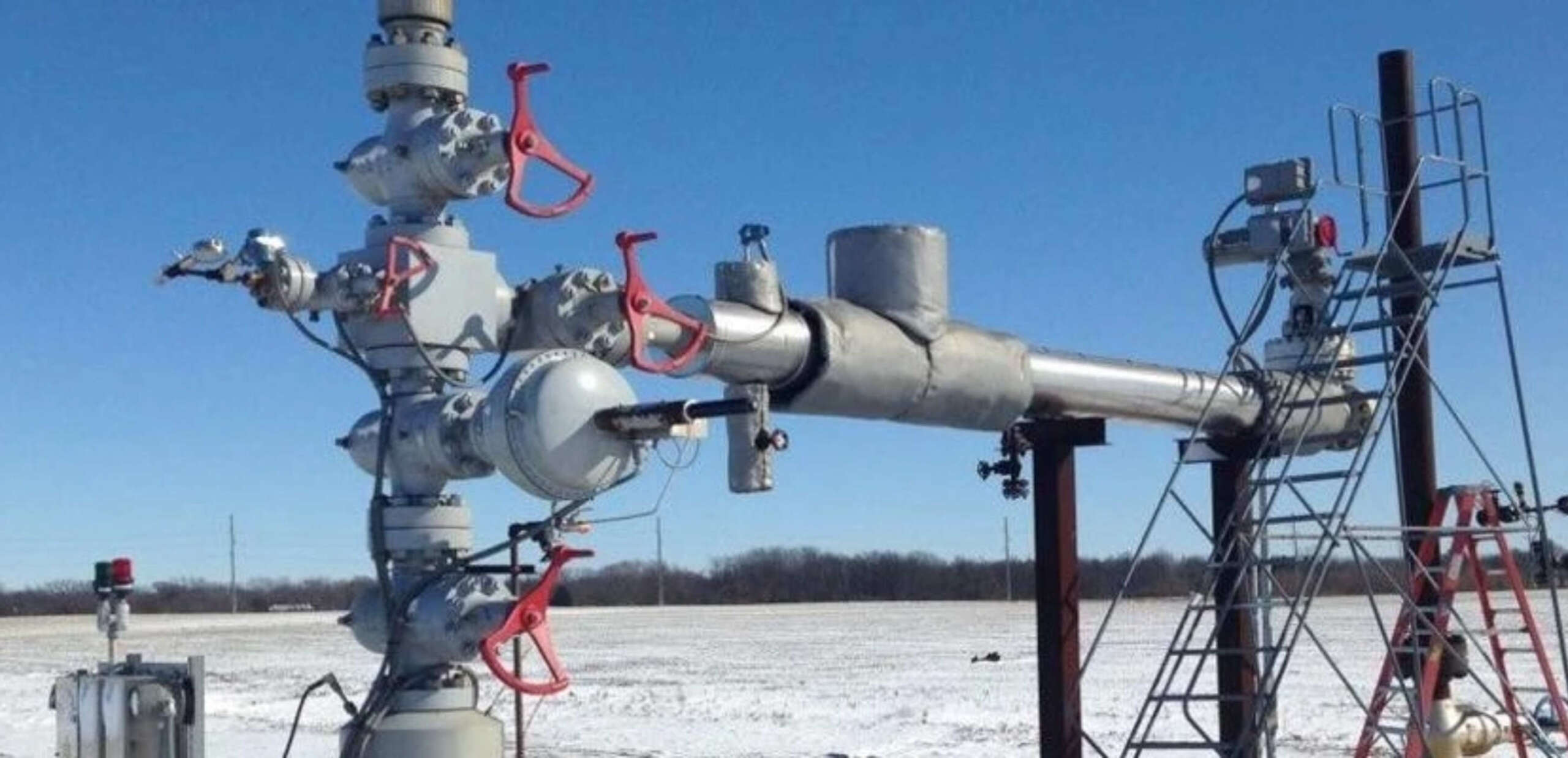
What Does This Mean for Mid-Continent Emitters?
For years, the economics of CCS development strongly favored companies with direct access to Gulf Coast storage hubs. Mid-continent emitters in states like Indiana, Illinois, Ohio, and Missouri faced harder choices. They either needed expensive CO2 pipeline networks to move captured emissions to coastal storage sites, or they waited for local options that were not yet available.
That equation is changing. Near-site sequestration projects like Vault's Indiana facility eliminate the pipeline dependency entirely. CO2 captured at Cardinal's ethanol plant is injected into geology directly beneath the site. Ethanol fermentation produces a concentrated, relatively pure CO2 stream, which makes capture equipment simpler and less expensive than post-combustion sources like power plants or cement kilns. The project avoids the pore space access, pipeline rights-of-way, and multi-state regulatory coordination that longer-haul CCS models require.
The federal 45Q tax credit strengthens the business case. Under the One Big Beautiful Bill Act, signed into law on July 4, 2025, the 45Q credit was maintained at a maximum of $85 per metric ton of CO2 permanently sequestered for industrial and power source projects meeting prevailing wage and apprenticeship requirements. The credit remains transferable, which lets developers sell credits to investors if they lack sufficient tax liability, a provision that benefits first-of-kind and smaller-scale projects like the One Carbon Partnership particularly.
Where the U.S. Carbon Storage Map Goes Next
The permit-by-permit expansion of U.S. carbon storage is gaining real momentum at both ends of the country's industrial map. Texas is managing the largest state-level Class VI backlog ever handed to a single state regulator. Indiana has demonstrated that the Midwest can issue a final Class VI permit and move a project to construction, without waiting for Gulf Coast infrastructure to reach inland. As of August 2025, the EPA had issued only 11 total Class VI permits nationwide since 2011. That number is now growing through state programs and EPA regional offices alike.
Other states are moving. Alabama is in early stages of its Class VI primacy application. Illinois is seeing active Class VI work, including the Vault 44.01 Mt. Simon-linked projects and the recently approved Marquis Carbon Injection project in Putnam County, which can store up to nine million metric tons of CO2 over six years. California's Carbon TerraVault I project broke ground in Kern County in October 2025, with first injection planned for early 2026.
The combined effect of state primacy expansion and inland permit approvals is a U.S. storage map that looks fundamentally different from what existed 18 months ago. Gulf Coast dominance in geologic storage is not going away. The scale and geology there remain unmatched. But it no longer has to be the only answer for industrial emitters pursuing permanent underground carbon storage.
For mid-continent facilities, that shift changes both the cost structure and the timeline of CCS development. Projects once blocked by federal permitting delays or pipeline economics now have a clearer, more direct path. One Class VI permit at a time, the geography of American carbon storage keeps getting bigger.
Frequently Asked Questions
What is a Class VI well permit and why does it matter for CCS?
A Class VI permit, issued under the EPA's Underground Injection Control (UIC) program, authorizes the construction and operation of a well designed to inject carbon dioxide into deep geologic formations for permanent storage. It is the primary regulatory requirement for commercial-scale CCS projects in the United States. Without a Class VI permit, a developer cannot legally inject CO2 underground for long-term sequestration.
How does state primacy speed up carbon storage project timelines?
When the EPA grants a state Class VI primacy, the state takes over permitting authority. Developers no longer need dual federal and state sign-off. A single state-issued permit covers the full process. States with primacy, like North Dakota and Wyoming, have consistently approved applications in under a year. Federal-only review has averaged 24 months or longer due to staffing demand and national application backlogs.
Why are ethanol plants an attractive starting point for Midwest CCS?
Ethanol fermentation produces a concentrated, relatively pure CO2 stream as a by-product of the corn fermentation process. That purity lowers capture equipment costs compared to post-combustion sources. Combined with the 45Q tax credit of up to $85 per metric ton for qualifying projects, and access to saline formations like the Mt. Simon Sandstone beneath many Midwest facilities, near-site sequestration at ethanol plants offers a cost-competitive path to commercial CCS without long-distance CO2 pipeline infrastructure.
Subscribe to the newsletter
Daily decarbonization data and news delivered to your inbox
Follow the money flow of climate, technology, and energy investments to uncover new opportunities and jobs.
Latest issues
-
Why Gulf Coast CCS Teams Are Watching Liverpool Bay
Inside This Issue 💂 Eni’s Douglas Platform Sets the Offshore CCS Blueprint 🌲 Pacolet Milliken Expands Its Biomass Platform With the Acquisition of Georgia Renewable Power 🧪 Metacon Receives EU Fun...
-
Who Bought Gevo’s $50M in 45Z Credits?
Inside This Issue ⛽ Gevo Sells $70M in 45Z Credits to a New Kind of Buyer 🌱 South Pole, Gaïago, and Gold Standard Issue European Soil Carbon Credits, Unlocking Verified Regenerative Agriculture Re...
-
Verra Landed CCP Approval. What Changes for DAC?
Inside This Issue ✅ Verra's CCS Credits Just Got the Integrity Seal Buyers Want 💰 South Korea Unveils $747 Billion Energy Transition Plan Through 2035 💧 Hydrogen and Carbon Capture and Storage in ...
Company Announcements
-
Former Saskatchewan cabinet minister Rob Norris takes the helm as MAX Power prepares to begin completions and pursues a dual listing in the United States, with Ran Narayanasamy moving to the newly...
-
CORALVILLE, IA, Oct. 13, 2026 (GLOBE NEWSWIRE) -- SunHydrogen, Inc. (OTCQB: HYSR), the developer of a breakthrough technology to produce renewable hydrogen using sunlight and water, today provided ...
-
Verde Secures Landmark ASTM EPD Verification for Engineered Biochar Road Application
Among the first independently verified EPDs for biochar in road construction, validating low-carbon data to accelerate commercialization with Ergon and global licensing ST. LOUIS, Oct. 13, 2026 (G...
-
Industrial-scale project brings new approach to brine management and water security to the region PERTH, Australia, Oct. 13, 2026 /PRNewswire/ -- Capture6 yesterday launched Project Tortuga, an in...