
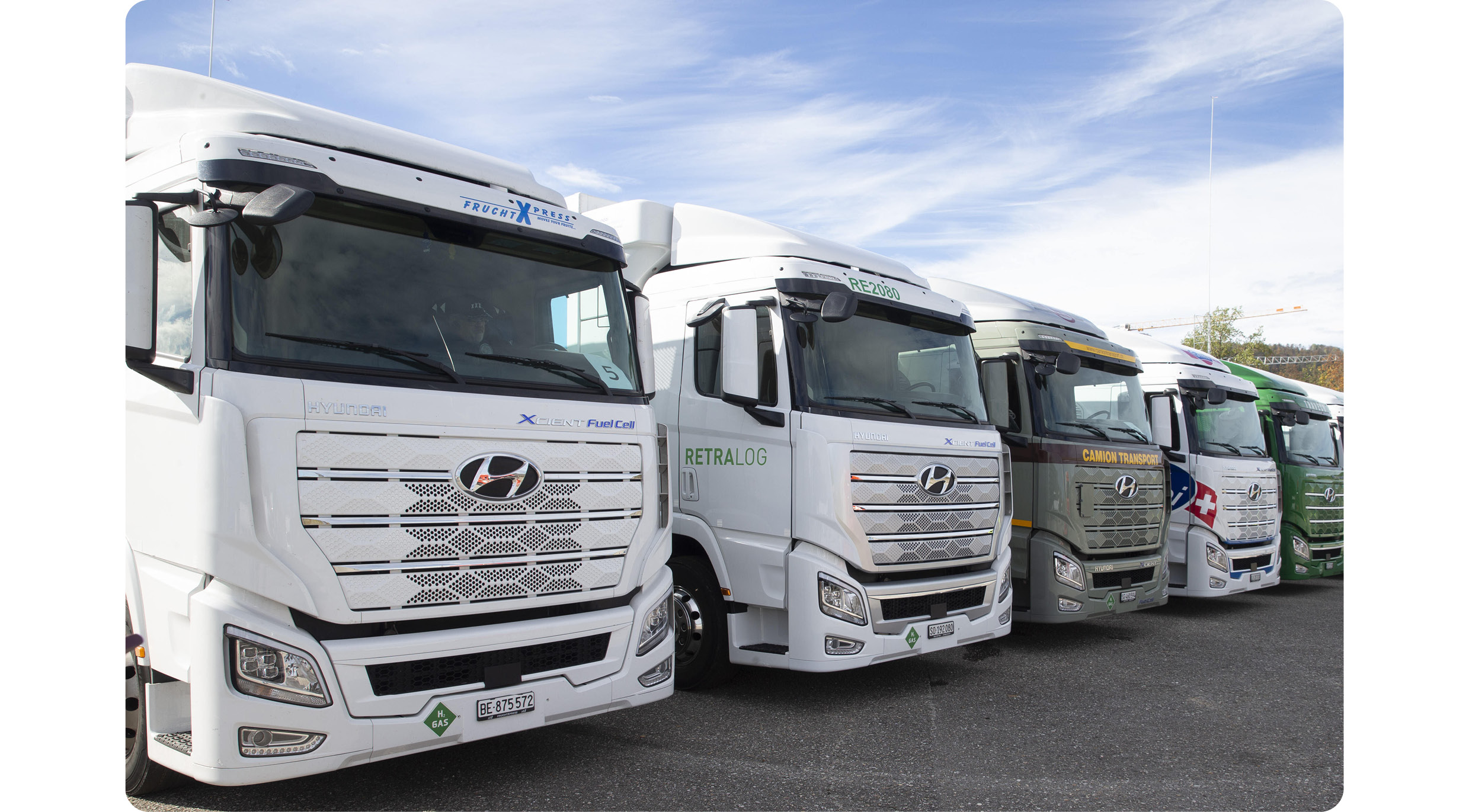
Hyundai Motor Company just proved that hydrogen fuel cell trucks work, and they work at scale. The automaker's XCIENT fuel cell heavy-duty truck fleet hit 20 million cumulative kilometers across Europe as of January 2026, a milestone that validates hydrogen as a viable diesel replacement for long-haul freight.
But here's what really matters for North America. While Europe dominated the mileage count, Hyundai explicitly flagged "visible progress" in the North American commercial market as the next major phase. Translation: the testing is done, and U.S. deployment is ramping up fast.
>> In Other News: Scientists Use Sunlight And Liquid Metal To Produce Clean Hydrogen From Water
Why This Mileage Data Actually Matters
Heavy-duty transport is where hydrogen makes the most sense right now. Unlike passenger vehicles where battery electric has won market dominance, Class 8 trucks need range, payload capacity, and fast refueling that batteries can't yet match economically.
The 20 million kilometer mark proves reliability, the key metric U.S. fleet operators care about when they're considering switching from diesel. These aren't pilot programs running on closed test tracks. Hyundai's 165 XCIENT trucks have been hauling freight across Switzerland, Germany, France, the Netherlands, and Austria since October 2020, operating in real commercial conditions.

"Hyundai Motor is reducing carbon emissions by working with global partners to deploy hydrogen fuel cell trucks across various sectors such as logistics, distribution and urban public operations."
Chul Youn Park, Head of Global Commercial Vehicle and Light Commercial Vehicle Business Division at Hyundai Motor Company
>> RELATED: The Long Haul: Why Toyota's Hydrogen Bet is All About Replacing Diesel
North America's Hydrogen Truck Buildout Is Happening Now
Hyundai already has 63 XCIENT fuel cell trucks operating in North America, collectively logging over 1.6 million kilometers since their 2023 debut. The deployments target strategic logistics corridors where hydrogen infrastructure is being built to support commercial-scale operations.
The largest single deployment is California's NorCAL ZERO Project, where 30 XCIENT trucks operate at the Ports of Oakland. This represents the biggest hydrogen truck fleet in North America and demonstrates that port drayage operations can run zero-emission without sacrificing productivity.

Hyundai's North American fleet of 63 XCIENT fuel cell trucks has accumulated over 1.6 million kilometers since 2023 through significant deployments in California, Georgia, and British Columbia.
In Georgia, 21 XCIENT trucks handle logistics at Hyundai's own manufacturing facility under the HTWO Logistics initiative with GLOVIS America. This in-house fleet serves as both operational proof and a testing ground for scaling across third-party logistics providers.
The Environmental Case: More Than Marketing
Compared to an equivalent diesel fleet covering 20 million kilometers, XCIENT trucks eliminate approximately 13,000 tons of carbon dioxide emissions. That's equal to the annual carbon absorption of 1.5 million pine trees.
For companies facing tightening emissions regulations, these trucks offer immediate compliance without operational compromises. Heavy-duty transportation accounts for a significant portion of freight emissions, and diesel alternatives like battery electric can't match the range requirements for long-haul routes.
Hyundai's fuel cell system provides comparable performance to diesel while refueling in roughly the same time. That operational parity matters more than any efficiency metric when fleet operators are calculating total cost of ownership.

Hyundai XCIENT hydrogen trucks are optimizing logistics across varied sectors in five European countries, including supply chain operations in Germany and refrigerated transport in Austria.
New Generation Technology Coming to Market
Hyundai launched an upgraded XCIENT fuel cell truck in 2025 featuring an improved hydrogen fuel cell system with greater efficiency and durability. The new model underwent rigorous real-world testing since 2021 across multiple climates and use cases, from port operations to medium-distance logistics.
The upgrades address lessons learned from five years of commercial operations in Europe, incorporating feedback from fleet operators who've been running these trucks daily. This isn't theoretical engineering, it's refinement based on millions of kilometers of actual freight hauling.
Continuous collaboration with fleet partners ensures the vehicle meets diverse customer driving needs. Regional partnerships with logistics providers and hydrogen fueling infrastructure companies are expanding rapidly to support larger deployments.
What This Means for the U.S. Freight Market
The 20 million kilometer milestone removes the "unproven technology" argument against hydrogen fuel cell trucks. European operations demonstrated that these vehicles can handle demanding commercial routes, mountain passes, and high-mileage logistics without reliability issues.
Now the focus shifts to North America, where longer distances and different freight patterns require scaled infrastructure. California is leading with emissions mandates that essentially force fleet transitions, but other states are watching closely. If hydrogen can work economically in California's high-cost environment, it can work anywhere.
Hyundai's explicit mention of North American expansion signals confidence that both the technology and supporting infrastructure are ready for commercial scale. The company isn't testing anymore, they're deploying.
Subscribe to the newsletter
Daily decarbonization data and news delivered to your inbox
Follow the money flow of climate, technology, and energy investments to uncover new opportunities and jobs.
Latest issues
-
Why Is Wyoming Giving 650,000 Acres to Carbon Storage?
Inside This Issue 🪨 Inside Blm's 650,000-Acre Bet on Wyoming Carbon Storage 🏭 California Advances Carbon Capture and Removal Regulations Under SB 905 ⚡ Why a Japanese Power Giant Is Betting on Den...
-
Colorado Joins the 7-State CCS Permit Fast Lane
Inside This Issue ⚖️ Colorado Takes Over Class VI Permits: What Changes for CCS? 🏭 Hebei Shoulang Facility Using LanzaTech Technology Achieves World’s First ISCC EU RCF Certification for Ethanol P...
-
The US Hasn't Made Heavy Water Since 1982
Inside This Issue ⚛️ Aternium Completes FEED Studies for US Hydrogen, Heavy Water Project 🐄 Google, McKinsey Strike Brazil Carbon Removal Deal With Silvopasture Project 🔧 Cummins Selects Stargate ...
Company Announcements
-
We’re Moving $2M+ to Climate Solutions
New companies, new ways to back existing ones, and every purchase built to pull in more capital We’re adding new companies to our portfolio and getting creative with how we put more money behind e...
-
Citi Closes $72 Million Carbon Removal-Linked Note to Support Applied Carbon Biochar Project
HIGHLIGHTS Citi structured an innovative $72 million carbon removal-linked note to provide upfront capital for Applied Carbon's biochar project, marking a first-of-its-kind "outcome bond" for ver...
-
New platform opens access to the same rigorous project evaluations trusted by the world's leading carbon removal procurement programs Today, Relae (formerly Carbon Direct) launched The Diligence C...
-
Inside BLM's 650,000-Acre Bet on Wyoming Carbon Storage
The Bureau of Land Management has offered right-of-way grants covering about 649,438 acres of federal pore space in southwest Wyoming. The September 21, 2026 offers went to Moxa Carbon Storage LLC ...