
Michigan is moving to claim state control over carbon capture permitting, a step that could reshape how its industrial base manages emissions in the years ahead. Bipartisan legislation cleared the Michigan Senate in September 2025 and a companion House package was introduced in March 2026. But passing laws is only the first link in a long chain. Before Michigan can issue a single Class VI permit, it still needs EPA approval, a working regulatory program, and a viable path for CO2 transport and storage.
Key Facts
- Michigan Senate passed SBs 394, 395, and 396 in September 2025 with bipartisan votes of 29-7 and 31-6
- A companion House package (HBs 5664-5669) was introduced in March 2026 and referred to the Committee on Energy
- Michigan's estimated underground CO2 storage capacity: more than 70 billion tons (Michigan Geological Survey at Western Michigan University, DOE-funded assessment)
- Michigan produces approximately 70 million metric tons of CO2 annually from energy combustion, with 205 industrial and power facilities in the state (U.S. EIA; Better Energy Institute)
- As of May 2025, 321 Class VI well applications had been submitted nationally, with only 37 permits issued (EPA tracker data)
- Six states had Class VI primacy as of late 2025: North Dakota, Wyoming, Louisiana, West Virginia, Arizona, and Texas
- The federal 45Q tax credit pays $85 per ton for industrial CCS projects
>> In Other News: Installation Work for a 30MW Class Hydrogen-Fired Gas Turbine Has Been Completed
What Is Michigan Trying to Do?
Michigan is pursuing state-level permitting authority over Class VI underground injection wells, which are used to permanently store captured CO2 deep in geological formations. Right now, that permitting sits with the U.S. EPA. Under the bills, Michigan's Department of Environment, Great Lakes, and Energy (EGLE) would take over that role.
The three Senate bills create a state regulatory framework for permitting, operating, and closing carbon sequestration projects. They require EGLE approval before any project breaks ground and allow operators to be charged up to 32 cents per ton of injected CO2. Passing that framework is the precondition for everything else. Michigan can't apply to the EPA for Class VI primacy without it.
State Senator John Cherry (D-Flint), one of the sponsors, made the case directly. Michigan's geology is the foundation of the argument. "One of the key pieces to understand is Michigan has excellent geology for carbon sequestration," he said. "As we are moving to a place where we want to reach carbon neutrality, a key piece of that is going to be carbon sequestration."
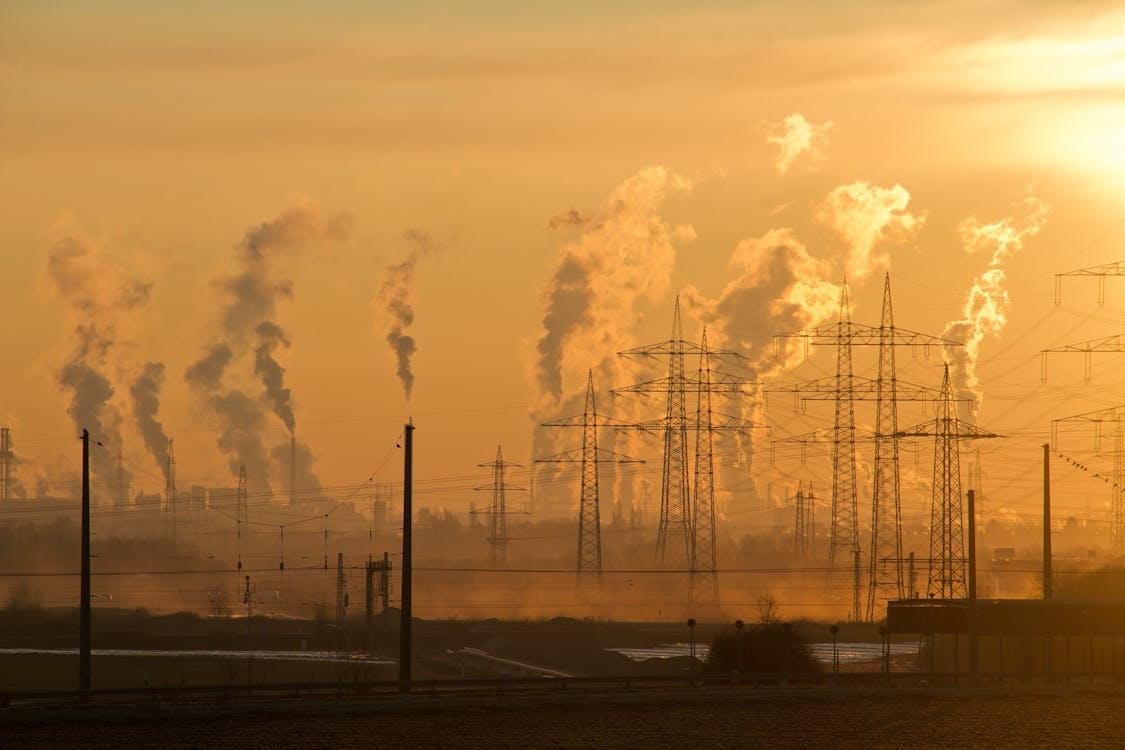
Industrial facilities across Michigan collectively produce roughly 70 million metric tons of CO2 annually, making the state a strong candidate for carbon capture and storage investment if Class VI permitting authority is established.
What Has to Happen Before Michigan Can Issue Class VI Permits?
Passing legislation is step one in a multi-step process. Here's the full path to state permitting authority:
- Michigan passes the legislation to establish a state CCS regulatory framework (Senate done; House still in committee as of September 2026).
- EGLE builds out the full regulatory program, including staffing, rules, and technical review capacity.
- Michigan submits a formal primacy application to the U.S. EPA.
- EPA evaluates whether the state program meets federal Class VI requirements under the Safe Drinking Water Act.
- EPA approves primacy.
- Michigan begins reviewing and issuing Class VI permits directly.
West Virginia completed that entire process in eight months, from application submission in May 2024 to EPA approval in January 2025. Michigan hasn't submitted an application yet. The House bill package is still in committee, and amendments are expected before anything reaches the governor.
The MI SUCCESS coalition has been the driving force behind the legislation. Members include the Michigan Chamber of Commerce, DTE Energy, Consumers Energy, Dow Inc., and the Michigan Laborers District Council. The coalition argues that state control means faster decisions, better local expertise, and stronger protections for landowners and communities.
"We look to a lot of things for how we can reduce our carbon output for energy and industrial uses and so on. And this legislation, should it be successful, will help Michigan reach our climate goals faster."
Sen. Sean McCann, D-Kalamazoo, SB 396 Co-Sponsor
Why Does Michigan's Geology Matter?
Michigan's case for CCS primacy rests heavily on its underground geology. The state hosts four key geological formations suited for long-term CO2 storage: the Mt. Simon Sandstone in the south, the Sylvania Sandstone in the central region, and the St. Peter Sandstone and Niagaran Reef formations in the north.
Autumn Haagsma, assistant director of the Michigan Geological Survey at Western Michigan University, has estimated storage potential at more than 70 billion tons of CO2. That figure comes from a DOE-funded assessment of five key Michigan Basin reservoirs. To put it in context: Michigan produces roughly 70 million tons of CO2 annually from energy combustion, according to the U.S. Energy Information Administration (EIA). Underground storage capacity could theoretically accommodate hundreds of years of the state's emissions.
Michigan is unusual in hosting all major formation types for CO2 storage within one state boundary. That geological diversity gives it options other Great Lakes states simply don't have in the same concentration.
The proximity question still matters, though. Even with excellent geology, CO2 storage projects don't work commercially if emitters can't move gas to injection sites without prohibitive pipeline costs. A DOE-funded Western Michigan University study is actively mapping Michigan Basin formations to address exactly this challenge. Industrial clusters in southeast Michigan and the Detroit area are geographically separated from some of the best storage formations in the north. That transportation gap is one of the key engineering and economic challenges the legislation alone cannot solve.
Official Michigan House Appropriations Subcommittee hearing (March 3, 2026) with EGLE and the Michigan Geological Survey on Class VI carbon storage, reef injection, the Senate CCS bills, an EPA primacy grant, and Michigan Basin geology.
How Does Michigan Compare to Great Lakes Competitors?
Michigan's push for CCS primacy comes in the middle of a regional race. Illinois, Indiana, and Ohio all host large industrial bases with significant CO2 emissions. Illinois passed its SAFE CCS Act in July 2024. That law covers sequestration permitting, CO2 pipeline regulation, and pore-space ownership rules. Indiana introduced its own primacy bill (HB 1368) in 2026 and has pending Class VI applications before EPA.
Ohio has no primacy legislation on the books as of mid-2026 and no active Class VI permit applications pending under state authority. That gives Michigan a potential window to move faster if it can close the gap with Illinois and Indiana.
>> RELATED: Michigan Senate Approves Carbon Capture Legislation
The key national data point: states with Class VI primacy issue permits far faster than the EPA. As of May 2025, the EPA had received 321 Class VI well applications nationally but issued only 37 permits. States with primacy, specifically North Dakota and Wyoming, account for the highest permitting efficiency, according to EPA tracker data. That 321-application-to-37-permit ratio reflects a persistent federal backlog that has frustrated CCS developers for years.
| State | Class VI Status | CCS Legislation | Key Industrial Sectors |
|---|---|---|---|
| Michigan | Pursuing (House bill in committee) | SBs 394-396 passed Senate (Sep 2025); HBs 5664-5669 in House (Mar 2026) | Auto, chemicals, cement, energy |
| Illinois | EPA permitting (no state primacy) | SAFE CCS Act signed July 2024 | Ethanol, chemicals, power |
| Indiana | Pursuing (HB 1368, 2026) | Primacy bill progressing through Senate as of early 2026 | Steel, power, ethanol |
| Ohio | No primacy legislation | No active state CCS framework | Steel, chemicals, power |
Which Michigan Industries Have the Strongest CCS Case?
Not every Michigan industrial facility is an equally strong candidate for carbon capture and storage. The best use cases are facilities with concentrated, hard-to-eliminate emissions, where CCS is one of the few available pathways to deep decarbonization.
The sectors with the clearest CCS applications in Michigan include:
- Cement and lime: Process emissions from limestone decomposition cannot be fully eliminated by fuel switching alone. CCS is one of the few routes to deep emissions cuts in cement production.
- Automotive manufacturing: Michigan's auto plants produce large volumes of CO2 from stamping, painting, and assembly. CCS could allow those facilities to meet emissions targets without full electrification of every process.
- Chemicals and refining: Facilities operated by companies like Dow, which is a member of the MI SUCCESS coalition, produce concentrated CO2 streams that are well-suited for capture and injection.
- Natural gas power plants: Under Michigan's 100% clean energy by 2040 standard, gas plants can qualify as clean if they achieve 90% CO2 capture. CCS may be the mechanism that keeps some gas generation online.
- Hydrogen and ammonia production: Blue hydrogen and ammonia facilities produce high-purity CO2 as a byproduct, making them among the lowest-cost applications for geological sequestration.
The state's own MI Healthy Climate Plan identifies industry as one of Michigan's largest sources of greenhouse gas emissions, after transportation and power. That gives EGLE's industrial decarbonization work a direct policy mandate that the CCS legislation is designed to support.
"Expanded use of CCUS technology will accelerate the decarbonization of Michigan's essential manufacturing facilities, which will protect jobs, create new CCUS construction jobs, and incentivize new economic development investments."
MI SUCCESS Coalition, statement of endorsement for SBs 394-396
What Does Permitting Authority Actually Change?
Supporters of state primacy often argue it produces faster permits because state regulators know local geology and can dedicate focused staff to applications. The data from primacy states backs that up generally. The six states with Class VI primacy have collectively issued more than 30 permits since 2018. The EPA, by contrast, had issued only 14 total Class VI permits nationally in the same period before the primacy wave accelerated approvals.
West Virginia's eight-month timeline from application to EPA approval is the sharpest example. Louisiana, which received primacy in December 2023, has also moved faster than federal timelines on projects in its pipeline. The pattern is consistent: states that know their geology and have committed regulatory capacity process permits more efficiently.
That said, permitting authority is just one piece of what a CCS project needs. Any Michigan project would still need capture equipment, CO2 pipelines, pore-space agreements with landowners, and long-term liability coverage for storage sites. The project must also qualify for the federal 45Q tax credit, which pays $85 per ton for industrial CCS. State primacy affects only one of those factors. The others depend on project economics, infrastructure investment, and federal policy that Michigan cannot control unilaterally.
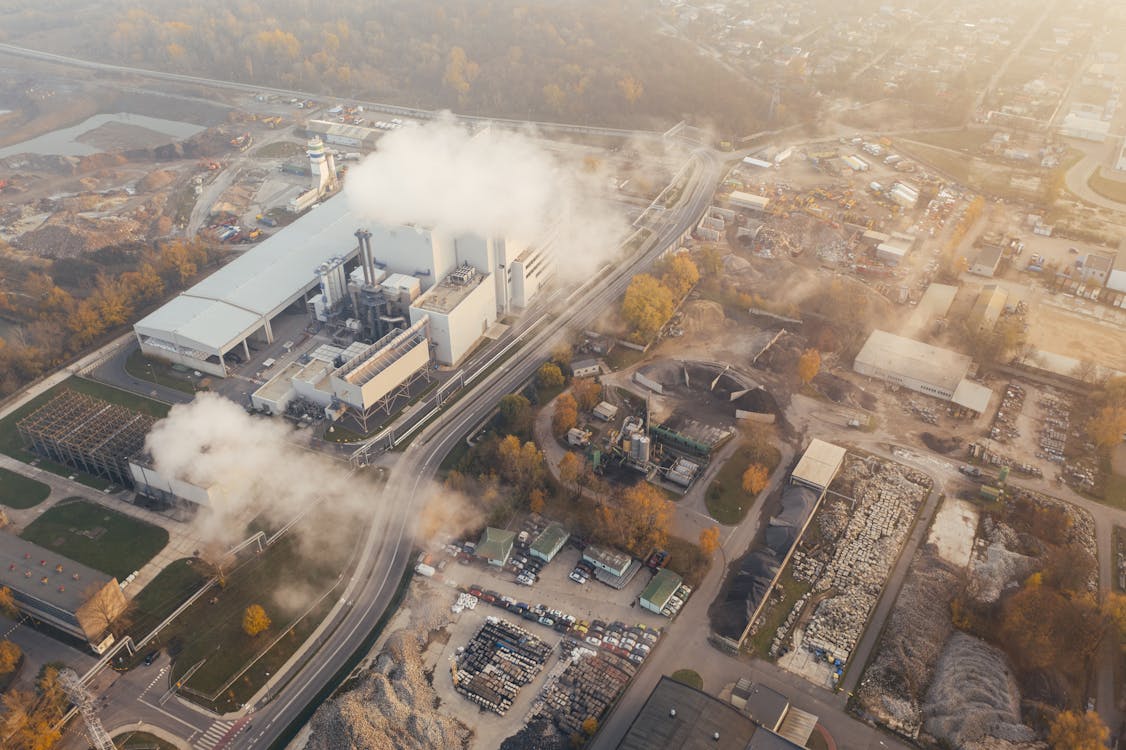
Michigan's industrial base spans automotive, cement, chemical, and power facilities that collectively produce concentrated CO2 streams well-suited for point-source carbon capture applications.
The Road Ahead for Michigan CCS
Michigan is building the regulatory piece of the CCS puzzle, and that piece genuinely matters. Without a state framework, no primacy application can go forward. Without primacy, permit timelines stay tied to the federal backlog. As of May 2025, 321 applications were pending nationally with only 37 approved, a backlog that has persisted for years despite growing project interest.
The House bill package introduced in March 2026 still needs to move through committee, receive amendments, pass both chambers, and be signed by Governor Whitmer. Changes are likely. Environmental groups including the Michigan League of Conservation Voters and the Michigan Sierra Club have raised concerns about liability provisions, monitoring requirements, and alignment with federal standards. Those negotiations will shape what the final law looks like before EGLE can begin building the program it would need to seek primacy.
The bigger question isn't just whether Michigan passes a law. It's whether Michigan can build a credible regulatory program fast enough to secure EPA approval before neighboring states lock in their CCS infrastructure advantages. Indiana and Illinois are both ahead on timeline. Texas and the Gulf Coast states already have mature CCS ecosystems with pipeline networks, deep industrial clusters, and established storage operations.
Michigan's geology, manufacturing base, and bipartisan political support are genuine assets. The gap between those assets and a functioning Class VI permit program is still measured in years of regulatory construction, not months. The bills matter. They're a necessary foundation. But they're not the finish line for industrial decarbonization in Michigan's hardest-to-abate sectors.
Frequently Asked Questions
What is Class VI primacy, and why does Michigan want it?
Class VI primacy is EPA authorization for a state to issue and enforce permits for underground CO2 injection wells used in carbon capture and storage projects. Michigan wants it because state regulators can process permits faster and with better knowledge of local geology than the federal EPA, which had 321 national applications pending against only 37 permits issued as of May 2025.
Does Michigan have the geology to support large-scale CO2 storage?
Yes. Michigan hosts four key geological formations suited for long-term CO2 storage, and the Michigan Geological Survey at Western Michigan University estimates total storage potential at more than 70 billion tons of CO2. That far exceeds the state's annual energy combustion output of roughly 70 million metric tons of CO2, across 205 industrial and power facilities (U.S. EIA; Better Energy Institute).
Will Michigan's CCS bills automatically lead to faster project approvals?
Not automatically. The bills must still pass the House, be signed into law, and then EGLE must build a full regulatory program before Michigan can even apply to the EPA for primacy. After that, EPA approval is required. The full timeline from bill passage to active state permitting is likely measured in years, not months, based on experience in other primacy states.
For ongoing coverage of carbon removal, BECCS, and corporate CDR procurement, subscribe to Decarbonfuse.com.
Subscribe to the newsletter
Daily decarbonization data and news delivered to your inbox
Follow the money flow of climate, technology, and energy investments to uncover new opportunities and jobs.
Latest issues
-
How Vaulted Deep Turned Offtakes Into $35M Debt
Inside This Issue 🏦 How Carbon Removal Offtakes Are Starting to Unlock Commercial Debt 🌉 California Opens the Door to a Three-Way Carbon Market 🧪 New Material Developed at Oregon State Provides Bo...
-
Canada Wants Foreign Buyers for Its Carbon Removals
Inside This Issue 🍁 Canada Explores Article 6 Path to Global Carbon Buyers 🌲 ARC Bio Demonstrates Canadian Forest Residue Pathway to Sustainable Aviation Fuel 🌾 Business, Forestry and Agriculture ...
-
How ADM Is Turning 800,000 Nebraska Tons Into Carbon Credits
Inside This Issue 🌾 ADM's 800,000-Ton Nebraska Bet on Carbon Removal Credits 🏔️ BLM Reaches New Milestone for Southeast Wyoming Carbon Storage Project 🍁 Haffner Energy Receives a €3.2M Firm Order ...
Company Announcements
-
Uniper signs capacity reservation agreement for future SAF supply from Syzygy Plasmonics' NovaSAF™ platform This agreement reflects growing market momentum in biogas to SAF technology and provides...
-
Anew Climate Expands European Forest Carbon Portfolio Through Ten-Year Agreement with Sweden's EKEN
Partnership brings Swedish improved forest management credits, developed under Verra's VM0045, to Anew's corporate buyers. Anew Climate (Anew), one of the world’s largest developers and marketers ...
-
Ocean Visions Launches Comprehensive Knowledge Platform on Marine Carbon Dioxide Removal
mCDR Knowledge Platform New public platform connects organizations, technologies, projects, and field trials to provide a more integrated view of the rapidly evolving mCDR landscape "This user-fr...
-
Reverion builds world-record efficiency solid oxide fuel cell (SOFC) power plants that generate electricity from gas, provide flexible energy storage through reversibility and can be run carbon-ne...