
The Railroad Commission of Texas has opened public comment on draft Class VI permits for two separate carbon storage projects, Milestone Carbon's South Midland facility and ExxonMobil's Rose CCS project in Jefferson County. Both notices confirm Texas is actively using its new federal primacy authority to move carbon storage applications through the pipeline.
Key Facts
- Milestone Carbon's South Midland project (Permit No. 57099) plans to inject 1 million metric tons of CO2 per year for 12 years, totaling 11.9 million metric tons
- ExxonMobil's Rose CCS project (Permit No. 57803) plans to inject 4 million metric tons of CO2 per year across three wells, totaling 53 million metric tons over 13 years
- Both projects are currently listed as "Notice of Draft Permit" on the RRC's CO2 storage notices page
- Texas received Class VI primacy from the EPA on November 12, 2025, effective December 15, 2025
- The RRC has already received 18 Class VI applications statewide and expects more
>> In Other News: [x](x)
What do these two draft permits actually cover?
Both notices represent applications the RRC is now processing directly under its Class VI primacy authority. Milestone Carbon Midland CCS Hub is seeking approval for one injection well near Midkiff in Upton County. ExxonMobil Low Carbon Solutions Onshore Storage is seeking approval for three injection wells near Fannett in Jefferson County, southwest of Beaumont.
Each project has cleared the RRC's technical review stage, the same step the state highlighted when it first took over Class VI permitting from the EPA. That means staff have already evaluated the geologic modeling, well construction plans, and financial assurance documents before opening the public comment window. A public comment period, followed by RRC review, comes next before any final decision.
Neither project has final approval yet. Both remain open to public comment, which is the step directly before a final permit decision or, if protested, a hearing before RRC hearing examiners.
How does Milestone Carbon's South Midland project work?

Milestone Carbon's South Midland CCS Hub safely injects carbon dioxide from power and industrial plants over two miles deep into rock formations below drinking water, introducing single-well storage to the Permian Basin with a sixty-two year monitoring plan.
Milestone Carbon plans to inject CO2 roughly 12,200 to 13,849 feet below ground through a single well called Midland CCS #2. The injection zone sits in the Siluro-Devonian and Ellenburger formations, more than two miles below the deepest source of drinking water in that location.
The CO2 will come from nearby oil and gas processing sites, power plants, and cement plants close to the Midland CCS Hub. Once captured, the gas is compressed into a supercritical fluid before being sent underground. Milestone Carbon will monitor the site through the entire 12-year injection period, plus 50 years afterward, unless the RRC approves an earlier closure.
This single-well structure makes South Midland a smaller-scale project compared to multi-well Gulf Coast storage hubs, but it extends Texas CCS activity west into the Permian Basin region rather than concentrating it along the coast.
How is ExxonMobil's Rose CCS project structured differently?
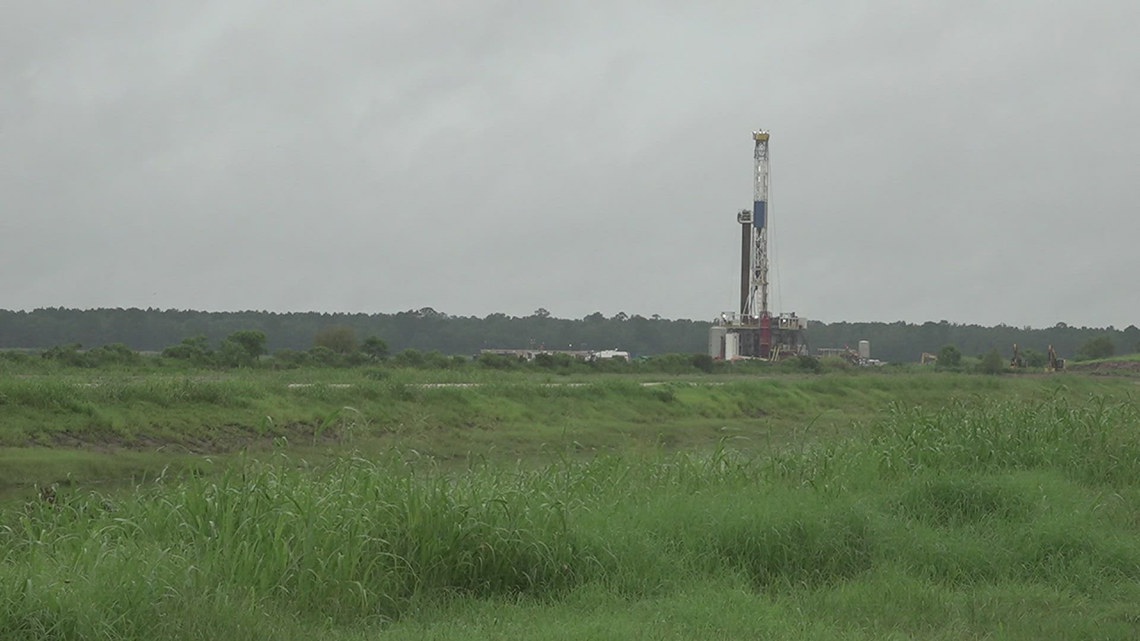
ExxonMobil's Rose CCS draft permit covers three wells rather than one, each targeting the Fleming and Upper Frio sand formations at depths between roughly 3,400 and 7,525 feet. Three deeper Upper Frio reservoirs sit below a 400-foot Anahuac Shale seal, while four shallower Fleming zones are covered by a separate 500-foot confining layer.
The project's scale is substantially larger. ExxonMobil expects to inject about 4 million metric tons of CO2 annually across the three wells, drawing from several large industrial emitters near the Jefferson County site. Over the full 13-year injection period, that adds up to 53 million metric tons stored underground.
| Project Detail | Milestone South Midland | ExxonMobil Rose CCS |
|---|---|---|
| Permit Number | 57099 | 57803 |
| County | Upton | Jefferson |
| Number of Wells | 1 | 3 |
| Annual Injection Rate | 1 million metric tons | 4 million metric tons |
| Total Injection Period | 12 years | 13 years |
| Cumulative Storage | 11.9 million metric tons | 53 million metric tons |
Why does timing matter for Texas CCS right now?
These two draft notices are moving because Texas now controls the process from start to finish. Before primacy, Class VI wells needed federal EPA review that often stretched past two years. Under RRC oversight, similar reviews are expected to move considerably faster, following the pattern of other primacy states like North Dakota and Wyoming.
"Obtaining Class VI primacy marks an important step forward for our state's energy sector."
Jim Wright, Chairman, Railroad Commission of Texas
That authority is already showing up in the numbers. The Railroad Commission of Texas reports 18 Class VI applications received statewide, with more expected, a jump from the backlog described when Texas first secured federal primacy approval. Reaching the draft permit stage for both the Permian Basin sequestration project in Upton County and a Gulf Coast carbon capture hub in Jefferson County within the same window shows the RRC working across multiple regions of the state at once, not just the coastal corridor.

"Primacy will streamline the application process and provide regulatory certainty."
Wei Wang, Executive Director, Railroad Commission of Texas
That regulatory certainty matters for financing. Developers weighing a 45Q tax credit structure alongside project timelines can now plan around a state agency instead of a federal backlog. It also puts more pressure on the industrial CO2 source pipeline feeding these wells, since storage capacity is only useful once emitters are actually under contract to send captured carbon there.
>> RELATED: Three States Just Took Control of CCS Permitting
For context, Texas is not the only state pursuing primacy for underground injection wells. Louisiana, North Dakota, Wyoming, West Virginia, and Arizona all hold similar authority, and several more states are in earlier stages of the process. What sets Texas apart is the volume of applications already stacked up, a direct result of the state accepting applications and fees years before primacy was finalized.
Both Milestone and ExxonMobil now sit in a similar spot. Draft permit issued, comment period open, final decision still ahead. If either draws a formal protest, the next stop is a hearing before RRC examiners rather than a straight administrative approval. That happened with ExxonMobil's earlier EPA-era Rose CCS wells, so a protest on this new state filing wouldn't be unusual.
ExxonMobil’s Rose carbon storage project in Jefferson County, Texas, advances to a state prehearing conference with the Railroad Commission of Texas as part of the Class VI permitting process for underground CO₂ injection and storage.
Public comments on the underground CO2 storage applications can be submitted directly through the RRC's online comment form, and the agency has committed to responding to significant comments before issuing a final permit decision on either project.
Frequently Asked Questions
What does "Notice of Draft Permit" mean for a Class VI well?
It means the RRC has completed its technical review and prepared a draft permit for public comment. It is not a final approval, and the permit can still change based on comments received.
Why does ExxonMobil have two different Rose CCS permits?
ExxonMobil received final EPA permits for an earlier set of Rose CCS wells in October 2025, before Texas gained primacy. This new draft notice, Permit No. 57803, is a separate state-level filing now being processed directly by the RRC.
How long does the public comment period last?
The RRC provides a minimum of 30 days for public comment on Class VI draft permits, with notice distributed through newspapers, other media, and mailing lists.
Two projects, two regions of Texas, one regulator now running the whole show. That is the real story behind these draft notices, and it is worth watching how fast the RRC turns draft into final now that the federal middleman is out of the picture.
For ongoing coverage of carbon removal, BECCS, and corporate CDR procurement, subscribe to Decarbonfuse.com.
Subscribe to the newsletter
Daily decarbonization data and news delivered to your inbox
Follow the money flow of climate, technology, and energy investments to uncover new opportunities and jobs.
Companies
Latest issues
-
Colorado Joins the 7-State CCS Permit Fast Lane
Inside This Issue ⚖️ Colorado Takes Over Class VI Permits: What Changes for CCS? 🏭 Hebei Shoulang Facility Using LanzaTech Technology Achieves World’s First ISCC EU RCF Certification for Ethanol P...
-
The US Hasn't Made Heavy Water Since 1982
Inside This Issue ⚛️ Aternium Completes FEED Studies for US Hydrogen, Heavy Water Project 🐄 Google, McKinsey Strike Brazil Carbon Removal Deal With Silvopasture Project 🔧 Cummins Selects Stargate ...
-
Why Colorado’s Koloma Has Japan’s Largest Utility Hooked
Inside This Issue ⚡ JERA Invests in Koloma to Explore Natural Hydrogen as a Future Low-Carbon Energy 🔬 New CATF Tool Provides Framework for Self-Assessment and Strengthening of Biomass Carbon Remo...
Company Announcements
-
Citi Closes $72 Million Carbon Removal-Linked Note to Support Applied Carbon Biochar Project
HIGHLIGHTS Citi structured an innovative $72 million carbon removal-linked note to provide upfront capital for Applied Carbon's biochar project, marking a first-of-its-kind "outcome bond" for ver...
-
New platform opens access to the same rigorous project evaluations trusted by the world's leading carbon removal procurement programs Today, Relae (formerly Carbon Direct) launched The Diligence C...
-
Inside BLM's 650,000-Acre Bet on Wyoming Carbon Storage
The Bureau of Land Management has offered right-of-way grants covering about 649,438 acres of federal pore space in southwest Wyoming. The September 21, 2026 offers went to Moxa Carbon Storage LLC ...
-
NEW YORK, BUSINESS WIRE, SWITCH Maritime (Switch), a leading developer of zero-emission vessels, secured a Design Basis Agreement (DBA) with the United States Coast Guard (USCG) for the SWITCH-150,...