
A Japanese shipping giant just received 2,500 tonnes of verified enhanced rock weathering credits from an Indian startup. The credits come from Darjeeling tea estates. And the entire 10,000-tonne deal is the world's first direct ERW offtake by a shipping company. That combination makes this milestone different from any ERW deal before it.
Mitsui O.S.K. Lines (MOL), one of the world's largest multi-modal shipping companies, has received 2,500 tonnes of carbon dioxide removal (CDR) credits from Bengaluru-based deeptech startup Alt Carbon. The credits come from the Darjeeling Revival Project and are verified under the Isometric Enhanced Weathering Protocol. MOL is scheduled to receive a total of 10,000 tonnes of CDR credits under the multi-year offtake agreement.
The deal was signed on April 25, 2025. The first tranche of verified credits was delivered within eight months. That delivery speed, for a frontier technology with complex measurement requirements, is one of the most credible signals ERW has produced to date.
Key Facts
- MOL has received 2,500 tonnes of CDR credits from Alt Carbon's Darjeeling Revival Project, the largest verified ERW credit volume in Asia
- The full multi-year offtake commits to permanently removing 10,000 tonnes of CO₂, the world's first direct ERW offtake by a shipping company
- Credits verified under Isometric's Enhanced Weathering Protocol, one of six Isometric protocols approved by the ICVCM with Core Carbon Principles status
- All underlying data is publicly available on the Isometric Registry
- Alt Carbon has onboarded 60,000 acres in Darjeeling and is scaling toward 100,000 carbon credits per year from 2026
- MOL targets a 45% reduction in GHG emissions intensity by 2035 (versus 2019 levels) and net-zero group-wide by 2050
- Alt Carbon has raised a total of $13 million, including a $12 million seed round led by Lachy Groom (May 2025)
>> In Other News: Canada Opens World's First Surficial Mineralization Hub in Quebec
How Does Alt Carbon's ERW Process Actually Work?
Alt Carbon spreads waste basalt rock across agricultural farmland in West Bengal, India. The target areas include heritage tea estates and neighboring rice paddies in the Darjeeling region. When rainwater, which absorbs CO₂ from the atmosphere, contacts the basalt, a chemical reaction converts that carbon into stable bicarbonate ions. Those ions travel through river networks to the ocean, where the carbon is stored as calcium carbonate for more than 10,000 years.
Alt Carbon applies this process using its proprietary silicate-rich amendment, called Hari Mati. The hot, humid climate of Darjeeling accelerates the natural weathering reaction. The company uses a timestamped, geotagged monitoring workflow connecting field sensors, weather station networks, and large soil and river chemistry datasets. That system is designed to reduce measurement uncertainty and standardize ERW monitoring across varied landscapes.
The scientific infrastructure is further supported through academic collaborations with the Indian Institute of Science (Bengaluru) and Ashoka University. Alt Carbon also operates the Darjeeling Climate Action Lab (D-CAL), a dedicated earth science research facility inside a heritage tea estate, capable of processing up to 100,000 samples annually by 2026.
The process delivers co-benefits beyond carbon removal. Field tests have shown evidence of improved soil health and increased tea plantation crop yields. Those outcomes matter for farmer adoption and long-term project sustainability across the 60,000 acres currently onboarded.
>> RELATED: Transforming US Agriculture with Enhanced Weathering: A Path to Carbon Removal
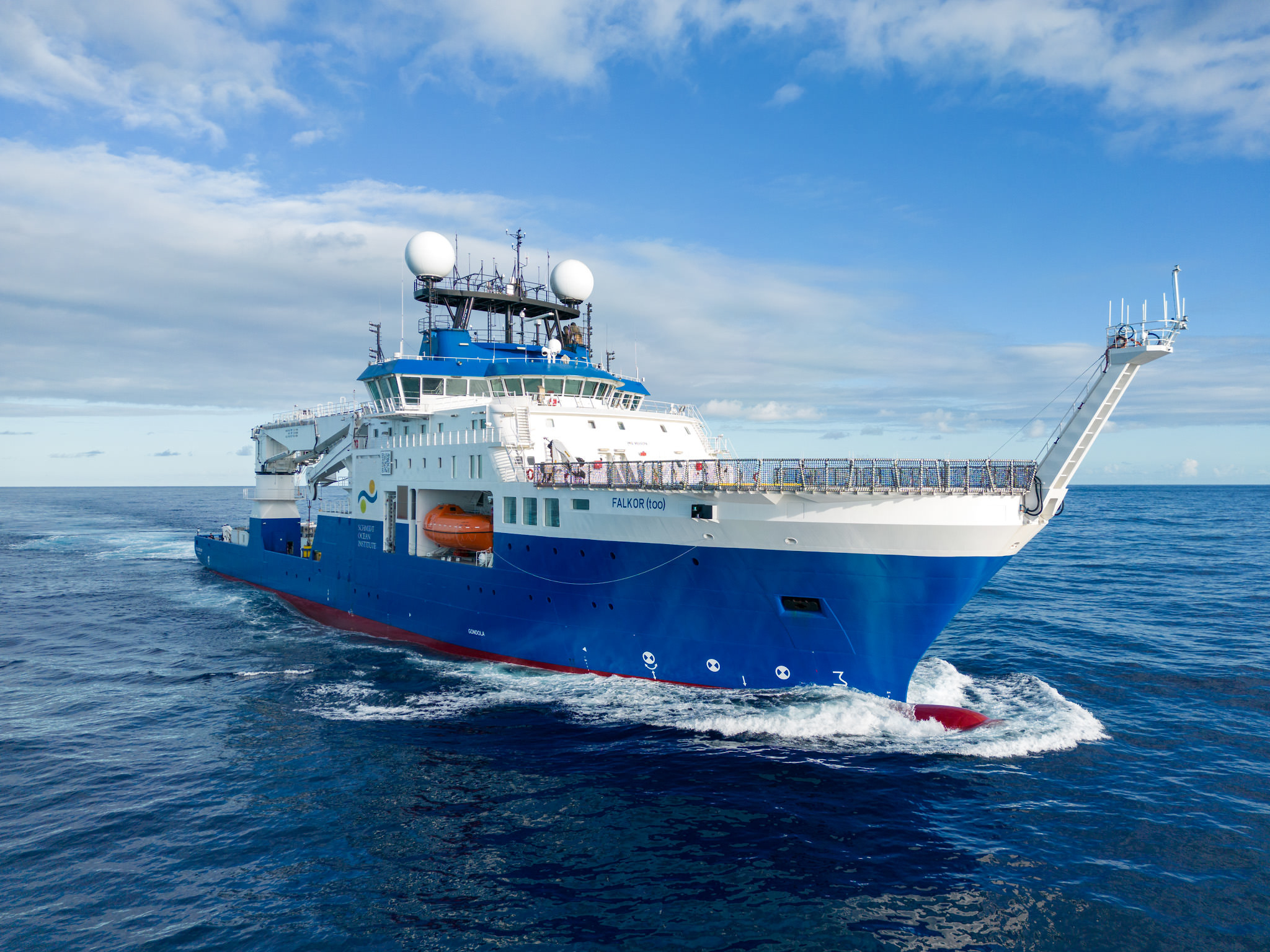
Why Is Shipping One of the Hardest Sectors to Decarbonize?
Shipping carries roughly 80% of global trade by volume. Deep-sea vessels run on heavy fuels, and no scalable alternative fuel exists yet for long ocean voyages. The International Maritime Organization (IMO) adopted a revised strategy in 2023. It targets a 20-30% reduction in shipping emissions by 2030 and net-zero by 2050, both versus 2008 levels.
MOL operates under its BLUE ACTION 2035 strategy. The plan targets approximately a 45% reduction in GHG emissions intensity by 2035 compared to 2019 levels, with net-zero GHG emissions group-wide by 2050. High-durability CDR credits address residual emissions that fuel transitions and efficiency measures cannot yet eliminate.
For hard-to-abate sectors like shipping, verified carbon removal is not a reputational tool. It is a structural part of the decarbonization stack while long-term fuel infrastructure catches up.
>> RELATED: How Green Fuels Are Reshaping the Shipping Industry

"We're determined to achieve net-zero GHG emissions by 2050 while assuring sustainable development for people, society, and the Earth. This first generation of CDR improves our confidence in subsequent deliveries by Alt Carbon."
Daisuke Fujihashi, General Manager, Carbon Solution Development Unit, MOL
What Makes Isometric's Verification Standard Different?
Isometric is the carbon removal registry that verified Alt Carbon's credits. Its Enhanced Weathering Protocol is among the most rigorous MRV frameworks in the voluntary carbon market. MOL has also signed a separate strategic partnership with Isometric, making it the company's preferred CDR verification partner going forward.

"This partnership underscores both the growing demand for transparent, scientifically rigorous carbon removal and Isometric's position as the registry of choice in the Japanese market. MOL is setting the pace for decarbonization strategies in the shipping sector."
Eamon Jubbawy, CEO, Isometric
Isometric's protocols currently span 17 CO₂ removal technologies. These include enhanced weathering, ocean alkalinity enhancement, biochar, and reforestation. Six of those protocols have been approved by the Integrity Council for the Voluntary Carbon Market (ICVCM), qualifying them to issue credits with the Core Carbon Principles (CCP) label.
The ERW verification challenge is substantial. Quantifying how much CO₂ was actually removed requires high-resolution field data, rigorous soil sampling, geochemical analysis of river and ocean chemistry, and clear separation of natural versus enhanced weathering signals. All underlying data and calculations from Alt Carbon's issuance are publicly available on the Isometric Registry, giving buyers and independent reviewers a permanent, auditable record of every tonne removed.
>> RELATED: A New Protocol for Carbon Removal via Direct Ocean Capture and Storage
Who Else Is Buying ERW Credits From Alt Carbon and the Broader Market?
The Darjeeling Revival Project has attracted buyers beyond MOL. The Frontier advance market commitment, backed by Stripe, Alphabet, Meta, Shopify, and McKinsey Sustainability, made an early purchase. The NextGen CDR coalition, which includes Boston Consulting Group, LGT Group, SwissRe, and UBS, also signed on. NextGen's Alt Carbon purchase was the coalition's first CDR deal outside Europe and the United States.
The broader ERW sector has seen significant growth. In Q1 2025, the CDR market set a record with 700 kilotonnes of new contracts signed, a 32% jump compared to Q1 2024, according to ClimeFi data reported by Decarbonfuse. The overall CDR market expanded from roughly 300 million USD in transacted volumes in 2021 to more than 10 billion USD today.
>> RELATED: JPMorgan Backs Mati Carbon to Scale ERW Carbon Removal Technology
| Buyer | ERW Provider | Volume (CO₂) | Geography |
|---|---|---|---|
| Mitsui O.S.K. Lines (MOL) | Alt Carbon | 10,000 tonnes (total deal) | Darjeeling, India |
| Microsoft | Undo + Eion | 23,000+ tonnes | UK, Canada, US |
| Terradot | 200,000 tonnes (from 2029) | Brazil | |
| Frontier Buyers (Stripe, Google, Shopify, McKinsey) | Terradot | 90,000 tonnes | Brazil |
| NextGen CDR (BCG, SwissRe, UBS, LGT) | Alt Carbon | Undisclosed | Darjeeling, India |
What Does This Deal Mean for India's Carbon Removal Ambitions?
Alt Carbon aims to remove 5 million metric tonnes of CO₂ by 2030. The company's current build-out targets 100,000 carbon credits per year from 2026, across 100,000-plus acres of enrolled agricultural land. Approximately $100 million was invested into Indian CDR startups in 2025, signaling growing investor confidence in the country as a CDR hub.
India's geographic and climatic conditions are well-suited for ERW. The country has large agricultural land areas, high rainfall in key regions, and an existing basalt supply chain. Alt Carbon's D-CAL laboratory is also designed to serve as a low-cost MRV service for other ERW operators in India, building shared measurement infrastructure for the sector.
The scale gap remains large. According to the IPCC, limiting warming to 1.5 degrees Celsius requires removing CO₂ at gigaton scale by 2050. Current novel CDR methods account for a fraction of that target. The Alt Carbon-MOL milestone contributes to closing that gap, one verified tonne at a time.
The Real Signal: ERW Credibility Beyond the Usual Buyers
ERW's growth has largely been driven by tech companies, advance market commitments, and sustainability-focused financial firms. MOL is a different kind of buyer. A 140-year-old shipping conglomerate, operating in one of the most emissions-intensive transport sectors, committed to verified ERW credits from a startup in India. That is not an optics-driven purchase. It is a strategic decarbonization decision driven by regulatory pressure and long-term climate targets.
The Isometric layer adds further credibility. All credits carry a public, auditable data trail on the Isometric Registry. Independent reviewers can scrutinize every tonne. That level of transparency is what the voluntary carbon market has been demanding, and Alt Carbon has delivered it at speed.
As Alt Carbon scales toward 100,000 credits per year from 2026, the MOL deal offers a replicable template. Frontier CDR pathways can deliver on time, meet rigorous scientific standards, and serve buyers in hard-to-abate sectors who need results, not promises.
>> RELATED: UNDO Lands Groundbreaking Carbon Removals Financing
Frequently Asked Questions
What is enhanced rock weathering and how does it permanently store carbon?
ERW spreads crushed silicate rock, typically basalt, across agricultural land. Rainwater absorbs CO₂ from the air, then reacts with the rock and converts that carbon into bicarbonate ions. Those ions flow through soil and rivers into the ocean, where the carbon is locked away as calcium carbonate for more than 10,000 years.
What is the Isometric Enhanced Weathering Protocol?
It is a scientific framework for measuring, reporting, and verifying how much CO₂ an ERW project has actually removed. It requires high-resolution field data, soil and river geochemistry analysis, and separation of natural versus enhanced weathering signals. Six Isometric protocols have received ICVCM Core Carbon Principles approval, the voluntary carbon market's highest integrity benchmark.
Why is the MOL deal historically significant for ERW?
The 10,000-tonne multi-year agreement between MOL and Alt Carbon is the world's first direct CDR offtake by a shipping company for the ERW pathway. It is also the first such CDR deal between a Japanese and Indian company. The 2,500 tonnes already received represent Asia's largest verified ERW credit issuance to date.
Subscribe to the newsletter
Daily decarbonization data and news delivered to your inbox
Follow the money flow of climate, technology, and energy investments to uncover new opportunities and jobs.
Latest issues
-
Colorado Joins the 7-State CCS Permit Fast Lane
Inside This Issue ⚖️ Colorado Takes Over Class VI Permits: What Changes for CCS? 🏭 Hebei Shoulang Facility Using LanzaTech Technology Achieves World’s First ISCC EU RCF Certification for Ethanol P...
-
The US Hasn't Made Heavy Water Since 1982
Inside This Issue ⚛️ Aternium Completes FEED Studies for US Hydrogen, Heavy Water Project 🐄 Google, McKinsey Strike Brazil Carbon Removal Deal With Silvopasture Project 🔧 Cummins Selects Stargate ...
-
Why Colorado’s Koloma Has Japan’s Largest Utility Hooked
Inside This Issue ⚡ JERA Invests in Koloma to Explore Natural Hydrogen as a Future Low-Carbon Energy 🔬 New CATF Tool Provides Framework for Self-Assessment and Strengthening of Biomass Carbon Remo...
Company Announcements
-
Citi Closes $72 Million Carbon Removal-Linked Note to Support Applied Carbon Biochar Project
HIGHLIGHTS Citi structured an innovative $72 million carbon removal-linked note to provide upfront capital for Applied Carbon's biochar project, marking a first-of-its-kind "outcome bond" for ver...
-
New platform opens access to the same rigorous project evaluations trusted by the world's leading carbon removal procurement programs Today, Relae (formerly Carbon Direct) launched The Diligence C...
-
Inside BLM's 650,000-Acre Bet on Wyoming Carbon Storage
The Bureau of Land Management has offered right-of-way grants covering about 649,438 acres of federal pore space in southwest Wyoming. The September 21, 2026 offers went to Moxa Carbon Storage LLC ...
-
NEW YORK, BUSINESS WIRE, SWITCH Maritime (Switch), a leading developer of zero-emission vessels, secured a Design Basis Agreement (DBA) with the United States Coast Guard (USCG) for the SWITCH-150,...