
North America's largest sustainable aviation fuel producer just made a big move. Montana Renewables (MRL) and World Energy announced a three-year agreement to deliver more than 70 million gallons of SAF to the market, with an estimated CO2 reduction of up to 600,000 metric tons.
The deal comes at a pivotal moment. MRL's MaxSAF™ 150 expansion is on track for a spring 2026 launch, and the contract signals strong demand for domestically produced sustainable aviation fuel even as policy uncertainty swirls around the 45Z Clean Fuel Production Tax Credit.
MRL is an unrestricted subsidiary of Calumet, Inc. (NASDAQ: CLMT). World Energy has operated in advanced bioenergy and low-carbon solutions for over three decades and is the world's first commercial-scale SAF producer.

>> In Other News: Climeworks Establishes Canadian Headquarters in Calgary
What This Deal Actually Looks Like
Under the agreement, MRL will supply SAF to World Energy, which specializes in carbon insets for corporate aviation clients. Carbon insets allow companies to acquire the environmental attributes derived from SAF to decarbonize global aviation operations, a market growing fast as airlines and corporate customers pursue net-zero targets.

The overview highlights significant milestones for the sustainable aviation fuel project, including a targeted CO2 reduction of up to 600,000 metric tons, a $1.67 billion DOE loan guarantee for expansion, and a goal to capture 50% of the North American market by 2030.
The partnership pairs MRL's production muscle with World Energy's deep corporate relationships. World Energy serves clients in tech, pharma, finance, and business services, all of whom are looking for credible ways to reduce aviation-related emissions.
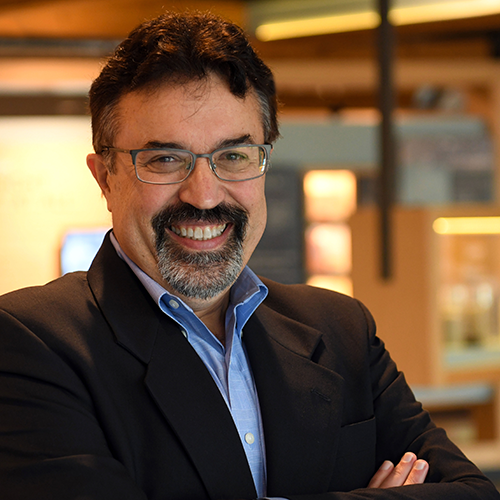
"MRL's MaxSAF expansion project is progressing rapidly and is on track to deliver economic benefits to the region's farmers, ranchers, and energy-related economy this spring. Market demand for SAF remains strong, and this agreement is another signal of our commitment to American energy independence and Montana agriculture."
Bruce Fleming, CEO, Montana Renewables
MaxSAF 150: The Expansion That Changes the Math
MRL's Great Falls, Montana facility has been operational since late 2022, producing approximately 140 million gallons per year of biofuels. The MaxSAF™ 150 expansion, backed by a $1.67 billion DOE loan guarantee announced in January 2025, will push capacity to a projected 315 million gallons per year, with the majority being SAF.
If MRL hits its targets, it would produce roughly half of all North American SAF and about 12% of global supply through 2030.
>> RELATED: The Overlooked Step To Max Out Your 45Z Credit
The feedstock story matters too. MRL sources agricultural byproducts from Pacific Northwest farms, including tallow, distillers corn oil, canola oil, used cooking oil, and camelina oil. That makes this expansion directly tied to rural agricultural communities and domestic supply chains.
World Energy's Corporate Play
World Energy brings something different to the table. As a pioneer in the carbon insets market, the company connects SAF supply with corporate demand from some of the world's biggest brands. Corporate buyers acquire the environmental attributes of SAF to offset their own aviation carbon footprints, and World Energy has been building this business for years.
"Contracting with MRL for SAF production enables us to better support our growing aviation decarbonization business. We are serving many of the most recognized and respected brands in the world in sectors including tech, pharma, aviation, finance, business services, and others to meet their decarbonization commitments."
Gene Gebolys, CEO, World Energy
World Energy's long-term contract also validates MRL's capital investments. When you're building out a facility backed by a billion-dollar-plus DOE loan guarantee, having contracted offtake agreements makes the financial picture considerably stronger.
How MRL's Expansion Stacks Up

Key performance metrics illustrate the projected growth in sustainable aviation fuel production, market share expansion, and substantial government funding secured through the MaxSAF 150 initiative.
Why This Matters Right Now
The timing is telling. The SAF market is at an inflection point. Global production doubled in 2025 to 1.9 million tonnes, but that still accounts for less than 1% of total jet fuel consumption. Demand keeps climbing, driven by corporate sustainability commitments and the CORSIA mandatory compliance phase approaching in 2027.
This contract shows that even amid uncertainty around the 45Z credit, the private sector is moving forward. Real contracts, real gallons, real infrastructure, all backed by American agriculture.
For the SAF industry, this is the kind of proof point that matters. Not memoranda of understanding, but binding supply agreements tied to a facility under construction and approaching commercial operation. The spring 2026 MaxSAF 150 launch will be one to watch.
Subscribe to the newsletter
Daily decarbonization data and news delivered to your inbox
Follow the money flow of climate, technology, and energy investments to uncover new opportunities and jobs.
Latest issues
-
Colorado Joins the 7-State CCS Permit Fast Lane
Inside This Issue ⚖️ Colorado Takes Over Class VI Permits: What Changes for CCS? 🏭 Hebei Shoulang Facility Using LanzaTech Technology Achieves World’s First ISCC EU RCF Certification for Ethanol P...
-
The US Hasn't Made Heavy Water Since 1982
Inside This Issue ⚛️ Aternium Completes FEED Studies for US Hydrogen, Heavy Water Project 🐄 Google, McKinsey Strike Brazil Carbon Removal Deal With Silvopasture Project 🔧 Cummins Selects Stargate ...
-
Why Colorado’s Koloma Has Japan’s Largest Utility Hooked
Inside This Issue ⚡ JERA Invests in Koloma to Explore Natural Hydrogen as a Future Low-Carbon Energy 🔬 New CATF Tool Provides Framework for Self-Assessment and Strengthening of Biomass Carbon Remo...
Company Announcements
-
Citi Closes $72 Million Carbon Removal-Linked Note to Support Applied Carbon Biochar Project
HIGHLIGHTS Citi structured an innovative $72 million carbon removal-linked note to provide upfront capital for Applied Carbon's biochar project, marking a first-of-its-kind "outcome bond" for ver...
-
New platform opens access to the same rigorous project evaluations trusted by the world's leading carbon removal procurement programs Today, Relae (formerly Carbon Direct) launched The Diligence C...
-
Inside BLM's 650,000-Acre Bet on Wyoming Carbon Storage
The Bureau of Land Management has offered right-of-way grants covering about 649,438 acres of federal pore space in southwest Wyoming. The September 21, 2026 offers went to Moxa Carbon Storage LLC ...
-
NEW YORK, BUSINESS WIRE, SWITCH Maritime (Switch), a leading developer of zero-emission vessels, secured a Design Basis Agreement (DBA) with the United States Coast Guard (USCG) for the SWITCH-150,...