
Captured carbon dioxide just found a customer outside the energy sector. On's Cloud X 5 running shoe now uses a midsole built from Infinium's eNaphtha, made from waste CO2 and renewable hydrogen. On has scaled the shoe past 1 million pairs, hitting that target four years ahead of schedule.
For years, CO2 utilization lived mostly in pilot plants and lab demos. This launch moves it into a product people actually buy and wear.
Key Facts
- On scaled the Cloud X 5 to more than 1 million pairs by 2026, four years ahead of its original commercial target (Infinium, PR Newswire)
- CleanCloud started as 5 prototype pairs when On introduced the concept in 2022 (On Running)
- CleanCloud EVA carries more than 80 percent lower modeled carbon impact than fossil-based EVA foam (On Running)
- Infinium's Project Pathfinder facility in Corpus Christi, Texas has shipped commercial eNaphtha since 2024 (Infinium, PR Newswire)
- The global CO2 utilization market is projected to reach 70 billion dollars by 2030 (Lux Research)
>> In Other News: Project CAPTURED Advances Regulatory Pathways for Onboard Captured CO2
What Is the Cloud X 5, and Why Does the Midsole Matter?
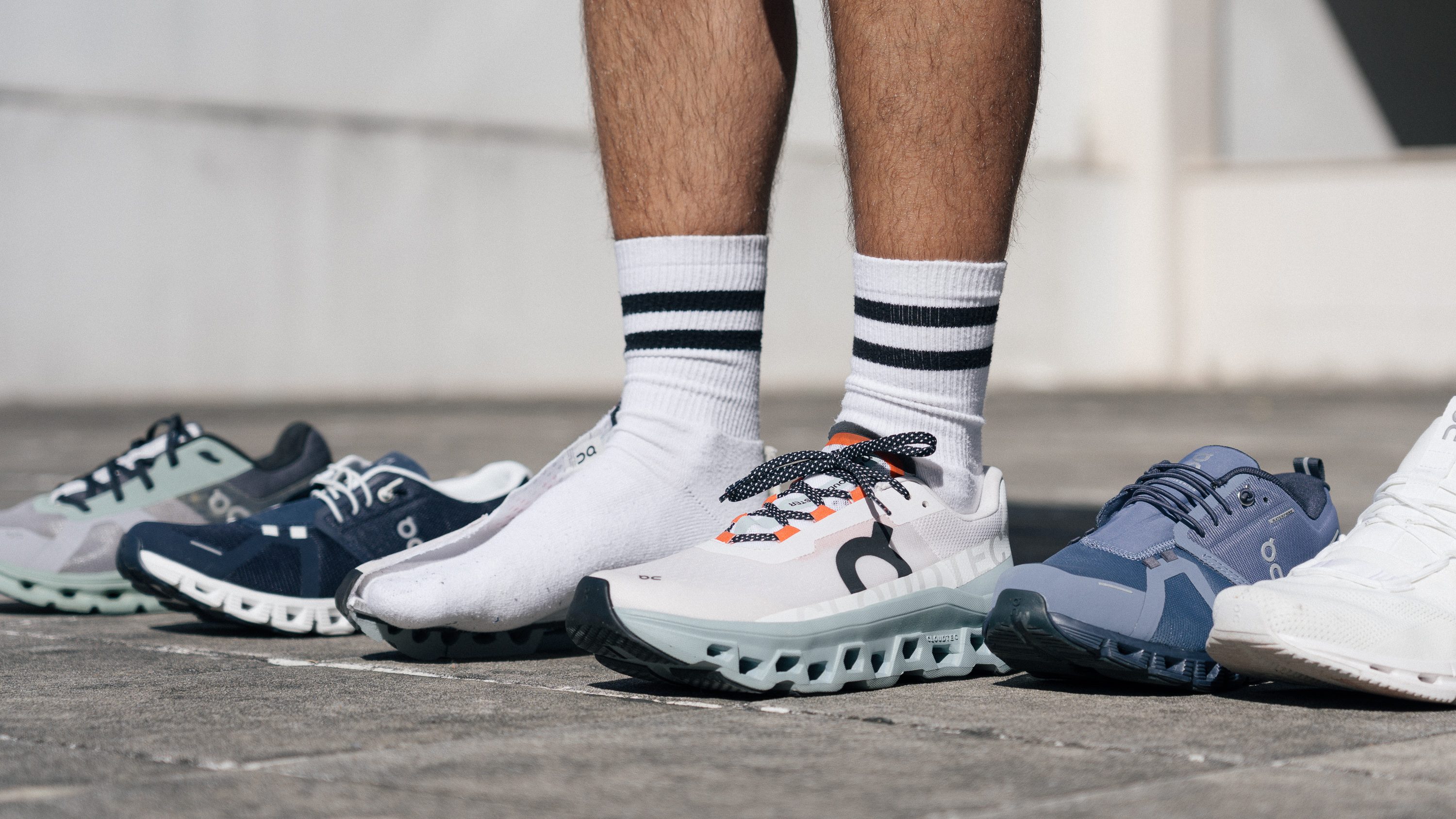
The Cloud X 5 is one of On's most popular running shoe styles, now built with a CleanCloud midsole. On, the Swiss performance sportswear brand founded in 2010, uses CleanCloud EVA foam in place of conventional fossil-based foam.
Most athletic midsoles come from EVA or polyurethane foam. Both are made from naphtha, a petroleum product refined from crude oil.
CleanCloud swaps that fossil naphtha for a carbon-based alternative. The chemistry stays the same. The feedstock does not.
- The resulting EVA foam is chemically identical to conventional material
- Runners get the same molecular structure and performance
- The carbon source is the only difference between old and new
CleanCloud carries more than 80 percent lower modeled carbon impact than conventional fossil-based EVA foam by On in 2026, based on a life cycle assessment using the credit approach, according to On Running's press release.

How Does Captured Carbon Become a Shoe?
The process runs through three companies, each handling one link in the chain. Waste CO2 goes in, EVA foam comes out.
Infinium, a Sacramento, California-based eFuels producer, converts waste CO2 and renewable hydrogen into eNaphtha at its green hydrogen-linked Project Pathfinder facility in Corpus Christi, Texas. That facility has shipped commercial volumes since 2024.
Infinium's eNaphtha is chemically equivalent to fossil naphtha. It runs through existing steam crackers without any equipment changes, which keeps costs down and speeds adoption.

"Infinium was founded on the belief that carbon isn't simply a waste product, it's a valuable feedstock. Seeing captured carbon transformed into a product worn by people around the world demonstrates what's possible when sustainable chemistry scales through existing industrial infrastructure."
Robert Schuetzle, CEO of Infinium
From there, Borouge International takes over. The polyolefins producer, formed in 2026 through the combination of Borouge Plc, Borealis, and NOVA Chemicals, converts the eNaphtha into e-ethylene at its Porvoo, Finland facility. That e-ethylene becomes the EVA used in the shoe.
Every step in the chain carries ISCC PLUS certification. That means verified chain-of-custody tracking from Infinium's plant through Borouge International's operations to On's manufacturing partners.
Is CO2 Utilization Finally Scaling Into Consumer Goods?
The Cloud X 5 answers that question with a yes. A supply chain built for petrochemicals now runs on captured carbon at commercial volume, not pilot scale.
Most carbon capture, utilization, and storage projects earn revenue through geological storage credits and tax incentives like 45Q. Consumer product buyers, on the other hand, purchase captured carbon simply because it performs the same as the fossil version and cuts emissions.
The global CO2 utilization market is projected to reach 70 billion dollars by 2030, rising to 550 billion dollars by 2040 by Lux Research's 2025 estimate. The broader carbon capture and storage market is projected to grow from 5.82 billion dollars in 2025 to 17.75 billion dollars by 2030 by MarketsandMarkets.
That growth needs buyers who are not oil and gas companies. A sportswear brand with a global retail footprint is exactly that kind of buyer.
| Year | Milestone | Scale |
|---|---|---|
| 2022 | On unveils CleanCloud concept | 5 prototype pairs |
| 2024 | Infinium ships commercial eNaphtha to Borouge International | Commercial volumes begin |
| 2026 | Cloud X 5 launches at commercial scale | 1,000,000+ pairs, 4 years early |
What This Means for CCUS Economics Beyond Storage Credits
Storage credits and tax incentives built the first wave of CCUS projects. A durable buyer market in consumer goods could build the second wave.
Plastics, textiles, and packaging all run on the same petrochemical feedstocks used to make shoe midsoles. If eNaphtha can replace fossil naphtha in one product line without new factories, it can likely replace it in others.

"By rethinking how the supply chain can collaborate, we've scaled to more than one million pairs. The speed at which we moved from a single prototype to commercial-scale production is remarkable for both the chemical and footwear industries."
Jean-Philippe Romain, Director of Polymer Science and Engineering at On
On has already said it wants to extend CleanCloud to other footwear styles across its lineup. That signals repeat demand, not a one-time marketing moment.
Infinium is not stopping at eNaphtha. Its second commercial facility, Project Roadrunner in West Texas, is under construction and will also produce synthetic aviation fuel alongside chemical feedstocks.
That pairs a growing sustainable aviation fuel supply chain with a consumer goods supply chain, both drawing from the same captured carbon and carbon capture foundation. It is one more sign that carbon utilization pathways are becoming standard infrastructure rather than side projects.
RELATED: CCUS Revolution: How 120x Growth Could Transform Net Zero
Infinium Breaks Ground on Massive eFuels Plant in West Texas – showcasing commercial-scale production of eFuels from waste CO2 and renewable hydrogen, powering sustainable materials like those in On's CleanCloud shoes.
Frequently Asked Questions
What is CleanCloud, and how is it different from a regular shoe midsole?
CleanCloud is On's EVA foam made from Infinium's eNaphtha, which comes from captured CO2 and renewable hydrogen instead of fossil-based naphtha. The foam itself is chemically identical to conventional EVA.
Is CO2-derived EVA foam as durable as regular midsole foam?
Yes. Because the eNaphtha is chemically equivalent to fossil naphtha, the resulting EVA has the same molecular structure and physical properties as conventional foam. On reports no difference in performance for runners.
What other products could captured carbon show up in next?
Any product built on petrochemical feedstocks is a candidate, including other footwear components, apparel, and packaging. On has already stated plans to expand CleanCloud into more of its product lineup.
A shoe midsole is a small object to carry a big signal. When captured carbon can pass as ordinary plastic to a runner lacing up for a morning jog, the argument for CO2 utilization stops being theoretical.
For ongoing coverage of carbon removal, BECCS, and corporate CDR procurement, subscribe to Decarbonfuse.com.
Subscribe to the newsletter
Daily decarbonization data and news delivered to your inbox
Follow the money flow of climate, technology, and energy investments to uncover new opportunities and jobs.
Latest issues
-
The US Hasn't Made Heavy Water Since 1982
Inside This Issue ⚛️ Aternium Completes FEED Studies for US Hydrogen, Heavy Water Project 🐄 Google, McKinsey Strike Brazil Carbon Removal Deal With Silvopasture Project 🔧 Cummins Selects Stargate ...
-
Why Colorado’s Koloma Has Japan’s Largest Utility Hooked
Inside This Issue ⚡ JERA Invests in Koloma to Explore Natural Hydrogen as a Future Low-Carbon Energy 🔬 New CATF Tool Provides Framework for Self-Assessment and Strengthening of Biomass Carbon Remo...
-
LNK Energies Targets $6.50 Hydrogen With No Federal Subsidies
Inside This Issue 🚛 MIT Startup Says It Can Turn Diesel Trucks Into Cheaper Hydrogen Haulers, See It at Disrupt 🏭 Baytown City Council Briefs: ExxonMobil Blue Hydrogen Agreement Approved 🌎 Colorad...
Company Announcements
-
A new interactive tool from Clean Air Task Force (CATF) provides a practical framework for the self-assessment and strengthening of biomass carbon removal (BiCRS) protocols to help ensure that carb...
-
LanzaJet Secures Financing to Scale SAF Production and Supply Global Customers
CHICAGO, Oct. 15, 2026 (GLOBE NEWSWIRE) -- LanzaJet, Inc., a leading next-gen fuels technology company and fuels producer, today announced fully committed new financing of at least $20 million to s...
-
44.01 and Frontier Advance Permanent CO₂ Storage Through In-Situ Mineralization
44.01's in-situ mineralization (ISM) process turns CO₂ into solid rock underground in a few years, after which the risk of reversal is functionally zero. >> In Other News: JERA Invests in ...
-
JERA Invests in Koloma to Explore Natural Hydrogen as a Future Low-Carbon Energy
JERA Co., Inc. (JERA), through its corporate venture capital arm JERA Ventures, has invested in Koloma, Inc. (Koloma), a U.S.-based natural hydrogen exploration and development company. The invest...