
Ontario's government is putting CAD$5.5 million behind a new approach to sustainable aviation fuel. Greenwater Technology will use mill byproducts and underused wood fibre to produce renewable diesel and SAF at a commercial-scale demonstration facility in Thunder Bay. This wood-to-fuel pathway remains rare in North America, and the provincial investment signals growing government confidence that forest biomass can become a serious, scalable feedstock for low-carbon transportation fuels.
Key Facts
- CAD$5.5 million (USD$4.02 million) provincial investment announced May 8, 2026 (Ontario government)
- Total Greenwater project cost: CAD$15.5 million (USD$11.3 million)
- Funding breakdown: CAD$5 million from Ontario's Forest Biomass Program, CAD$500,000 from NOHFC
- Demonstration plant will process approximately 10 tonnes of dry biomass per day (Northern Ontario Business, 2026)
- Expected yield: approximately 3,000 litres of fuel per day, targeting 300 litres per tonne of wood
- Project expected to create 3 new jobs in Thunder Bay
- Ontario's Forest Biomass Program has committed over CAD$55 million to more than 55 projects since May 2023, securing over CAD$115 million in additional external funding and creating more than 110 jobs (Ontario government)
- Ontario's forest sector generates close to CAD$21 billion in annual business revenue and supports close to 155,000 jobs (Ontario government)
- A separate CAD$210 million Indigenous-led biorefinery in Fort Frances, Ontario, owned 80% by ten First Nation communities through WBCEC, is targeting 2028 commissioning for SAF and renewable diesel from woody biomass
>> In Other News: Plants Boost Carbon Uptake Through Water Efficiency, Not Heat Adaptation, Global Analysis Reveals
What Is Greenwater Technology Building in Thunder Bay?
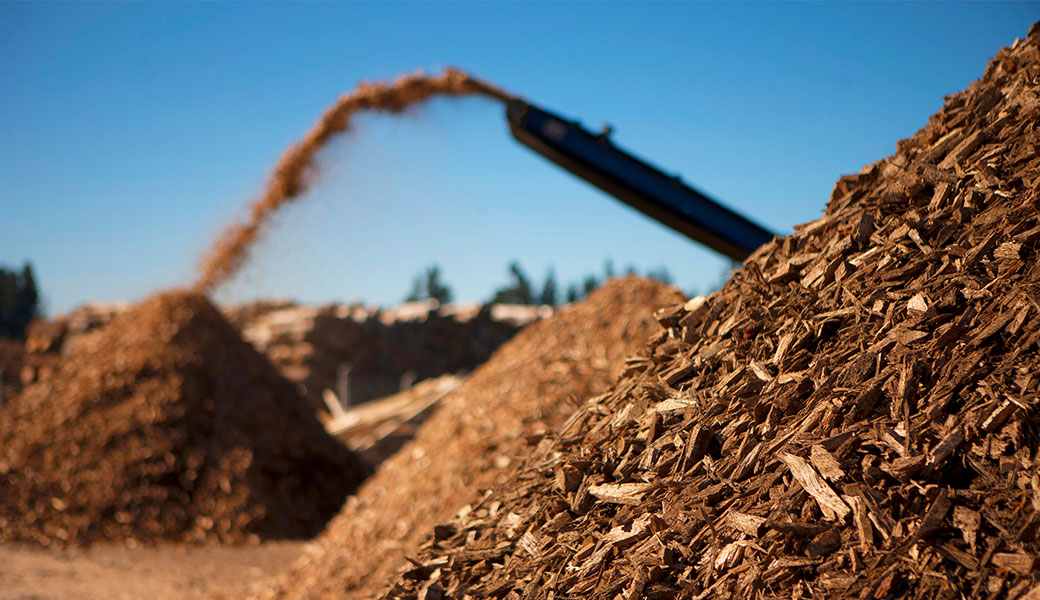
Greenwater Technology is converting part of the former Thunder Bay Pulp and Paper facility into a commercial-scale demonstration and testing plant. The goal is to prove the technology works at scale before seeking financing for larger commercial sites. Ontario's CAD$5.5 million commitment covers part of the total CAD$15.5 million project cost.
Once running, the pilot unit will process approximately 10 tonnes of dry biomass per day and produce roughly 3,000 litres of fuel daily. That is a target yield of approximately 300 litres of fuel for every tonne of wood, which Irving says is the number the project needs to hit to make the commercial case work.

"This is the first-of-its-kind technology. Before you can get a bank loan to build the big one, you've got to prove that it'll work at scale. The energy is in the wood. The trick has always been how to get it out in a way that's competitive with petroleum."
James Irving, President, Greenwater Ltd.
Irving described Thunder Bay as the ideal site, citing research support from Lakehead University, fabrication from Venshore Mechanical, and engineering design from Nordmin Engineering. The facility's location inside the Thunder Bay Pulp and Paper complex also allows Greenwater to operate under existing environmental permits, which significantly accelerated the project timeline.
The mill's CEO, Norm Bush, confirmed the site's strategic value. "This project reflects the growing opportunity to transform Ontario's sustainably managed wood fibre into clean energy and high-quality jobs for Northern Ontario as traditional paper demand evolves," Bush said.
The investment is structured to create three new good-paying jobs directly, while opening new revenue streams for forest-sector businesses supplying biofuels to aviation and transportation markets. After proving the technology here, Greenwater plans to integrate its biofuel plants at other anchor mills across Ontario, providing an on-site use for forest biomass that would strengthen existing forestry supply chains.
"Under our government's forest sector roadmap, we're taking action to enhance Ontario's reputation as a G7 leader in forest product manufacturing. We are proud to invest in new technology that will deliver renewable fuels to power industries, accelerate productivity and grow business opportunity in Thunder Bay and across Ontario's forest sector."
Kevin Holland, Ontario Associate Minister of Forestry and Forest Products
The Ontario government framed the investment as both an economic and environmental priority. It sits inside the province's 10-year Roadmap to Protecting Ontario's Forest Sector, designed to help forestry businesses diversify into next-generation products and stay competitive amid U.S. trade pressures. Ontario's forest sector currently generates close to CAD$21 billion in annual business revenue and supports close to 155,000 jobs, according to the provincial government.
Why Is Woody Biomass an Undercovered SAF Feedstock?
Most commercial SAF today relies on fats, oils, and greases. Used cooking oil, tallow, and soybean oil dominate the current feedstock mix. These pathways are well-established, but they come with supply constraints. As of 2024, global SAF production reached just 1 million tonnes, representing only 0.3% of global jet fuel production, according to the International Air Transport Association (IATA).
| SAF Feedstock | Current Production Share | Key Constraint |
|---|---|---|
| Fats, oils, and greases (used cooking oil, tallow) | Dominant share of current supply | Limited global availability; supply ceiling well below 2030 demand projections |
| Corn and sugarcane ethanol (Alcohol-to-Jet) | Emerging; limited commercial scale | Food crop competition; contested lifecycle emissions in some pathways |
| Woody biomass and forestry residues (Fischer-Tropsch) | Pilot and demonstration scale only | High capital cost; technology still being proven at commercial scale |
| CO2 plus green hydrogen (Power-to-Liquid / eSAF) | Early demonstration phase | High cost; requires large-scale renewable electricity supply |
The World Economic Forum and Kearney, in a February 2025 report, project global SAF demand will reach 17 million tonnes per year by 2030, representing about 5% of total jet fuel consumption. That gap between current output and future need is enormous.
Woody biomass offers a very different supply picture compared to waste oils. Forest and sawmill residues are abundant, renewable, and do not compete with food crops. They are also widely available across Northern Ontario, which has both the infrastructure and the feedstock base to support multiple production sites over time.
Despite this potential, woody biomass remains a marginal feedstock in commercial SAF production today. Most announced capacity through 2030 still depends heavily on lipid-based feedstocks. That is exactly the gap that Greenwater's demonstration facility, and the broader Ontario cluster forming around it, is positioned to address.

Ontario’s woody biomass SAF cluster is taking shape through public funding, Indigenous-led project development, and commercial biorefinery investment. The Fort Frances project, backed by Highbury Energy and WBCEC, is advancing toward a CAD$210 million facility designed to convert woody biomass into sustainable aviation fuel and renewable diesel.
>> RELATED: Nova Scotia Bets $6B on Turning Trees Into Jet Fuel
How Is Ontario Building a Woody Biomass SAF Cluster?
The Greenwater Technology project is not a one-off grant. It fits into a pattern forming across Northern Ontario, where multiple actors are moving toward commercial-scale woody biomass fuel production at roughly the same time.
Ontario's Forest Biomass Program has committed over CAD$55 million across more than 55 projects since its launch in May 2023. That investment has secured over CAD$115 million in additional external funding and created more than 110 new jobs, according to the provincial government. The NOHFC has invested more than CAD$1 billion across 8,423 projects in Northern Ontario since June 2018, leveraging more than CAD$3 billion in total investment and creating or sustaining over 13,000 jobs.
Separately, a much larger project is advancing about 400 kilometres to the west. Highbury Energy Inc. and Wanagekong-Biiwega'iganan Clean Energy Corporation (WBCEC), an Indigenous-led consortium owned 80% by ten First Nation communities, are developing a CAD$210 million biorefinery in Fort Frances, Ontario. The project completed its Front-End Engineering Design (FEED) study in 2025, validating the technology and business model. It is now advancing into final design and engineering, with commissioning targeted for 2028.
The Fort Frances facility will use woody biomass to produce sustainable aviation fuel and renewable diesel at net-zero carbon intensity, aligned with Canada's low-carbon fuel mandates. It is expected to create 84 direct and indirect jobs while delivering long-term economic benefits to the ten participating First Nation communities.

"This game-changing partnership combines Highbury Energy Inc. and EFT's cutting-edge technologies with the strength of ten First Nation communities, backed by all levels of government."
Len Bykowski, CEO, Highbury Energy Inc.
Together, the Greenwater demonstration plant and the Highbury/WBCEC Fort Frances project represent two stages of the same transition. One is proving the technology at scale. The other is deploying it commercially. Both draw on Ontario's forests as feedstock, and both target SAF and renewable diesel as the end product.
Province funds new biofuel project in Thunder Bay – Greenwater Technology’s pilot plant will convert mill byproducts and wood fibre into renewable diesel and sustainable aviation fuel. Courtesy of Rogers TV (May 2026).
What Does This Mean for North American SAF Supply?
The North American SAF supply picture is shifting, but the feedstock mix is still heavily weighted toward waste oils. Both Canada and the United States need to diversify that mix to meet long-term production targets. The World Economic Forum and Kearney project global SAF demand at 17 million tonnes per year by 2030, about 5% of total jet fuel consumption. Global production in 2024 reached only 1 million tonnes, according to IATA. That is a supply gap that cannot be closed by waste oils alone.
Woody biomass from sustainably managed forests is one of the most available and least developed feedstock options, particularly in Canada, where forest cover is extensive and mill residues are often underutilized. Nova Sustainable Fuels is planning a CAD$6 billion facility in Goldboro, Nova Scotia, that would process 750,000 tonnes of forestry residues per year and produce 165,000 tonnes of SAF annually, with first production targeted for 2031.
Ontario is building toward its own version of that story. The province's Crown forests are sustainably sourced and renewable, and its existing forestry infrastructure gives new biofuel projects a solid foundation. The CAD$5.5 million Greenwater investment is a relatively small number on its own. But what it could unlock, a proven technology pathway at commercial demonstration scale, positions Northern Ontario to attract much larger investments down the line.
The Ontario government framed the Greenwater project explicitly as a response to U.S. tariff pressures, treating biofuel diversification as industrial policy, not just climate policy. That framing matters. It means government support for wood-based SAF is being tied directly to economic resilience, which gives the funding a durability that climate-only arguments sometimes lack.

Northern Ontario as a North American Biofuel Leader
The Greenwater Technology project is a demonstration-scale bet, but it is a well-placed one. Northern Ontario has the raw material, the research infrastructure, and now the policy backing to prove that forest biomass can be a commercially viable SAF feedstock. The Forest Biomass Program's track record of committing over CAD$55 million to 55-plus projects and leveraging over CAD$115 million in external funding provides the financial framework for continued scale-up.
The broader pattern is clear. The CAD$5.5 million Greenwater project in Thunder Bay, the CAD$210 million WBCEC biorefinery targeting 2028 in Fort Frances, and the CAD$6 billion Nova Sustainable Fuels project in Nova Scotia all point the same direction: Canada is building a wood-based SAF supply chain from the ground up, starting with the feedstock its forests have always produced.
With global SAF demand projected to reach 17 million tonnes per year by 2030, projects that prove out new biofuel feedstock pathways today are not supplementary efforts. They are necessary infrastructure for the decade ahead.
Frequently Asked Questions
What is Greenwater Technology's project in Thunder Bay?
Greenwater Technology is converting part of the Thunder Bay Pulp and Paper facility into a CAD$15.5 million commercial-scale demonstration plant to produce renewable diesel and SAF from forest biomass and mill byproducts. The plant will process approximately 10 tonnes of dry biomass per day, targeting a yield of 300 litres of fuel per tonne of wood. Ontario's government is providing CAD$5.5 million of the total cost through the Forest Biomass Program and NOHFC.
Why is Ontario investing in SAF and renewable diesel from wood?
Ontario is using biofuel investment to open new revenue streams for its forestry sector amid U.S. trade pressures. The Forest Biomass Program has committed over CAD$55 million to more than 55 projects since May 2023, leveraging over CAD$115 million in external funding and creating more than 110 jobs. The investment is part of Ontario's 10-year Roadmap to Protecting Ontario's Forest Sector, which supports next-generation forest products, worker protection, and long-term sector competitiveness.
What is the CAD$210 million WBCEC project in Fort Frances?
Wanagekong-Biiwega'iganan Clean Energy Corporation (WBCEC), owned 80% by ten First Nation communities, is developing a CAD$210 million biorefinery in Fort Frances, Ontario, in partnership with Highbury Energy Inc. and Emerging Fuel Technology. The facility will produce SAF and renewable diesel from woody biomass at net-zero carbon intensity, and is targeted for commissioning in 2028. It is expected to create 84 direct and indirect jobs and deliver long-term economic benefits to its First Nations partners.
For ongoing coverage of sustainable aviation fuel, renewable diesel, and clean energy policy in North America, subscribe to Decarbonfuse.com.
Subscribe to the newsletter
Daily decarbonization data and news delivered to your inbox
Follow the money flow of climate, technology, and energy investments to uncover new opportunities and jobs.
Latest issues
-
Europe's First Full-Scale CO2 Storage Is Now Live
Inside This Issue 🌊 EU's First Full-Scale Carbon Storage Site Goes Live as INEOS Greensand Begins Operations ⚡ IRS 45Z Guidance Reshapes U.S. Biofuel Economics 🏭 Avnos Introduces the Avnos HDAC Mo...
-
Mammoth DAC Plant in Iceland Hits 5x Carbon Removal Output
Inside This Issue 🌱 Climeworks Cuts Mammoth DAC Operating Costs by Over 50% 💰 ExxonMobil Wins Texas Approval for $5bn Carbon Capture Project 🌐 Open Coalition Approves Work Plan and Defines Secreta...
-
Origins Hub Will Store 1.5 Million Tonnes of CO2 in Alberta
Inside This Issue 🍁 Enhance Energy's Origins Hub Reshapes Alberta Carbon Storage 🤝 Carbon Unbound Merges East and West Coast Summits Into One Flagship North American CDR Event 🧭 Vortex Energy Enga...
Company Announcements
-
MAX Power Engages Global Technology Leader Kyndryl to Build Commercialization Strategy for MAXX LEMI
Kyndryl Canada has been engaged to deliver a commercialization strategy and go-to-market plan for MAX Power’s proprietary AI-assisted MAXX LEMI platform, built on Canada’s first confirmed subsurfac...
-
Perdue Farms and Arva Intelligence will serve as the first adopters of the Registry as part of a new pioneering organization each is helping to co-found – an environmental board of trade (EBOT) - ...
-
Exomad Green and Carbonfuture Expand Long-Term Supply as Buyers Prioritize Proven Delivery
The world’s largest supplier of delivered durable carbon removal deepens its commercial collaboration with Carbonfuture as buyers prioritize execution, traceability and reliable delivery SANTA CRU...
-
Avnos Introduces the Avnos HDAC™ Module, Its First Factory-Built Product Line
Avnos enters commercial manufacturing with its first standardized HDAC™ module built, tested and ready for deployment. LOS ANGELES -- BUSINESS WIRE--Avnos, developer of infrastructure-scale Hybrid...