
The EPA just issued its first-ever Class VI well permit in Kansas, and across all four states in its Heartland region. PureField Ingredients, a wheat processor and ethanol producer in Russell, Kansas, now has federal authorization to permanently inject carbon dioxide into deep rock formations underground. That single permit could change how carbon storage projects get built across the central United States.
Key Facts
- PureField received the first Class VI CCS well permit in Kansas and across EPA Region 7's four Heartland states (Iowa, Kansas, Missouri, Nebraska), issued April 10, 2026
- The permitted well can store up to 1.8 million metric tons of CO2 beneath Russell County, Kansas, over a 12-year injection period
- CO2 source: PureField's ethanol facility, approximately 5 miles from the planned injection well site
- Monitoring requirements extend 50 years after injection ends, per EPA safety standards under the Safe Drinking Water Act
- Global CO2 capture volumes are projected to grow from 43 million metric tons in 2024 to 300 million metric tons by 2050 (IEA World Energy Outlook 2025)
- As of late 2025, 239 Class VI well permits were under EPA review nationwide, with six states now holding Class VI permitting primacy
>> In Other News: Louisiana Lawmakers Reject Parish-Level Carbon Capture Bans
What Is a Class VI Well and Why Does It Matter?
A Class VI well is a federally regulated underground injection well built specifically for the permanent storage of carbon dioxide. The EPA manages these wells under the Underground Injection Control (UIC) program, which operates under the Safe Drinking Water Act.
Getting a Class VI permit is the single biggest regulatory hurdle for any CCS project. Without it, no CO2 can legally be injected underground for permanent storage. Until April 2026, no project in Kansas or any of its neighboring Region 7 states had cleared that bar.
That changed when EPA Region 7 signed off on PureField's permit. EPA Region 7 covers Iowa, Kansas, Missouri, and Nebraska, a cluster of agricultural states with active ethanol industries and growing interest in carbon storage. This permit is the first of its kind across all four of those states.
>> RELATED: Kansas Ethanol Plant Gets EPA Green Light for CCS
How Is PureField Capturing and Storing CO2?
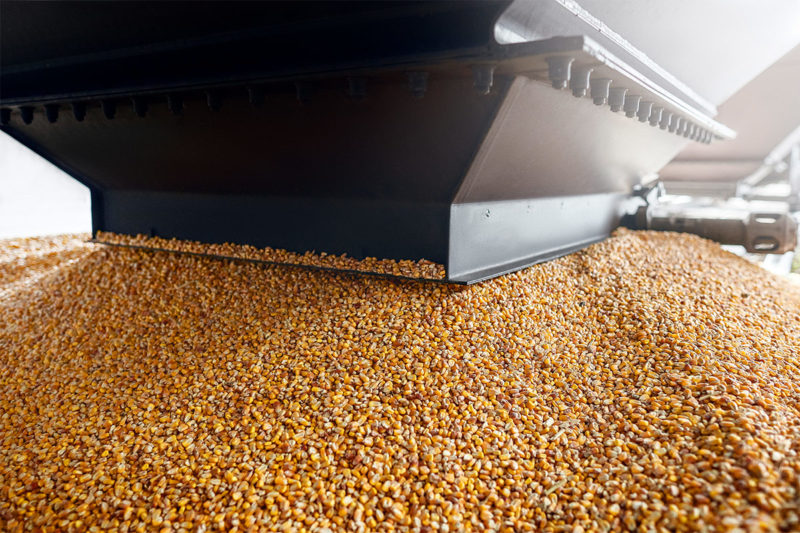
PureField Ingredients operates a fully integrated food and fuel production system at its Russell, Kansas facility. The plant processes close to 20 million bushels of Kansas-grown wheat and sorghum each year. That grain gets converted into food ingredients, animal feed, and approximately 50 million gallons of ethanol annually.
Fermentation, the process that produces ethanol, releases a concentrated stream of CO2. This is one of the cleanest and most affordable sources of carbon for capture, because the gas comes out at high purity and low cost compared to industrial flue stacks. PureField will capture that CO2 and transport it by pipeline to the injection well site, roughly 5 miles away.
The permitted well will store up to 1.8 million metric tons of CO2 beneath Russell County over 12 years. The targeted storage zone sits thousands of feet below any drinking water source, separated by dense layers of rock, according to EPA's geological assessment of the site.

"This is a defining moment for PureField to meet our commitment to serve Kansas farmers and our customers in the U.S. and around the world. By combining our advanced, wheat-based feedstock with carbon capture and permanent storage, we are creating a structurally advantaged platform that delivers some of the lowest carbon fuels in the world while simultaneously producing essential food ingredients."
Aaron Buettner, CEO, PureField Ingredients
Why Did This Permit Take So Long to Arrive in the Heartland?
EPA's Class VI permitting backlog has been a documented problem for years. After three years of delays, the agency has been working to clear a pile of applications that has grown faster than its review capacity.
As of late 2025, 239 Class VI permits were under EPA review across the country. The agency's official target is to process complete applications within 24 months. In practice, timelines often stretch to three to five years. Some applications have run more than 200 days past the stated goal, according to EPA's own Office of Inspector General.
None of the four EPA Region 7 states currently holds Class VI primacy, the authority to issue and regulate these permits independently without going through the federal review process. That means every project in Iowa, Kansas, Missouri, and Nebraska still moves through EPA's queue. The PureField permit is proof that the queue is moving, but the region has no shortcut to faster timelines yet.
By contrast, states like North Dakota and Wyoming moved to state-level primacy in 2018 and 2020 respectively. North Dakota has since issued eight Class VI permits on its own. Wyoming has issued nine permits for well construction. That pace is significantly faster than what EPA regional offices typically manage.
>> RELATED: Texas Bypasses EPA, Unlocks Billion-Dollar CCS Rush
Which States Now Control Their Own CCS Permitting?

Class VI primacy is shifting carbon storage permit reviews from EPA to states, with Texas now handling more than one in four pending applications.
Six states currently hold Class VI primacy. North Dakota was first in 2018, followed by Wyoming in 2020, Louisiana in late 2023, West Virginia in February 2025, Arizona in September 2025, and Texas in November 2025. Each grant shifts a chunk of the federal backlog to the state level.
Texas's primacy has the largest near-term impact. At the time of the grant, 64 of the 239 pending Class VI permits under EPA review were in Texas. That is more than one in four pending applications, now handled by the Texas Railroad Commission rather than EPA Region 6.
No Region 7 state is currently in an advanced stage of the primacy application process. Nebraska is among several states identified as being in early coordination with EPA to explore primacy, particularly given its role in regional CO2 transport corridors. Utah, Colorado, and Oklahoma are also in early discussions. Until any of these states receive primacy, CCS developers in the Heartland must work with EPA's federal review timeline.
| State | Primacy Year | Permits Issued | Status |
|---|---|---|---|
| North Dakota | 2018 | 8 | Active |
| Wyoming | 2020 | 9 | Active |
| Louisiana | 2023/2024 | 1 (moratorium in place) | Paused review |
| West Virginia | Feb 2025 | In review | Active |
| Arizona | Sep 2025 | 0 pending at grant | Active |
| Texas | Nov 2025 | 64 transferred from EPA | Active |
What Does This Mean for Carbon Storage at Scale?
The IEA's World Energy Outlook 2025 projects global CO2 capture volumes will grow from 43 million metric tons in 2024 to 160 million metric tons by 2035. By 2050, the projected volume reaches 300 million metric tons per year. Getting there requires thousands of storage wells, not dozens. Every new permit in a new jurisdiction moves that trajectory forward.

"This permit exemplifies EPA's support of domestic energy production and unleashing American energy dominance. We'll continue to advance projects that grow rural economies while fulfilling the agency's core mission of protecting human health and the environment."
Jim Macy, EPA Region 7 Administrator
For PureField, the permit unlocks access to California's low-carbon fuel standard market, where fuels with lower carbon intensity sell at a premium. The Russell facility already ships about 50 million gallons of ethanol annually to West Coast blending markets. With CCS in place, PureField's fuel could qualify for net-zero or even net-negative carbon intensity status under applicable methodologies, which translates directly to higher revenue per gallon.
The Section 45Q federal tax credit provides additional financial support. The credit pays companies for every metric ton of CO2 permanently stored underground via a Class VI well. Congress preserved and strengthened 45Q in the One Big Beautiful Bill Act, signed in July 2025, providing long-term certainty for storage project economics.
PureField is not alone in Kansas. Conestoga Energy Holdings, a Kansas-based ethanol producer that has been capturing CO2 for more than 15 years, submitted its own full Class VI permit application to EPA Region 7 in September 2025. Its project is located near its Bonanza BioEnergy ethanol plant in Garden City. EPA is also reviewing applications from other ethanol producers in the state.

The Bigger Picture: Ethanol, Agriculture, and Carbon Storage
Ethanol is one of the cheapest feedstocks for carbon capture. The fermentation process produces a near-pure stream of CO2, which means minimal processing is needed before injection. That cost advantage makes biofuel plants a natural starting point for building out CCS infrastructure in agricultural states.
Kansas produces roughly 642 million gallons of ethanol per year and is the largest wheat-producing state in the United States, with close to 7 million harvested acres annually. PureField's Russell plant alone processes approximately 20 million bushels of wheat and sorghum each year. Pairing that scale with underground carbon storage creates a pathway to some of the lowest-carbon liquid fuels commercially available today.
The global CO2 capture market is projected to grow from $4.51 billion in 2025 to $14.51 billion by 2032, a compound annual growth rate of 18.18%. Agricultural states in the U.S. Heartland are well positioned to capture a meaningful share of that growth. The geology is favorable, the feedstocks are already on-site, and the regulatory momentum, though still slower than industry wants, is moving in the right direction.
PureField Ingredients receives the first-ever EPA Class VI well permit in Kansas and EPA Region 7. The Russell, Kansas ethanol facility is now authorized to capture and permanently store up to 1.8 million metric tons of CO₂ underground, turning fermentation emissions into low-carbon ethanol while advancing carbon storage in the Heartland.
What Comes Next for Region 7 and the Heartland
PureField's permit proves that EPA Region 7 can issue Class VI approvals. The question now is whether the region can do it at the pace that CCS developers need. Multiple applications from Kansas ethanol producers are already in the queue. Conestoga's application alone envisions storing up to 800,000 metric tons of CO2 annually, including CO2 from third-party emitters beyond its own plant.
If any Region 7 state moves toward primacy, the dynamic shifts considerably. Nebraska is the state most often cited in discussions of potential Region 7 primacy, given its role in CO2 transport corridors and its existing ethanol infrastructure. But no formal application is pending yet.
For now, the Heartland's CCS buildout runs through EPA. PureField's permit is the proof of concept. The next few approvals will tell the industry whether Kansas, and the broader Region 7 corridor, can become a reliable destination for carbon storage investment alongside the Gulf Coast and the Northern Plains.
The global CCS scale-up requires CO2 capture volumes to reach 300 million metric tons by 2050. A single wheat plant in Russell, Kansas, is a small piece of that. But every Class VI permit in a new state adds a data point, a precedent, and a clearer path for the projects that follow.
Subscribe to the newsletter
Daily decarbonization data and news delivered to your inbox
Follow the money flow of climate, technology, and energy investments to uncover new opportunities and jobs.
Latest issues
-
The US Hasn't Made Heavy Water Since 1982
Inside This Issue ⚛️ Aternium Completes FEED Studies for US Hydrogen, Heavy Water Project 🐄 Google, McKinsey Strike Brazil Carbon Removal Deal With Silvopasture Project 🔧 Cummins Selects Stargate ...
-
Why Colorado’s Koloma Has Japan’s Largest Utility Hooked
Inside This Issue ⚡ JERA Invests in Koloma to Explore Natural Hydrogen as a Future Low-Carbon Energy 🔬 New CATF Tool Provides Framework for Self-Assessment and Strengthening of Biomass Carbon Remo...
-
LNK Energies Targets $6.50 Hydrogen With No Federal Subsidies
Inside This Issue 🚛 MIT Startup Says It Can Turn Diesel Trucks Into Cheaper Hydrogen Haulers, See It at Disrupt 🏭 Baytown City Council Briefs: ExxonMobil Blue Hydrogen Agreement Approved 🌎 Colorad...
Company Announcements
-
Toyota Achieves Heavy-Duty Hydrogen Truck Milestones
GARDENA, Calif. and PLANO, Texas , Oct. 20, 2026 /PRNewswire/ -- Toyota Motor North America's Hydrogen Headquarters (H2HQ) division is making steady progress in fueling improvements for heavy-duty ...
-
The parties intend to design hydrogen power into the Hendry County development's master plan before horizontal construction begins and to scale it with each phase of the build-out DELRAY BEACH, Fl...
-
OSLO, Norway, Oct. 20, 2026 /PRNewswire/ -- Aker BP and Höegh Evi have been awarded EUR 223 million from the European Union Innovation Fund for the Atlas Project, a large-scale CCS network connecti...
-
XCF Global Announces Agreement to Acquire Paramount, California Renewable Fuel Production Facility
Mergers and Acquisitions Acquisition further expands XCF's alternative energy platform with the proposed addition of ~50 million annual gallons of sustainable aviation fuel, renewable diesel and r...