
Game-Changing Innovation in the Fight Against Emissions
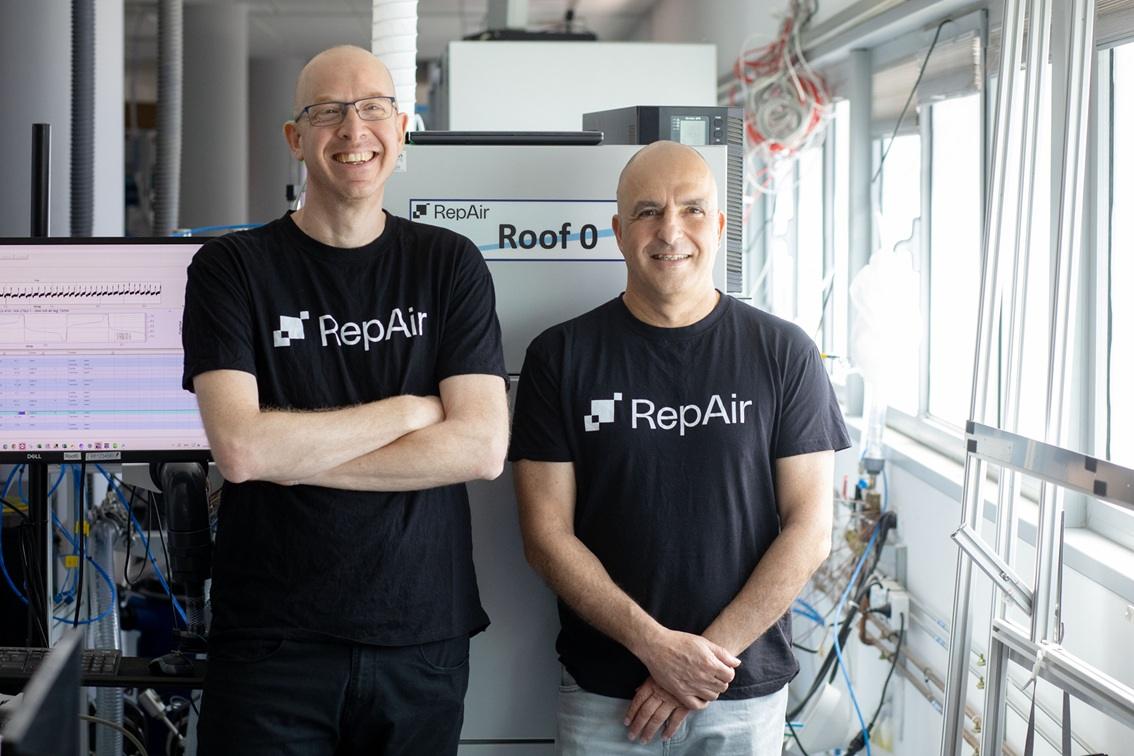
RepAir, a rising force in carbon capture technology, has announced a successful $15 million Series A funding round. The Israeli-based startup is pushing forward a modular, electromechanical solution designed to capture carbon from both atmospheric air and industrial emissions at an affordable cost. Founded in 2020, RepAir is quickly becoming a critical player in reshaping how industries tackle carbon emissions.
The company's core technology works without relying on heat, liquids, or solvents, offering an alternative that slashes energy use by an impressive 70% compared to traditional methods. "Companies are starting to recognize that renewable energy alone cannot meet the unprecedented surge in energy demand driven by AI," said Amir Shiner, CEO and Co-founder of RepAir Carbon.
How RepAir's Technology Works
At the heart of RepAir’s system are cathode and anode electrodes placed on either side of a separator plate. Atmospheric air is drawn into the cathode, where an electrical current creates hydroxide ions. These ions bind with CO2 molecules, pulling them across the separator plate to the anode, while clean air is released back into the atmosphere.
This electromechanical process not only cuts down on energy usage but also makes it possible to efficiently capture diluted carbon dioxide. Applications range from cleaning emissions at gas turbines and aluminum smelters to direct air capture initiatives.
>> RELATED: RepAir Raises $15 Million to Scale Electromechanical Carbon Capture Solution

Strategic Partners and Growing Industry Support
The Series A funding round was led by Taranis Carbon Ventures and Extantia Capital, with key participation from Ormat Technologies and Repsol. As an added boost, the Israeli Innovation Authority contributed a $3 million non-dilutive grant.
Victor Choley from Taranis and Yair Reem from Extantia have also joined RepAir’s board of directors, signaling strong investor confidence. Their involvement is expected to help guide RepAir’s growth strategy and expansion into larger-scale manufacturing and demonstration projects.
"The explosive rise of AI usage globally has dramatically increased energy demands, creating an unexpected and urgent need for carbon capture solutions," said Victor Choley, Partner at Taranis Carbon Ventures.
Scaling Up for a Cleaner Future
RepAir plans to use the new capital to move from prototype to full-scale commercial manufacturing. This includes building strategic partnerships with industry leaders who need practical carbon capture systems that work at a large scale without extreme costs.
The company's modular design means that its carbon capture units can be easily scaled to fit different industries. This flexibility is especially important in sectors where emissions are diluted and traditional carbon capture technologies fall short.
Meeting the Needs of an Energy-Hungry World
The timing of RepAir’s technology couldn’t be better. As AI continues to fuel massive increases in energy demand, many companies are realizing that decarbonization must move faster than renewable energy supply can.
RepAir’s system offers a solution that can be installed at facilities already using gas turbines, aluminum production, and other large-scale industrial activities. It fills a critical gap in global efforts to reach net zero.
>> In Other News: Carbon Capture Technology to Produce Clean Fuel From Air
Why the Industry is Watching RepAir Closely
Scaling direct air capture (DAC) has been one of the biggest hurdles for carbon removal. Traditional systems are costly, energy-hungry, and location-dependent.
RepAir’s electromechanical approach offers a simpler, cleaner, and cheaper alternative that could significantly shift how industries look at DAC. By making carbon capture more accessible, RepAir is creating new opportunities to tackle emissions across a broader range of sectors.
The Broader Impact of Low-Energy Carbon Capture
Solving industrial carbon emissions is not just a climate necessity—it's also a business opportunity. According to the International Energy Agency, carbon capture will need to reach 1.6 billion tonnes per year by 2030 to stay on track for net zero goals.
Solutions like RepAir’s that lower the cost and complexity of capturing CO2 will be essential. The involvement of respected investors like Ormat Technologies, a major U.S.-based renewable energy player, also hints at North American expansion potential.
On the Horizon
RepAir’s journey is just beginning, but the company’s scalable, low-energy technology positions it at the forefront of carbon removal innovation. With strong industry backing and a clear path to commercial growth, it’s poised to play a major role in shaping a cleaner, more resilient energy future.
As more industries wake up to the twin realities of rising energy demand and urgent decarbonization needs, RepAir's vision of practical, affordable carbon capture is more relevant than ever.
Subscribe to the newsletter
Daily decarbonization data and news delivered to your inbox
Follow the money flow of climate, technology, and energy investments to uncover new opportunities and jobs.
Latest issues
-
Why Colorado’s Koloma Has Japan’s Largest Utility Hooked
Inside This Issue ⚡ JERA Invests in Koloma to Explore Natural Hydrogen as a Future Low-Carbon Energy 🔬 New CATF Tool Provides Framework for Self-Assessment and Strengthening of Biomass Carbon Remo...
-
LNK Energies Targets $6.50 Hydrogen With No Federal Subsidies
Inside This Issue 🚛 MIT Startup Says It Can Turn Diesel Trucks Into Cheaper Hydrogen Haulers, See It at Disrupt 🏭 Baytown City Council Briefs: ExxonMobil Blue Hydrogen Agreement Approved 🌎 Colorad...
-
Why Gulf Coast CCS Teams Are Watching Liverpool Bay
Inside This Issue 💂 Eni’s Douglas Platform Sets the Offshore CCS Blueprint 🌲 Pacolet Milliken Expands Its Biomass Platform With the Acquisition of Georgia Renewable Power 🧪 Metacon Receives EU Fun...
Company Announcements
-
A new interactive tool from Clean Air Task Force (CATF) provides a practical framework for the self-assessment and strengthening of biomass carbon removal (BiCRS) protocols to help ensure that carb...
-
LanzaJet Secures Financing to Scale SAF Production and Supply Global Customers
CHICAGO, Oct. 15, 2026 (GLOBE NEWSWIRE) -- LanzaJet, Inc., a leading next-gen fuels technology company and fuels producer, today announced fully committed new financing of at least $20 million to s...
-
44.01 and Frontier Advance Permanent CO₂ Storage Through In-Situ Mineralization
44.01's in-situ mineralization (ISM) process turns CO₂ into solid rock underground in a few years, after which the risk of reversal is functionally zero. >> In Other News: JERA Invests in ...
-
JERA Invests in Koloma to Explore Natural Hydrogen as a Future Low-Carbon Energy
JERA Co., Inc. (JERA), through its corporate venture capital arm JERA Ventures, has invested in Koloma, Inc. (Koloma), a U.S.-based natural hydrogen exploration and development company. The invest...