
SUSTAERO will license Nextchem's NX Circular gasification technology to convert Canadian forest residues into sustainable aviation fuel. The plant targets up to 144,000 tons of SAF annually once it starts operating in 2030. That route uses gasification, distinct from the pyrolysis pathway behind Quebec's Project Avance.
Key Facts
- SUSTAERO licensed Nextchem's NX Circular gasification technology on June 17, 2026.
- The plant targets 144,000 tons of SAF annually once operational in 2030.
- Capacity could expand to four times that volume, reaching 576,000 tons per year.
- Nextchem operates through its subsidiary MyRechemical for this licensing deal.
- The project converts forest residues into purified, chemical-grade syngas before SAF conversion.
>> In Other News: [x](x)
What Makes This Wood Waste Approach Different?
SUSTAERO converts wood waste into SAF through gasification, not pyrolysis. The company's proprietary SOAR process feeds forest residues into Nextchem's NX Circular technology for the biomass-to-syngas step.
"We are thrilled to be working with Nextchem to convert Canada's abundant wood waste into SAF and eSAF. We evaluated all technologies and nothing compares to the performance of the NX Circular for processing biomass into the cleanest syngas."
Keith Gillard, CEO of SUSTAERO
That step uses high-temperature gasification to break wood waste down into synthetic gas. Nextchem, the technology arm of Italy's Maire Group, then purifies that syngas into a chemical-grade feedstock ready for SAF conversion.
Project Avance, the Boeing-backed Quebec initiative, uses pyrolysis to create a liquid biocrude that gets hydrotreated into SAF. SUSTAERO's plant skips the liquid biocrude stage and goes straight to syngas, a meaningfully different chemical route to the same fuel.

Project Avance and SUSTAERO use different wood-waste pathways to reach the same SAF goal, with one route using biocrude and the other moving through syngas.
How Much SAF Will the Plant Produce?
The plant targets 144,000 tons of SAF annually starting in 2030. That initial capacity could grow to four times that volume, putting the ceiling near 576,000 tons per year.
Forest residues left unmanaged raise wildfire risk across Canada, similar to the feedstock challenge behind Graphyte's biomass carbon removal projects in the United States. Converting that biomass into fuel cuts wildfire fuel loads while displacing fossil jet fuel.
| Project | Conversion Method | Initial Capacity | Target Start |
|---|---|---|---|
| SUSTAERO / Nextchem | Gasification to syngas | 144,000 tons per year | 2030 |
| Project Avance (Alder/Boeing) | Fast pyrolysis to biocrude | 10 million gallons per year | 2027 |
>> RELATED: Boeing Backs $10M Quebec SAF Project to Fly by 2027
Why Did Nextchem Win This Licensing Deal?
Nextchem's gasification technology already has a track record on this exact application. The company supplied similar gasification systems for the Louisiana SAF megaproject, processing bagasse instead of wood waste.
That prior deployment gave Nextchem a working reference plant for biomass-to-syngas conversion at commercial scale. SUSTAERO's leadership cited that proven performance as the deciding factor.

"This agreement confirms the market interest in our proprietary gasification solutions for advanced and versatile waste-to-value applications from multiple feedstocks. By enabling the production of purified syngas for SAF, we are supporting SUSTAERO in the development of an innovative pathway that combines circularity with decarbonization objectives."
Fabio Fritelli, Managing Director of Nextchem
Nextchem also licensed its NX AdWinMethanol Zero technology to Transition Industries' Pacifico Mexinol facility in Mexico. It ranks among the largest ultra-low carbon methanol plants under development worldwide.
Past the Final Investment Decision, Nextchem's role can expand further. The deal leaves room for the company to supply process design packages, proprietary equipment, technical services, and catalysts as the project advances.
A Wider North American SAF Buildout
Other North American SAF capacity is coming online on a similar timeline. Twelve's AirPlant One facility in Washington state, engineered by a Calgary firm, opened on June 10, 2026, using an entirely different power-to-liquid pathway.
Demand keeps pace with new supply too. DHL and Phillips 66 closed a 240,000-ton SAF supply deal last year, and Wheels Up launched a SAF purchasing program with Delta for charter customers.
Quebec's sawmill density supports pyrolysis-based Project Avance, while SUSTAERO's gasification route targets a broader, less geographically concentrated wood waste supply. Both lean on the same growing SAF demand and convert a waste stream that previously had limited commercial value.
Frequently Asked Questions
How is SUSTAERO's process different from Project Avance?
SUSTAERO uses gasification to convert wood waste into syngas before SAF production. Project Avance uses fast pyrolysis to create a liquid biocrude intermediate instead.
When will the SUSTAERO and Nextchem plant start producing SAF?
The plant is scheduled to become operational in 2030, with an initial capacity of 144,000 tons of SAF annually.
Has Nextchem worked on similar SAF projects before?
Yes, Nextchem previously supplied gasification technology for a Louisiana SAF megaproject led by DG Fuels, processing bagasse instead of wood waste.
Canada's forests are about to feed both lumber mills and jet engines from the same leftover pile. With two production pathways now moving toward commercial scale, the country's wood waste SAF story is just getting started.
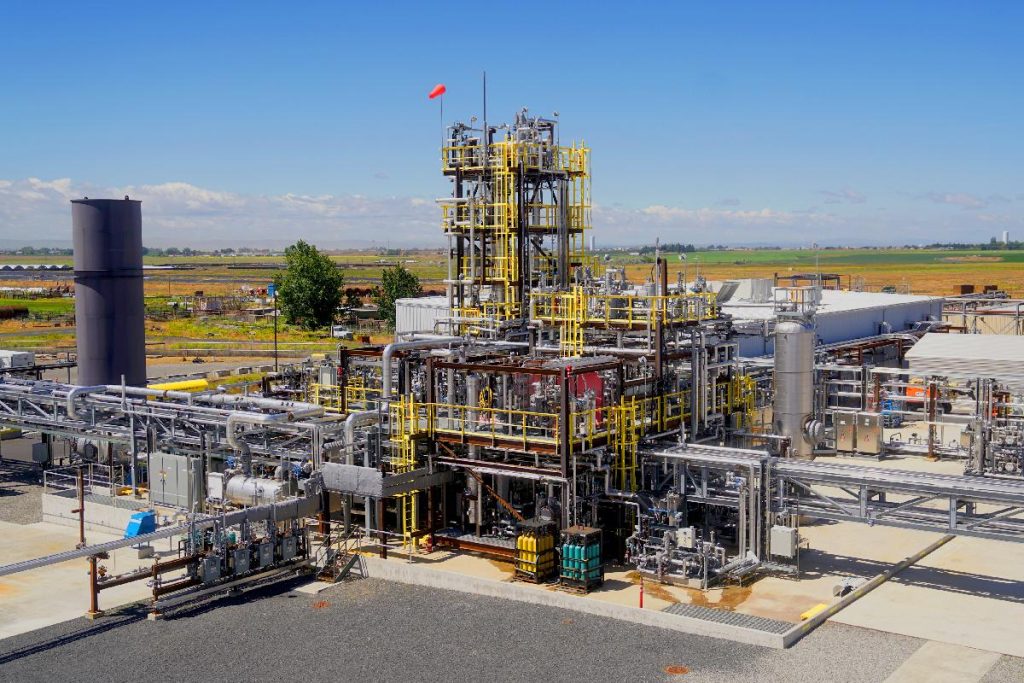
Nextchem (MAIRE) explains how its NX Circular technology converts waste, agricultural, and biomass residues into sustainable aviation fuel (SAF), enabling up to 90% lower lifecycle CO₂ emissions while supporting growing air travel demand through scalable, locally optimized production pathways.
For ongoing coverage of carbon removal, BECCS, and corporate CDR procurement, subscribe to Decarbonfuse.com.
Subscribe to the newsletter
Daily decarbonization data and news delivered to your inbox
Follow the money flow of climate, technology, and energy investments to uncover new opportunities and jobs.
Latest issues
-
Verra Landed CCP Approval. What Changes for DAC?
Inside This Issue ✅ Verra's CCS Credits Just Got the Integrity Seal Buyers Want 💰 South Korea Unveils $747 Billion Energy Transition Plan Through 2035 💧 Hydrogen and Carbon Capture and Storage in ...
-
Quebec Wood Waste Just Became Jet Fuel
Inside This Issue 🌲 ARC Bio Tests a Refinery Shortcut to Forest-Based SAF 💧 Scientists Just Found a New Way to Make Hydrogen from Water 🤝 How Channel Partnerships Are Helping More Organizations Ta...
-
How Vaulted Deep Turned Offtakes Into $35M Debt
Inside This Issue 🏦 How Carbon Removal Offtakes Are Starting to Unlock Commercial Debt 🌉 California Opens the Door to a Three-Way Carbon Market 🧪 New Material Developed at Oregon State Provides Bo...
Company Announcements
-
Ballard Secures 4.8MW Order From Siemens Mobility to Power Hydrogen Trains in Romania
24 FCrail™ fuel cell modules will power 12 Mireo Plus H trains, Romania’s first hydrogen fleet and the platform’s largest deployment to date. VANCOUVER, CANADA and MUNICH, GERMANY – Ballard Power ...
-
Company Update Approval Advances Strategic Growth of XCF's Diversified Alternative Energy Platform and Marks a Major Milestone as the Parties Work Toward Closing as Soon as Practicable HOUSTON, T...
-
On September 20, Yiwu County in Hami, Xinjiang, a centralized project bid opening and launch ceremony drew the attention of the entire hydrogen energy community, Dondel officially launched its Gree...
-
MEXICO CITY--BUSINESS WIRE--In the framework of today's World Habitat Day, here is an invitation to reflect on building more sustainable communities, where Mexico is moving firmly toward the energy...